 Custer
 Fiber Cement Siding for Ferndale Homes Near Custer
Ferndale sits close enough to the water and to the open farmland east of Custer that its homes take a specific kind of weather beating: salt-laden air rolling in off the Strait of Georgia and Bellingham Bay, long stretches of driving rain off the Pacific systems that push through Whatcom County every fall and winter, and enough shade and dampness in the wetter months to grow moss on almost anything that holds moisture. Siding here doesn't fail because it's old — it fails because it was never matched to this climate in the first place, or because it went up with shortcuts that don't show up until year three or four.
This page covers exactly one thing: fiber cement siding, done correctly, on homes in and around Ferndale. Not a general siding overview, not a sales pitch for every product on the market — just what this specific material needs to do in this specific place, and what a job has to include to actually deliver on that.
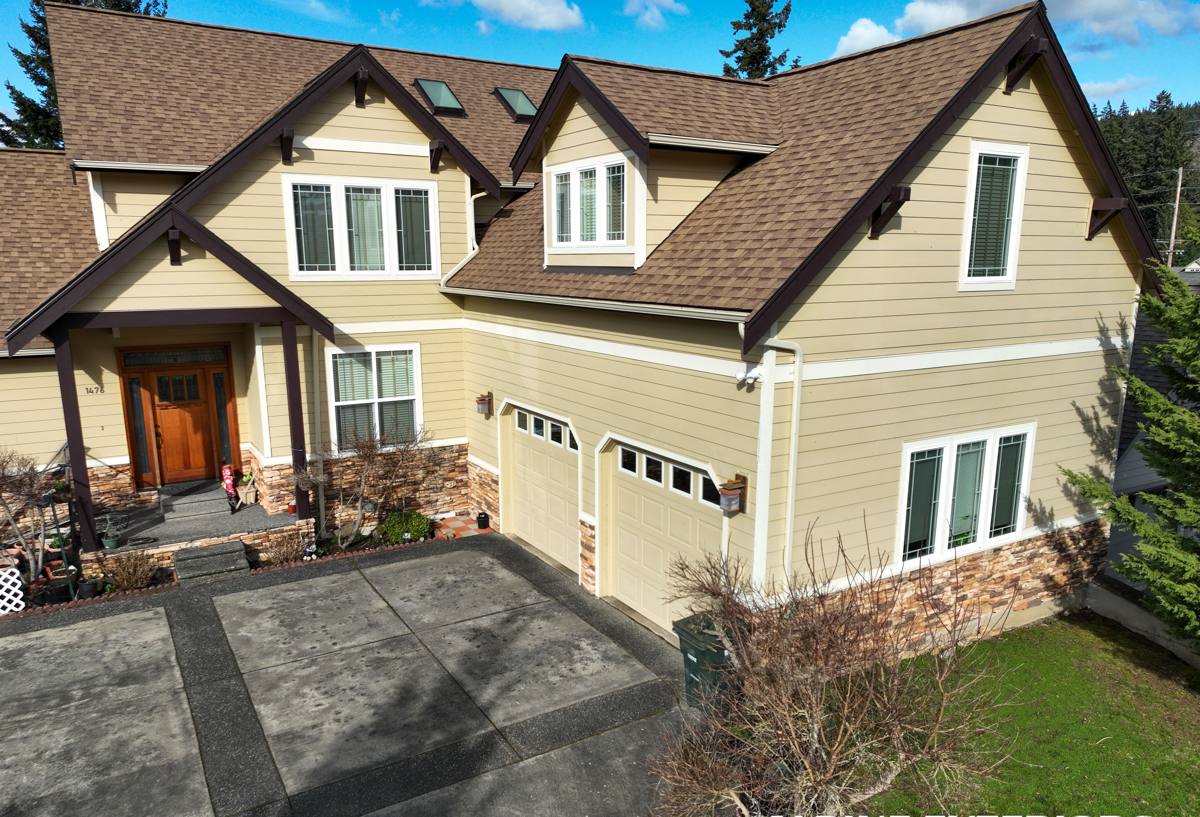
What Ferndale's Climate Actually Does to a Wall
Salt Air
Homes closer to the water deal with airborne salt that settles on every exterior surface. Salt is hygroscopic — it pulls moisture out of the air and holds it against whatever it's sitting on. On fasteners and trim that aren't corrosion-resistant, that means rust streaks and failing hardware well before the siding itself would ever need replacing. On paint and coatings not built for the exposure, it means chalking and premature fading.
Driving Rain
Whatcom County's winter storms don't just fall straight down — wind-driven rain hits siding at an angle and gets pushed up under laps, around penetrations, and into any gap that wasn't properly flashed or caulked. A wall assembly that isn't detailed for wind-driven rain will eventually take on water behind the siding, where it does the real damage: sheathing rot, insulation failure, and mold, long before anyone sees a problem from the curb.
Moss Season
Shaded north- and west-facing walls, tree cover, and consistent damp conditions for much of the year create ideal moss and algae growth conditions on any siding material that stays damp. Moss holds water against the surface even longer than it would sit on its own, which compounds the moisture problem rather than just being a cosmetic nuisance.
None of these three conditions is unique to Ferndale, but the combination — salt air plus driving rain plus a long moss season — is a tougher, more persistent load than most siding products and most installation crews are actually built to handle.
Why Fiber Cement Is the Right Match Here
James Hardie fiber cement is cement, sand, and cellulose fiber — it doesn't rot, it isn't a food source for moss or algae the way wood-based products can be, and it holds its shape and finish under damp, cool conditions far better than wood or wood-composite sidings. It's also non-combustible, which matters as much for insurance underwriting as it does for actual fire risk.
The factory-applied ColorPlus finish is baked on under controlled conditions and holds color and resists fading, chalking, and salt-related wear far better than field-applied paint. That matters directly in a salt-air environment, where a field-painted product depends entirely on the paint film holding up against constant airborne salt exposure — and paint films are exactly what salt air degrades fastest.
James Hardie's HZ5 product line is engineered specifically for climates with more moisture, freeze-thaw cycling, and moss/mildew pressure than the standard HZ10 line built for hot, dry regions. Whatcom County, including Ferndale and Custer, falls squarely into the climate zone that line was designed for.
What a Correct Installation Actually Involves
Fiber cement is only as good as the wall assembly behind it. A siding job that looks right from the street can still be wrong in ways that only show up after a few wet winters. The details that matter most in this climate:
- Weather-resistive barrier and drainage plane — a properly lapped house wrap or building paper with a drainage gap behind the siding, so any water that does get past the surface has somewhere to go besides the sheathing.
- Flashing at every penetration — windows, doors, hose bibs, light fixtures, and vents all need proper flashing, not just caulk. Caulk fails; flashing sheds water by design.
- Correct fastener type and placement — stainless or hot-dip galvanized fasteners set at the manufacturer-specified depth and location, not overdriven (which cracks the board) or underdriven (which lets it move and eventually crack anyway).
- Proper clearance at grade and roofline — Hardie siding needs a minimum gap above grade, roofing, decks, and patios so it isn't sitting in standing water or snow.
- Caulking only where the manufacturer specifies it — over-caulking traps moisture in places it should be able to drain or evaporate from.
- Field-cut edges sealed — any cut end of a Hardie board needs to be primed or sealed per the manufacturer's instructions, or it becomes a weak point for water intake.
Skip any one of these and the siding itself can be flawless while the wall behind it still fails.
Our Process for Ferndale Jobs
1. On-Site Assessment
We walk the home in person, looking specifically at sun/shade exposure on each elevation, existing moisture or moss patterns, trim and window condition, and how the current siding has actually performed — not just its age.
2. Tear-Off and Sheathing Check
Once the old siding is off, we inspect the sheathing underneath. Any soft or water-damaged sheathing gets addressed before anything new goes up — covering over a compromised wall with new siding just hides the problem for another few years.
3. Weather Barrier and Flashing
We install or verify the drainage wrap and flash every penetration before the first piece of Hardie board goes up. This step is invisible in the finished product but is the single biggest factor in how the wall performs over the next twenty years.
4. Installation to Manufacturer Spec
Fastener pattern, clearances, joint treatment, and caulking follow James Hardie's published installation guidelines for our climate zone — not shortcuts, not "how we've always done it."
5. Trim, Caulk, and Touch-Up
Corner boards, trim, and any factory-cut edges are sealed and finished so the whole assembly is presenting a continuous, weather-tight surface.
6. Final Walkthrough
We walk the finished job with the homeowner, point out anything they should know about (vent placement, expected caulk lines, care notes), and answer questions before we call it done.
Why a Crew That Already Works Ferndale Matters
A lot of what makes fiber cement siding perform well here isn't in a manual — it's judgment calls: how much drainage gap to build in on a shaded north wall that never fully dries out, which elevations need extra attention to moss-prone corners, how local wind patterns affect where driving rain actually hits hardest on a given lot. A crew that's done several jobs in the same few square miles has already seen how these homes behave through a winter, not just how they look on installation day.
There's also a practical side: knowing the area means fewer surprises with permitting, typical lot layouts, and the kind of existing construction (era of home, common sheathing types, typical prior siding) found in and around Ferndale and Custer. That translates into fewer change orders and a more accurate estimate up front.
Fiber Cement vs. Other Siding Options for This Climate
| Factor | James Hardie Fiber Cement | Vinyl | Wood / Cedar | Engineered Wood (e.g. LP SmartSide) |
|---|---|---|---|---|
| Moisture/rot resistance | Not organic — doesn't rot | Doesn't rot, but seams can trap water | Vulnerable without diligent upkeep | Wood-based core, vulnerable if the coating is breached |
| Moss/algae resistance | Not a food source for growth | Resists growth but shows it clearly | Can feed moss/mildew growth | Similar risk to wood if surface is compromised |
| Salt air performance | Factory finish holds up well | Can become brittle over time | Finish degrades faster near salt exposure | Coating is the main defense; failure exposes wood core |
| Fire resistance | Non-combustible | Combustible, can melt/warp | Combustible | Combustible |
| Finish longevity | Factory ColorPlus, long warranty | Color molded in, can fade/chalk | Field-applied, needs recoating | Field or factory coating, needs monitoring |
We install James Hardie exclusively. We don't carry vinyl, cedar, or engineered wood products like LP SmartSide, and we're upfront about why: in a climate that combines salt exposure, sustained rain, and long damp/moss seasons, we've made non-combustible fiber cement with a factory finish our standard, and we'd rather turn down work than install something we don't think holds up to what this area asks of it.
Cost Factors Specific to Ferndale-Area Homes
| Factor | Why It Affects Cost Here |
|---|---|
| Home elevation/exposure | Windward walls facing prevailing weather may need extra flashing detail and prep |
| Existing sheathing condition | Rot repair from prior moisture intrusion is priced once the old siding is off and inspected |
| Trim and architectural detail | Corner boards, window trim, and fascia work add labor beyond flat wall coverage |
| Access and lot layout | Tree cover, fencing, and tight side yards common in the area can affect staging and labor time |
| Siding profile and color | Lap width and ColorPlus color selection affect material cost within the Hardie product line |
We don't quote a number until we've actually seen the home — anyone quoting a firm price over the phone for a job like this is guessing.
Living With Fiber Cement Siding in a Moss-Prone, Salt-Air Climate
Fiber cement is genuinely low-maintenance compared to wood, but "low-maintenance" doesn't mean "no maintenance" anywhere near Ferndale. A few habits keep it performing the way it should:
- Rinse shaded, moss-prone elevations periodically with a garden hose — no pressure washer directly against the surface, which can force water behind laps and joints.
- Keep gutters clear so overflow isn't running down the face of the siding during heavy rain events.
- Trim back vegetation and tree limbs that keep a wall section shaded and damp longer than the rest of the house.
- Check caulk lines around windows, doors, and trim every couple of years and have any cracked or failed caulk redone before a wet season starts.
- Watch for any soft spots, staining, or discoloration at the base of walls near grade — early signs of a drainage or clearance issue, not a siding defect.
A Practical Checklist Before You Hire Anyone for This Job
- Do they install to the manufacturer's published specs for our climate zone, or their own shortcut version?
- Will they inspect and address sheathing condition before installing new siding, not just cover it?
- Do they detail flashing at every penetration, not just caulk over gaps?
- Can they explain why they chose the specific Hardie product line and profile for your home's exposure?
- Do they carry proper insurance and offer a workmanship warranty in addition to the manufacturer's material warranty?
- Have they worked in Ferndale or nearby Custer before, and can they speak specifically to how homes here perform over time?
Get a Straight Answer for Your Home
Every home in the Ferndale area carries its own combination of sun exposure, shade, wind direction, and existing wall condition, and that combination is what actually determines what a siding job needs — not a generic estimate. If you'd like a straightforward look at your home's siding and an honest, no-pressure estimate, request a free consultation using the form below.