 Custer
 Why California Creek Roofs Wear on Their Own Schedule
Homes around California Creek sit close enough to the water and the open fields north of Custer that they take a different kind of weathering than a roof further inland in Bellingham or Ferndale. The combination of salt-tinged air drifting off Puget Sound, near-constant winter drizzle, and long stretches of shade from mature trees and low winter sun angles creates conditions that shorten the useful life of a roof if it wasn't built for this specific stretch of Whatcom County. A roof that would hold up fine in a drier part of the state can start showing granule loss, moss colonization, and flashing corrosion years ahead of schedule out here.
New roof installation in this area isn't just about swapping old shingles for new ones. It's about choosing materials, underlayment, and ventilation details that specifically account for the moisture load this neighborhood sees, so the homeowner isn't back to square one in twelve or fifteen years instead of the twenty-five-plus they were expecting.
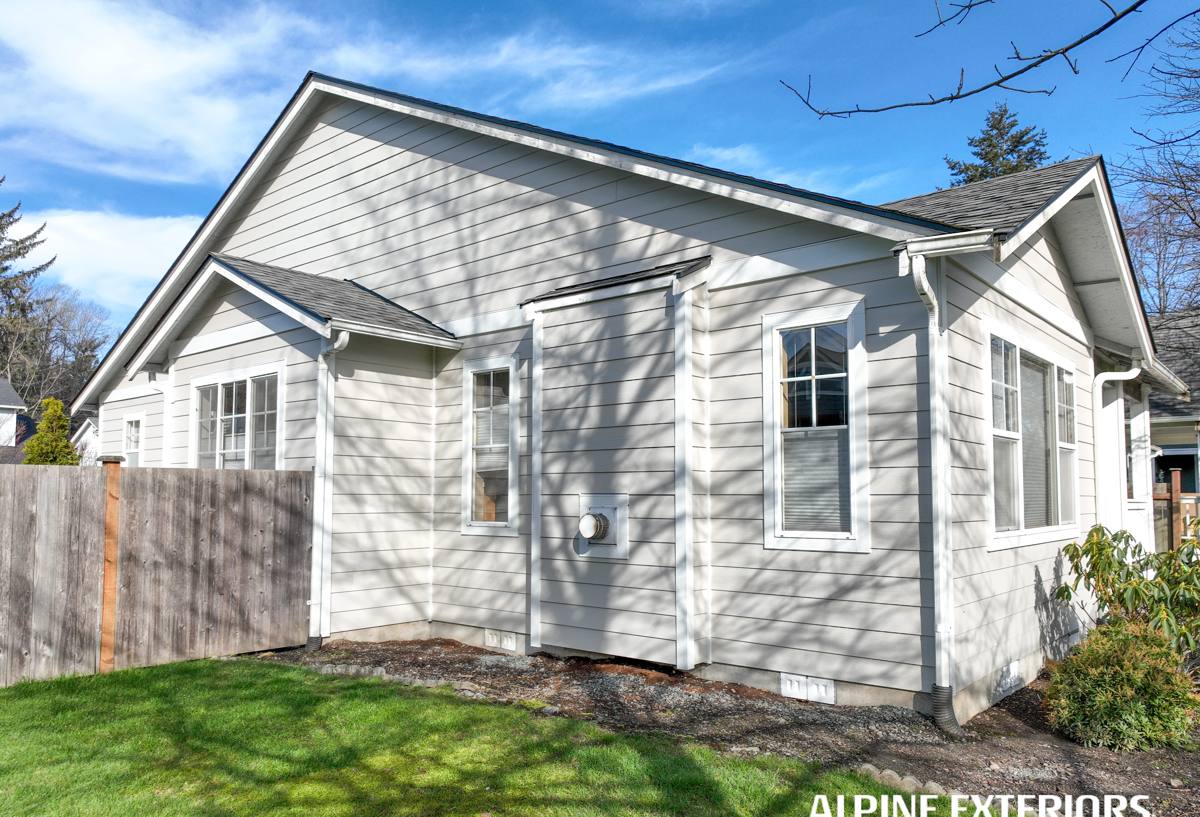
What Salt Air, Driving Rain, and Moss Actually Do to a Roof
Salt Air and Metal Fasteners
Salt-laden air accelerates corrosion on any exposed metal — nail heads, flashing, vent boots with metal collars, and gutter hardware. Standard electro-galvanized fasteners can start rusting within a handful of years this close to the water. Roofs that were installed with the cheapest available fastener package tend to show rust streaking on the shingles and eventual fastener back-out well before the shingles themselves are worn out.
Driving Rain and Wind-Driven Water
Custer gets its share of storms that push rain sideways, not just down. That matters at every horizontal transition on a roof — valleys, chimney flashing, skylight curbs, and the eaves where wind can drive water up and under the shingle edge. A roof designed for calmer weather, with minimal ice-and-water shield and basic drip edge, is more vulnerable to wind-driven intrusion than one detailed for this climate.
Moss and the Long Wet Season
Whatcom County's moss season effectively runs most of the year on north-facing and shaded slopes. Moss isn't just a cosmetic issue — as it establishes itself under shingle tabs, it holds moisture against the roofing material, lifts shingle edges, and slowly works its way into the fastener line. Left unaddressed for several seasons, moss growth can shorten a roof's life by years and lead to deck rot underneath.
Signs a California Creek Home Actually Needs a New Roof (Not a Repair)
- Granule loss heavy enough that you can see bare, shiny patches on multiple slopes, not just one worn spot
- Moss or algae staining across large sections rather than isolated patches near a tree
- Shingles that are cupping, curling, or cracking when you look closely from the ground or a ladder
- Daylight or water staining visible in the attic near the roof deck, especially around chimneys, vents, or valleys
- Multiple past repairs to different areas — a sign the roof is failing broadly, not just in one spot
- The roof is nearing or past the manufacturer's expected lifespan for the material, adjusted down for this climate
If only one or two of these apply and the roof is otherwise sound, a targeted repair is usually the honest recommendation. New roof installation makes sense once the underlying materials — deck, underlayment, and shingles — are failing together rather than in one isolated spot.
What a Correct New Roof Installation Involves
Deck Inspection First
Every proper re-roof starts with exposing the deck and checking it board by board, not just eyeballing it from the old shingles. Any soft, delaminated, or water-stained plywood or sheathing gets replaced before a single new shingle goes down. Skipping this step is the single most common shortcut that leads to problems five to ten years later.
Underlayment Built for Wet Climates
Given the rain and moss exposure here, we treat synthetic underlayment and ice-and-water shield at vulnerable areas — eaves, valleys, and roof penetrations — as standard, not an upsell. This is the layer that protects the deck if wind-driven rain or a future shingle failure lets water past the surface layer.
Flashing and Fasteners Matched to the Environment
Chimney flashing, valley metal, and vent boots get detailed with corrosion resistance in mind given the salt air exposure. We use fastener packages rated for coastal or high-moisture conditions rather than the cheapest standard option, since that's one of the first things that fails prematurely out here.
Ventilation Sized for the Roof
Proper intake and exhaust ventilation keeps the underside of the deck dry and reduces the moisture buildup that feeds both rot and moss. A roof that's ventilated correctly also runs cooler in summer and helps the shingles hold their warranty life. We size ventilation to the specific roof, not a one-size-fits-all vent count.
Comparing Roofing Material Options for This Area
There's no single "best" material for every California Creek home — it depends on roof pitch, budget, and how much moss and moisture exposure a given slope sees. Here's an honest breakdown of the common options homeowners in this area weigh:
| Material | Moisture & Moss Resistance | Typical Lifespan Here | Trade-offs |
|---|---|---|---|
| Architectural asphalt shingle | Good, with algae-resistant granules | 20-25 years with proper ventilation | Most affordable; needs periodic moss treatment on shaded slopes |
| Standing seam metal | Excellent — sheds moisture and resists moss | 40+ years | Higher upfront cost; requires correct fastener and coating spec for salt air |
| Synthetic/composite shingle | Very good | 30-40 years | Higher material cost than asphalt; fewer local installers experienced with it |
| Cedar shake | Poor without diligent maintenance | Highly variable | Attractive but demands frequent moss and moisture upkeep in this climate — we're honest that it's a high-maintenance choice here |
We don't push one product line across every job. The right call depends on the roof's exposure, the home's structure, and what the homeowner wants to spend on upkeep down the road versus upfront.
How Our Process Works for a California Creek Re-Roof
1. On-Site Assessment
We walk the roof and attic in person, not just from the ground. That's the only way to catch deck issues, ventilation gaps, and flashing problems before they turn into surprises mid-job.
2. Straightforward Written Estimate
The estimate spells out material choice, underlayment package, flashing details, and ventilation plan — no vague "materials and labor" line item. Homeowners should know exactly what they're paying for.
3. Efficient Tear-Off and Deck Repair
Old roofing comes off, the deck gets inspected and repaired as needed, and we protect landscaping and gutters through the process.
4. Installation to Spec
Underlayment, flashing, ventilation, and the finish material go in per manufacturer requirements and the details we discussed up front — the parts that actually determine how the roof performs in this climate, not just how it looks the day it's finished.
5. Final Walkthrough
We walk the finished roof and the site with the homeowner before calling the job done.
Why Hiring a Crew That Already Works This Area Matters
A roofing crew that's put in time around Custer and the surrounding Whatcom County coastline already knows which slopes on a typical California Creek property collect moss fastest, how much wind-driven rain protection a given exposure actually needs, and which fastener and flashing choices hold up against the salt air instead of failing early. That's not something you get from a generic installation checklist — it comes from having done the work in this specific environment repeatedly.
It also matters for follow-up. A local crew is realistically available if a question comes up after the job, or if a storm causes damage a season or two later. That's harder to count on with a contractor working from out of the area.
Questions Worth Asking Before You Hire Anyone for a Re-Roof
- Will you inspect and replace damaged decking as part of the base scope, or is that a separate change order?
- What underlayment and ice-and-water shield package is included, and where specifically will it be used?
- How will you handle ventilation — is it calculated for this roof, or a standard vent count regardless of size?
- What fastener and flashing materials are you using, and are they rated for coastal/salt-air exposure?
- Is the manufacturer warranty tied to a certified installation, and does your crew hold that certification?
- Do you carry current liability insurance and workers' comp coverage, and can you provide proof?
Get a Free, No-Pressure Estimate
If your California Creek home's roof is showing its age or you just want an honest read on where it stands, we're glad to take a look. Use the form below to request a free estimate — no pressure, no obligation, just a straight assessment from a crew that knows what this stretch of Whatcom County does to a roof.