 Custer
 Roofing for California Creek's Particular Climate
California Creek sits close enough to the water that salt air is part of daily life, and it's part of what your roof deals with too. Add Whatcom County's driving winter rain, long stretches of overcast humidity, and a moss season that can run most of the year in shaded areas, and you've got a combination that wears on asphalt shingles differently than it would on a roof fifty miles inland. None of this means asphalt shingle roofing is a bad fit here — it's still one of the most practical, cost-effective roofing systems available. It just means the installation details, material choices, and maintenance habits matter more than they would in a milder climate.
A roof that's installed correctly for this area will shed water fast, resist wind-driven rain intrusion at the edges and penetrations, and stay ahead of moss and algae growth long enough that you're cleaning it on a schedule instead of reacting to a problem. A roof that's installed generically — using the same details you'd use anywhere in the country — tends to show its age here faster than it should.
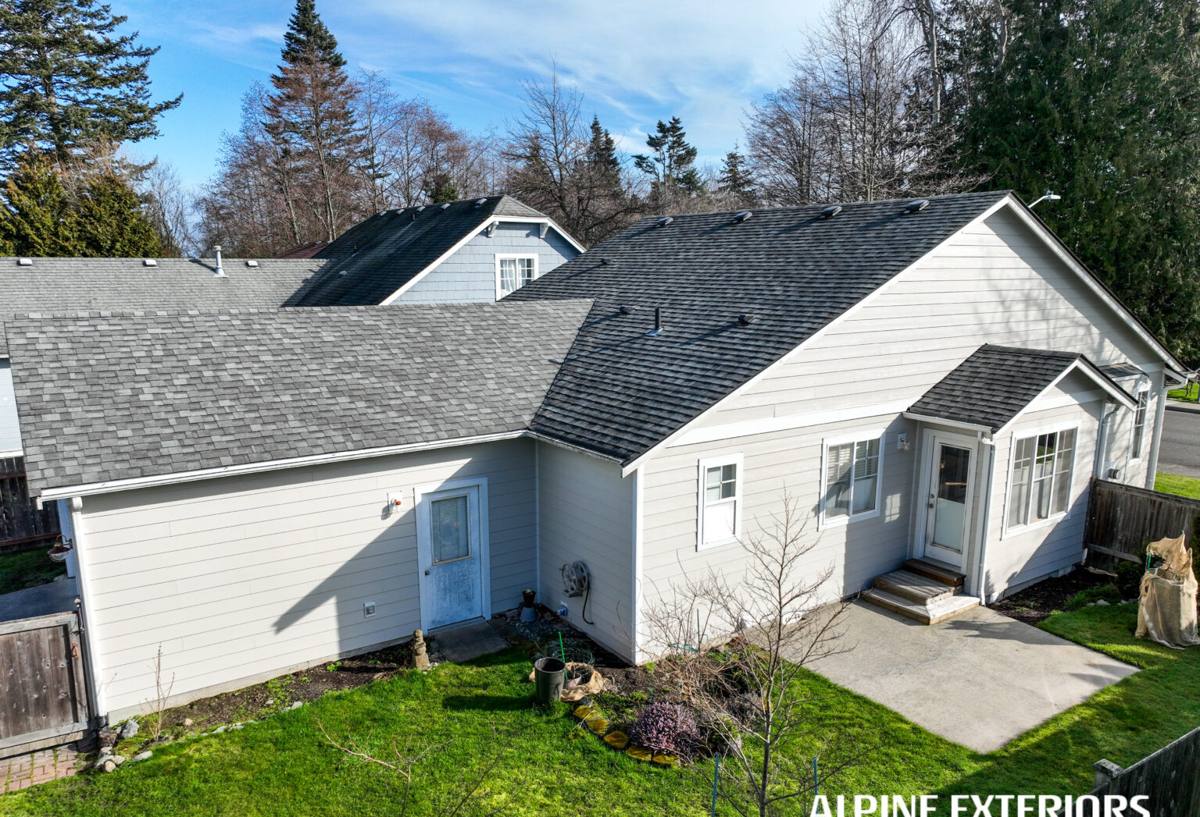
What Salt Air, Rain, and Moss Actually Do to a Shingle Roof
Salt Air
Airborne salt doesn't damage asphalt shingles the way it corrodes metal, but it accelerates wear on the metal components every roof depends on: flashing, drip edge, vent stacks, nails, and fasteners. Once those parts start to corrode, water finds its way in around them long before the shingles themselves are worn out. This is why fastener and flashing quality matters more here than the shingle brand printed on the wrapper.
Driving Rain
Rain that falls straight down is easy for any roof to handle. Rain that comes in sideways during a windstorm — which is a normal weather pattern for this part of Whatcom County — tests every seam, valley, and edge detail on the roof. Underlayment coverage, proper shingle nailing patterns, and correctly lapped flashing are what keep wind-driven rain from working its way under the shingle field.
Moss and Algae
Shaded, north-facing, and tree-covered sections of roof in California Creek can stay damp for days after a storm passes. That moisture is exactly what moss needs to establish itself. Once moss takes hold, it lifts shingle edges as it grows, holds water against the roof deck, and accelerates granule loss. Left unaddressed for a few seasons, moss can shorten the useful life of an otherwise sound roof by years.
Choosing Shingles and Materials for This Location
Not every asphalt shingle product is built the same way, and for a roof in California Creek, a few characteristics matter more than they would elsewhere: algae resistance, wind rating, and how the shingle is designed to seal down in wet, windy conditions.
| Feature | Why It Matters Here |
|---|---|
| Algae-resistant (AR) granules | Slows the growth of the dark streaking and moss-friendly buildup common in our damp, shaded conditions |
| High wind rating | Handles the gusts that come with driving winter storms off the water without lifting at the tabs |
| Sealant strip quality | Determines how well shingles bond down in cooler, damp installation conditions typical of the Pacific Northwest |
| Shingle weight/thickness | Heavier shingles resist wind uplift and impact better over a long service life near the coast |
We don't push homeowners toward premium shingle lines as a default — a well-installed mid-grade shingle with the right underlayment and flashing detail will outperform a top-tier shingle installed with shortcuts. Our job is to match the product to your roof's exposure, not to upsell a package.
What a Correct Installation Involves
Deck Inspection First
Before any shingles go down, the roof deck gets inspected for soft spots, delamination, or moisture damage — issues that are more common on older Custer-area homes where a roof may have been re-covered once or twice without a full tear-off. Installing new shingles over a compromised deck just hides the problem.
Underlayment Built for Wet Climates
We use synthetic or ice-and-water-style underlayment in the areas most exposed to wind-driven rain — eaves, valleys, and roof penetrations — rather than relying on shingles alone as the water barrier. This is one of the most overlooked details on lower-cost roofing jobs and one of the most important for a property this close to the water.
Flashing and Fasteners That Resist Salt Air
Corrosion-resistant flashing and fasteners are used throughout, particularly around chimneys, skylights, and vent penetrations — the points where a roof is most likely to leak once metal components start to degrade.
Proper Nailing and Sealing
Shingles are installed to the manufacturer's nailing pattern and spacing, not a faster shortcut pattern. Correct nailing is what keeps a shingle roof intact during the high-wind rain events this area sees most winters.
Ventilation Check
Attic ventilation is reviewed as part of every job. Poor ventilation traps moisture underneath the roof deck, which contributes to premature shingle aging and can encourage mold and rot regardless of how good the shingles themselves are.
Moss Management: A Year-Round Job, Not a Spring Chore
In much of the country, moss removal is a once-a-year task. In California Creek, shaded roof sections can stay wet enough for moss to keep growing for most of the year. We treat moss control as an ongoing part of roof care rather than a one-time cleaning:
- Physical moss removal using methods that don't strip granules or damage the shingle surface
- Zinc or copper control strips installed along ridge lines, where appropriate, to slow regrowth between cleanings
- Trimming recommendations for overhanging branches that keep sections of roof shaded and damp
- Gutter and valley clearing so trapped debris doesn't hold moisture against the shingles
We don't recommend pressure washing a shingle roof — it's an aggressive method that can strip protective granules and shorten the roof's life, even though it looks clean afterward. Careful, low-impact removal protects your investment instead of trading long-term wear for short-term appearance.
Signs Your California Creek Roof Needs Attention
Because damage from salt air and moisture tends to start small and hidden, it helps to know what to watch for between inspections:
- Dark streaking or green/black patches, especially on north-facing or shaded slopes
- Granules collecting in gutters or at the base of downspouts
- Shingle edges that look curled, lifted, or cupped
- Soft or spongy spots when walking the roof (or visible sagging from the ground)
- Rust staining around flashing, vents, or nail heads
- Daylight visible through the attic roof deck
- Water stains on interior ceilings, especially after a windy storm
Any one of these is worth a call. Caught early, most are a repair. Left alone through another wet season, several of them become a full replacement.
Repair or Replace? What Actually Drives That Decision
| Factor | Leans Toward Repair | Leans Toward Replacement |
|---|---|---|
| Roof age | Under 15 years | Approaching or past 20-25 years |
| Extent of damage | Isolated to one slope or penetration | Spread across multiple slopes |
| Deck condition | Solid, no soft spots | Soft decking or visible rot found |
| Moss/algae history | Minor, manageable with cleaning | Heavy, recurring growth undermining shingles |
| Granule loss | Light, localized | Significant, exposing asphalt mat |
We'll give you a straight answer on which side of that line your roof falls, including honest ranges for cost based on roof size, pitch, and what we find once we're up there — not a number pulled before anyone's inspected the deck.
Why It Matters to Hire a Crew That Already Works This Area
A roofing crew that mainly works inland, drier parts of the region can do a technically fine installation and still miss the details that matter for a property exposed to salt air and coastal storms — corrosion-resistant fastener choices, extra underlayment coverage at vulnerable points, and realistic moss-control planning. Working regularly in Custer and the surrounding Whatcom County coastline means we're not guessing at how a roof will hold up here — we're accounting for it from the first day of the job, and we're a call away afterward if a storm causes a problem.
We also know this area well enough to give straight answers about what's actually necessary versus what's an upsell. Not every roof needs premium materials or a full tear-off. Plenty do need the underlayment, flashing, and ventilation details that a generic installation skips.
Get a Straightforward, No-Pressure Estimate
Whether you're dealing with visible moss, a slow leak, an aging roof you're not sure about, or you're simply planning ahead, we're happy to take a look and give you a clear picture of where things stand. Fill out the form below for a free estimate on asphalt shingle roofing — installation, repair, or maintenance — for your California Creek home.