 Custer
 Roof Repair for Sandy Point's Waterfront Conditions
Sandy Point is a shoreline community, and a shoreline roof lives a different life than one a few miles inland. Salt-laden air, wind-driven rain off the water, and a moss season that runs longer here than almost anywhere else in Whatcom County all work on a roof at the same time. A repair that would hold up fine in a sheltered subdivision can fail in a season out here if it doesn't account for what this particular stretch of Custer actually throws at a house. That's the gap we fill: roof repair work sized to Sandy Point's exposure, not a generic patch job.
This page is about repair specifically — not full roof replacement. Most roofs that are otherwise sound don't need to be torn off; they need the right section diagnosed correctly and fixed the right way, with materials and technique matched to what's actually failing.
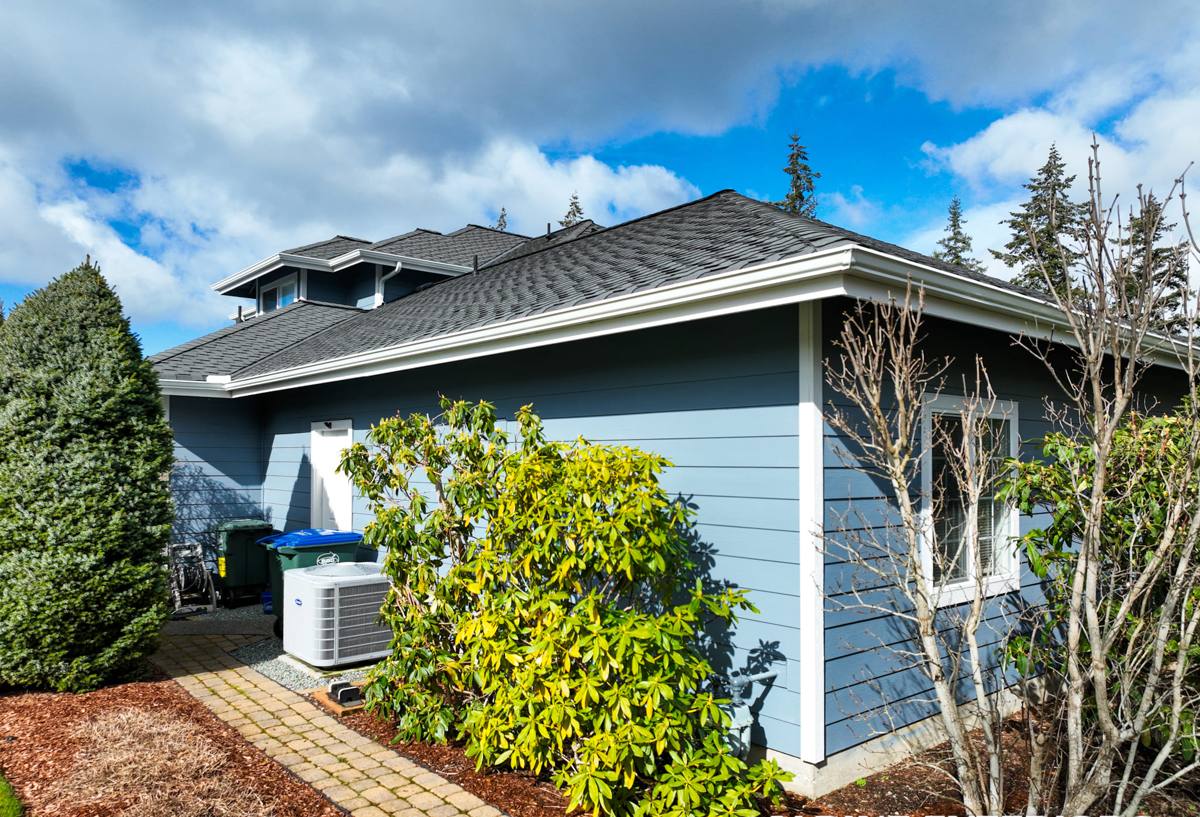
What Salt Air, Rain, and Moss Actually Do to a Roof
Salt air and metal fatigue
Salt in the air accelerates corrosion on anything metal on a roof — flashing, fasteners, vent caps, gutter hardware, and any exposed nail heads. Galvanized fasteners that would last decades inland can start rusting and backing out years sooner in a salt-exposed setting like Sandy Point. Once a fastener or flashing edge corrodes, it stops sealing the way it did when it was installed, and that's very often where a "mystery leak" actually starts.
Wind-driven rain
Whatcom County doesn't just get rain, it gets rain pushed sideways by wind off the water. That matters because a roof is designed to shed water moving downhill under gravity — it's not always designed for water being driven uphill under a shingle tab or sideways under a flashing lap. Homes close to the water take more of this than homes set back, which is why the same roof age and material can perform very differently depending on how exposed the lot is.
Moss and moisture retention
Moss doesn't just look bad — it holds water against the roofing material long after the rain stops, keeps shaded and north-facing slopes damp for weeks at a stretch, and works its way under shingle tabs and shakes as it grows, lifting edges and breaking the seal. In a spot with Sandy Point's tree cover and marine humidity, moss season effectively runs most of the year, which means the damage it causes is cumulative rather than seasonal.
Signs a Sandy Point Roof Needs Repair, Not Replacement
Most homeowners call us after they've already noticed something. Here's what tends to mean a repair will actually solve the problem, versus what's a sign of a bigger issue:
- A stain on an interior ceiling or wall that appears only during or after heavy, wind-driven rain — often a flashing or fastener issue, not a whole-roof failure
- Granule buildup in gutters or at downspout outlets — normal in small amounts, a red flag in large amounts
- Visible moss or dark streaking concentrated on one slope, especially a shaded or north-facing one
- Lifted, curled, or missing shingle tabs after a windstorm, especially near ridges, edges, and valleys
- Rust streaks below metal flashing, vents, or fasteners
- Soft or spongy spots underfoot near chimneys, skylights, or plumbing vents (usually a sign of trapped moisture at a penetration)
- Daylight visible through the roof deck from inside an attic, at a seam or penetration
If the damage is isolated to flashing, penetrations, one storm-damaged slope, or moss-related lifting, that's almost always repairable. Widespread granule loss over the whole field, soft decking in multiple areas, or a roof that's already past its expected service life is a different conversation, and we'll tell you honestly if that's what we're looking at.
What a Correct Repair Involves
Diagnosis before anything gets touched
We start on the roof, not on the ladder pointing at shingles from the ground. Most leaks in this area trace back to flashing, fasteners, or a penetration detail — not the field of the roofing material itself — so a repair that only addresses the visible shingle damage without checking the flashing underneath tends to come back within a season or two.
Flashing and penetration work
Given how hard salt air and wind-driven rain are on flashing specifically, we treat flashing as the priority on almost every repair out here. That means checking step flashing at walls and chimneys, counter-flashing laps, valley metal, and the boots and collars around vent pipes and skylights — and replacing any of it that's corroded or no longer sealing, rather than caulking over a failing detail.
Moss removal and treatment
Where moss is part of the problem, removal has to be done carefully — pressure washing a shingle roof can strip granules and shorten its life faster than the moss would have. We remove moss by hand or with low-pressure methods appropriate to the roofing material, clear the debris that's trapping moisture, and treat the area to slow regrowth. This is maintenance as much as repair, and it's often the difference between a roof that stays sound for its full service life and one that fails early.
Matching materials
On an older roof, matching new shingles or shakes to weathered existing material isn't always possible in color or exact profile, but a competent repair blends in as closely as the material allows and, more importantly, ties into the existing roofing correctly at the seams so water still sheds the way the roof was designed to shed it.
Common Sandy Point Roof Repairs
| Repair Type | Typical Cause Here | What the Fix Involves |
|---|---|---|
| Flashing replacement | Salt-accelerated corrosion, failed sealant | Remove old flashing, replace with new material, reset laps correctly |
| Wind-lifted shingles | Wind-driven storms off the water | Re-secure or replace damaged tabs, check underlayment beneath |
| Moss-related lifting | Long moss season, shaded slopes | Moss removal, damaged section repair, treatment to slow regrowth |
| Vent and skylight leaks | Aged rubber boots, corroded collars | Replace boot/collar, reseal penetration correctly |
| Valley leaks | Heavy runoff volume, debris buildup | Clear debris, repair or replace valley metal or membrane |
Repair vs. Replacement: What Actually Drives the Decision
| Factor | Leans Toward Repair | Leans Toward Replacement |
|---|---|---|
| Age of roof | Well within expected service life | At or past expected service life |
| Extent of damage | Isolated to one area or detail | Spread across multiple slopes |
| Decking condition | Solid, no soft spots | Soft or damaged decking found in more than one place |
| Granule loss | Limited to one section | Widespread across the field |
| History | First repair on this roof | Repeated repairs to the same areas |
Cost for a repair depends on how much of the roof is involved, how the roof is accessed, and whether the underlying decking is sound once we open things up. We'll always give you an honest read on which side of this table your roof actually falls on before we quote anything — a repair quote on a roof that really needs replacing doesn't do you any favors.
How Our Process Works
- Inspection. We look at the roof itself, not just the ceiling stain — including flashing, penetrations, and any moss-affected areas.
- Straight answer. We tell you what we found, whether it's a repair or something bigger, and roughly what it involves — no upsell if a repair is genuinely the right call.
- Written estimate. You get a clear scope of work and price before anything is scheduled.
- The repair itself. Done to hold up against this area's actual conditions — correct flashing, correct fastener choice, correct material tie-in.
- Cleanup and walkthrough. We clear debris and moss removal waste and walk you through what was done.
Why a Crew That Already Works Sandy Point Matters
Roofing crews that mostly work drier, sheltered neighborhoods inland don't always default to marine-grade fastener choices or prioritize flashing the way a shoreline roof requires — not because they're careless, but because it's not what their typical job calls for. A crew that regularly works Sandy Point and the rest of Custer's waterfront-adjacent areas already knows to check flashing first, already has a feel for which slopes hold moss longest given the tree cover and exposure here, and isn't guessing at how wind-driven rain behaves on this stretch of Whatcom County coastline. That local pattern recognition shortens the diagnosis and reduces the chance of a repair that looks right but fails again after the next storm.
There's also a practical side: local crews know realistic access and staging for this area's lots, and they're not routing a first visit around a long drive from somewhere else in the county, which matters when a leak needs a timely look rather than a week's wait.
Keeping a Repaired Roof Sound Between Visits
A good repair buys you years, but a few habits stretch that further in this climate:
- Keep gutters and downspouts clear — clogged gutters back water up under the roof edge, especially in heavy, wind-driven rain
- Trim back overhanging branches where practical — less shade means faster drying and slower moss regrowth
- Have moss treated before it becomes visible from the ground, not after — early growth is far easier to manage than an established mat
- Have flashing and fasteners checked after any significant windstorm, even if nothing looks obviously wrong from the ground
- Don't ignore a small ceiling stain — in this climate it rarely stays small on its own
None of this replaces a proper inspection, but it reduces how often you need one, and it keeps small issues from turning into deck damage.
Get a Straight Look at Your Roof
If you're dealing with a leak, storm damage, or moss that's gotten ahead of you, we're happy to come take a real look and give you an honest answer — repair, not repair, or something in between — with a free, no-pressure estimate. Just fill out the form below and we'll get in touch.