 Custer
 Why Nooksack Roofs Wear Out Faster Than the Shingle Warranty Suggests
Nooksack sits close enough to the water and low enough in the Whatcom County valley that its roofs deal with a specific combination of stress most shingle manufacturers never test for in their glossy warranty paperwork. Salt-laden air moves in off the Strait and Bellingham Bay and settles into the low-lying farmland and river-bottom neighborhoods around Custer and Nooksack, slowly working on exposed metal fasteners, flashing, and vent housings. Add driving, wind-pushed rain that comes in sideways during fall and winter storms, and you have moisture finding its way into spots a shingle roof was never designed to shed water from vertically.
Then there's moss. Between the tree cover, the persistent damp, and the long stretch of gray months where a roof rarely gets a full day of direct sun to dry out, moss here doesn't just show up in one bad season — it's close to a year-round tenant on any roof that isn't ventilated and maintained correctly. A roof built the same way you'd build one in a dry inland climate simply doesn't hold up in Whatcom County the way it should.
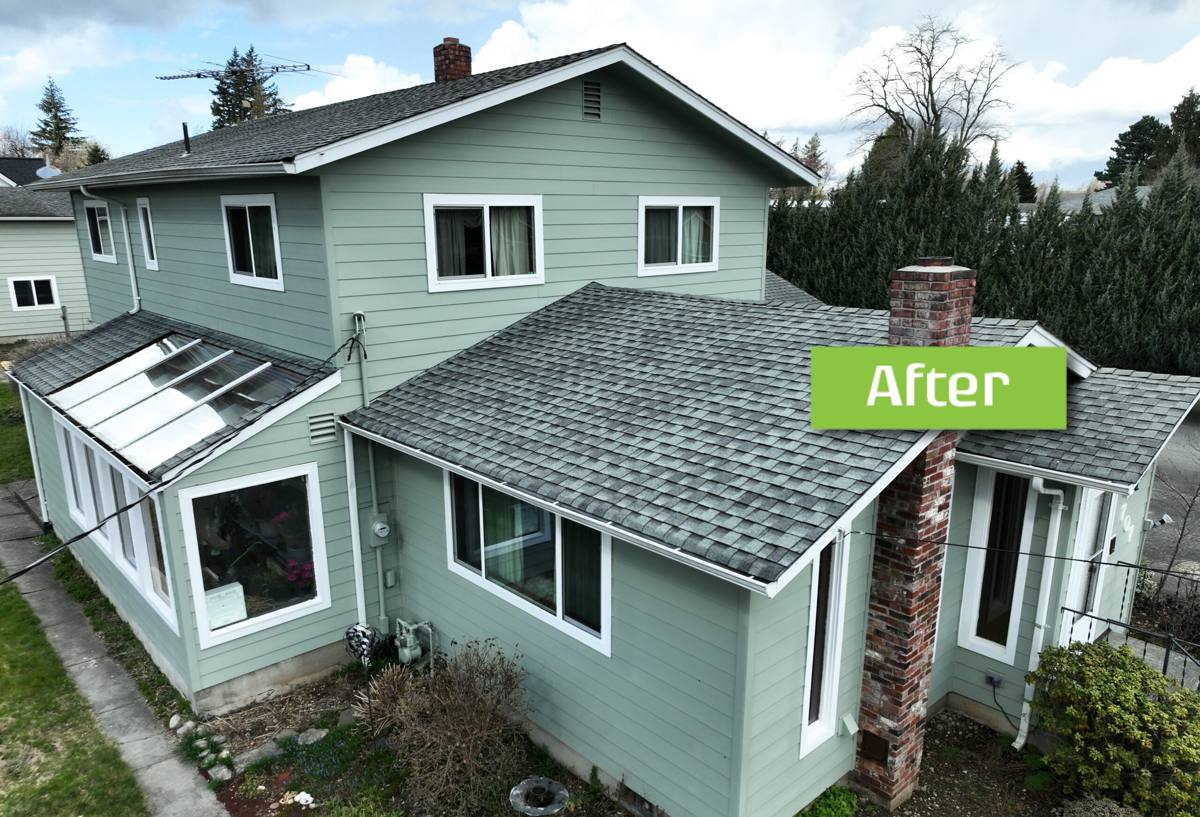
What a Correct Shingle Roof Has to Do in This Climate
A roofing job that's "technically to code" and one that's actually right for a Nooksack address aren't always the same thing. Around here, a correctly installed asphalt shingle roof has to do four things well, not just one:
- Shed wind-driven rain that hits the shingles at an angle, not just water running straight down
- Keep moisture out of fastener penetrations and flashing points long enough for the metal and sealant to hold up against salt air corrosion
- Move enough air through the attic to keep the underside of the deck dry, which also slows moss growth from the inside out
- Resist moss and algae staining on the surface without relying on homeowners to pressure-wash the roof every year, which shortens shingle life
Skip any one of those and you end up with the pattern we see constantly on service calls here: a roof that's only twelve or fifteen years old but already showing granule loss, soft spots at the valleys, or moss mats thick enough to hold water against the shingle surface.
The Layers That Actually Keep Water Out
A shingle roof is a system, not a single product, and in this climate every layer under the shingles matters as much as the shingles themselves.
Deck Prep
Before anything goes down, the decking gets inspected for soft or delaminated spots — common on older Nooksack-area homes where a slow roof leak went unnoticed for a while under moss cover. Bad decking gets replaced, not covered over, because no underlayment or shingle can compensate for a deck that's already failing.
Ice and Water Barrier at the Vulnerable Points
Eaves, valleys, and any roof-to-wall transitions get a self-adhering waterproof membrane underneath the regular underlayment. These are the spots where wind-driven rain and ice dams (on the rare cold snaps that do hit Whatcom County) find their way in first.
Synthetic Underlayment
Across the rest of the roof, a synthetic underlayment provides a second line of defense if wind ever lifts or drives rain under a shingle tab — which happens more often here than in calmer inland climates.
Flashing and Drip Edge
Metal flashing at chimneys, sidewalls, and roof edges is where salt air does the most damage over time. Using properly coated metal and sealing it correctly the first time avoids the slow leaks that show up as ceiling stains years later.
Ventilation
Balanced intake and exhaust ventilation keeps the attic close to outdoor temperature and humidity, which reduces condensation on the underside of the deck and slows the conditions moss needs to take hold on the shingle surface above.
Picking a Shingle That Can Actually Handle Whatcom County Weather
Not every asphalt shingle is built the same, and the differences matter more here than in a drier climate. The table below covers the main categories we work with and how each one holds up to salt air, driving rain, and moss pressure.
| Shingle Type | Wind & Rain Performance | Moss/Algae Resistance | Typical Lifespan Here |
|---|---|---|---|
| Standard 3-tab | Adequate in calm weather, more prone to tab lift in driving wind and rain | Low unless treated; moss takes hold faster | 12–18 years in this climate |
| Architectural/dimensional | Heavier, better wind rating, more resistant to water intrusion at the tab edges | Moderate; better if algae-resistant granules are specified | 20–28 years |
| Algae-resistant architectural | Same strong wind/rain performance as standard architectural | Copper- or zinc-infused granules actively slow algae and moss growth | 25–30 years with routine upkeep |
For most Nooksack and Custer homes, we steer people toward algae-resistant architectural shingles. The upfront cost difference over standard architectural shingles is modest, and given how much moss pressure this area puts on a roof, it's usually the more honest recommendation rather than the cheapest one.
How We Approach a Nooksack Re-Roof, Start to Finish
- On-site inspection — we walk the roof and attic, not just look from the ground, to check deck condition, existing ventilation, and moss/moisture damage that isn't visible from the street.
- Honest scope and estimate — you get a written breakdown of what needs replacing versus what can stay, so you're not paying for work the roof doesn't need.
- Tear-off and deck inspection — old material comes off completely; we don't layer new shingles over old ones, because that traps moisture and hides deck problems.
- Underlayment and flashing installation — ice and water barrier at eaves and valleys, synthetic underlayment across the field, new flashing where the old metal is corroded or undersized.
- Shingle installation — installed to the manufacturer's wind-rated nailing pattern, which matters more here than in sheltered inland areas.
- Ventilation check — intake and exhaust vents balanced or upgraded as needed, since a new roof over bad ventilation just resets the clock on the same moss and moisture problems.
- Cleanup and walk-through — magnetic sweep for debris, and we point out anything you should keep an eye on going forward.
Moss: Managing It Instead of Fighting It Every Spring
No roof in this part of Whatcom County is going to be permanently moss-free — the climate simply doesn't allow it. The goal is keeping moss from becoming a moisture problem, and that comes down to a short list of habits more than any one product.
- Keep overhanging branches trimmed back so more sun and airflow reach the roof surface
- Clear gutters and valleys of needles and debris before the fall rains start, since trapped debris is where moss gets its first foothold
- Have moss physically brushed or treated rather than pressure-washed, which strips protective granules and shortens shingle life
- Check attic ventilation isn't blocked by insulation, which is a common and easily fixed cause of chronic moss on the shaded side of a roof
- Schedule a roof check every couple of years even if there's no visible leak, since moss damage often starts underneath before it shows inside the house
What Drives the Cost of a Shingle Roof in This Area
Every roof is different, but a few factors consistently move the price up or down for homes in the Nooksack and Custer area:
| Factor | Why It Matters Here |
|---|---|
| Roof pitch and access | Steeper roofs and limited equipment access add labor time and safety measures |
| Number of valleys and penetrations | Each valley, vent, and chimney needs flashing work — the main leak points in driving rain |
| Deck condition underneath the old roof | Rot or soft decking found during tear-off, common where moss has held moisture for years, means added repair |
| Shingle class chosen | Algae-resistant and heavier architectural shingles cost more upfront but hold up longer against local moss and salt air |
| Ventilation upgrades needed | Older homes often need added intake or exhaust venting brought up to a standard that actually works in this climate |
We'd rather walk you through these line items in person than throw out a number that doesn't reflect your actual roof.
Why It Matters That We Already Work in Nooksack and Custer
A roofing crew that mainly works dry, sheltered climates tends to build to a generic code minimum — because that's what their normal jobs require. Working in Nooksack, Custer, and the rest of Whatcom County day in and day out means we're used to designing for salt air corrosion on flashing, wind-driven rain at the tab edges, and moss pressure that never fully lets up. That's not a sales pitch — it's just the difference between a roof spec written for "somewhere" and one written for here.
If you're weighing a repair versus a full re-roof, or just want an honest look at what your current roof actually needs, we're happy to come take a look. The estimate is free, there's no pressure attached to it, and you can use the form below to get started.