 Custer
 Windows Built for the Semiahmoo Waterfront, Not a Catalog Somewhere Inland
Homes around Semiahmoo sit in one of the more demanding window environments in Whatcom County. You're close to saltwater, exposed to wind-driven rain off the Strait, and shaded enough in places that moss and algae get a long season to work on anything that stays damp. A window that's rated fine for a subdivision twenty miles inland can start failing here years ahead of schedule — foggy glass, swollen sashes, corroded hardware, stained trim. Custom windows done right for this location aren't about a fancier look. They're about matching the frame material, glazing, flashing, and installation detail to what this specific stretch of coastline actually does to a house.
We install and replace windows across Whatcom County, and Semiahmoo-area jobs get treated differently from the start because the site conditions are different. This page covers what that actually means in practice — not marketing language, just what a correct job looks like out here.
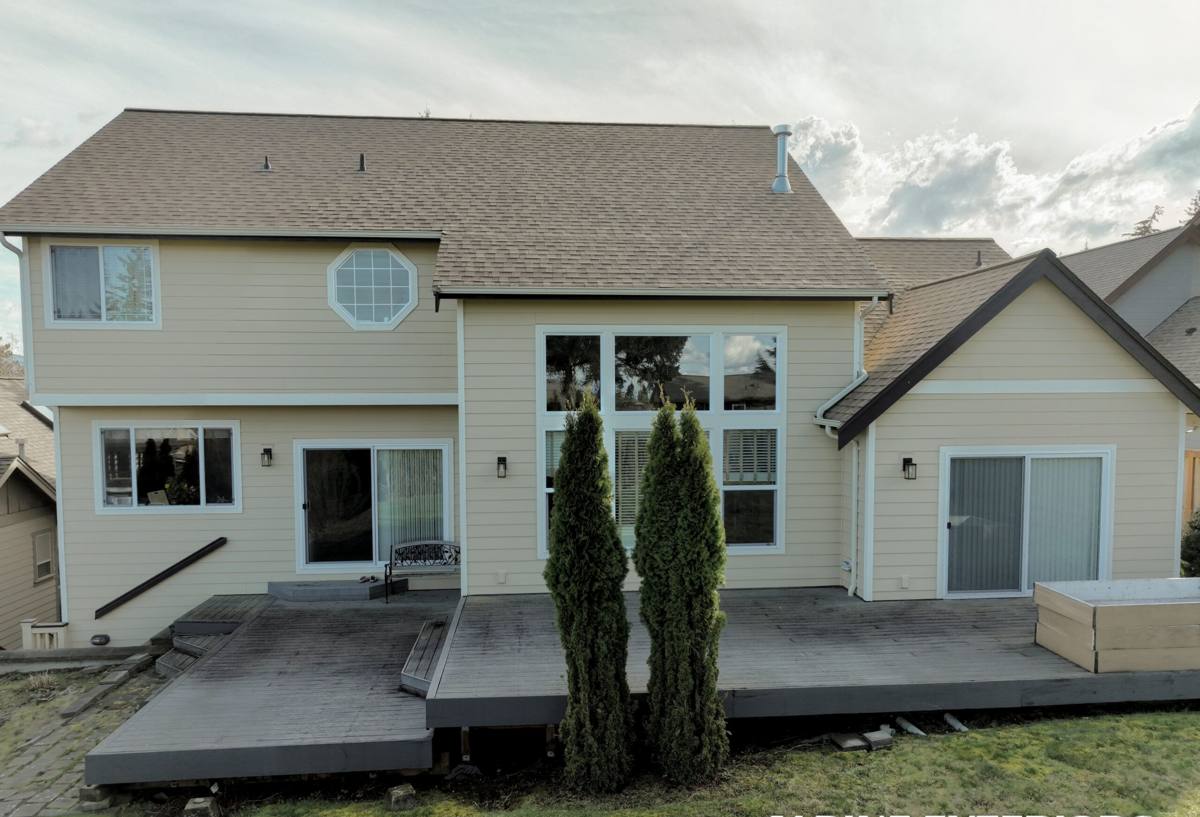
What Salt Air, Driving Rain, and Moss Season Actually Do to a Window
Salt Air
Airborne salt from Semiahmoo Bay and Drayton Harbor settles on exterior surfaces and accelerates corrosion on anything metal — hinges, cranks, locks, screws, and cheap aluminum spacers inside the glass unit itself. Once corrosion starts on hardware, windows get harder to open and close, and seals around moving parts wear unevenly. It's a slow process, but it's constant, and it doesn't stop at the coastline; homes set back from the water still get exposed on windy days.
Driving Rain
Rain that comes in sideways, which is common with the wind patterns through this part of the county, tests window flashing and sealant in a way vertical rain never does. Water gets pushed up and under trim, into nail fins, and behind siding if the flashing sequence wasn't done correctly. A window can look fine from inside for years while water is slowly working its way into the wall cavity around it.
Moss and Sustained Moisture
Shaded sides of a house, especially north- and west-facing walls common on Semiahmoo lots with tree cover, stay damp for long stretches through fall and winter. Moss and algae take hold on sills, trim, and anywhere water sits instead of shedding. Wood components that aren't properly sealed or clad start to soften from the outside in, often before it's visible from inside the house.
What a Correctly Installed Custom Window Involves
"Custom" doesn't just mean a non-standard size — though that matters on older Semiahmoo homes with openings that don't match today's stock sizing. It means the whole assembly is specified and installed for the actual conditions at your address. That includes:
- Frame material chosen for coastal exposure, not just budget or looks
- Correctly sequenced flashing — housewrap, flashing tape, and sill pan integrated so water sheds outward at every layer, never trapped behind the window
- Sealants and gaskets rated for UV and moisture cycling, not general-purpose caulk that hardens and cracks within a few seasons
- Corrosion-resistant fasteners and hardware, especially on anything within direct view of open water
- Glazing spec matched to the exposure — the right low-E coating and gas fill for a home that gets strong western light and cool marine air
- Proper shimming and squaring so the sash operates smoothly for years, not just on install day
Skip any one of these and the window might look right for a year or two before problems show up — usually as a soft spot in the siding around the frame, a sash that won't latch cleanly, or fogging between the panes that means the seal already failed.
Choosing the Right Frame Material for a Semiahmoo Site
There's no single "best" window material for every house — it depends on how close you are to the water, how much direct weather exposure a given wall gets, and what you're trying to match architecturally. Here's how the common options actually perform in this environment:
| Frame Material | Coastal / Salt Air Performance | Maintenance | Typical Trade-Offs |
|---|---|---|---|
| Vinyl | Good — won't corrode or rot, handles salt exposure well | Low | Limited color/profile options; can look generic on older homes |
| Fiberglass | Very good — dimensionally stable, resists moisture and UV well | Low | Higher upfront cost than vinyl |
| Aluminum-clad wood | Good on the exterior face if cladding is intact; wood core still needs the interior kept dry | Moderate | Interior wood offers a warmer look, but any cladding breach lets moisture reach the wood |
| Solid wood, unclad | Weakest in direct salt/rain exposure without diligent upkeep | High | Best traditional appearance, but we generally steer clients away from exposed wood on wind-facing walls here unless upkeep is a firm commitment |
Our default recommendation for anything facing open water or prevailing wind is vinyl or fiberglass. Where a homeowner wants the look of wood — common on older Semiahmoo-area homes — aluminum-clad wood on the exterior face is usually the right compromise, as long as the cladding and flashing details are done correctly at every seam.
Our Process, Start to Finish
1. On-Site Assessment
We look at the actual exposure of each wall — sun, wind, and proximity to water can vary a lot even across one house — plus the condition of the existing framing and sheathing behind the current windows before we spec anything.
2. Measuring and Spec
Older homes in this area often have openings that don't match modern standard sizes, which is where "custom" becomes necessary rather than a marketing word. We measure precisely and select frame material, glazing, and hardware based on that wall's exposure.
3. Removal and Inspection
Once the old window comes out, we check the framing and sheathing for hidden water damage — this is often the first real look anyone's had at that part of the wall in years, and it's common to find soft framing behind older, poorly flashed windows near the water.
4. Flashing and Installation
Sill pan, flashing tape, and housewrap integration happen in the correct order so water always has a path outward, never into the wall. This step is where most window failures near the coast actually originate, and it's the one step that's invisible once the trim goes back on.
5. Sealing, Trim, and Final Check
We seal, trim, and operate every window before we call the job done — checking that sashes latch cleanly and seals are continuous with no gaps.
Signs Your Current Windows Are Already Losing the Fight
If you're not sure whether it's time to look at replacement, these are the signs we see most often on Semiahmoo-area homes before an owner calls us:
- Fogging or a hazy look between the panes — the seal has failed and the gas fill is gone
- Hardware that's stiff, corroded, or won't latch fully closed
- Visible moss or dark staining building up on the sill or lower trim
- Soft or spongy trim/siding immediately around the frame
- A noticeable draft or cold spot near the window in winter wind
- Paint or finish peeling specifically around the window opening, not the wall generally
Any one of these is worth a look. Several together usually mean the flashing or seal has already been compromised for a while.
Cost Factors for Semiahmoo Window Projects
We don't quote firm numbers without seeing the job, but these are the main factors that move the price up or down on a coastal Whatcom County window project:
| Factor | Effect on Cost |
|---|---|
| Frame material (vinyl vs. fiberglass vs. clad wood) | Fiberglass and clad wood run higher than vinyl for comparable performance |
| Custom vs. standard sizing | Non-standard openings on older homes add fabrication time and cost |
| Number of windows replaced at once | Bundling openings in one project typically lowers per-window cost |
| Condition of existing framing/sheathing | Hidden water or rot damage found during removal adds repair cost before install |
| Wall exposure and flashing complexity | Direct wind/water-facing walls need more careful (and more time-intensive) flashing work |
| Glazing package (low-E, gas fill) | Higher-performance glazing costs more upfront, pays back in comfort and less condensation |
Why Local Experience in This Specific Area Matters
A window contractor who mostly works inland, sheltered neighborhoods will size up a Semiahmoo job the same way they'd size up any other — and that's exactly how salt-exposed installs end up failing early. Knowing which walls in this area actually take the worst of the wind and salt, which frame materials hold up and which don't, and how the local moss and moisture cycle affects trim and sealant over time isn't something you get from a spec sheet. It comes from doing the work here, on this coastline, repeatedly, and seeing what actually holds up five and ten years later versus what looked fine on install day.
We're a Whatcom County crew, based out of Custer, and Semiahmoo-area homes are a regular part of our work — not an occasional trip out to the water.
Get a Straight Answer on Your Windows
If you're dealing with fogged glass, stiff hardware, moss creeping up your trim, or you're just planning ahead for a home near the water, we'll come take a look and give you an honest read on what's actually going on — no pressure, no inflated scope. Use the form below to request a free estimate.