 Custer
 Why Sandy Point Roofs Age Differently Than Roofs Inland
Sandy Point sits right up against the water, and that changes what a roof has to survive year after year. Homes just a few miles inland in Whatcom County deal with plenty of rain, but they don't get the same steady dose of salt-laden wind coming off the strait. That salt air settles on shingles, flashing, fasteners, and gutters, and it doesn't wash off completely even in a hard rain. Combine that with the driving, wind-blown rain typical of shoreline exposure and a long, wet moss season, and you get a roof that ages on a different timeline than the same product would inland in Custer.
None of this means a roof at Sandy Point is doomed to fail early. It means the material choice, the flashing details, and the fastener hardware all need to be selected with that exposure in mind, and the installation needs to be done correctly the first time. A roof that's a good fit for a sheltered lot a mile inland isn't automatically the right call for a home facing open water.
What Salt Air, Rain, and Moss Actually Do to a Roof
Corrosion at the Small Details
Roofs rarely fail because the shingle field wears out evenly. They fail at the details — nail heads, flashing seams, gutter fasteners, vent boots. Salt air accelerates corrosion at exactly those points. Once a fastener starts to corrode, it loses holding power, and once flashing starts to pit or thin, water finds a way behind it. This is a slow process, which is why it's easy to miss until it's already caused damage underneath.
Moss and Trapped Moisture
Whatcom County's long wet season gives moss plenty of time to establish itself, and shaded, north-facing, or low-slope sections of a roof are especially prone to it. Moss holds moisture against the roofing material far longer than open air would, which softens shingles, promotes granule loss, and can lift shingle edges enough for wind-driven rain to get underneath. Left long enough, moss doesn't just sit on top of a roof — it starts to work its way into the layer beneath it.
Driving Rain and Wind Uplift
A shoreline lot sees more sustained wind than a sheltered one, and wind-driven rain can push water uphill under shingle edges that would stay dry in calmer conditions. That makes proper shingle sealing, ridge and hip detailing, and starter course installation more important here than on a typical inland roof.
Signs a Sandy Point Roof Needs Replacement, Not Just a Repair
Not every roofing problem calls for a full replacement. But there are signs that point to a roof reaching the end of its useful life rather than needing a spot fix:
- Granule loss heavy enough that you're finding grit in gutters and downspouts every season
- Shingles that are curling, cupping, or losing their seal at multiple points across the roof, not just one section
- Moss that keeps returning to the same areas within a year of cleaning, which usually means the mat underneath is already compromised
- Soft spots in the decking felt from the attic side, or daylight visible at eaves and valleys
- Rusted or heavily pitted flashing, especially around chimneys, skylights, and roof-to-wall transitions
- A roof that's approaching or past the upper end of its expected service life for its material type in this climate
If a roof shows one or two of these in isolation, a repair can often buy real time. If several show up together, that's usually the roof telling you it's past patching.
Choosing a Roofing System for a Shoreline Home
Material choice matters more here than it does a few miles inland. The table below reflects general trade knowledge about how common roofing types tend to perform under salt exposure, moss pressure, and driving rain — not brand claims.
| Roofing Material | Typical Lifespan | Moss/Moisture Behavior | Salt-Air Performance | Relative Cost |
|---|---|---|---|---|
| 3-tab asphalt shingle | 15-20 years | More prone to moss retention; thinner mat | Standard fasteners can corrode faster near salt exposure | Lowest |
| Architectural laminate shingle | 25-30 years | Better shedding, still needs moss management | Performs well with corrosion-resistant fastener upgrades | Moderate |
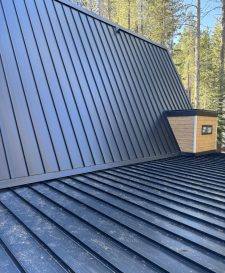
| Standing seam metal | 40-50+ years | Sheds moss-forming debris well; low organic growth | Coated/coastal-rated panels resist salt corrosion better than uncoated fasteners | Highest |
| Cedar shake/shingle | 20-30 years with upkeep | High moisture retention risk without diligent upkeep | Salt air adds to weathering; needs more frequent maintenance | High |
We don't push one material as universally "best." A well-installed architectural laminate shingle with the right underlayment and fastener package is a solid, cost-effective choice for most Sandy Point homes. Metal earns its higher upfront cost back over time through lower maintenance and longer service life, which matters more on a home that takes the full brunt of shoreline weather. Cedar can look great, but it asks more of the homeowner in ongoing upkeep in a climate this wet, and we're upfront about that trade-off before anyone commits to it.
What a Correct Roof Replacement Involves Here
Tear-Off and Deck Inspection
A proper replacement starts with full tear-off, not a layover. That's the only way to actually see the decking, check for soft or rotted sheathing, and confirm the roof structure is sound before anything new goes down. In a moisture-heavy climate like this one, skipping that inspection is how hidden rot gets sealed under a new roof instead of fixed.
Underlayment and Flashing Built for This Exposure
Given the rain and wind here, self-adhering underlayment at eaves, valleys, and other vulnerable transitions isn't optional — it's the backup layer that protects the deck if wind-driven water ever gets past the shingle field. Flashing at chimneys, skylights, and wall intersections gets rebuilt or replaced as part of the job, not just re-caulked, and fastener hardware is selected with corrosion resistance in mind rather than whatever is cheapest.
Ventilation
A roof that can't breathe traps moisture in the attic, which shortens the life of the decking and the shingles from underneath. Balanced intake and exhaust ventilation is part of a correct replacement, not an afterthought, especially on a home dealing with this much ambient moisture.
How Our Process Works
- On-site assessment — we walk the roof and the attic, note deck condition, ventilation, flashing points, and moss pressure, and take measurements.
- Written proposal — a clear scope covering material, underlayment, flashing, ventilation, and cleanup, with pricing broken out so you know what you're paying for.
- Scheduling around weather — we plan the tear-off and dry-in around forecasted rain windows so your home isn't left exposed longer than necessary.
- Tear-off and deck repair — old roofing comes off, decking gets inspected, and any rotted sheathing is replaced before anything new is installed.
- Installation — underlayment, flashing, and roofing material go on per manufacturer specification and the coastal-exposure details covered above.
- Cleanup and walkthrough — site is cleared of debris and nails, and we walk the finished roof with you before calling the job done.
Why Hiring a Crew That Already Works Sandy Point Matters
A roofing crew that hasn't worked shoreline properties before will often default to standard inland specs — standard fasteners, standard underlayment coverage, standard ventilation assumptions. On a Sandy Point roof, that's how you end up with premature fastener corrosion or moss returning within a season. A crew that already works this area knows to upgrade fastener hardware, extend underlayment coverage at vulnerable points, and account for wind exposure in how shingles are laid and sealed.
There's also a practical side to it: knowing how weather windows tend to move through this part of Whatcom County, understanding typical permitting steps for the area, and having a track record of return visits if anything needs adjustment after the first real storm season. That local familiarity isn't a marketing line — it's the difference between a roof that's built for where it sits and one that's just built to a generic spec.
What Drives Roof Replacement Cost at Sandy Point
| Cost Factor | Why It Matters |
|---|---|
| Roof pitch and complexity | Steeper or more cut-up rooflines take more labor time and more flashing detail work |
| Number of existing layers | Multiple layers of old roofing mean more tear-off labor and disposal cost |
| Decking condition | Rotted or soft sheathing found during tear-off adds material and labor to replace it |
| Material selection | Asphalt, metal, and cedar carry different material and labor costs, as shown above |
| Access and site conditions | Shoreline lots with limited staging space or difficult access can add setup time |
| Ventilation and flashing upgrades | Correcting inadequate ventilation or outdated flashing adds scope but reduces future problems |
We give a straight number after seeing the actual roof, not a guess over the phone. Anything found once tear-off starts — hidden rot, undersized ventilation, deteriorated flashing — gets flagged before we proceed, not added as a surprise on the final invoice.
Protecting a New Roof in This Climate
A correctly installed roof still benefits from a little seasonal attention, especially this close to the water. These are the basics worth staying on top of:
- Clear moss and debris from valleys and low-slope sections before it has a chance to establish
- Keep gutters and downspouts clear so water isn't backing up under the eaves
- Trim back overhanging branches that shade the roof and keep it damp longer than it needs to be
- Have flashing points checked periodically, especially after a hard windstorm
- Confirm attic ventilation isn't blocked by insulation or debris
- Rinse accumulated salt film off metal flashing and gutters during drier stretches when possible
None of this requires a maintenance contract or constant attention — just a seasonal check so small issues get caught before they become roof-replacement issues again.
If your roof is showing wear, or you just want an honest read on how much life it has left, we're glad to take a look. Estimates are free, there's no pressure attached, and you'll get a clear answer about what your roof actually needs — use the form below to get started.