 Custer
 Why Sandy Point Windows Wear Out Faster Than Inland Homes
Sandy Point sits close enough to the water that its homes take a different kind of weather beating than a house a few miles inland in Custer or elsewhere in Whatcom County. Salt-laden air moves through the neighborhood most of the year, driving rain comes in sideways during winter storms off the Strait, and the shaded, damp stretches of the year hand the whole area a long moss season that coats roofs, trim, and window sills alike. None of that is dramatic on its own, but it adds up on a window over ten or fifteen years — corroding hardware, breaking down seals, and giving moss and algae a foothold on sills and frames that never fully dry out between rain events.
We bring this up first because it changes what "custom windows" should mean for a Sandy Point property. A window that performs fine in a dry, sheltered lot somewhere else in the county can struggle here if it wasn't selected and installed with salt air and sustained moisture in mind. This page is about what that actually looks like in practice.
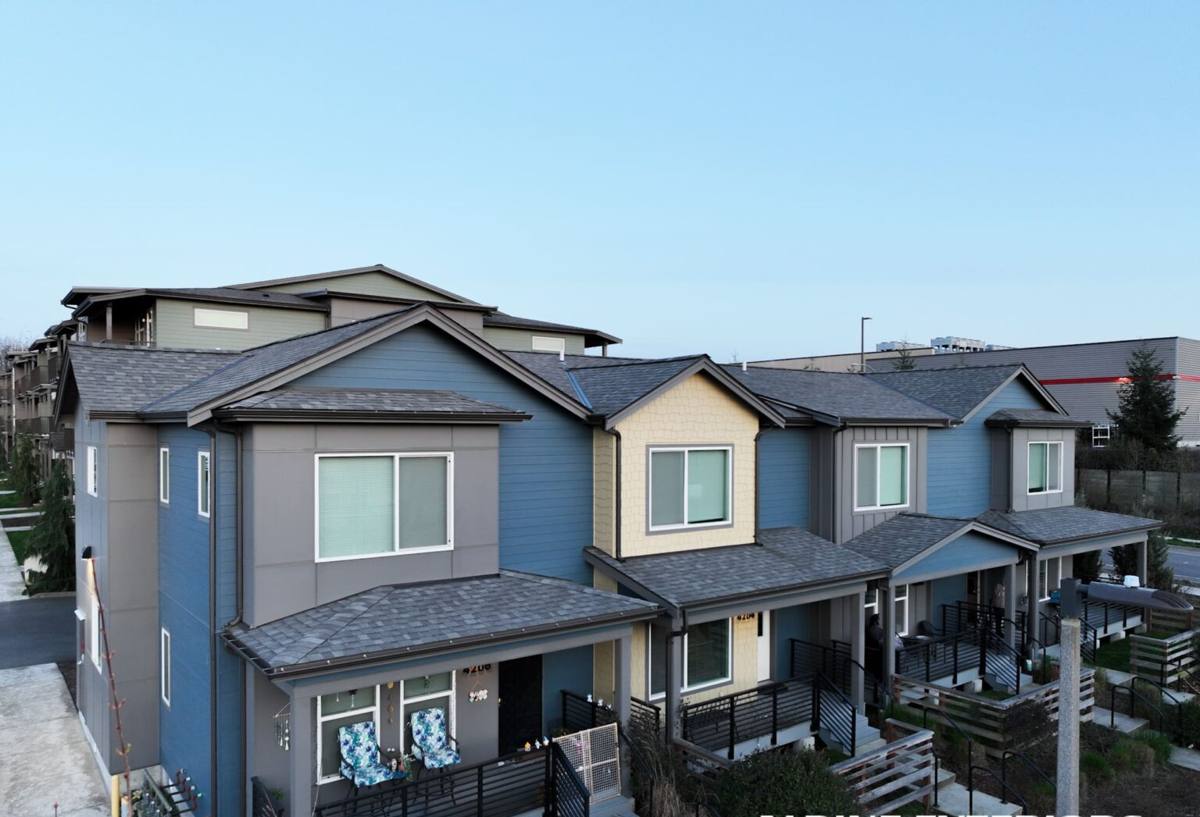
What Custom Windows Should Solve for a Sandy Point Home
"Custom" doesn't just mean a nonstandard size or a shape that isn't off-the-shelf. For homes in this area it usually means matching the window to three things at once: the opening it's going into, the direction that opening faces relative to wind and rain, and the age and construction of the wall around it. Get any of those wrong and you end up with a window that looks right but underperforms.
Exposure Matters More Than the Compass Direction Alone
Two windows on the same house, facing different directions, can need different glass packages, different frame reinforcement, or different flashing details depending on how much driving rain and wind they actually take. A window tucked under a deep eave doesn't need the same water-management detailing as one on an exposed gable end catching weather straight off the water. We look at the specific wall, not just the general climate, before recommending anything.
Matching Openings in Older Framing
A lot of homes in and around Sandy Point were built decades ago, and rough openings from that era are rarely true or square by today's standards. Custom windows let us size to the actual opening instead of forcing a stock size into a wall that's shifted or settled, which matters a great deal for how well the finished window seals against wind-driven rain.
The Part That Actually Determines Whether a Window Fails: Installation Detail
The window unit itself gets most of the attention, but in a wet, salty environment the installation details are what decide whether that window is still performing well in fifteen years or leaking and staining the wall inside five.
Flashing and Water Management
Every opening gets a sill pan and properly lapped flashing so that any water that gets past the exterior trim — and some always will, eventually, in this climate — drains back out instead of sitting against the framing. This is the single most common point of failure we find on older Sandy Point windows: missing or improperly lapped flashing that let years of driving rain work its way into the wall cavity slowly, long before anyone noticed a problem inside.
Sealants and Caulking Choices
Not every exterior sealant holds up to constant salt air and UV exposure. We use products rated for marine or coastal exposure where it matters, and we don't rely on caulking alone to do a flashing detail's job — caulk is the backup, not the primary defense, on a house exposed the way Sandy Point homes are.
Fastening and Hardware
Cheaper fasteners and hardware corrode faster in salt air, which shows up first as rust streaks and stuck locks or cranks. We use corrosion-resistant fasteners and hardware rated for coastal exposure, because replacing a window's hardware in year six is a preventable expense.
Frame Material: What Holds Up Near Salt Air and What Doesn't
Every frame material has real trade-offs in this environment. None of them are "bad" — they're just better or worse fits depending on your budget, your home's style, and how much maintenance you're willing to keep up with.
| Frame Material | How It Handles Salt Air & Moisture | Maintenance | General Trade-Off |
|---|---|---|---|
| Vinyl | Won't corrode or rot; performs well long-term | Low — occasional washing | Budget-friendly, fewer color/finish options |
| Fiberglass | Very stable in temperature and moisture swings | Low | Higher upfront cost, excellent longevity |
| Wood-clad | Good if the cladding and seals are intact; wood core needs protection from moisture intrusion | Moderate to high | Best interior appearance, more install-sensitivity |
| Aluminum | Prone to corrosion and condensation in this climate unless thermally broken and coastal-rated | Moderate | Slim sightlines, needs the right spec for this area |
For most Sandy Point homes we lean toward vinyl or fiberglass for straightforward performance, but wood-clad windows are a reasonable choice on homes where the interior look matters most, as long as the installation and flashing details are done right — which circles back to the point above. We don't push one material as universally correct; we talk through what fits your specific house and budget.
Problems We See Most Often on Sandy Point Homes
- Moss and algae buildup on sills and bottom rails that never get enough sun or airflow to dry out fully
- Corroded or seized hardware — locks, cranks, and hinges — from long-term salt air exposure
- Condensation or fogging between panes, a sign the seal on an older insulated glass unit has failed
- Soft or discolored trim and framing around older windows where flashing was missing or inadequate
- Drafts and water staining below windows that face the prevailing wind and rain direction
Most of these are gradual — nothing that shows up as an emergency, which is exactly why they tend to go unaddressed until a window needs full replacement instead of a simpler fix.
Our Process for a Sandy Point Window Job
- On-site assessment — we look at each opening, the wall assembly behind it, and the specific exposure that section of the house takes
- Product recommendation — frame material, glass package, and sizing based on that exposure and your budget, not a one-size answer
- Proper removal — old units come out carefully so we can inspect the framing and sheathing underneath before anything goes back in
- Repair as needed — any soft framing, moisture damage, or missing flashing from the original install gets addressed before the new window goes in, not covered over
- Installation with full flashing and sealing detail — sill pan, flashing, corrosion-resistant fasteners, and coastal-rated sealant
- Final check — operation, seal, and trim finish confirmed before we consider the job done
Skipping step four is how a lot of window problems in this area get built right back into a brand-new installation. We'd rather find and fix an issue at the framing stage than have you call us about a stain on the wall two years later.
Keeping Custom Windows Performing After Install
- Rinse salt residue and grime off frames and glass a couple times a year, more often on the sides facing prevailing wind
- Clear moss and debris from sills and tracks before it holds moisture against the frame
- Check and lightly lubricate hardware — locks, cranks, hinges — annually so salt air doesn't seize them up
- Inspect exterior caulking each fall before the wet season sets in, and have any cracked sections redone
- Watch for condensation between panes on older units, which signals a failed seal rather than a cleaning issue
Why a Crew That Already Works This Neighborhood Matters
Custer isn't a huge area, but conditions vary block by block depending on how exposed a lot is to wind and water. A crew that's already done window work on other Sandy Point homes has a working sense of which exposures need extra flashing attention, which older homes tend to have framing issues behind the trim, and what actually holds up here versus what looks good in a showroom but struggles after a few winters. That's not something you get from a general product catalog — it comes from doing the work in this specific place, on this specific coastline, repeatedly.
It also matters for permitting and code compliance in Whatcom County, since window replacement can trigger requirements around egress, flashing, and energy code depending on the scope of the job. A local crew already knows what's expected and builds it into the plan instead of discovering it partway through.
What Affects the Cost of a Custom Window Project
| Factor | Why It Moves the Price |
|---|---|
| Frame material | Vinyl is generally the most affordable; fiberglass and wood-clad cost more upfront |
| Number and size of openings | More or larger windows mean more material and labor |
| Framing condition | Hidden moisture damage found during removal adds repair work before install |
| Exposure and flashing complexity | Highly exposed walls need more detailed water-management work |
| Glass package | Upgraded glazing for sound, energy performance, or condensation resistance adds cost |
We don't quote a job sight unseen, because the framing condition behind an old window is often the biggest variable — and that's something we'd rather find during a visit than guess at over the phone.
If you're weighing custom windows for a Sandy Point home, we're glad to come take a look and give you a straightforward, no-pressure estimate — including what we see behind the trim, not just a number for the units themselves. Use the form below to get started.