 Custer
 Building a Deck That Actually Holds Up on Point Roberts
Point Roberts sits on a small peninsula that pokes south from the Canadian mainland, cut off from the rest of Whatcom County by an international border. It's surrounded on three sides by the Strait of Georgia and Boundary Bay, which means almost every deck out here is built within a stone's throw of open water and full marine exposure. That's a great setting for outdoor living — and a demanding one for the deck itself. Salt-laden air, driving rain off the water, and a moss season that runs most of the year all work against untreated wood, unprotected fasteners, and sloppy structural details in a way that a drier, more sheltered inland property never has to deal with.
We build and repair decks throughout Whatcom County, and Point Roberts specifically calls for decisions most contractors don't think about until something's already failing — fastener grade, ledger flashing, drainage under the deck surface, and how the structure handles wind coming straight off the water. None of that is exotic or expensive to get right the first time. It just has to be treated as standard practice, not an upsell.
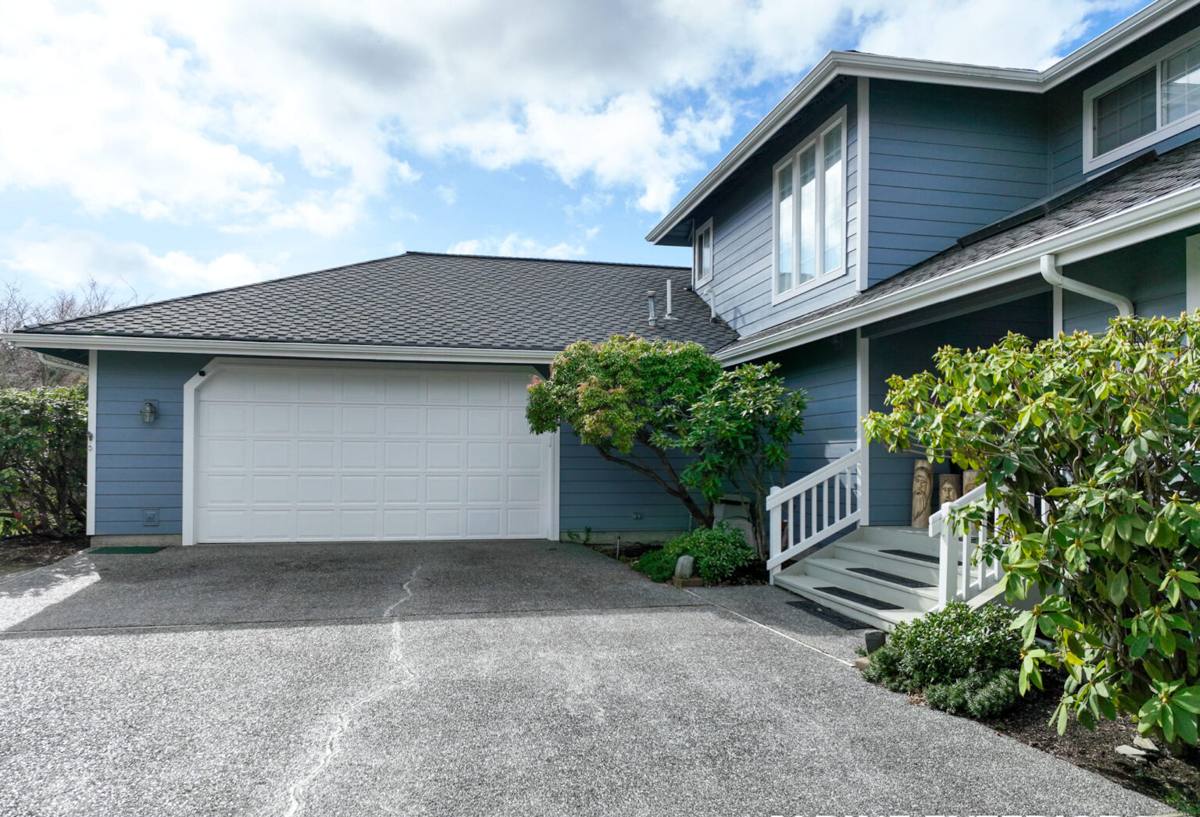
What Salt Air and Driving Rain Do to a Deck
Fastener and Hardware Corrosion
Standard-grade screws, nails, and joist hangers corrode faster out here than almost anywhere else in the county. Salt in the air settles on exposed metal even when the deck isn't directly waterfront, and once a fastener starts rusting it loses holding strength long before it looks obviously bad. A deck can look solid on the surface while the hardware holding it together is quietly weakening underneath.
Ledger Board and Water Intrusion
The ledger board — where the deck attaches to the house — is the single most common failure point on any deck, and driving rain off the water makes it worse here. Water pushed sideways by wind finds its way behind a ledger that wasn't flashed correctly, and from there it travels into the rim joist and wall framing where nobody sees it until there's rot or a soft spot in the siding above.
Moss and Surface Growth
Long stretches of damp weather and mild temperatures give moss and algae plenty of time to take hold on deck boards, especially on shaded sides of the house or under overhangs where the surface doesn't dry out between rains. Beyond looking bad, a mossy deck surface gets slick and holds moisture against the boards longer, which shortens the life of both wood and lower-grade composite decking.
Wind Exposure
Being surrounded by water on three sides, Point Roberts properties often see more direct wind than a comparable inland Whatcom County lot. That matters for railing attachment, post connections, and how a raised deck's structure is braced — a deck built to a bare-minimum spec can develop movement or loosened connections over time that a properly braced structure won't.
Choosing the Right Decking Material for This Environment
There's no single "correct" decking material for every homeowner — it comes down to budget, maintenance appetite, and how much the moss and moisture issue bothers you. Here's how the common options actually compare in a marine climate like this one:
| Material | Moisture / Moss Resistance | Maintenance | Typical Lifespan Here |
|---|---|---|---|
| Pressure-treated wood | Fair — needs sealing to perform | Annual cleaning and periodic re-sealing | 10–15 years with upkeep |
| Cedar | Good natural resistance, but surface still grows moss if shaded | Regular cleaning, occasional oil/stain | 15–20 years with upkeep |
| Composite decking | Very good — doesn't rot, but can still grow surface moss/mildew | Periodic washing, no sealing needed | 25+ years |
| PVC/capped decking | Best — fully moisture-sealed board | Occasional washing only | 25+ years |
Composite and PVC decking cost more up front, but for a property that sits in near-constant marine moisture, the reduced maintenance and rot risk usually make up the difference over the life of the deck. Wood is still a reasonable choice for homeowners who want that look and are willing to keep up with sealing and cleaning — we're honest about that trade-off rather than pushing one product as the only right answer.
Fastener and Hardware Standard
Whatever decking material is chosen, we specify hot-dip galvanized or stainless steel fasteners and structural hardware on every Point Roberts deck as standard practice. Standard zinc-coated hardware is rated for general use, not sustained marine exposure, and it shows corrosion within a few years out here. The cost difference between grades is small relative to the labor involved in a deck rebuild.
The Structural Details That Actually Matter
- Ledger flashing: Properly lapped flashing that directs water out and away from the ledger-to-house connection, not caulk used as a substitute for it.
- Post bases and footings: Posts set on proper metal post bases above grade, not buried directly in concrete or soil where they stay wet.
- Joist hangers: Corrosion-resistant hangers rated for the actual load, installed with the correct fastener type for that hanger — mixing hardware grades defeats the purpose.
- Board spacing and drainage: Consistent gapping between boards so water sheds through rather than sitting on the surface, plus attention to how water drains under a raised deck.
- Railing attachment: Structural blocking behind railing posts so they don't loosen under wind load or regular use over time.
Permits, Setbacks, and Building to Code
Point Roberts falls under Whatcom County's building and permitting jurisdiction even though it's physically separated from the rest of the county, and deck construction generally requires a permit once it exceeds a certain height or size — the exact threshold and setback requirements depend on the specific property and its zoning. We handle the permit process as part of the job rather than leaving homeowners to figure out county requirements on their own, and we build to the structural code requirements for railing height, guard spacing, and stair geometry regardless of whether a given project happens to fall under the permit threshold.
Why Hiring a Crew That Already Works Point Roberts Matters
Point Roberts is a genuine exclave — there's no direct road connection to the rest of Whatcom County or Washington State. Getting a crew and a load of lumber, decking, and hardware onto the peninsula means routing through Canada by land, or arriving by boat or small plane. That's not a complaint about the place — it's a real logistical fact that changes how a job needs to be planned. A contractor who doesn't already work here regularly has to account for border crossing time for crew and equipment, customs paperwork for material deliveries, and the risk of delays that can stall a job for days.
A crew that already builds decks on Point Roberts on a regular basis has that logistics figured out — material orders timed correctly, crossing routines that don't eat half the workday, and a working knowledge of how the county's permitting applies to this specific area. That translates into fewer surprise delays and a more accurate schedule from the start, which matters more here than it would on a mainland job a few miles down the road.
Our Deck Building Process
We start with an on-site look at the property — where the deck will attach to the house, sun and shade exposure, wind exposure given the water on three sides, and any existing structure if this is a rebuild rather than new construction. From there we walk through decking material options and their real trade-offs, handle the permit application where one's required, and give a written scope before any work begins. Ledger flashing, corrosion-resistant hardware, and proper drainage detailing are built into every deck we frame — not offered as optional upgrades.
On the framing itself, we take the extra time on the connections that don't show once the decking is down: ledger attachment, post bases, and joist hangers. Those are the details that determine whether a deck is still solid in fifteen years or starting to show problems in five, and they're much cheaper to get right the first time than to open back up later.
A Checklist Before Hiring for Deck Work on Point Roberts
- Ask specifically how they flash the ledger board connection, not just what decking brand they install
- Confirm they specify galvanized or stainless fasteners and hardware, not standard zinc-coated hardware
- Confirm current Washington contractor licensing and active liability insurance
- Ask whether they already work on Point Roberts regularly, and how they plan for crew and material logistics
- Get a written scope that covers permit handling if the project requires one
- Ask how they'll handle drainage under the deck if it's a raised structure
If you're planning a new deck, replacing an aging one, or dealing with a deck on your Point Roberts property that's showing rust, soft spots, or moss buildup, we're happy to take a look and give an honest, no-pressure assessment. Reach out below for a free estimate.