 Custer
 Nooksack Weather Doesn't Go Easy on a Roof
If you live in or around Nooksack, you already know your roof works harder than roofs in drier parts of the state. Whatcom County sits close enough to the water that salt-laden air moves inland on a regular basis, and it settles on every exposed surface of a house, including the roof. Add to that the region's driving rain — the kind that comes in sideways during a winter system, not just straight down — and you have moisture finding its way into every gap, lap, and fastener hole a roof has. Then there's the moss. Between the shade from mature trees, the humidity, and a wet season that stretches for months, moss has plenty of time to take hold on any roofing material that gives it a foothold.
None of this is unusual for the area — it's just what a roof here has to deal with, year after year. The question isn't whether your roof will face salt air, hard rain, and moss pressure. It's whether the roofing system and the installation underneath it were built to handle all three at once.
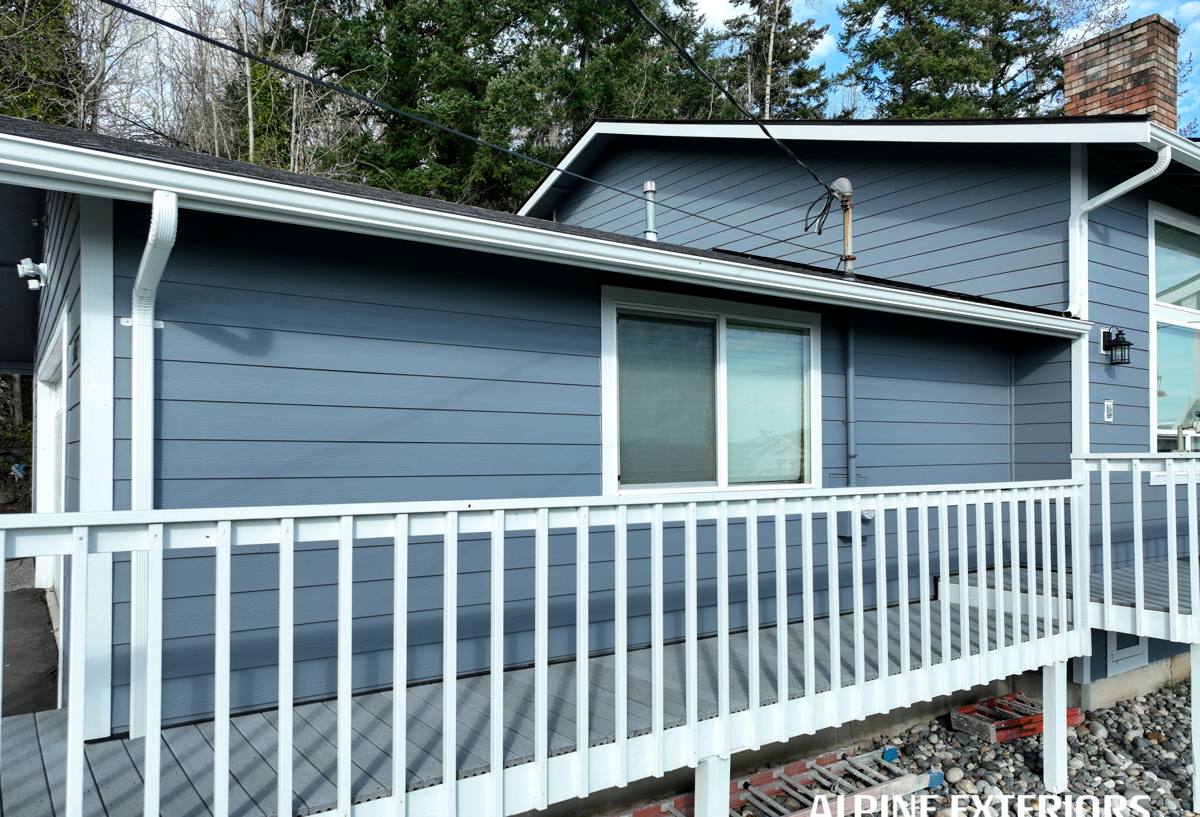
Why Metal Roofing Holds Up Better in This Climate
Metal roofing earns its reputation in exactly these conditions. A properly coated steel or aluminum panel sheds water fast because of its steep-sided profile and tight seams, which means less standing moisture sitting on the surface where moss spores can settle in. The smooth, hard surface also gives moss and lichen far less to grip onto compared to the granular texture of asphalt shingles, so a metal roof generally needs less aggressive cleaning to stay clear.
Modern coatings — baked-on paint systems over galvanized steel, Galvalume, or aluminum — are formulated to resist the kind of corrosion that salt air can accelerate on unprotected metal. That matters here in a way it wouldn't in an inland, dry climate. A well-specified panel and coating combination, installed correctly, is built to go decades without needing anything more than routine upkeep, and most manufacturers back that with meaningful material warranties.
Wind resistance is another factor worth mentioning. Winter storms moving through Whatcom County can bring sustained wind and gusts strong enough to lift poorly fastened roofing. A correctly installed metal roof, with the right fastener pattern or concealed clip system, handles uplift far better than roofing that depends on adhesive strips and gravity to stay put.
Choosing the Right Metal Roofing System
Standing Seam vs. Exposed Fastener
Not all metal roofing is built the same way, and the choice matters more in a wet, salty climate than it would somewhere drier. The two systems homeowners in this area typically weigh against each other are standing seam and exposed-fastener (sometimes called corrugated or ag-panel) roofing.
| Factor | Standing Seam | Exposed Fastener |
|---|---|---|
| How panels attach | Hidden clips under raised seams — no exposed screws | Screws driven through the panel face, with washers |
| Weather-tightness in driving rain | Very high — seams interlock and shed wind-driven water | Good, but relies on washer seals that can wear over time |
| Long-term maintenance | Minimal — no fasteners to re-check | Fastener washers should be inspected periodically |
| Typical upfront cost | Higher | Lower |
| Best fit | Primary roofs, homes near the coast, low-slope sections | Outbuildings, budget-driven projects, steeper simple gables |
Our standard recommendation for a primary home roof in this area is standing seam, mainly because it removes the long-term maintenance item of aging fastener washers — something that matters more here, where salt exposure and constant moisture shorten the service life of rubber and neoprene seals faster than they would in a dry climate. Exposed-fastener panel systems are still a legitimate, cost-effective option, particularly for detached shops, garages, and simpler roof shapes, as long as the washers get checked periodically.
What a Correct Metal Roofing Installation Actually Involves
Metal roofing is unforgiving of shortcuts in a way that's easy to miss until years later, when a leak shows up somewhere that looks unrelated to the actual failure point. A correct installation is built in layers, and every layer has a job to do.
Underlayment goes down first, over a sound, dry deck. In this climate we use synthetic underlayment rather than old-style felt, because it holds up better to the extended damp periods a roof can sit through during installation and over its service life. At eaves, valleys, and any low-slope transitions, a self-adhered ice-and-water membrane goes down as extra insurance against wind-driven rain working backward under the panels.
Flashing details are where most long-term leaks start if they're rushed. Every penetration — vent stacks, chimneys, skylights — and every valley, wall transition, and ridge needs custom-formed flashing that ties into the panel system correctly, not a generic piece bent to "close enough." Fastening matters too: standing seam clips need to be spaced and fastened to the manufacturer's specification so the panels can expand and contract with temperature changes without buckling, and exposed-fastener screws need to be driven straight and to the correct depth — overdriven crushes the washer seal, underdriven leaves a gap.
Ventilation is the part that's easy to overlook. A metal roof that traps warm, moist attic air against the underside of cold panels will produce condensation, which causes rot and mold from the inside even when the exterior installation is flawless. Ridge and soffit ventilation sized correctly for the attic space keeps that from happening.
One detail specific to a salt-air environment: dissimilar metals in contact with each other can set off galvanic corrosion — for example, using the wrong fastener alloy against a panel, or letting copper flashing touch galvanized steel. It's a small thing that's cheap to get right during installation and expensive to fix once it's caused staining or pitting.
- Solid, dry decking with any soft or damaged sections replaced before underlayment goes down
- Synthetic underlayment rated for extended moisture exposure
- Self-adhered ice-and-water membrane at eaves, valleys, and low-slope areas
- Custom-formed flashing at every penetration, valley, and wall transition
- Fasteners and clips matched to the panel manufacturer's spec, at the correct spacing
- Compatible metals throughout — no mismatched fasteners or flashing that can trigger corrosion
- Ridge and soffit ventilation sized for the attic volume
- Room left in the fastening system for thermal expansion and contraction
Where We See Roofs Go Wrong
Most of the metal roofing problems we get called out to look at trace back to one of a handful of shortcuts, not a bad panel. Screws driven at an angle or overtightened crush the washer and create a slow leak that doesn't show up inside the house for a season or two. Underlayment skipped or doubled up incorrectly at valleys leaves exactly the spot where water concentrates the most exposed. Flashing bent on-site from a generic trim coil, rather than formed for the specific detail, tends to rely on caulk to do a job it was never meant to do alone — and caulk is a maintenance item, not a permanent fix.
We also see roofs where ventilation was an afterthought, which is a bigger problem in this climate than in a dry one, because the extended damp season gives condensation more time to do damage before anyone notices. None of these are reasons to avoid metal roofing — they're reasons to be selective about who installs it. The material itself is well suited to Whatcom County weather; the failures we see are almost always installation issues, not product issues.
Our Process, Start to Finish
How a Project Runs
- Site walk and roof assessment — we look at the existing roof, deck condition, ventilation, and any problem areas before recommending a system.
- Measurement and material selection — panel profile, gauge, and coating are chosen based on the roof's slope, exposure, and your budget.
- Tear-off and deck prep — old roofing comes off, the deck gets inspected, and any soft or damaged sheathing is replaced.
- Underlayment and flashing — synthetic underlayment, ice-and-water membrane at vulnerable areas, and custom-formed flashing go in before a single panel is set.
- Panel installation — panels are set, fastened or clipped to spec, with attention to expansion room and clean, straight lines.
- Trim, ridge, and finish details — ridge caps, rake trim, and penetration flashing are finished out and sealed correctly.
- Cleanup and walkthrough — job site cleared of debris and fasteners, and we walk the finished roof with you.
- Warranty documentation — manufacturer material warranty and our workmanship coverage are provided in writing.
We don't skip steps to shave time off a schedule, and we don't sub out the flashing work to whoever's available — those details are where a roof's performance over the next few decades actually gets decided.
What Affects Cost
Metal roofing costs more upfront than asphalt shingles, and the exact number depends on several factors specific to your roof, not just square footage. We'll always give you a written estimate before any work starts, but here's what typically moves the number:
| Factor | Why It Matters |
|---|---|
| Panel system (standing seam vs. exposed fastener) | Standing seam costs more in material and labor but needs less long-term maintenance |
| Roof pitch and complexity | Steep roofs, multiple valleys, and dormers all add labor time and flashing work |
| Tear-off vs. overlay | Removing old roofing and inspecting the deck adds cost but is usually the right call on an older roof |
| Deck repairs | Rotted or soft sheathing found during tear-off needs to be replaced before installation |
| Coating and gauge | Heavier gauge steel and premium coatings cost more but extend service life, especially in salt air |
| Access and site conditions | Steep lots, limited driveway access, or tall roofs affect staging and labor time |
As a general rule, metal roofing is a long-term investment: higher cost per square foot than asphalt, offset by a service life that's typically double or more, and less exposure to the moss-related maintenance costs that asphalt roofs accumulate over time in this climate.
Keeping a Metal Roof Ahead of Moss Season
A metal roof needs far less maintenance than shingles, but "far less" isn't "none." A little attention once or twice a year keeps it performing the way it's supposed to for decades.
- Keep gutters and valleys clear of needles and leaf debris so water has a clean path off the roof
- Watch for moss or algae starting in shaded, north-facing sections and treat it early, before it spreads
- Trim back tree branches that keep sections of the roof shaded and damp longer than the rest
- Do a visual check of fasteners, flashing, and sealant after major storms
- Schedule a walk-through inspection every year or two, especially heading into the wet season
Catching a small issue — a loosening fastener, a bit of moss gaining a foothold in a shaded valley — during a routine check is far cheaper than dealing with the water damage that follows if it's ignored for a few winters.
Why Hire a Crew That Already Works in Nooksack
A lot of what makes a metal roof perform well here comes down to decisions that aren't obvious unless you're used to building in this specific climate — how much ice-and-water membrane a given roof actually needs, which coating holds up best with the salt exposure this area sees, how to detail ventilation on an older Whatcom County home that wasn't built with modern airflow in mind. A crew that works Nooksack and the surrounding area regularly has already made those calls dozens of times and knows what actually holds up here versus what looks fine on paper.
There's also a practical side to hiring local: a shorter distance means faster response if you need someone out to look at something, and a contractor with an ongoing presence in the community has a reputation here worth protecting — not just a one-time job to finish and move on from.
If you're weighing a metal roof for your Nooksack home, we're happy to walk the roof with you, talk through panel options, and give you a straightforward, no-pressure estimate. Use the form below to get started.