 Custer
 Why Nooksack Roofs Wear Differently Than Roofs Inland
Nooksack sits in a part of Whatcom County that gets the full range of what Pacific Northwest weather can do to a roof. Storms roll in off the water with driving, wind-pushed rain that doesn't just fall straight down — it finds its way up under shingle tabs, into open valleys, and around flashing that's even slightly out of spec. Add in salt-carrying air moving inland from the Custer area and the coast, and you've got a combination that accelerates corrosion on fasteners, flashing, and any exposed metal that isn't rated for it. Then there's moss. Whatcom County's mild, damp climate keeps roofs wet longer than drier regions, and shaded, north-facing slopes around Nooksack can stay damp for months at a stretch. That's exactly the environment moss needs to take hold.
None of this means a roof in Nooksack has to fail early. It means the installation has to account for these conditions from the start — material selection, fastener choice, underlayment, and ventilation all matter more here than they would in a dry climate. A roof that's installed to a generic national standard, without adjustment for local conditions, is the one that shows moss streaking, soft decking, or granule loss years before it should.
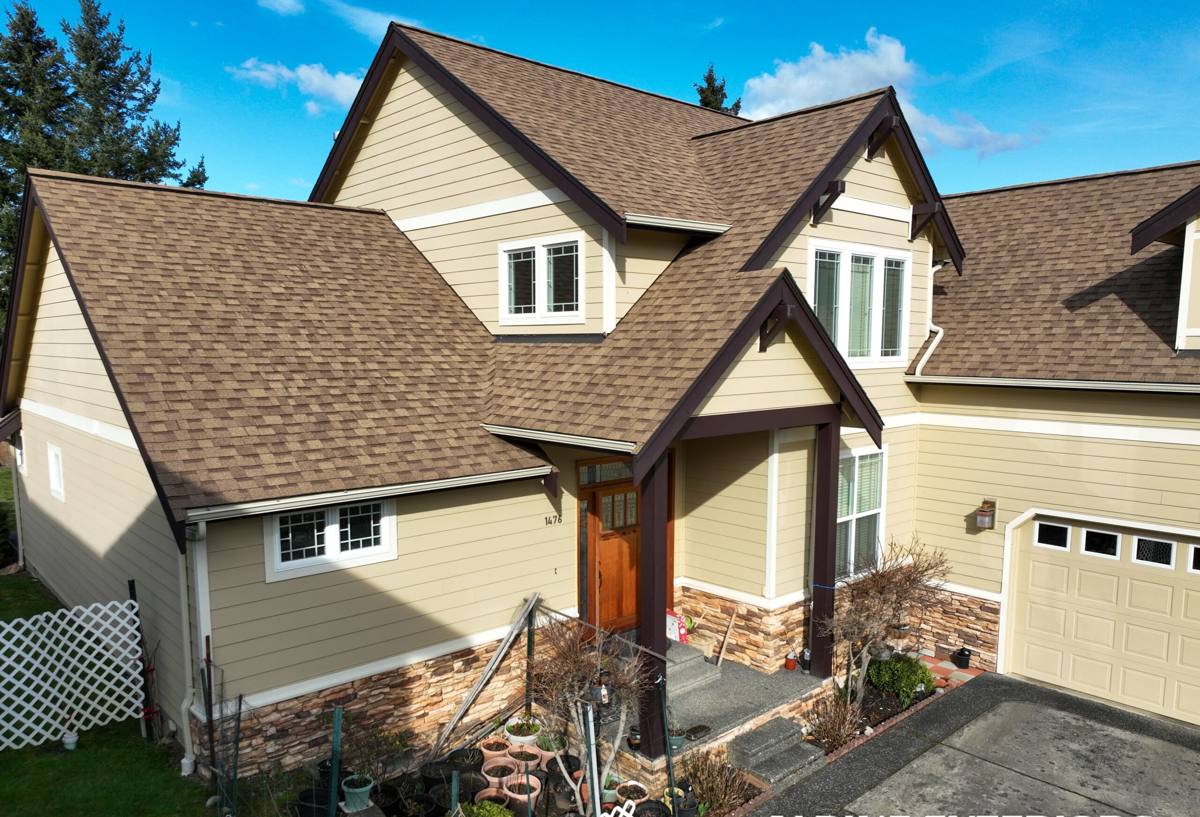
Signs a Nooksack Home Needs a New Roof, Not Another Repair
Homeowners often ask us to patch a leak and end up finding out the roof is past the point where patching makes sense. Some signs that point toward full replacement rather than another repair:
- Granule loss heavy enough that you can see bare asphalt on multiple slopes, not just one worn spot
- Moss that keeps coming back within a season or two of cleaning, especially on shaded slopes
- Soft or spongy decking felt when walking the roof, which usually means water has been getting through for a while
- Daylight visible through the attic, or water staining on rafters and sheathing
- Curling, cracked, or missing shingles concentrated on the sides that take the worst weather
- A roof approaching or past the manufacturer's expected service life for its material and exposure
If only one of these applies and the roof is otherwise sound, a repair may still be the right call. We'll tell you that directly if that's what the roof needs — a new roof isn't the answer to every problem, and an honest assessment should say so.
What a Correct New Roof Installation Actually Involves
Tear-Off and Deck Inspection
A proper new roof starts with a full tear-off down to the deck, not an overlay. Overlaying a new layer on top of old, weathered shingles traps moisture, hides deck problems, and shortens the life of the new roofing material. Once the old roofing is off, the deck gets inspected for soft spots, rot, or delamination. Any damaged sheathing gets replaced before anything new goes down — skipping this step is one of the most common shortcuts that leads to problems years later.
Underlayment Built for Wet Climates
In a climate that sees as much sustained rain as Whatcom County does, underlayment isn't a formality. We use synthetic or ice-and-water underlayment in vulnerable areas — eaves, valleys, and around penetrations — where wind-driven rain is most likely to work its way past the primary roofing material.
Flashing and Penetrations
Chimneys, vent pipes, skylights, and roof-to-wall transitions are where the majority of roof leaks start, not in the open field of the roof. Correct flashing detail at every penetration matters more here than material choice does.
Ventilation
A roof deck that can't breathe traps moisture from inside the home, which speeds up rot from underneath — separate from anything happening on the surface. Balanced intake and exhaust ventilation is part of a correct installation, not an upsell.
Material Options for Nooksack Homes
There's no single "best" roofing material for every home — it depends on the roof's exposure, the home's style, and what the homeowner wants to maintain long-term. Here's how the common options compare for this climate:
| Material | Moss & Moisture Resistance | Typical Lifespan | Maintenance |
|---|---|---|---|
| Architectural asphalt shingle | Good with proper underlayment; moss-resistant granule options available | 25–30 years | Periodic moss/debris removal, especially on shaded slopes |
| Standard 3-tab shingle | Fair; wears faster under sustained moisture | 15–20 years | More frequent moss management needed |
| Metal (standing seam or panel) | Excellent; sheds moisture quickly, doesn't hold moss the way asphalt can | 40–50+ years | Low; occasional fastener and seam checks |
| Composite/synthetic shake | Good; engineered to resist moisture absorption | 30–50 years | Low to moderate |
We generally steer homeowners away from lower-grade three-tab shingle in this climate — not because it's a bad product outright, but because the maintenance burden and shorter service life don't hold up well against Whatcom County's rain and moss exposure. It's a reasonable choice on a budget for a shorter time horizon; it's just not what we'd put on our own roofs here.
Our Installation Process
- On-site inspection. We look at the existing roof, attic ventilation, and any problem areas before quoting anything.
- Written estimate. Material options, scope of work, and timeline laid out clearly, with no vague allowances.
- Scheduling around weather windows. We plan installs with Whatcom County's rain patterns in mind rather than fighting the forecast.
- Tear-off and deck repair. Old material removed, deck inspected and repaired as needed.
- Underlayment, flashing, and material installation. Installed to manufacturer spec, with extra attention at vulnerable transitions.
- Ventilation check. Intake and exhaust balanced for the specific roof structure.
- Final walkthrough. We go over the finished roof with the homeowner and answer questions before we consider the job done.
Cost Factors on a New Roof
| Factor | Why It Matters |
|---|---|
| Roof size and pitch | Steeper roofs and larger square footage take more labor and material |
| Number of penetrations and valleys | More flashing detail work drives up labor time |
| Deck condition | Rotted or soft sheathing found during tear-off adds repair cost |
| Material choice | Asphalt, metal, and composite carry different upfront costs and lifespans |
| Access | Tree cover, tight lot lines, or difficult staging can affect labor time |
Every roof is different enough that we don't quote sight-unseen. We'll walk the roof, note the specifics, and give a written number — not a rough guess over the phone.
Why a Crew That Already Works Nooksack Matters
A roofing crew based out of Custer and working regularly in and around Nooksack has already seen how local weather patterns behave on real roofs in this area — which slopes hold moss longest, where wind-driven rain tends to find weak points, and how salt-tinged air affects fastener and flashing choices over time. That's different from a crew that mostly works dry-climate installs and treats every job the same way regardless of exposure.
It also matters for the practical side of the job: knowing local permitting requirements, being available for follow-up if a question comes up after the install, and not disappearing once the invoice is paid. We live and work in this county — a bad roof job in our own service area comes back to us directly, which is exactly the incentive we want to have.
Permits and Warranty Basics
New roof installations in Whatcom County typically require a building permit, and we handle that as part of the job rather than leaving it to the homeowner to sort out. On the warranty side, a correct installation should carry two separate protections: the manufacturer's warranty on the material itself, and a workmanship warranty from the installer covering the labor. Ask any contractor you're vetting to show both in writing, not just describe them verbally — this is one of the simplest ways to tell a serious contractor from one that isn't.
After Installation: A Simple Maintenance Checklist
A correctly installed roof still benefits from basic upkeep in this climate. A few habits that make a real difference over the roof's lifespan:
- Clear gutters and downspouts at least twice a year so water isn't backing up under the roof edge
- Remove overhanging branches that keep shaded slopes damp and feed moss growth
- Have moss treated or removed before it builds up thick enough to hold moisture against the shingles
- Check attic ventilation isn't blocked by insulation or debris
- Schedule a visual inspection after major windstorms, especially around flashing and penetrations
- Address small leaks immediately rather than waiting for them to show up as ceiling stains
If you're weighing whether your Nooksack-area roof needs replacing or just some attention, we're happy to take a look and give you a straight answer either way. Reach out for a free, no-pressure estimate using the form below.