 Custer
 Why Sandy Point's Location Changes What a Roof Needs to Do
Sandy Point sits right on the water, and that changes the math on roofing in ways that don't apply a few miles inland. A roof here isn't just shedding rain — it's living in a marine environment full-time. Salt-laden air moves off the Strait and settles on every exposed surface, wind-driven rain gets pushed sideways under trim and flashing that would stay dry elsewhere, and the shaded, damp winters that define Whatcom County give moss months at a time to take hold. None of that is unique to any one house at Sandy Point; it's the baseline every roof on that stretch of shoreline has to handle, year after year.
That's the context this page is written for: what metal roofing needs to look like, be built like, and be maintained like specifically for homes in this waterfront pocket near Custer — not a generic rundown of metal roofing in general.
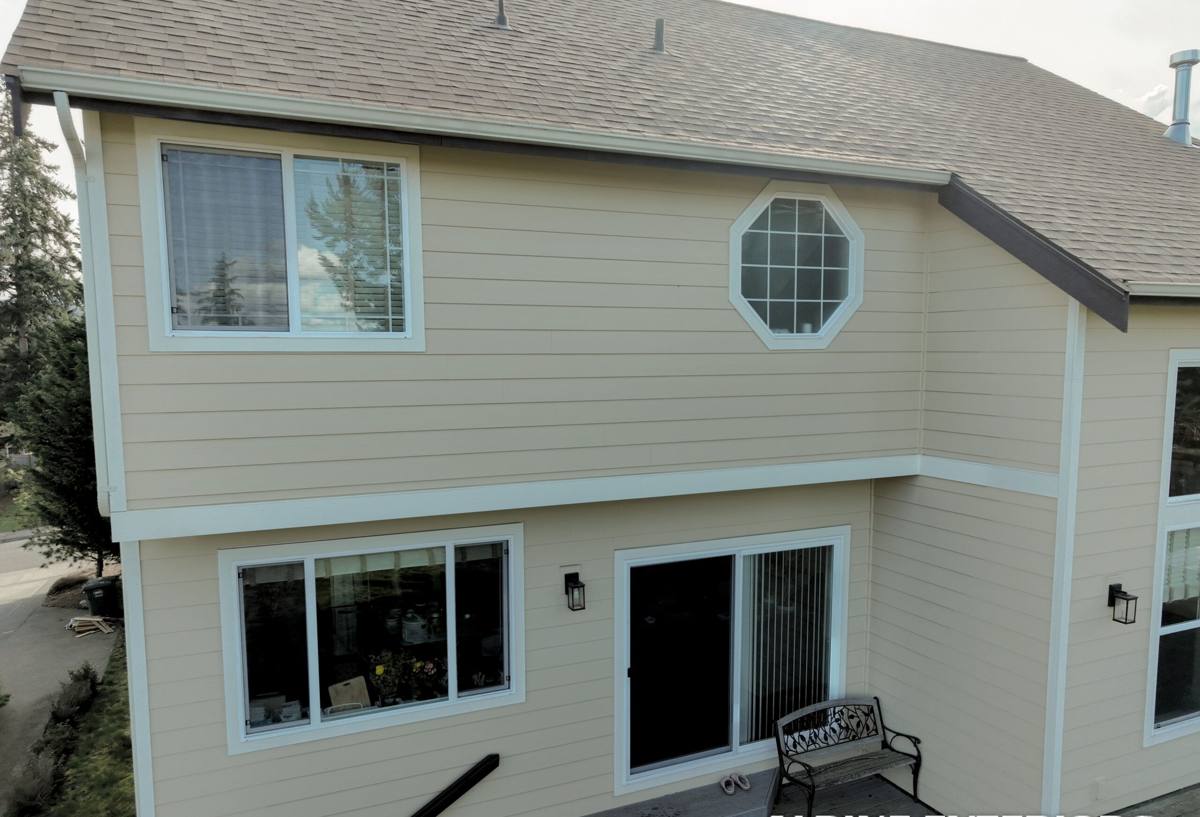
What Salt Air, Driving Rain, and Moss Actually Do to a Roof
Corrosion at the Fastener and Flashing Level
Salt air is corrosive to bare or poorly coated metal, and it doesn't need direct ocean spray to do damage — airborne salt travels well inland from the shoreline and settles as a fine film on any exposed metal. The failure point is almost never the roofing panel itself; it's the fasteners, flashing, and any hardware that wasn't specified for a coastal environment. A screw or flashing piece rated for an inland job can start showing rust streaks and weakening well ahead of schedule at Sandy Point.
Wind-Driven Rain and Wet Underlayment
Rain that comes in sideways behaves differently than rain that falls straight down. It gets pushed up under lap joints, around chimney and vent flashing, and into places a roof designed for calmer weather never has to defend. That's a wind and geometry problem as much as a materials problem, which is why flashing detail and underlayment coverage matter more here than the panel choice itself.
The Moss Season Problem
Whatcom County's wet, mild, shaded winters are close to ideal growing conditions for moss, and Sandy Point's tree cover and coastal humidity add to that. On an asphalt shingle roof, moss lifts the mat and holds moisture against it, which shortens the roof's life. On a metal roof done correctly, moss has a much harder time getting a foothold in the first place — but "done correctly" is doing a lot of work in that sentence, and we'll get into what that means below.
Why Metal Roofing Is a Strong Fit for Sandy Point Homes
Metal isn't the right roof for every house or every budget, and we'll say that plainly rather than oversell it. But for a waterfront property dealing with salt air, wind-driven rain, and a long moss season, it solves several problems at once: a properly coated metal panel doesn't absorb water the way a shingle mat does, it sheds moss and debris more readily because there's no porous surface for organic matter to grip, and a quality coating system is built to resist salt-air corrosion rather than just tolerate it.
Standing Seam vs. Exposed-Fastener Panels
Not all metal roofing is built the same, and the difference matters more in a coastal setting than it does inland. The table below is how we walk homeowners through the trade-off.
| Factor | Standing Seam (concealed fastener) | Exposed-Fastener Panel |
|---|---|---|
| Fastener exposure to salt air | Fasteners are hidden under the seam, out of direct weather | Fasteners penetrate the panel face and are directly exposed |
| Long-term maintenance | Very low — no exposed gaskets to inspect | Gaskets under exposed screws age and need periodic checking |
| Upfront cost | Higher material and labor cost | Lower upfront cost |
| Best fit | Full waterfront exposure, longer ownership horizon | Outbuildings, budget-driven projects, less direct exposure |
For a home with direct exposure to Sandy Point's marine air, we lean toward standing seam as our default recommendation — not because exposed-fastener panels are a bad product, but because concealed fasteners remove the single most common long-term maintenance item on a coastal metal roof. Where budget is the deciding factor, a well-installed exposed-fastener system can still perform well if the gaskets are inspected on a normal schedule.
What a Correct Metal Roof Installation Involves Here
Underlayment and Ice-and-Water Protection
Given how much wind-driven rain a shoreline roof takes, we treat underlayment coverage as non-negotiable rather than a cost-saving spot to trim. That means full synthetic underlayment across the field and self-adhered ice-and-water membrane at eaves, valleys, and any roof-to-wall transition where wind can push moisture backward under the panel edge.
Fasteners, Flashing, and Coastal-Grade Hardware
This is where a lot of otherwise-decent metal roofs quietly fail early in a place like Sandy Point. Fasteners, screws, and flashing need to be specified for marine/coastal exposure — stainless or equivalent corrosion-resistant hardware, not the standard-grade fasteners that are fine on a job a few miles from the water. Flashing details at chimneys, vents, valleys, and wall transitions get extra attention, since those are the points where wind-driven rain actually finds its way in.
Ventilation
A metal roof needs proper attic and ridge ventilation just as much as any other roofing material — arguably more, since trapped moisture under a metal panel in a humid coastal climate can lead to condensation issues if the assembly can't breathe. We check existing ventilation on every reroof rather than assuming what's there is adequate.
Our Process for a Sandy Point Metal Roof
- On-site assessment — we look at existing roof condition, decking, ventilation, flashing points, and how exposed the specific structure is to wind and salt air off the water.
- System recommendation — standing seam or exposed-fastener, panel gauge, and coating, based on that exposure and your budget, explained in plain terms with the trade-offs laid out.
- Tear-off and deck inspection — old roofing removed, decking checked for rot or moisture damage before anything new goes down.
- Underlayment and flashing — full coverage synthetic underlayment, ice-and-water membrane at vulnerable points, coastal-grade flashing at every penetration and transition.
- Panel installation — installed to manufacturer spec with corrosion-resistant fasteners throughout.
- Final walk-through — we go over the finished roof with you, including what to watch for and when it's worth a maintenance check.
Why a Crew That Already Works Sandy Point Matters
A roofing crew that mostly works drier, inland jobs can still install a technically correct roof on paper and still miss what actually matters at Sandy Point — because the failure points there aren't obvious until you've seen them repeat across several waterfront jobs. Knowing which fastener grade holds up against this specific salt air exposure, which flashing details actually stop wind-driven rain coming off the water, and how aggressively moss grows on a shaded, humid lot near the shoreline isn't something you get from a spec sheet. It's something you learn by doing the work here repeatedly. We work throughout Whatcom County, including this stretch of coastline near Custer, and that regional experience shapes the material choices and installation details on every estimate we write.
Cost Factors to Expect
Every roof is different, so exact numbers depend on your specific home, but these are the factors that move the price up or down on a Sandy Point metal roof project.
| Factor | Effect on Cost |
|---|---|
| Standing seam vs. exposed-fastener panel | Standing seam typically costs more upfront but reduces long-term maintenance |
| Roof complexity (valleys, dormers, penetrations) | More cuts, flashing, and labor time |
| Tear-off vs. overlay | Full tear-off costs more but lets us check decking and ventilation underneath |
| Coating/finish level | Higher-grade coastal coatings cost more but resist salt-air corrosion longer |
| Roof pitch and access | Steeper or harder-to-access roofs add labor cost |
Maintenance Checklist for a Coastal Metal Roof
Metal roofing is lower-maintenance than shingles, but "lower" isn't "none," especially this close to the water. A simple annual check covers most of it:
- Rinse off accumulated salt film and debris, especially after storm season
- Check gutters and downspouts for moss and debris buildup that can back water up under the eave
- Look at exposed fasteners (if applicable) for early rust streaking or loose screws
- Check flashing at chimneys, vents, and wall transitions for gaps or lifted edges
- Trim back overhanging branches to reduce shade and moss growth on the roof
- Watch for any moss or algae starting at valleys or shaded slopes and address it early
If you're not comfortable getting on the roof yourself, a quick professional look-over every year or two is worth it — catching a loose fastener or lifted flashing early is a much smaller job than fixing what it causes if it's left alone through another wet winter.
Getting a Straight Answer for Your Home
If you're weighing a metal roof for a home at Sandy Point, we're happy to come take a look, walk the roof, and give you a straightforward assessment of what your specific house needs — no pressure, no upsell. Use the form below to request a free estimate.