 Custer
 Energy-Efficient Windows in Meridian: What This Climate Demands
Meridian sits in the flat, open farmland just outside Custer, in a stretch of Whatcom County that gets the full effect of marine weather moving in off the water with almost nothing to slow it down first. Homes here deal with salt-laden air carried inland, driving rain that comes in sideways during winter storms, and a moss and mildew season that runs long enough to feel like it barely stops. That combination is hard on any exterior component, but windows take a particular kind of beating — they're where a wall assembly has the most seams, the most hardware, and the most opportunity for heat, air, and water to move somewhere it shouldn't.
"Energy-efficient" gets used loosely in this industry, but for a Meridian property it means something specific: a window unit that holds its seal against sustained wind pressure, glazing that resists both heat loss in winter and condensation on cold glass, and an installation detail that keeps wind-driven rain out of the wall rather than just out of the room. A window with a great energy rating on paper that's installed with sloppy flashing will still leak, waste energy around a compromised seal, and cost more to fix later than it would have cost to do right the first time.
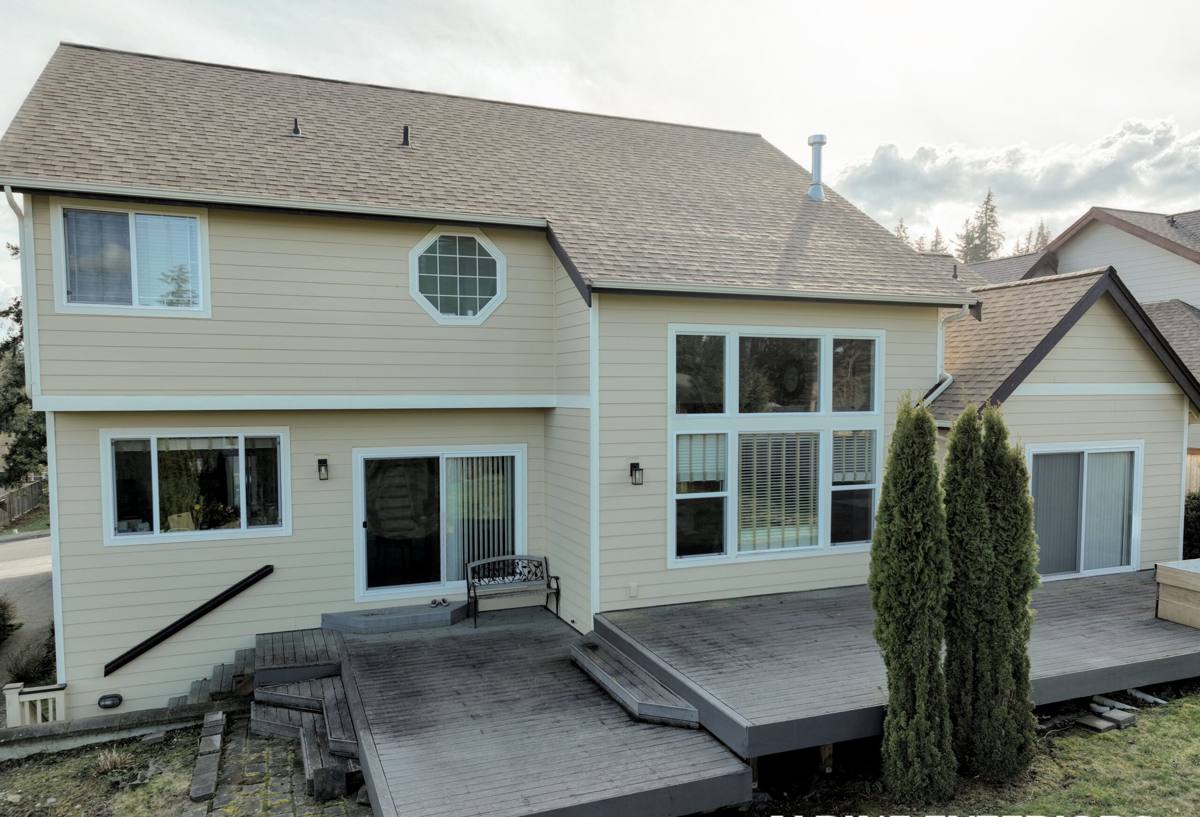
Why Older Windows Underperform in This Part of Whatcom County
Wind-Driven Rain and Air Infiltration
Open farmland around Meridian doesn't offer much of a windbreak, so storms coming off the Strait of Georgia push rain into wall assemblies at an angle rather than straight down. Older windows with worn weatherstripping or frames that have shifted slightly over the years let both air and water through gaps that wouldn't matter in a calmer climate. That air infiltration is a direct energy cost — every draft around a window frame is heated or cooled air leaving the house and outside air taking its place.
Marine Air and Seal Failure
Salt-influenced air carried inland accelerates the breakdown of window seals, gaskets, and hardware faster than a dry inland climate would. Once a seal fails on a double-pane window, the insulating gas fill between the panes escapes and is replaced by regular air, and the energy performance of that window drops immediately — often well before the fogging or visible moisture between panes becomes obvious.
Moss, Mildew, and Long-Term Moisture Exposure
Whatcom County's mild, damp weather keeps moss and mildew active across most of the year, and window sills, trim, and the wood framing on older units are common places it settles in. Once moisture starts sitting in a spot instead of draining away, it's not just a cosmetic problem — swollen or softened wood around a window frame breaks the seal integrity that energy-efficient performance depends on.
Condensation From Interior-Exterior Temperature Swings
The gap between a heated interior and a cold, wet Whatcom County exterior puts real condensation pressure on window glass and frames. Fogging, water pooling on sills, or persistent dampness around a window in winter is usually a sign that the glazing or seal isn't doing its job anymore — and a window that's fighting condensation is also a window that's losing energy efficiency.
What an Energy-Efficient Window Actually Needs to Include
A lot of what gets marketed as "energy-efficient" is really just a glazing package. That matters, but it's only part of the picture for a Meridian property. We look at four things together, because leaving any one of them out undermines the rest.
- Frame material and construction: Vinyl and fiberglass frames resist rot and don't require the maintenance a wood frame does, which matters given how much sustained moisture this region sees.
- Glazing package: Double or triple-pane glass with a low-E coating and an insulating gas fill between panes cuts heat loss in winter and reduces unwanted solar gain in summer, while also lowering interior condensation on cold glass.
- Weatherstripping and hardware: Corrosion-resistant hardware and durable weatherstripping hold their seal longer against marine-influenced air than standard-grade components.
- Installation and flashing: None of the above matters if the unit isn't installed with flashing that laps correctly into the surrounding wall — a well-rated window installed poorly still lets in air and water.
Signs a Meridian Home Would Benefit From Window Work
- Noticeably higher heating bills in winter without a clear other cause
- Drafts or cold spots near windows even when they're fully latched
- Fogging or visible moisture trapped between panes on a double-pane window
- Interior condensation or water pooling on sills during cold, wet stretches
- Wood trim or sills that feel soft, look discolored, or show early rot
- Rooms near large or older windows that feel colder than the rest of the house
Glazing and Frame Options: Honest Trade-Offs
We don't push one brand or material as the only right answer, because the right choice depends on the specific home, its exposure, and the homeowner's budget. What follows are the trade-offs we actually talk through on site.
| Option | Where It Performs Well | Trade-Off to Know About |
|---|---|---|
| Vinyl frame, double-pane low-E | Good energy performance at a moderate cost; resists rot | Fewer custom color options than fiberglass |
| Fiberglass frame, double-pane low-E | More dimensionally stable across temperature swings; can be painted | Higher upfront cost than vinyl |
| Triple-pane glazing (either frame) | Best energy performance and condensation resistance for exposed elevations | Added cost and weight; not always necessary on sheltered walls |
| Argon or krypton gas fill | Improves insulating value between panes | Gas fill can migrate out slowly over the window's life, which is a seal-quality issue more than a fill-choice issue |
Flashing and Installation: The Part That Determines Whether Any of This Holds Up
We spend more time on installation detail than on comparing glazing specs, because in a climate like this, flashing is what actually determines whether an energy-efficient window keeps performing for decades or starts losing efficiency within a few wet seasons. The flashing has to lap correctly with the weather-resistive barrier and siding around the opening, direct water out and away from the rough opening instead of trapping it behind the frame, and every seam needs sealant rated for sustained moisture exposure. This is standard on every window we install — not an upgrade a homeowner has to request.
The most common installation mistake we see on older Meridian-area homes isn't a failed window unit — it's caulk used as the primary seal instead of as a supplement to proper flashing. Caulk cracks and breaks down over time, and once it fails, wind-driven rain has a clear path into the wall behind the window, where it can sit unnoticed for a long time before showing up as damage inside.
How We Approach a Window Job in Meridian
- On-site assessment of existing windows — frame condition, seal integrity, hardware function, and how current flashing ties into the surrounding siding.
- An honest read on which windows are reasonable candidates for repair versus which make more sense to replace, given condition and remaining service life.
- A written scope that separates the manufacturer's product warranty from our installation warranty, so both are clear before work starts.
- Installation with flashing and drainage detailing handled as standard practice, tied into the siding and wall assembly rather than treated as a standalone swap.
- A final check of operation, seal, and exterior trim work before we consider the job finished.
Cost Factors Worth Understanding Before You Get a Quote
Window pricing swings widely based on size, glazing package, frame material, and how much flashing and trim work is needed around each opening — we're not going to quote a number here that wouldn't hold up once we've actually seen the house. What we can say honestly is that the biggest cost drivers tend to be the number of openings involved, whether existing flashing needs to be reworked or is already sound, and whether trim or siding around the window needs repair as part of the job. Custom-sized units built for a specific opening also typically take several weeks to arrive, which affects scheduling more than it affects the final price.
A Checklist Before Hiring for Window Work Near Custer
- Ask specifically how they handle flashing integration with the existing siding, not just which window brand they carry
- Confirm current Washington contractor licensing and active liability insurance
- Get a written scope that separates product warranty from installation warranty
- Ask for their honest read on repair versus replacement for each affected window, not a blanket answer
- Ask about lead times on custom-sized units, since ordering delays are common in this region
Why It Matters That We Already Work This Area
A crew that regularly works Meridian and the surrounding Custer area already knows how exposed, open farmland handles wind-driven rain differently than a sheltered inland lot does, and that knowledge shows up in decisions a homeowner never sees directly — how much lap a flashing detail gets, whether hardware is specified for marine-influenced air or just standard grade, whether caulk is treated as a backup seal or mistakenly relied on as the only one. We handle siding, roofing, windows, and decks throughout this part of Whatcom County, which means the person detailing your window flashing also understands how it needs to tie into the siding and roof-to-wall details around it — not a separate trade working in isolation on one component of the building envelope.
If your Meridian-area home has drafty, foggy, or underperforming windows — or you're just not sure whether repair or replacement makes more sense — we're glad to take a look and give a straight answer. Reach out below for a free, no-pressure estimate.