 Custer
 Marietta's Location Makes Siding Repair a Different Job
Marietta sits close to the water in Whatcom County, which means homes here take a different kind of beating than houses ten or fifteen miles inland. Salt-laden air moves off the water and settles on exterior surfaces, driving rain comes in sideways during fall and winter storms, and the long, damp Pacific Northwest season keeps moss and algae established on north- and west-facing walls for much of the year. None of that is unique to any one house on any one street — it's simply the climate this part of Whatcom County lives with. What it means practically is that siding failures here tend to start earlier and spread faster than they would in a drier, more sheltered location, and a repair that doesn't account for those conditions usually doesn't last.
Siding repair isn't just about making a bad-looking board disappear. Done right, it's about finding out why that board failed in the first place, fixing the underlying cause, and putting back material and detailing that will actually hold up to the next few winters of wind-driven rain and salt exposure. Done wrong, a repair just delays the same problem by a season or two.
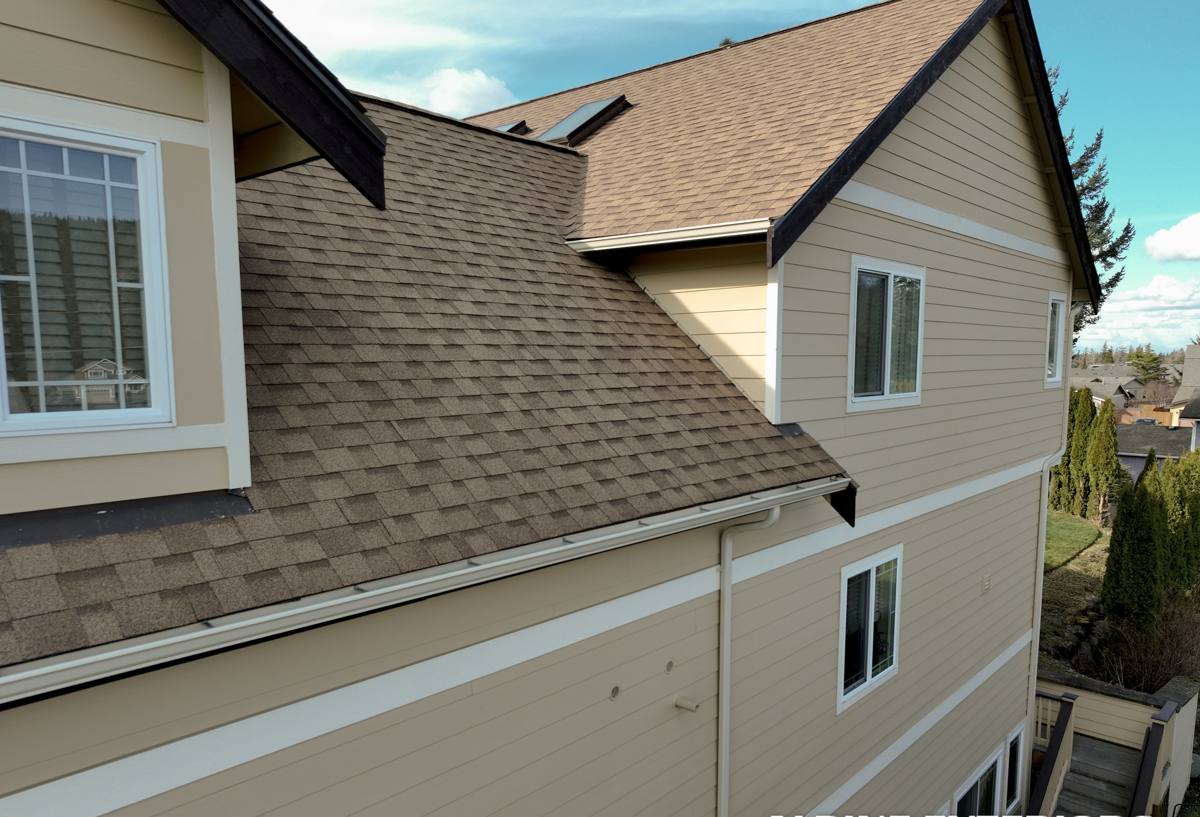
Signs a Marietta Home May Need Siding Repair
Because moisture problems in this climate often start small and hidden, it helps to know what to watch for before a minor issue becomes a rot problem behind the wall. Common warning signs include:
- Boards that feel soft, spongy, or give slightly when pressed near the bottom edge
- Visible cracking, splitting, or delamination, especially on older wood-based siding
- Gaps opening up at butt joints, corners, or trim edges
- Paint that's peeling, bubbling, or chalking heavily in one area but not others
- Moss or dark streaking that returns quickly even after cleaning
- Rust-colored streaks running down from fastener heads
- Warping or bowing near the ground level, under windows, or along the roofline
- Daylight or drafts noticeable at trim joints from the inside
Any one of these on its own might be minor. Several showing up in the same section of wall usually means water has been getting behind the siding for a while.
What a Correct Siding Repair Actually Involves
Diagnosing the Cause, Not Just the Symptom
The most common mistake in siding repair is treating the visible damage as the whole problem. A soft board is a symptom — the actual problem is usually a flashing detail that was never installed correctly, a caulk joint that failed and let water track behind the cladding, or grading and gutter issues sending water where it shouldn't go. A repair that swaps the damaged board without addressing the water path will look fine for a season and then fail again in the same spot.
Matching Material, Reveal, and Finish
When a section of siding needs to be cut out and replaced, the new piece has to match the reveal (the exposed width of each course) and sit flush with the surrounding boards, or the repair will be visible from the street. Factory-finished siding adds another wrinkle: matching a field-painted patch to a factory finish that's weathered for several years rarely looks seamless, which is one more reason we lean on material systems where full-panel or full-course replacement is a clean, predictable option.
Getting the Water Management Right
Correct repair work means proper flashing at joints and penetrations, the right drainage gap behind the cladding where the system calls for it, and sealant used only where the manufacturer's details actually require it. Over-caulking is a common shortcut that looks tidy but often traps moisture against the wall instead of letting it drain and dry — exactly the wrong outcome in a climate that already keeps everything damp longer than most.
Repair or Full Replacement? How to Think About It
Not every damaged section needs a full re-side, but not every problem should be patched forever either. The table below outlines the factors that typically point one direction or the other.
| Factor | Points Toward Repair | Points Toward Replacement |
|---|---|---|
| Extent of damage | Isolated to one or two sections | Recurring across multiple walls |
| Underlying sheathing | Dry, sound wood behind the siding | Soft or rotted sheathing found during inspection |
| Siding material and age | Newer material, still available or close-matchable | Older, discontinued profile that can't be matched |
| Cause of failure | A specific, fixable detail (one flashing, one joint) | Systemic issue (original installation lacked proper water management) |
| Cost over time | Lower upfront cost, addresses the immediate issue | Higher upfront cost, resets the clock on the whole exterior |
A straightforward answer isn't always possible until a contractor has actually pulled a board or two and looked at what's behind it. Anyone who quotes a repair scope without doing that is guessing.
Why We Repair and Rebuild With James Hardie Fiber Cement
We install James Hardie fiber cement exclusively — we don't install vinyl, LP SmartSide, or unfinished wood siding, and that standard carries into repair work as well. When a section of siding has to come out and be replaced, we want what goes back in to hold up as long as the rest of the wall, not become the next weak point.
Hardie's HZ5 product line is engineered for climates like this one — freeze-thaw cycles, sustained damp, and salt exposure — and its ColorPlus factory finish resists peeling and fading far better than field-applied paint holds up on cut-in patches. It's also non-combustible fiber cement, which doesn't absorb and swell with moisture the way wood-based products can, and it carries a strong transferable warranty when installed to the manufacturer's specifications.
If a Marietta home currently has a different siding material — older cedar, LP, vinyl, or something else — we'll say so plainly: a small patch job on non-Hardie siding is still worth doing if the rest of the wall is sound, but if damage keeps recurring across a home with aging or discontinued siding, we'll tell you honestly when a full re-side to Hardie makes more long-term sense than chasing patches on a material that's reached the end of its useful life.
Our Siding Repair Process in Marietta
Inspection and Diagnosis
We start by identifying not just the visible damage but the water path behind it — pulling boards where needed to check the sheathing and house wrap condition, not just eyeballing the surface.
An Honest Scope
We tell you what we find, including when the damage is more limited (or more extensive) than it looks from the ground, and what a repair versus a fuller fix would actually cost and accomplish.
Correct Repair Execution
Damaged material comes out cleanly, the underlying cause gets fixed — flashing, drainage, fastening, whatever the diagnosis showed — and new material goes in fastened and finished to spec, not just tacked on to look right from the street.
Cleanup and Protection
We treat moss and organic growth on and around the repaired area, apply sealant only where it belongs, and leave the site clean.
Why a Crew That Already Works Marietta Matters
A contractor who works this stretch of Whatcom County regularly already knows which walls take the worst of the salt air and driving rain, which orientations stay shaded and damp long enough to grow moss year-round, and which original installation shortcuts tend to show up as failures first. That local pattern recognition shortens the diagnosis step and means less guessing about what's likely happening behind a damaged section before a board ever comes off the wall. It also means faster response — in a climate where a small moisture problem can turn into sheathing rot over one wet winter, timing matters as much as the repair itself.
A few things worth asking any contractor before hiring them for repair work in this area:
- Will they inspect behind the damaged siding before quoting a fixed scope of work?
- Do they explain what caused the failure, not just what they'll replace?
- Are they specific about the material they'll use for the repair, and why?
- Do they have experience with homes in this specific coastal pocket of the county?
- Will they put the scope, material, and warranty terms in writing?
Keeping Repaired Siding Healthy Through Moss Season
A good repair holds up longer with a little routine attention, especially given how long the damp season runs here. Gentle cleaning of moss and algae once or twice a year keeps growth from re-establishing and holding moisture against the surface. Trimming back vegetation and branches near the walls improves airflow and drying time after storms. Keeping gutters clear prevents overflow from running down and pooling against siding it was never meant to sit against. And it's worth avoiding pressure washing directly at siding joints — the same high-pressure water that removes grime can force water behind boards and undo the water management a proper repair was built around.
If you're seeing any of the warning signs above, or you're just not sure whether what you're looking at is cosmetic or something more, we're happy to take a look. We offer free, no-pressure estimates for siding repair in Marietta and the surrounding area — no obligation, just an honest read on what's going on and what it would take to fix it right.