 Custer
 Why Lynden Homes Wear Out Windows Faster Than Most
Lynden sits inland from Puget Sound and Georgia Strait, but Whatcom County's marine air still reaches this far — enough salt and moisture in the wind to accelerate corrosion on hardware, seals, and metal components most homeowners never think to check. Add in the region's long stretch of driving rain each fall and winter, plus a moss season that can run eight months or more under the tree cover and open farmland fog common around Lynden, and you have a climate that is genuinely hard on window assemblies. It's not dramatic weather — no hurricanes, no hailstorms — but it's relentless, and relentless moisture exposure is exactly what breaks down seals, frames, and flashing over time.
Windows that were fine ten or fifteen years ago start showing their age here in specific ways: fogged glass from failed seals, soft wood at the sill, hardware that won't latch cleanly anymore. None of that is unusual for this part of Whatcom County. It's just what happens when a window wasn't installed with this climate in mind, or has simply reached the end of its service life.
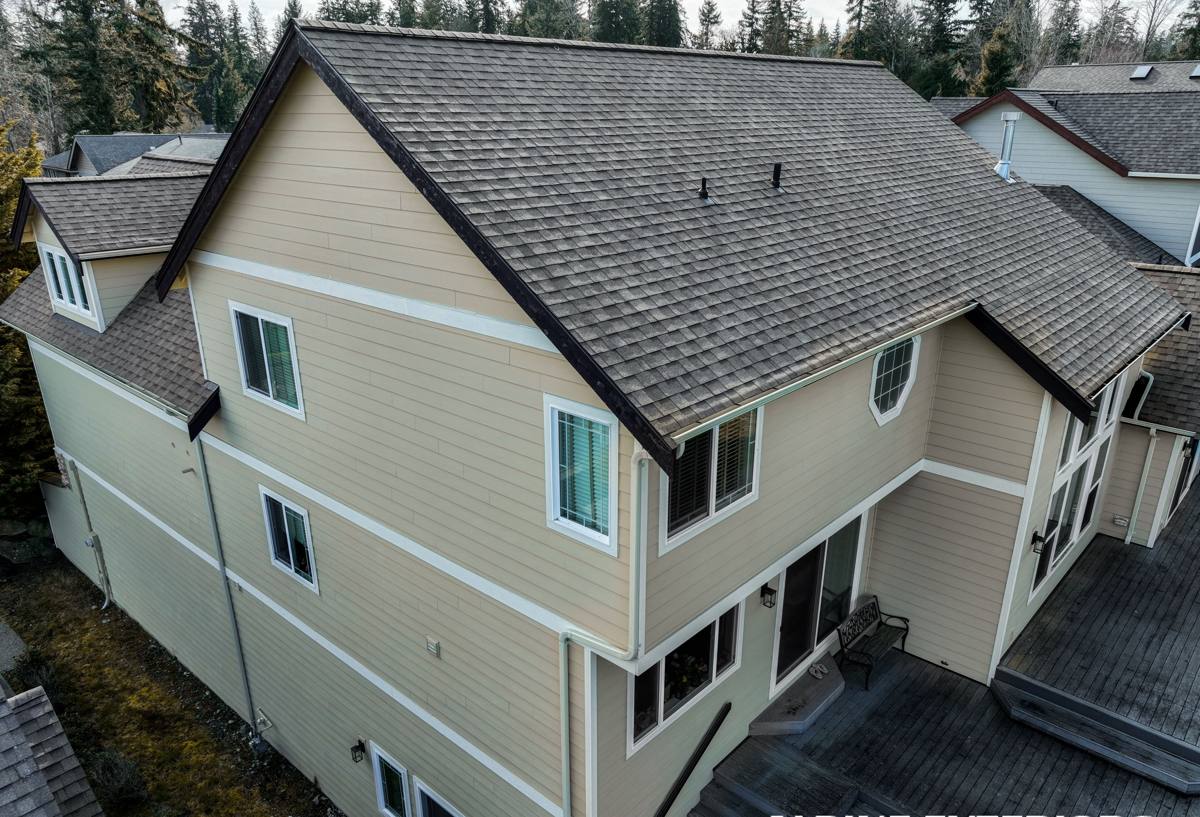
Signs a Lynden Home Actually Needs Window Replacement
Not every window problem calls for full replacement — sometimes a re-caulk or hardware fix solves it. But certain signs mean the window itself, or its installation, has failed and repair won't hold:
- Fog, haze, or moisture trapped between panes (a failed seal on double-pane glass — this cannot be fixed, only replaced)
- Visible soft or discolored wood around the frame or sill, especially on north- and west-facing walls that catch the most driving rain
- Moss, algae, or black mildew staining on the sill or lower sash that keeps coming back after cleaning
- Drafts you can feel by hand along the frame edge, even with the window latched shut
- Windows that are difficult to open, close, or lock — often a sign the frame has shifted or swollen
- A noticeable jump in heating costs without any other explanation
- Single-pane glass or original aluminum-frame windows on an older home that's never been upgraded
If you're seeing two or more of these on the same window, replacement is almost always the more honest recommendation than another round of patching.
What a Correct Window Replacement Job Actually Involves
The window unit itself is only part of the job. Most of the water damage we find in this area traces back to how a previous window was flashed and sealed into the wall — not the window brand. A proper replacement addresses the whole opening, not just the glass and frame.
The Parts Homeowners Don't See
Behind the trim, a correct installation includes a properly lapped weather-resistive barrier, sill flashing that directs water outward instead of into the wall cavity, and backer rod and sealant sized for the gap rather than caulk smeared over a crack. Skipping any of these is how a brand-new window ends up with rot behind it in five years — and it's the single biggest quality gap we see when we open up an older install.
The Parts Homeowners Do See
On the visible side, that means clean, square trim lines, consistent reveal around the sash, hardware that operates smoothly, and a finished look that matches the rest of the home's exterior — especially important on Lynden's mix of farmhouse-style homes, newer developments, and older in-town properties where window proportions matter to the home's overall character.
Choosing the Right Window for This Climate
Material choice matters more here than in drier parts of the state, because whatever you install will spend most of the year wet, humid, or both. Here's how the common options actually perform under Whatcom County conditions:
| Material | Moisture & Salt-Air Behavior | Maintenance | Best Fit |
|---|---|---|---|
| Vinyl | Won't rot or corrode; performs well in wet, salty air | Low — occasional cleaning | Most Lynden homes; best overall value for this climate |
| Fiberglass | Excellent stability in temperature and moisture swings; very durable | Low | Homes wanting a higher-end, longer-service-life option |
| Wood (unclad) | Attractive but the most vulnerable to our rain and moss exposure | High — regular painting/sealing required | Interior-facing or sheltered openings only, by our standard |
| Wood-clad (exterior aluminum or vinyl shell) | Good protection if the cladding and flashing details are done right | Moderate | Homeowners who want a wood interior look with a protected exterior face |
| Aluminum (older/original) | Conducts cold and condenses heavily; hardware corrodes over time near coastal air | Moderate to high | Generally not something we recommend replacing like-for-like today |
We're upfront that we steer most Lynden customers away from unclad exterior wood and older aluminum frames — not because either product is bad in the right setting, but because our standard is to install what will hold up with the least maintenance burden in this specific climate. Glass package matters too: a double-pane unit with a Low-E coating and an argon fill is the practical baseline here, and triple-pane is worth discussing on north-facing walls or rooms that are hard to heat.
Our Window Replacement Process
- On-site assessment — we look at every window being considered, check for hidden moisture or rot around the openings, and talk through what's actually needed versus what can wait.
- Measurements and product selection — exact sizing and a walk-through of material, glass, and grid/style options that fit the home.
- Permitting — for structural changes or larger jobs, we handle what Whatcom County or the local jurisdiction requires.
- Removal — old units come out carefully, with attention to protecting siding and interior finishes.
- Inspect the opening — this is the step that matters most in our climate. Any soft sheathing or framing found here gets flagged and repaired before anything new goes in.
- Flash and seal the opening — new weather-resistive barrier and sill flashing installed correctly, before the window ever goes in.
- Set, shim, and fasten the new window level and square.
- Insulate and seal the perimeter gap — not overfilled with spray foam, not left with gaps.
- Exterior trim and sealant, finished to match the home.
- Interior trim and cleanup, with job-site debris and old units hauled off.
- Final walkthrough — operation checked on every window before we call it done.
What Affects the Cost
Every home is different, but the same handful of factors drive most of the variation in a window replacement quote:
| Factor | Why It Moves the Price |
|---|---|
| Number of windows | More openings means more labor, material, and disposal |
| Frame material | Vinyl is typically the most economical; fiberglass and clad-wood cost more upfront |
| Glass package | Triple-pane, specialty coatings, or tempered/safety glass add cost over a standard double-pane unit |
| Opening condition | Rot or framing repair discovered during removal adds labor that couldn't be quoted sight-unseen |
| Access | Second-story or hard-to-reach windows take longer and may need additional equipment |
| Trim and finish work | Matching existing trim profiles or repainting adds finish-carpentry time |
As a broad range, most whole-home or partial-home window replacement projects in this area land somewhere between a few thousand dollars for a small handful of standard-size vinyl windows and well into the five figures for a full-home upgrade with higher-end materials. We won't know your real number until we've seen the openings — anyone who quotes a firm price sight-unseen is guessing.
Why Local Experience in Lynden Specifically Matters
A window that's correctly installed in a dry inland climate can still fail here if the crew doesn't build in enough drainage margin for our rain volume, or doesn't think about moss and organic buildup settling into sill tracks. Crews who already work in and around Lynden and the rest of Whatcom County know which orientations take the worst weather, which older housing stock tends to have hidden rot behind the trim, and what a realistic maintenance schedule looks like for a homeowner here — not a homeowner in a drier part of the state. That local pattern recognition is the difference between a window that's still tight in year one and one that's still tight in year fifteen.
Keeping New Windows Performing Through Moss Season
Even a correctly installed window benefits from a little seasonal attention here. A few habits go a long way:
- Clear debris and moss growth from sills and tracks before it holds moisture against the frame
- Check exterior caulk lines once a year for cracking or separation, especially after the first winter
- Keep gutters and downspouts clear so runoff isn't sheeting directly over upper-floor windows
- Wipe down interior sills during heavy rain stretches if condensation collects overnight
- Trim back vegetation that shades a window most of the day, since shaded, damp spots are where moss and mildew take hold first
None of this is heavy maintenance — it's the kind of five-minute seasonal check that keeps a quality installation performing the way it's supposed to for the long run.
If you're seeing drafts, fogged glass, or worn frames on your Lynden home, we're glad to take a look and give you an honest read on what's actually needed. Fill out the form below for a free, no-pressure estimate — no obligation, just a straight answer.