 Custer
 Laurel's Climate Is Harder on Siding Than Most Homeowners Realize
Laurel sits close enough to the water and open farmland north of Bellingham that homes here take on a specific combination of punishment: salt-tinged air drifting in off the Strait, wind-driven rain that hits siding sideways instead of just running down it, and long stretches of gray, damp weather that never quite dry a wall out. None of these three things alone is unusual for Whatcom County. Together, on the same wall, year after year, they separate siding that holds up for decades from siding that starts failing in five to ten years.
Salt Air and Coastal Exposure
Homes closer to Custer and the surrounding coastline deal with airborne salt that settles on exterior surfaces and accelerates corrosion on fasteners, trim flashing, and any metal components tied into the siding system. Salt exposure doesn't rot fiber cement the way it can degrade some other materials, but it does mean that the fasteners, flashing, and hardware behind and around the siding need to be corrosion-resistant, and that finish coatings need to actually bond and hold color rather than chalk out early.
Driving Rain and Whatcom County's Wet Season
Whatcom County gets a real wet season, and Laurel's open exposure means rain often arrives at an angle rather than straight down. Wind-driven rain finds every gap in a poorly lapped joint, every under-flashed window, and every place where siding was nailed directly against sheathing with no drainage path behind it. Over time, water that gets behind siding and has nowhere to go is the single biggest cause of rot, mold, and sheathing damage on homes in this area — regardless of what the siding material itself is rated to handle.
Moss, Algae, and Shade
Between tree cover, fences, and the simple fact that walls here rarely get a full day of direct sun in winter, north- and west-facing elevations in Laurel are prone to moss and algae growth. That's a cosmetic issue on a properly finished surface, but on siding with a weak or inconsistent factory finish, prolonged moisture plus organic growth can accelerate fading, staining, and coating breakdown well before the siding itself has reached the end of its useful life.
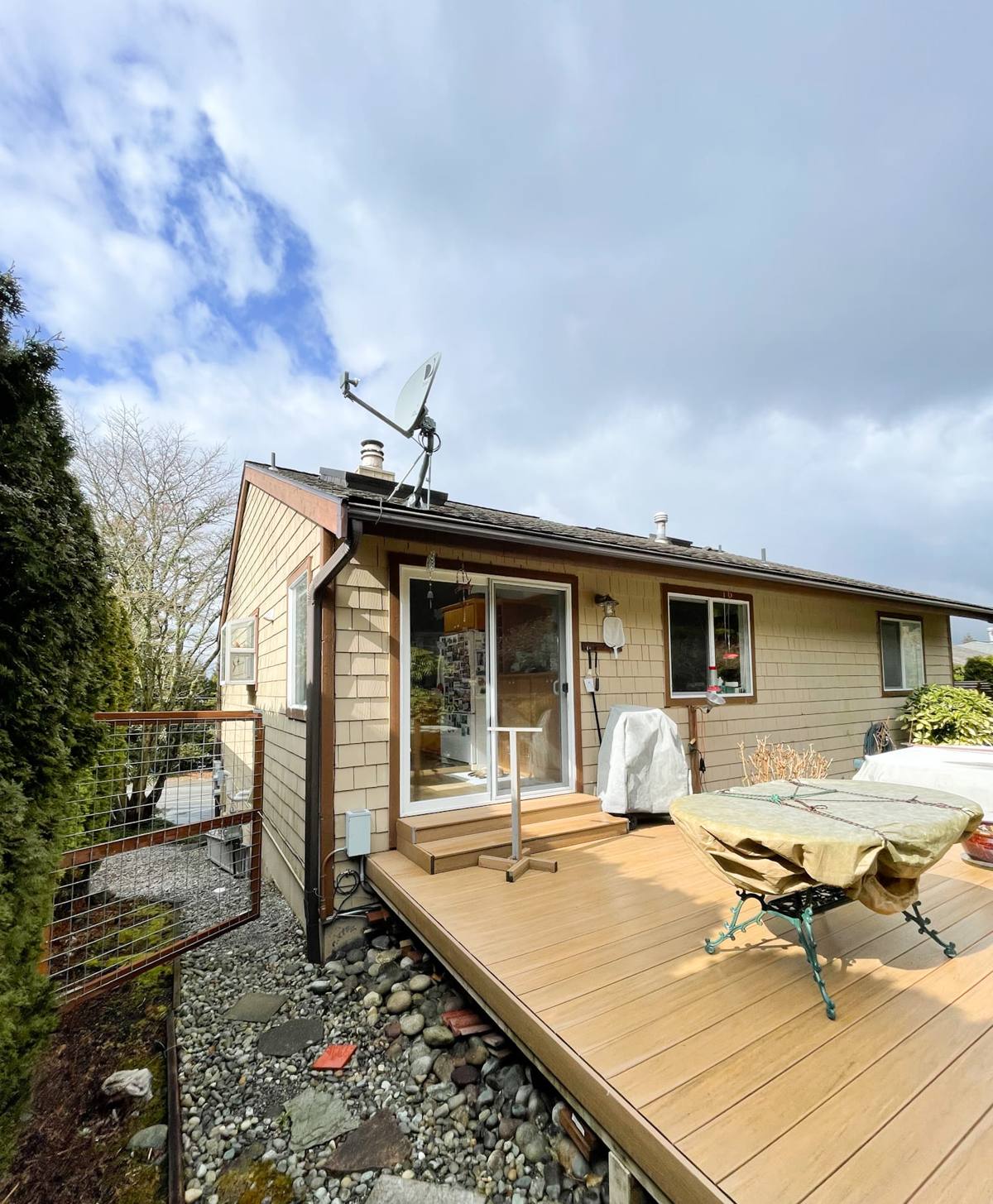
Why Fiber Cement Is the Right Material for This Environment
Fiber cement is made from cement, sand, and cellulose fibers, which gives it a set of properties that line up well with what Laurel's climate demands. It doesn't absorb water the way wood does, it doesn't warp or expand and contract with humidity swings the way some composite products can, and it's non-combustible — a real consideration for insurance and wildfire-adjacent building codes even in a wet climate like this one. It also holds a factory-applied finish far more consistently than field-painted materials, which matters when a wall spends half the year damp and shaded.
None of that means every fiber cement product performs the same way once it's on a wall. The material category is broad. The engineering, the finish system, and how well the manufacturer has tuned the product for a specific climate zone make the real difference in how it ages here.
Why We Only Install James Hardie
We install James Hardie fiber cement siding exclusively — not vinyl, not LP SmartSide, not Cemplank, Allura, primed spruce, or cedar. That's a deliberate standard, not a brand preference, and it's worth explaining honestly.
Climate-Engineered for This Region
James Hardie manufactures different formulations for different climate zones under its HZ5 and HZ10 engineering system. The HZ5 line is engineered for regions like the Pacific Northwest that see prolonged moisture, freeze-thaw cycling, and humidity rather than extreme heat. That's not a marketing label — it changes the mix design so the board performs specifically in wet, temperate conditions rather than being a one-size-fits-all product.
ColorPlus Factory Finish
Hardie's ColorPlus finish is baked on in a controlled factory environment through multiple coats, rather than sprayed or brushed on site. In a climate where a field-applied paint job has to cure in damp, cool conditions, a factory finish that's already fully cured before it ever reaches Laurel is a meaningful advantage — better color retention, better resistance to the fading and chalking that shaded, damp walls are prone to, and a longer stretch before repainting is even a conversation.
Warranty That Actually Transfers
Hardie backs its siding with a long-term limited warranty that's transferable to a subsequent homeowner, and ColorPlus finishes carry their own separate finish warranty. That matters in a market where houses change hands — a warranty that dies with the original owner isn't worth much to anyone buying a home ten years from now.
We've made a professional decision to stand behind one system we can install, warranty, and maintain consistently, rather than juggling several products with different moisture behaviors, fastening requirements, and finish rules. That consistency is part of what protects the homeowner.
What a Correct Fiber Cement Installation Actually Involves
The single biggest factor in how long fiber cement siding lasts in a climate like Laurel's isn't the product — it's the installation. Fiber cement is unforgiving of shortcuts in ways that don't show up for years, which is exactly why so many "siding failures" are really installation failures wearing a product's name.
| Installation Element | Why It Matters Here |
|---|---|
| Rainscreen / drainage gap behind siding | Gives wind-driven rain that gets behind the panel a path to drain and air-dry instead of sitting against the sheathing |
| Corrosion-resistant fasteners | Salt-influenced air accelerates rust on standard fasteners, which can streak the finish and loosen boards over time |
| Correct flashing at windows, doors, and penetrations | Most water intrusion happens at transitions, not on the open field of a wall |
| Manufacturer-specified nailing pattern and clearance | Improper fastening restricts the board's ability to handle moisture-driven movement and can void the warranty |
| Proper joint lapping and caulking at seams | Poorly sealed joints are where driving rain finds its way behind the siding first |
| Ground and roofline clearance | Siding installed too close to grade or a roof surface stays wet longer and is more exposed to splashback and moss |
Every one of these details is spelled out in James Hardie's own installation guidelines, and every one of them is something we follow as a baseline, not an upgrade. Cutting any of them might not show up as a visible problem for a few years — which is exactly the trap. By the time it does show, the fix usually involves opening up the wall, not just recaulking a seam.
Choosing the Right Hardie Product for a Laurel Home
James Hardie makes several distinct product lines, and the right choice depends on the home's style, exposure, and what's being matched or replaced.
| Product | Best Fit |
|---|---|
| HardiePlank lap siding | The most common choice for traditional and craftsman-style homes; wide range of widths and textures |
| HardieShingle | Staggered or straight-edge shingle look for accent gables, dormers, or full shingle-style exteriors |
| HardiePanel | Vertical panel siding, often used for modern facades or as an accent alongside lap siding |
| HardieTrim | Corner boards, fascia, and window/door trim engineered to match the siding's moisture performance |
On exposed or salt-air-influenced elevations, we also pay attention to texture and profile choice — a smooth finish shows streaking and staining differently than a cedar-textured finish, and that's worth talking through before ordering material, not after it's on the wall.
Living With Fiber Cement Siding in a Damp, Shaded Climate
Fiber cement is genuinely low-maintenance compared to wood, but "low-maintenance" doesn't mean "no maintenance," especially with the moss and algae pressure common on Laurel properties with tree cover or north-facing walls.
- Rinse siding with a garden hose (not a pressure washer aimed directly at seams) once or twice a year to clear pollen, salt residue, and early moss growth
- Keep gutters clean and downspouts directed away from the wall so runoff doesn't concentrate moisture at one section of siding
- Trim back vegetation and tree limbs that keep a wall shaded and damp longer than the rest of the house
- Inspect caulking at trim, window, and door joints every couple of years and recaulk before gaps open up
- Address any moss or algae staining promptly with a gentle wash rather than letting it sit and darken over a full wet season
- Watch for any siding that feels soft, or trim that's separating, which usually points to a moisture path that needs attention, not just a cosmetic fix
What Drives the Cost of a Laurel Siding Project
Every home is different, but the same handful of factors move the price on most fiber cement jobs in this area.
| Factor | Why It Affects Cost |
|---|---|
| Existing siding removal | Tear-off, disposal, and any sheathing repair uncovered underneath add labor before new siding can go up |
| Wall complexity | Dormers, multiple gables, and cut-up elevations take more time to flash and trim correctly than a simple rectangular wall |
| Product line and profile | Lap, shingle, and panel products carry different material and labor costs, and specialty textures cost more than standard |
| Trim and accent work | Matching or upgrading trim, fascia, and corner details adds material and detail time |
| Site access | Tight lots, fencing, or limited staging space can add time for scaffolding and material handling |
We give straightforward, itemized estimates rather than vague per-square-foot numbers, because the honest cost of a job depends on what's actually on the wall today and what it will take to do the work correctly.
Why It Matters to Hire a Crew That Already Works in Laurel
Siding installation isn't identical everywhere in the country, and it isn't even identical everywhere in Whatcom County. A crew that regularly works Laurel and the surrounding Custer area already knows which elevations tend to take the worst of the driving rain, where moss pressure is heaviest, and how much clearance and drainage detail a given lot's exposure actually calls for. That's knowledge that doesn't come from a manufacturer's install manual alone — it comes from having done the work on homes with the same wind exposure, the same tree cover, and the same wet-season timeline.
It also means fewer surprises with permitting and inspection, since local crews are familiar with how Whatcom County handles exterior work and what inspectors here are looking for.
Our Process for a Laurel Siding Project
We start with an on-site walk-through to look at the home's current siding condition, exposure, and any moisture or rot already present behind existing cladding. From there we put together a written scope and estimate that spells out product line, profile, color, and any trim or flashing work involved — no guessing after the fact. Once a project is scheduled, our crew handles removal of the old siding, correction of any sheathing or moisture issues found underneath, installation of a proper drainage plane, and then the Hardie siding itself, installed to manufacturer specification from the first course to the last piece of trim.
If you're weighing a siding replacement on a home in Laurel or elsewhere near Custer, we're happy to take a look and give you a straightforward, no-pressure estimate — just fill out the form below.