 Custer
 Why Laurel Homes Ask More of Their Windows
Laurel sits close enough to the water and the marine air moving in off the Strait of Georgia and Puget Sound that windows here work harder than they would twenty miles inland. Salt-laden air corrodes weak hardware and frame components faster than most manufacturers' standard warranties account for. Add Whatcom County's driving, wind-pushed rain — the kind that hits glass and trim sideways instead of falling straight down — and you get a climate that finds every weak seal, every gap in flashing, and every low-grade frame within a few winters. Then there's moss season, which in this part of the county can run most of the year: constant damp shade around window sills, trim, and nearby siding keeps moisture sitting against wood and vinyl longer than drier climates ever would.
None of that means Laurel homeowners need exotic products. It means the details that get skipped on a budget installation — proper flashing sequencing, the right sealant in the right place, a frame material that won't wick moisture — matter more here than they would in a dry inland climate. That's the whole difference between a window that performs for twenty-five years and one that starts fogging, sticking, or leaking air within five.
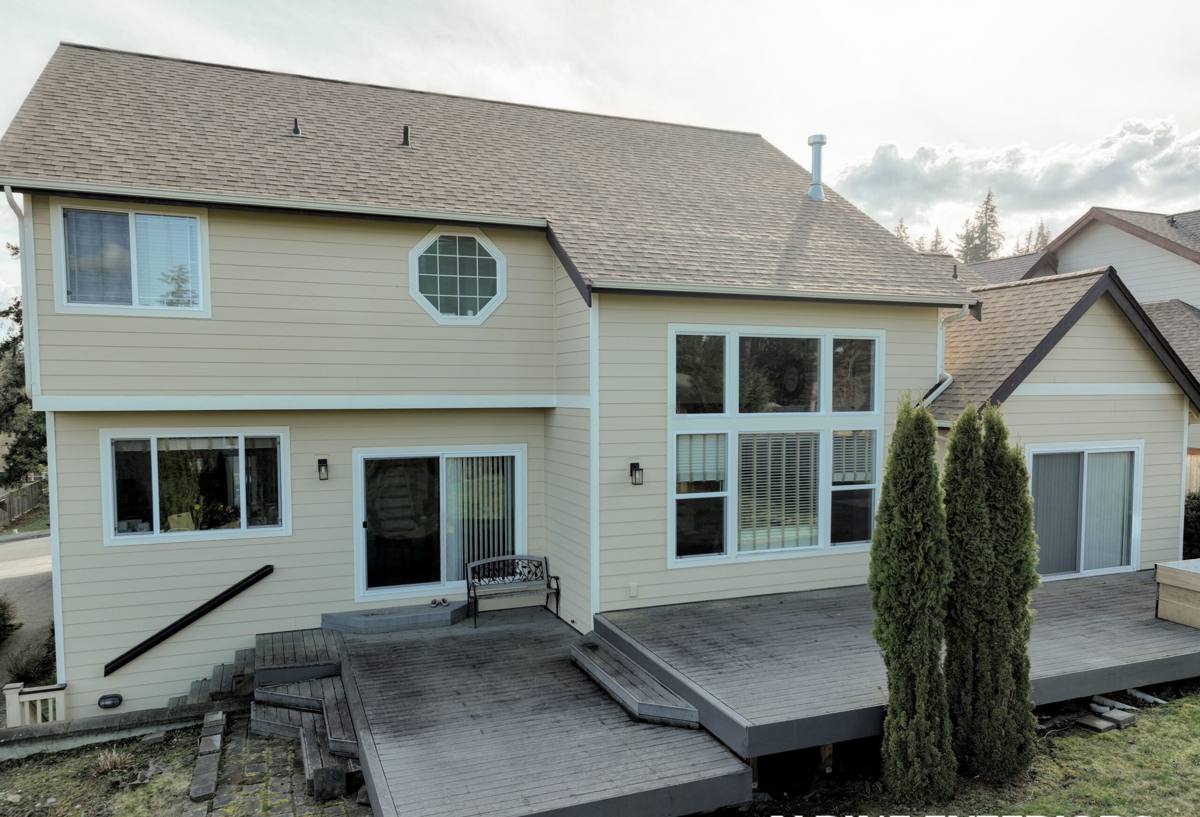
What "Energy-Efficient" Actually Means in This Climate
Energy efficiency isn't just a sticker on the glass. In a marine climate like Custer and Laurel, it's really three systems working together: the glass, the frame, and the seal around the opening. Get one wrong and the other two can't save you.
Glass Package
Double-pane, low-E glass with an argon gas fill is the practical baseline for this area — it cuts winter heat loss and summer solar gain without the added cost of triple-pane, which rarely pencils out for our mild-but-damp climate. What matters more locally is the spacer system between the panes. Cheap aluminum spacers conduct cold and moisture straight through the edge of the glass, which is exactly where condensation and seal failure tend to start in a humid coastal climate. A warm-edge spacer (foam or non-metal composite) holds up noticeably better here over time.
Frame Material
Vinyl and fiberglass both perform well against salt air and moisture, provided the vinyl is a quality multi-chambered profile and not a thin economy grade that flexes and gaps over time. Wood-clad frames look great but need the cladding and any exposed wood detailing to be genuinely sealed and maintained — in a moss-prone, high-moisture area, wood that isn't kept up becomes the first thing to fail. We steer most Laurel homeowners toward vinyl or fiberglass for that reason: less upkeep, better resistance to the damp, and no repainting cycle to stay ahead of.
Air Sealing and Flashing
This is the part that actually determines whether "energy-efficient" windows deliver on that promise. A high-performance window installed with poor flashing or a gapped sill pan will leak air and, eventually, water — no matter how good the glass rating is. Correct integration with the house wrap or weather-resistant barrier, a sloped sill pan, and properly lapped flashing tape are what keep wind-driven rain from finding its way behind the trim.
Signs Your Laurel Home's Windows Are Underperforming
Most homeowners don't think about their windows until something's obviously wrong, but the early signs are usually there well before a window fails outright. Worth checking for:
- Condensation or fogging between the panes — the seal has failed and the gas fill is gone
- Visible daylight or a draft you can feel at the frame edge on a windy day
- Soft or discolored trim and sill wood, especially on north- or west-facing walls that stay shaded and damp
- Moss or dark streaking building up on the sill or the siding just below the window
- Windows that are difficult to open, close, or lock — frames can swell or warp with sustained moisture exposure
- A noticeable jump in heating costs without a clear cause elsewhere in the house
- Paint or caulk around the frame that's cracked, peeling, or pulling away from the wall
Any one of these on its own isn't necessarily urgent. Several together, especially on the weather-exposed side of the house, usually means the window and its flashing are past the point where caulk and weatherstripping will fix it.
What a Correct Installation Actually Involves
Swapping in a new window is straightforward. Doing it in a way that holds up to Whatcom County's driving rain and moss season takes more care at each step:
- Remove the old window and inspect the rough opening for hidden rot or water damage before anything new goes in — this is where problems from a prior bad install usually surface
- Repair or rebuild any damaged framing or sheathing rather than installing over it
- Install a sloped sill pan so any water that does get past the window drains back out, not into the wall
- Set the new window level, plumb, and properly shimmed, then fasten per the manufacturer's specs
- Flash the window in the correct shingle-lap sequence — sides first, then top — so water sheds down and out over each layer, never up and under
- Seal and insulate the gap between the frame and rough opening with a low-expansion foam that won't bow the frame
- Finish trim and exterior caulking with a sealant rated for exterior, marine-climate exposure
Skipping the sill pan or rushing the flashing lap is the single most common shortcut we see on prior installs across the area, and it's almost always what causes a "new" window to leak within a few rainy seasons.
Comparing Frame Options for a Laurel Property
| Frame Material | Moisture & Salt Air Resistance | Maintenance | Typical Lifespan |
|---|---|---|---|
| Vinyl (quality multi-chamber) | Very good — won't rot or corrode | Low — occasional cleaning | 20–30+ years |
| Fiberglass | Excellent — highly stable, resists warping | Low | 30+ years |
| Wood-clad | Good if cladding stays intact and sealed | Higher — watch exposed wood and seams | 20–30 years with upkeep |
| Aluminum | Poor in salt air — prone to corrosion and heat/cold transfer | Moderate | Varies widely |
We don't install aluminum-frame windows on homes in this area as a matter of standard practice — the thermal conductivity and corrosion risk in salt-influenced air work against everything an energy-efficient window is supposed to do. Vinyl and fiberglass cover the vast majority of Laurel homes well; wood-clad remains an option for homeowners who want that look and are prepared for the upkeep it requires in a wet climate.
Choosing the Right Style for a Coastal Whatcom County Home
Style matters for weather performance, not just looks. Casement windows, which seal by compressing against the frame when cranked shut, generally resist wind-driven rain and air infiltration better than single- or double-hung windows, which rely on a sliding sash meeting a track. That doesn't mean double-hung is off the table — it's still a solid, familiar choice for a lot of Laurel homes — but on walls that take the brunt of storms coming off the water, casement or awning styles are worth the conversation.
Sliding windows are convenient and cost-effective but have more opportunities for the seal to wear over time, so they're best reserved for more sheltered elevations rather than the side of the house that takes direct weather.
Our Process, From Estimate to Cleanup
We start with a walkthrough of the home, looking at each window's condition, orientation, and exposure to prevailing weather — a north-facing window in constant shade gets a different read than one on a sun-exposed wall. From there we talk through frame material, glass package, and style options that fit the home and the budget, with a written estimate that spells out product, labor, and timeline.
On installation day, we protect interior floors and landscaping, remove old windows carefully to check for hidden damage, and install using the sequence outlined above — sill pan, flashing, insulation, trim, sealant. We haul away old materials and walk the homeowner through the finished work before we call the job done. No pressure, no upsell script — just what the house actually needs.
Why Working With a Crew That Already Knows Laurel Matters
A lot of window problems we get called to fix started with a crew that was used to a drier climate, or that installed the same way everywhere without adjusting for what wind-driven coastal rain actually does to a wall assembly. Working regularly in Custer and the surrounding Whatcom County communities means we're not guessing at how a given wall or elevation handles weather — we've seen how these houses age, where moss tends to build up, and which details actually matter versus which ones are just extra steps on a checklist. That local pattern recognition is worth more than a lower bid from a crew installing windows the same way they would in Spokane or Sacramento.
Keeping New Windows Performing for the Long Haul
Even a correctly installed window benefits from basic upkeep in this climate. A yearly rinse to clear salt residue and organic buildup off the glass and frame, a look at exterior caulking for cracks before the wet season sets in, and keeping gutters and nearby vegetation from dumping extra water or shade onto a window all go a long way. None of it is complicated — it just needs to actually happen, which is easy to let slide when moss season stretches on as long as it does here.
If your windows in Laurel are drafty, fogged, hard to operate, or just old enough that you're wondering whether they're costing you on heating bills, we're happy to take a look. Reach out for a free, no-pressure estimate — use the form below to get started.