 Custer
 Why Meridian Homes Need Siding Built for This Climate
Meridian sits in the part of Whatcom County that takes weather seriously. Homes here deal with salt-laden air moving in off the water, long stretches of driving rain through the fall and winter, and a moss season that can run half the year under tree cover and on north-facing walls. Siding that works fine in a drier inland climate often struggles here — it absorbs moisture, holds onto grime and moss spores, or simply fades and chalks faster than it should. Choosing the right siding material, and having it installed correctly, matters more in Meridian than in most parts of the country.
This page focuses on one thing: fiber cement siding for homes in and around Meridian, what the local climate demands from it, what a correct installation actually involves, and why the crew doing the work matters as much as the product itself.
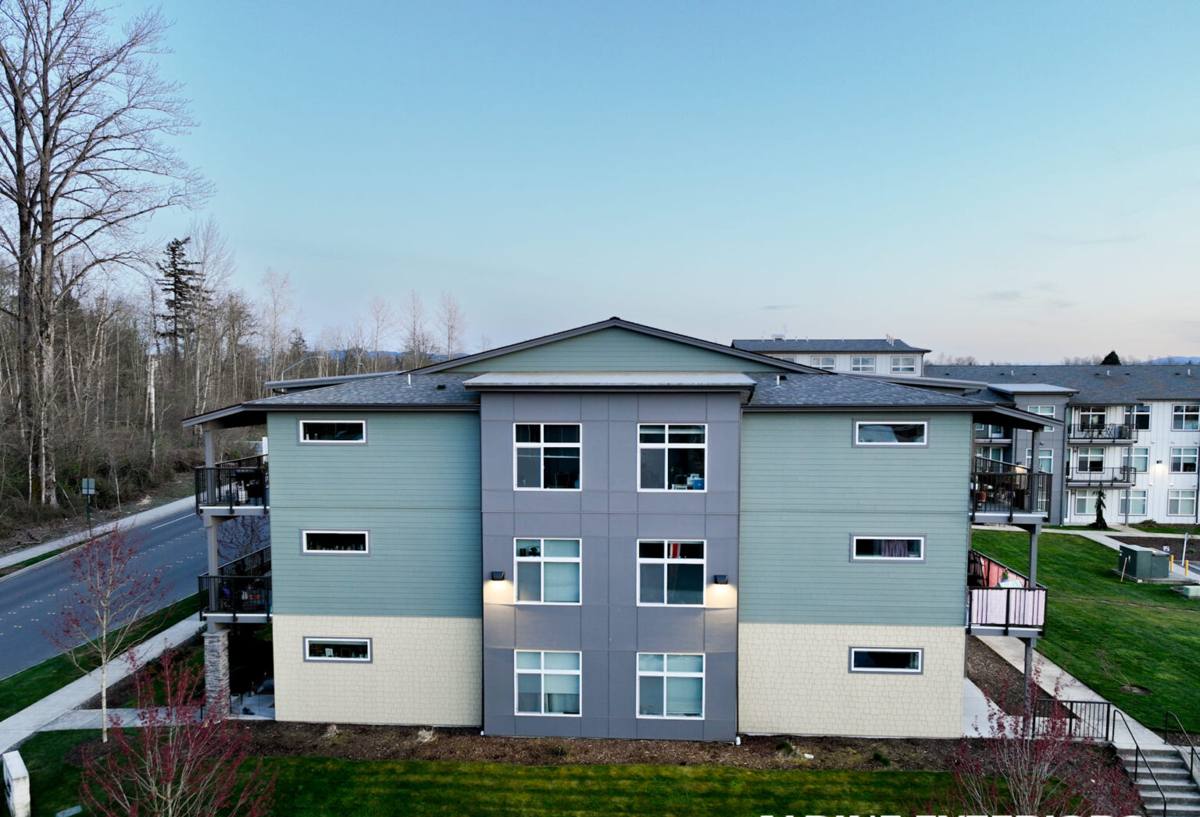
What Whatcom County Weather Does to Siding Over Time
Salt Air and Coastal Exposure
Even a few miles inland from Puget Sound and the Strait of Georgia, salt-bearing air moves through on prevailing winds. Over years, that salt accelerates corrosion on exposed metal fasteners and trim, and it speeds up the breakdown of paint films and cheaper composite materials. Siding systems that aren't engineered for coastal exposure tend to show pitting, chalking, and fastener staining well before their expected lifespan is up.
Driving Rain and Wind-Driven Moisture
Meridian doesn't just get rain — it gets rain pushed sideways by wind off open fields and water. That means moisture is driven into laps, seams, and butt joints, not just falling straight down where gravity and simple overlaps can shed it. Siding and flashing details that would be adequate in a calmer climate can let water track behind the cladding here, which is where rot and hidden damage start.
The Long Moss and Shade Season
Between tree cover, cloud cover, and short winter daylight, north and east-facing walls in Whatcom County can stay damp for weeks at a stretch. That's ideal growing condition for moss and algae. Porous or textured surfaces give spores something to grab onto; smooth, factory-finished surfaces resist it far better and are much easier to rinse clean.
Why We Install Only James Hardie Fiber Cement
We standardized on James Hardie fiber cement siding for every home we side, including in Meridian, and we don't install vinyl, LP SmartSide, Cemplank, Allura, or bare wood siding like primed spruce or cedar. That's not a marketing position — it's a decision based on what actually holds up under the conditions described above.
Non-Combustible and Climate-Engineered
Fiber cement is non-combustible, which matters increasingly in the Pacific Northwest as wildfire risk and insurance underwriting both tighten up. James Hardie also engineers its HZ product lines for specific climate zones, and the HZ5 formulation used in this region is built around the freeze-thaw cycles, moisture exposure, and humidity Whatcom County actually sees — not a generic national spec.
ColorPlus Factory Finish vs. Field Painting
James Hardie's ColorPlus finish is baked on in a controlled factory environment, which gives it far better UV and moisture resistance than paint applied on-site in variable weather. In a climate with this much rain and salt exposure, that difference shows up as color retention and a finish that doesn't need repainting nearly as often — a real advantage over materials that rely on field-applied paint or stain.
Warranty That Follows the Home
James Hardie backs its siding with a strong, transferable limited warranty. That matters to homeowners planning to sell within a decade or two, and it reflects the manufacturer's own confidence in how the product performs over time when installed to spec — which is the other half of this equation.
What a Correct Installation Actually Involves
Fiber cement siding is only as good as the installation behind it. The product can be excellent and still fail early if it's hung wrong. In a wet, wind-driven climate like Meridian's, these details aren't optional extras — they're what determines whether the wall stays dry for the next 30 years.
| Detail | Correct approach | Common shortcut that causes problems |
|---|---|---|
| Weather-resistive barrier | Continuous, properly lapped house wrap or building paper with all penetrations sealed | Wrap installed with gaps, torn corners, or unsealed penetrations around vents and outlets |
| Drainage plane | Rainscreen gap or drainage wrap so any moisture that gets behind the siding can drain and dry | Siding nailed tight to the wall with no way for trapped moisture to escape |
| Fasteners | Corrosion-resistant nails or screws, set to Hardie's specified depth and spacing | Overdriven nails that crack the board or standard fasteners that corrode in salt air |
| Flashing at openings | Head flashing, kick-out flashing, and properly integrated window/door flashing | Caulk used in place of proper flashing at windows, doors, and roof-to-wall intersections |
| Clearances | Minimum gap maintained above roof lines, decks, and grade per manufacturer spec | Siding installed tight to roofing, concrete, or soil, wicking moisture upward |
| Joints and caulking | Butt joints backed and sealed per spec; high-quality sealant at trim and penetrations | Unsupported butt joints or cheap caulk that shrinks and cracks within a couple of seasons |
Every one of these details takes longer to do right than to skip. That's the trade-off a homeowner is actually making when comparing bids — not just the price per square foot of siding.
Our Process for a Meridian Siding Project
- Assessment: We walk the exterior, check the current wall assembly and any moisture-damaged sheathing or framing, and look at how the home's exposure to wind, rain, and shade affects the plan.
- Scope and product selection: We spec the right Hardie profile (lap, panel, shingle-style) and HZ formulation for the home's exposure, and lay out flashing and drainage details specific to that structure.
- Prep: Removal of old siding, repair of any damaged sheathing or framing found underneath, and installation of a continuous weather-resistive barrier and drainage plane.
- Installation: Siding hung to Hardie's fastening and clearance specifications, with flashing integrated at every window, door, and roofline intersection — not caulked over as an afterthought.
- Finish and walkthrough: Trim, caulking, and touch-up work completed, site cleaned up, and a walkthrough so the homeowner understands what was done and how to maintain it.
What Fiber Cement Siding Costs in Meridian
Pricing depends on the specifics of the home, but the main cost drivers are consistent across most projects. This gives a general sense of what moves the number up or down — not a quote, since that requires seeing the actual home.
| Factor | Why it affects cost |
|---|---|
| Home size and wall complexity | More square footage, gables, and cut-ins mean more material and labor time |
| Current siding removal | Tear-off and disposal of old siding, especially if hazardous materials are involved, adds labor |
| Sheathing or framing repair | Hidden rot found once old siding comes off has to be addressed before new siding goes on |
| Siding profile chosen | Lap, panel, and shingle-style products differ in material and installation time |
| Trim and detail work | Window and door trim, corner boards, and fascia detail add labor beyond flat wall coverage |
| Access and site conditions | Steep grades, tight lot lines, or multi-story walls affect staging and labor time |
Maintaining Fiber Cement Siding in a Wet, Salty Climate
James Hardie siding is low-maintenance compared to wood or vinyl, but "low-maintenance" isn't "no-maintenance" — especially in Whatcom County's moss season and salt-air exposure. A simple annual routine goes a long way:
- Rinse the siding, especially north and east-facing walls, once or twice a year to keep moss and algae from taking hold
- Keep gutters clear so overflow doesn't run down the wall face and stay wet longer than it should
- Trim back vegetation and tree limbs that keep walls shaded and damp
- Check caulking at trim, windows, and penetrations annually and re-caulk where it's cracked or pulled away
- Look at fastener heads and cut edges for any exposed, unpainted fiber cement and touch up with matching ColorPlus touch-up paint
- Watch for staining below downspouts or at grade, which can signal a drainage issue worth addressing early
Why It Matters to Hire a Crew That Already Works in Meridian
A siding job in Meridian isn't the same job as a siding job in a dry inland climate, and it isn't the same job as one three states away where the manufacturer's install guide gets treated as a suggestion. A crew that regularly works this part of Whatcom County knows how local wind and rain patterns actually load a wall, which details get skipped by crews in a hurry, and what condition to expect old sheathing to be in when it comes off a home that's weathered a few decades of Pacific Northwest winters. That local pattern recognition is what keeps a new James Hardie installation performing the way it's supposed to for the next 30-plus years, instead of quietly failing behind a finish that still looks fine from the curb.
If you're considering fiber cement siding for a home in Meridian, we'd be glad to take a look and walk you through what your specific home needs. Reach out for a free, no-pressure estimate using the form below.