 Custer
 Why Ferndale Homes Wear Out Siding Faster Than You'd Expect
Ferndale sits close enough to the water and the marine air moving in off the Strait of Georgia that homes here take on a different kind of weathering than siding built for a drier inland climate. It's not one dramatic event that breaks siding down in this part of Whatcom County — it's the accumulation of a long wet season, salt-tinged air, and moss that gets a running start every fall and doesn't fully let go until late spring.
Driving rain is the biggest factor most homeowners underestimate. Wind off the water pushes rain sideways into wall assemblies, not just straight down onto a roof. Siding that isn't detailed correctly at the laps, corners, and penetrations lets that moisture find its way behind the cladding, where it doesn't dry out for weeks at a time. Add in the salt air common to Ferndale's stretch of Whatcom County, which accelerates corrosion on fasteners and trim, and you've got a climate that's genuinely tougher on exterior materials than most manufacturers' warranty testing assumes.
Moss and algae are the visible symptom of all that moisture. On siding that stays damp for extended stretches — north-facing walls, shaded elevations near trees, areas with poor roof overhangs — moss doesn't just look bad. It holds water against the surface, and on materials sensitive to sustained moisture, that's exactly the condition that shortens service life.
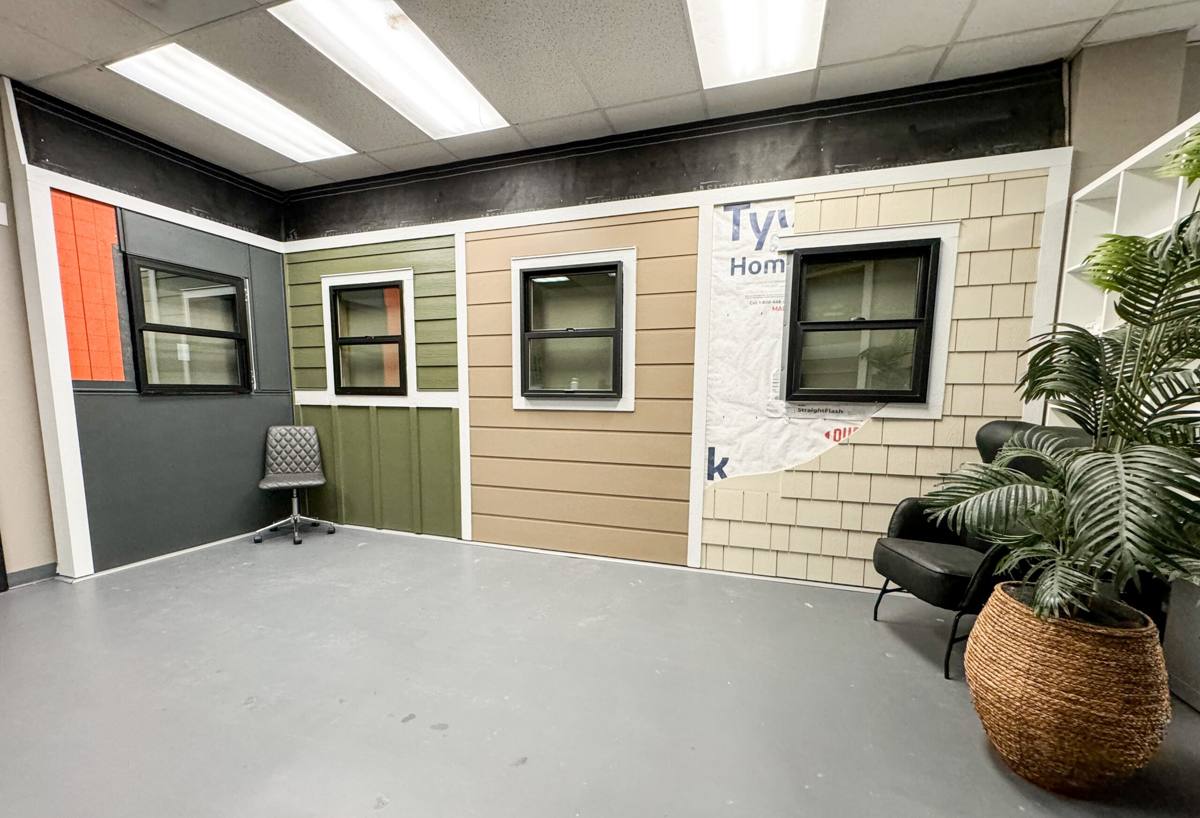
What "Correct" Siding Replacement Actually Means Here
A siding replacement is more than swapping old boards for new ones. In a climate like Ferndale's, the work that happens underneath the new siding matters as much as the siding itself. A correct job includes:
- Full tear-off of the old cladding so the sheathing can actually be inspected, not just covered over
- Repair or replacement of any rotted or water-damaged sheathing found underneath
- A properly lapped and sealed water-resistive barrier (WRB) installed shingle-style so water sheds outward, not inward
- Correct flashing at every window, door, and roof-to-wall intersection — the spots where driving rain finds gaps first
- Rainscreen or furring strategy where conditions call for it, giving the wall assembly a way to drain and dry
- Fastening pattern and fastener type matched to the siding manufacturer's specification, not just "close enough"
- Correct caulking and sealant only where the manufacturer calls for it — not as a substitute for proper flashing
Skip any one of these steps and you can end up with siding that looks fine from the curb for a year or two while moisture is already working on the wall behind it. That's the failure mode we see most often on re-siding jobs in this area: a previous install that looked acceptable on installation day but wasn't built to handle a Whatcom County winter.
Why We Install James Hardie Fiber Cement — and Nothing Else
We standardized on James Hardie fiber cement siding for every home we work on, including Ferndale, and we don't install vinyl, LP SmartSide, or cedar. That's a deliberate choice, not a lack of options.
Fiber cement is non-combustible and dimensionally stable in a way wood-based and engineered-wood products aren't — it doesn't swell, split, or take on moisture at the edges the way OSB-core products can when a seam or cut edge gets exposed. James Hardie's HZ5 product line is specifically engineered for cold, wet climates like ours, and the factory-applied ColorPlus finish is baked on under controlled conditions, which holds up better against the kind of UV and moisture cycling this coastline delivers than a field-applied paint job ever will.
For a Ferndale home dealing with salt air and a long moss season, that combination — a material that doesn't rot, a finish that doesn't need repainting every several years, and a warranty that's backed by the manufacturer rather than resting entirely on the installer — is why Hardie is what goes on the houses we work on.
Signs Your Ferndale Home's Siding Needs Replacing
Not every siding problem calls for a full replacement, but in this climate, some signs mean the wall assembly behind the siding is already compromised:
| What You See | What It Usually Means |
|---|---|
| Soft or spongy spots when pressed | Moisture has reached the substrate, not just the surface |
| Persistent moss or algae that returns after cleaning | That section stays wet longer than it should — often a drainage or overhang issue |
| Paint that's bubbling or peeling in patches | Trapped moisture pushing out from behind the siding |
| Visible gaps or separation at butt joints and corners | Water intrusion points that get worse every wet season |
| Warping, cupping, or bowing boards | Sign of an engineered-wood or vinyl product reaching the end of its service life |
| Rising interior humidity or musty smell near exterior walls | Possible sign moisture has already reached the sheathing |
If you're only seeing one or two of these and only in isolated spots, a repair may be enough. If several of these are showing up across multiple walls, that's usually a sign the underlying materials and details have run their course.
How Our Process Works, Start to Finish
1. On-Site Assessment
We walk the exterior with you, including the elevations that take the worst of the weather — usually the sides facing prevailing wind and rain. We look at existing flashing, overhangs, grading, and any visible moisture damage before we talk about product or price.
2. Tear-Off and Sheathing Inspection
Old siding comes off, and we inspect the sheathing underneath. Any rot or water damage gets addressed before anything new goes up — this is the step that gets skipped on rushed jobs and it's the one that determines how long the new siding actually lasts.
3. Water Management Layer
We install the water-resistive barrier and flashing details built for a wet, wind-driven climate, lapped correctly at every seam, window, and penetration.
4. Hardie Installation to Spec
James Hardie siding goes up following the manufacturer's fastening, clearance, and caulking requirements — the details that keep the warranty valid and keep water out.
5. Trim, Caulk, and Final Walkthrough
Trim work, touch-up, and a walkthrough with you before we call the job done.
What Drives the Cost of a Siding Replacement
| Factor | Why It Matters |
|---|---|
| Extent of sheathing damage found during tear-off | Rot repair adds material and labor beyond the original siding scope |
| Home size and wall complexity | More corners, gables, and trim details mean more labor hours |
| Siding profile and Hardie product line chosen | Lap, shingle, and panel styles have different material and install costs |
| Current condition of flashing and window details | Bringing these up to spec during the job protects the new siding investment |
| Access and site conditions | Landscaping, elevation, and staging space affect labor time |
We give honest, itemized estimates rather than a single vague number, so you can see what's driving the cost and where the money is actually going.
Why a Crew That Already Works Ferndale Matters
Siding installation isn't one-size-fits-all across Washington. A crew that mostly works drier, inland conditions can install a technically fine product with details that fall short of what this coastline actually demands. Working regularly in and around Custer and Ferndale means we already know which elevations on a typical home here take the worst of the wind-driven rain, how much clearance to leave for drainage given the moss and moisture patterns common in Whatcom County, and where past installs in this area have failed so we don't repeat those mistakes.
That local pattern recognition is hard to substitute for. It's the difference between a siding job that's technically installed and one that's actually built for the weather it has to survive.
Caring for Hardie Siding After Installation
One advantage of switching to fiber cement is how little upkeep it needs compared to what most Ferndale homeowners are used to. Still, a few habits keep it performing at its best over the long run:
- Rinse siding annually to keep salt residue and moss spores from building up, especially on shaded or north-facing walls
- Keep gutters clear so overflow doesn't run down the siding face repeatedly
- Trim back vegetation and tree cover that keeps a wall shaded and slow to dry
- Check caulking at trim joints periodically — it's a smaller maintenance item than repainting an entire wall
- Address any impact damage promptly rather than letting a small chip sit exposed through a wet season
None of this is heavy maintenance — it's the kind of upkeep that takes an afternoon a year and keeps the ColorPlus finish and factory warranty doing their job.
Get a Straightforward Estimate
If your Ferndale home's siding is showing wear, or you just want an honest read on how much life is left in what's currently on the walls, we're happy to take a look. The estimate is free, there's no pressure attached to it, and you'll get a clear explanation of what we find — use the form below to get started.