 Custer
 Windows Take a Different Kind of Beating Near California Creek
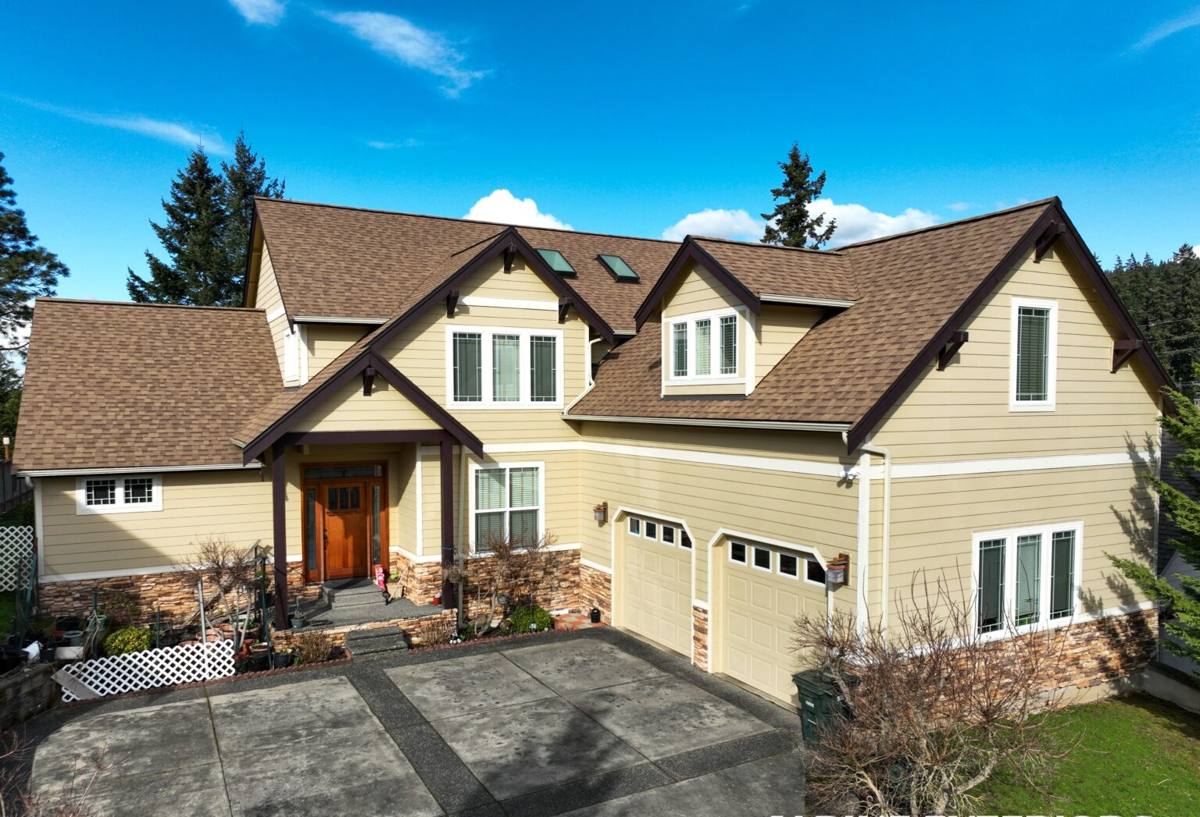
The California Creek area sits close enough to the water and the surrounding tree cover that homes here deal with a specific combination of conditions most inland Whatcom County properties don't see as often: salt-tinged marine air, long stretches of driving rain off the Strait, and shaded, slow-drying corners where moss and algae get a head start every fall. None of that is dramatic on its own, but stacked together over a decade or two, it's exactly the kind of environment that finds every weak point in a window installation. A replacement job done for this pocket of Custer needs to account for all three, not just swap old glass for new and call it done.
This page is about window replacement specifically for California Creek homes — what the local climate actually does to windows, what a correct installation looks like here, and how we approach these jobs differently than we would somewhere drier and further from the water.
What Salt Air, Rain, and Moss Actually Do to Windows
Salt Air and Metal Components
Even a few miles of separation from open salt water is enough for airborne salt to settle on exterior surfaces over time. On windows, the parts that suffer first are the ones you don't think about — hinges, cranks, screen frames, and lower-cost aluminum spacer bars inside the glass unit. Salt exposure accelerates corrosion and pitting, which shows up as stiff or seized hardware and, eventually, seal failure at the glass edge (that's the fogging you see between panes on an older dual-pane window).
Wind-Driven Rain and Water Intrusion
Custer gets its share of straight-down rain, but homes near the creek corridor also catch wind-driven rain that comes in sideways during storms off the water. That matters because a window doesn't fail from water hitting the glass — it fails when water gets behind the trim and finds a path into the wall framing through gaps in flashing or old, cracked caulk. A window that's been "fine" for years can still be sitting on a rotted sill that nobody's seen because it's hidden behind the casing.
Moss, Shade, and Slow-Drying Wood
Properties near the creek often have more tree cover and damp shade than open lots elsewhere in Custer. That keeps humidity higher right at the window and slows down drying after rain. On wood-frame or wood-clad windows, that's a long moss and mildew season — and it means any exposed or unpainted wood stays wet longer, which is when rot actually takes hold. It's not the rain itself that ruins a window frame; it's rain that never gets a chance to dry out.
Signs a California Creek Home Needs Window Replacement, Not Just Repair
Not every window problem means full replacement. But in this climate, some symptoms are worth taking seriously rather than patching year after year:
- Fogging or a permanent haze between the panes of a dual-pane window (the seal has failed — this can't be fixed, only replaced)
- Soft, spongy, or darkened wood at the sill or lower corners of the frame
- Visible daylight or a draft around the frame even when the window is latched
- Hardware — locks, cranks, hinges — that's stiff, corroded, or won't fully engage
- Paint or finish that keeps failing in the same spot within a year or two of repainting
- Moss or dark staining that returns quickly after cleaning, especially on north- or shade-facing windows
- A noticeable temperature difference near the window compared to the rest of the room
- Condensation forming on the inside of the glass regularly, even in normal weather
One or two of these on their own might just need attention. Several together, especially on the shaded or water-facing side of the house, usually means the window and its surrounding wood have been losing the fight for a while.
What a Correct Window Replacement Job Actually Involves
A window replacement is only as good as what happens before the new window ever goes in the opening. This is where most of the long-term performance — or long-term problems — actually get decided.
Flashing and Water Management First
Before a new window is set, the opening needs to be checked and, where necessary, re-flashed so water is directed out and away from the wall framing, not trapped behind it. Given how much wind-driven rain this area gets, this step matters more here than it would on a more sheltered, inland lot. Skipping it or reusing failed flashing is the single most common reason a "new" window ends up with the same rot problem five years later.
Frame Material Choices for This Microclimate
There's no single "best" window material for every home — it depends on budget, the look of the house, and how much upkeep you want to take on. In a salt-air, high-moisture environment like California Creek, though, some trade-offs matter more than they would elsewhere.
| Frame Material | How It Handles Salt Air & Moisture | Maintenance | Typical Fit |
|---|---|---|---|
| Vinyl | Good — won't corrode or rot; UV-stable options hold color | Low — occasional cleaning | Most homes prioritizing value and low upkeep |
| Fiberglass | Very good — dimensionally stable, resists moisture-driven warping | Low | Homes wanting durability with a more refined frame profile |
| Wood-clad | Fair to good — cladding protects the exterior, but any breach exposes wood underneath | Higher — cladding seams and any exposed wood need monitoring | Homes prioritizing an interior wood look |
| Bare aluminum | Poor near salt air — prone to corrosion and condensation | Higher — hardware and finish need regular attention | Generally not what we recommend this close to the water |
We're not against wood-clad or aluminum outright — they have real advantages elsewhere. Near the creek, though, we walk homeowners through these trade-offs honestly rather than defaulting to whatever's easiest to install, because the maintenance burden and moisture risk are genuinely different here than on a dry, inland lot.
Sealing and Insulation Around the Frame
The gap between the new window frame and the rough opening needs to be properly insulated and air-sealed — not just caulked around the visible trim. Done right, this cuts drafts, reduces condensation risk, and keeps moisture from working its way into the wall cavity over the years ahead.
Our Process for California Creek Projects
Assessment
We start by looking at the actual condition behind the trim, not just the glass — checking for soft wood, existing rot, and how the current flashing is holding up. This tells us whether it's a straight window swap or whether some sill or framing repair needs to happen first.
Installation
We re-flash and prep the opening properly, set the window plumb and level, and insulate and seal the perimeter before trim goes back on. Given the moss and shade issues common in this area, we also pay attention to how the finished install will drain and dry — window openings that trap water are the ones that come back to bite you.
Final Check
Before we call a job finished, we check operation, seal integrity, and that exterior finish work (caulk lines, trim, touch-up paint) is done cleanly enough to actually shed water, not just look good on install day.
Why It Matters to Hire a Crew That Already Works This Area
A lot of window problems in coastal and creek-adjacent parts of Whatcom County trace back to installs that were done correctly for a drier climate but not for this one — flashing details that would be fine in eastern Washington but aren't enough here, or wood species and finishes that need more upkeep than most owners realize going in. A crew that regularly works California Creek and the surrounding Custer area has already seen which details actually matter locally: where wind-driven rain hits hardest, which sides of a house hold moss longest, and which frame and sealing choices hold up rather than needing attention again in a few years. That's not something you get from a general contractor doing their first job in the area.
What Affects the Cost of a Window Replacement Here
Every project is different, and we'll give you real numbers after we've actually looked at your windows — but a few factors consistently move the price on jobs in this area:
| Factor | Why It Matters Locally |
|---|---|
| Extent of hidden rot or water damage | Sill and framing repair adds labor beyond a standard swap; more common on shaded, water-facing walls |
| Frame material selected | Vinyl, fiberglass, and wood-clad carry different material costs and long-term maintenance trade-offs |
| Number and size of openings | Larger or specialty-shaped windows take more time to flash and fit correctly |
| Access and site conditions | Second-story or tree-shaded openings can add setup time |
| Trim and finish work required | Matching existing exterior trim or repainting adds scope beyond the window itself |
Broadly, straightforward one-for-one window swaps cost less than jobs that involve rot repair, custom sizing, or full trim replacement. We'll walk through this with you specifically rather than quoting off a generic price list.
Keeping New Windows Performing in This Climate
New windows still need a little seasonal attention here. A quick annual check helps them last:
- Rinse salt residue and grime off frames and glass a few times a year, especially after storms
- Clear moss or debris from tracks and weep holes so water can drain properly
- Lubricate hardware — locks, cranks, hinges — periodically to prevent stiffness or corrosion
- Check caulk lines around the exterior trim annually and touch up any cracking before wet season
- Trim back nearby vegetation that's keeping a window in constant shade and slowing drying
Get a Straight Answer About Your Windows
If your windows near California Creek are drafty, fogged, sticking, or just past their best years, we're happy to take a look and tell you honestly what we see — whether that's a full replacement, a partial fix, or something that can wait. Use the form below to request a free, no-pressure estimate.