 Custer
 Siding in California Creek Has to Earn Its Keep
California Creek sits close enough to the water that homes here deal with a different mix of weather than siding manufacturers assume when they write their general installation guides. Salt-laden air off the Strait, wind-driven rain that comes in sideways during winter storms, and a shaded, damp growing season that keeps moss and algae active for months out of the year — all of it lands directly on the exterior walls of your house. Siding that isn't matched to that combination doesn't fail overnight. It fails slowly, in ways that are easy to miss until a repair bill shows up.
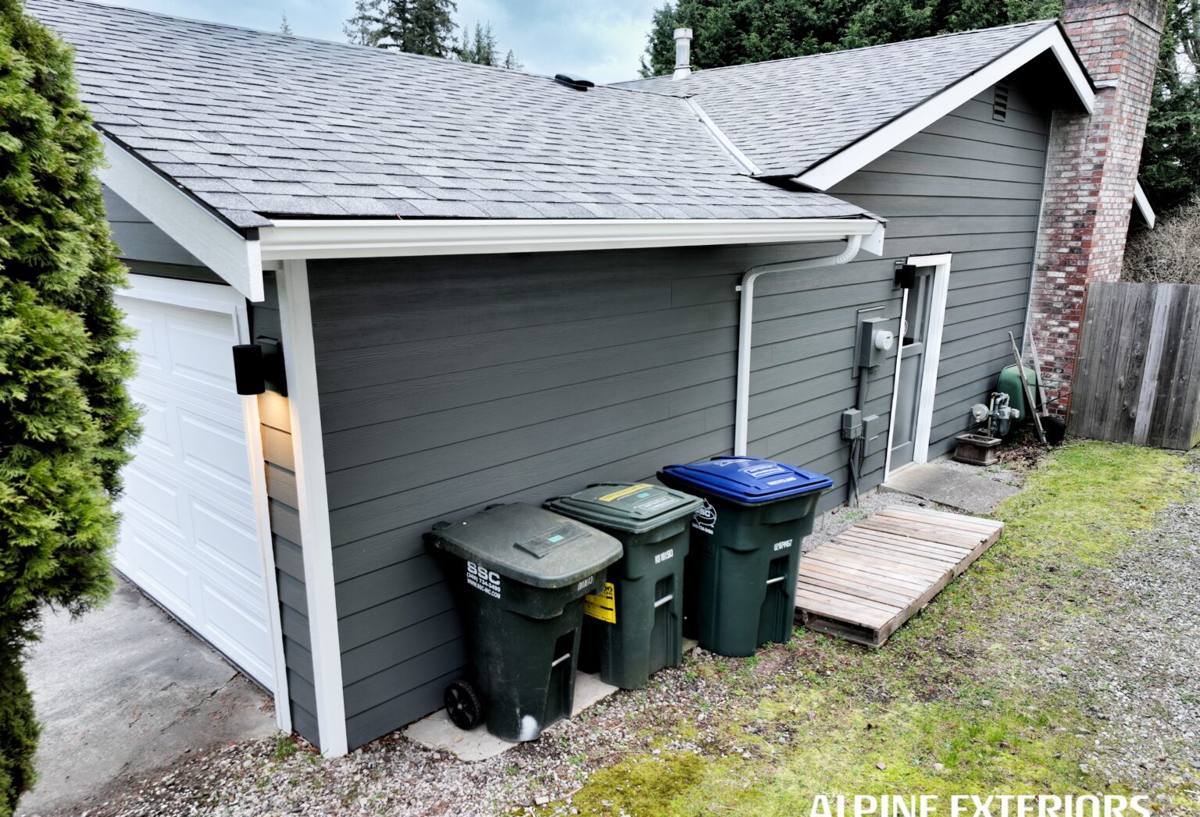
We install fiber cement siding — specifically James Hardie products — for homeowners in this part of Whatcom County because it's the one siding material that holds up to salt exposure, moisture cycling, and moss without the maintenance treadmill that other materials put homeowners on. This page covers what that actually means for a California Creek home: what the climate demands, what a correct installation looks like, and how our process works from first estimate to finished wall.
What This Climate Actually Does to Siding
Salt Air
Airborne salt is corrosive to metal fasteners, flashing, and trim, and it's abrasive to painted or coated surfaces over time. Materials that rely on a thin surface coating or a factory paint layer with limited resistance to salt exposure tend to chalk, fade, or lose adhesion faster near the water than they would twenty miles inland. Fiber cement doesn't eliminate that exposure, but the material itself is inert — it's not going to corrode, and a factory-baked finish holds color and integrity far longer under salt exposure than field-applied paint on other substrates.
Driving Rain
Wind-driven rain doesn't just hit a wall — it gets pushed sideways and upward into laps, seams, and any gap in the water-resistive barrier behind the siding. This is a wind-exposed stretch of coastline, and a siding system that depends on caulk and paint film alone to keep water out is going to lose that fight eventually. What actually keeps water out is correct lap coverage, proper flashing at every penetration and transition, and a drainage plane behind the siding that lets any water that does get past the cladding find its way back out instead of sitting against the sheathing.
The Long Moss Season
Between tree cover, marine humidity, and long stretches of overcast weather, north-facing and shaded walls in California Creek stay damp for extended periods. That's exactly the environment moss and algae need. Porous or wood-based sidings absorb that moisture and give organic growth something to hold onto. A dense, factory-finished fiber cement surface gives moss far less to grip, and it doesn't swell, cup, or rot the way wood-based products can when they stay wet.
Why We Only Install James Hardie Fiber Cement
We don't install vinyl, LP SmartSide, or cedar, and that's a deliberate standard, not a lack of options. Vinyl can warp and its seams open up under sustained wind-driven rain. Engineered wood products like LP SmartSide use a wood-strand core that's more sensitive to sustained moisture exposure than a cement-based product, which matters in a climate where walls stay damp for weeks at a stretch. Cedar looks great new but requires ongoing refinishing to hold up against salt air and rain, and that maintenance schedule is a real, recurring cost most homeowners underestimate when they choose it.
James Hardie fiber cement is non-combustible, dimensionally stable when it gets wet, and available in HZ5 formulations engineered for wetter, more variable climates like this one. Paired with the factory-applied ColorPlus finish, it holds color without the repaint cycle that wood and some engineered products require. That combination — material stability plus a durable factory finish — is why it's the only product we put on homes.
What a Correct Fiber Cement Job Involves
Fiber cement performs the way it's supposed to only when it's installed to spec. A lot of the siding problems we get called out to inspect in this area trace back to installation shortcuts, not the material itself. A correct job includes:
- A continuous water-resistive barrier behind the siding, lapped correctly shingle-style so water sheds outward at every seam
- Proper flashing at windows, doors, roof-to-wall intersections, and any deck or porch penetration — the places wind-driven rain actually finds a way in
- Correct minimum clearance between the bottom of the siding and grade, roofing, decks, and walkways, so splash-back and standing water don't sit against the material
- Fastener placement and spacing per Hardie's published installation guide, using corrosion-resistant fasteners appropriate for a coastal environment
- Proper lap coverage and gapping at butt joints, with factory-cut or field-cut edges caulked and touched up per Hardie's specification
- Adequate gapping and sealing around penetrations — vents, hose bibs, light fixtures — that's often skipped on rushed jobs
Skip any one of these and you can end up with a wall that looks fine from the driveway but is taking on moisture behind the cladding. That's the kind of damage that stays hidden until it's expensive.
James Hardie Product Lines We Install Here
Not every Hardie product is the right fit for every wall or every home. Part of our job is matching the product line and texture to the house and its exposure.
| Product | Best Use | Why It Fits California Creek |
|---|---|---|
| HardiePlank Lap Siding (HZ5) | Primary wall cladding | Formulated for wetter, harsher climates; the standard choice for most homes here |
| HardieShingle | Accent gables, dormers, feature walls | Cedar-shingle look without the moisture absorption and moss-friendly texture of real wood shakes |
| HardieTrim | Corners, window and door casing, fascia | Matches the plank's stability so trim doesn't expand, contract, or gap differently than the field siding |
| HardiePanel | Modern vertical siding, accent sections | Clean lines for contemporary exteriors, same factory-finish durability |
All of it comes through in ColorPlus factory finish where possible, which matters more here than in a drier inland climate — a factory-baked finish resists the fading and chalking that salt air and UV accelerate on field-applied paint.
Our Process, Start to Finish
- On-site assessment. We look at your current siding, wall assembly, drainage, and exposure — north walls, wind-facing elevations, and anywhere we see existing moss or moisture staining get particular attention.
- Written estimate. You get a clear scope: product lines, colors, trim details, and what tear-off and prep involves for your specific house.
- Tear-off and inspection. Removing the old siding lets us actually see the sheathing and framing underneath. Any rot or water damage gets addressed before anything new goes on — no covering up a problem.
- Water-resistive barrier and flashing. This is the step that determines whether your walls stay dry for the next thirty years, and it's the one that's invisible once the siding goes up.
- Fiber cement installation. Installed to Hardie's published specifications for fastening, clearance, and lap coverage — not shortcuts to save a day of labor.
- Trim, caulking, and final detailing. Every penetration sealed, every joint finished properly.
- Final walkthrough. We go over the finished job with you before we consider it done.
Common Problems We Find on Older Siding in This Area
When we're called out to look at failing siding in and around California Creek, a handful of patterns show up repeatedly:
- Missing or improperly lapped flashing at window heads, letting driving rain track behind the siding
- Siding installed too close to grade or a deck surface, wicking moisture up from below
- Heavy moss buildup on shaded walls that were never designed with adequate drainage or ventilation behind the cladding
- Caulk relied on as the primary water seal instead of proper flashing and lap technique
- Wood or engineered wood siding with soft, delaminating spots at butt joints and lower courses where moisture collects
None of these are dramatic failures at first. They show up as a soft spot near the bottom of a wall, a persistent damp patch, or moss that keeps coming back no matter how often it's cleaned off. By the time they're visible, there's usually already sheathing damage behind the siding.
Living With Fiber Cement in a Salt Air, High-Moss Climate
Fiber cement is low-maintenance compared to wood or vinyl, but "low-maintenance" doesn't mean "no maintenance" — especially this close to the water. A simple annual routine keeps it performing the way it's designed to:
- Rinse the exterior once or twice a year with a garden hose to clear salt residue and organic buildup, especially on shaded or wind-facing walls
- Trim back vegetation and tree limbs that keep walls shaded and damp longer than they need to be
- Check caulking at trim joints and penetrations annually and touch up before small gaps become water paths
- Walk the foundation line after major storms to confirm nothing is holding standing water against the bottom course
- Address any soft spots, staining, or recurring moss immediately rather than waiting for the next scheduled look
What Drives Cost on a California Creek Job
Every house is different, but the same handful of factors move the price up or down on most jobs in this area:
| Factor | Why It Matters |
|---|---|
| Tear-off scope | Removing multiple layers of old siding or dealing with rot adds labor before new material even goes up |
| Sheathing repair | Water-damaged sheathing found during tear-off has to be replaced before installation continues |
| Wall complexity | Dormers, multiple gables, and cut-up elevations take more time and material than a simple rectangular wall |
| Product mix | Combining lap siding with shingle accents or vertical panel sections adds detail work versus a single product throughout |
| Trim scope | Full trim replacement versus reusing sound existing trim changes both material and labor |
| Access and exposure | Height, tree cover, and wind exposure affect scaffolding, staging, and scheduling around weather windows |
We won't quote a number without seeing the house — anyone who does is guessing. What we can tell you honestly is that fiber cement typically costs more upfront than vinyl and less over a twenty-plus year horizon than wood siding once you factor in refinishing.
Why Hiring a Crew That Already Works California Creek Matters
A crew that installs siding all over Whatcom County, including homes exposed to this same stretch of coastline, already knows which walls take the worst of the driving rain, where moss builds up fastest, and what flashing details actually hold up here versus what a generic install guide assumes for a drier climate. That local pattern recognition shows up in small decisions — extra attention to a north-facing wall, a flashing detail at a tricky roofline, fastener choice appropriate for salt exposure — that don't show up on a spec sheet but matter to how the siding performs ten and twenty years out.
If your California Creek home needs new siding or you're seeing early signs of trouble — moss that won't stay gone, soft spots, or a wall that never quite looks dry — we're happy to come take a look. Reach out for a free, no-pressure estimate using the form below.