 Custer
 Why Blaine's Marine Climate Is Hard on Windows
Blaine sits right on the water, at the northern edge of Whatcom County, which means homes here take a different kind of beating than houses even a few miles inland. Salt-laden air off the bay works on aluminum hardware, fasteners, and unprotected wood trim year-round. Wind-driven rain off the water doesn't just fall straight down — it gets pushed sideways into window frames and trim joints, which is exactly the condition that exposes a weak seal or a poorly flashed installation. And then there's the long wet season: months of damp, low-light conditions that let moss and algae take hold on sills, tracks, and exterior trim if they aren't shedding water properly.
None of this means windows in Blaine need to be exotic or overbuilt. It means the details that get skipped in easier climates — the flashing, the sealant, the frame material, the drainage path — can't be skipped here without consequences showing up within a few winters.
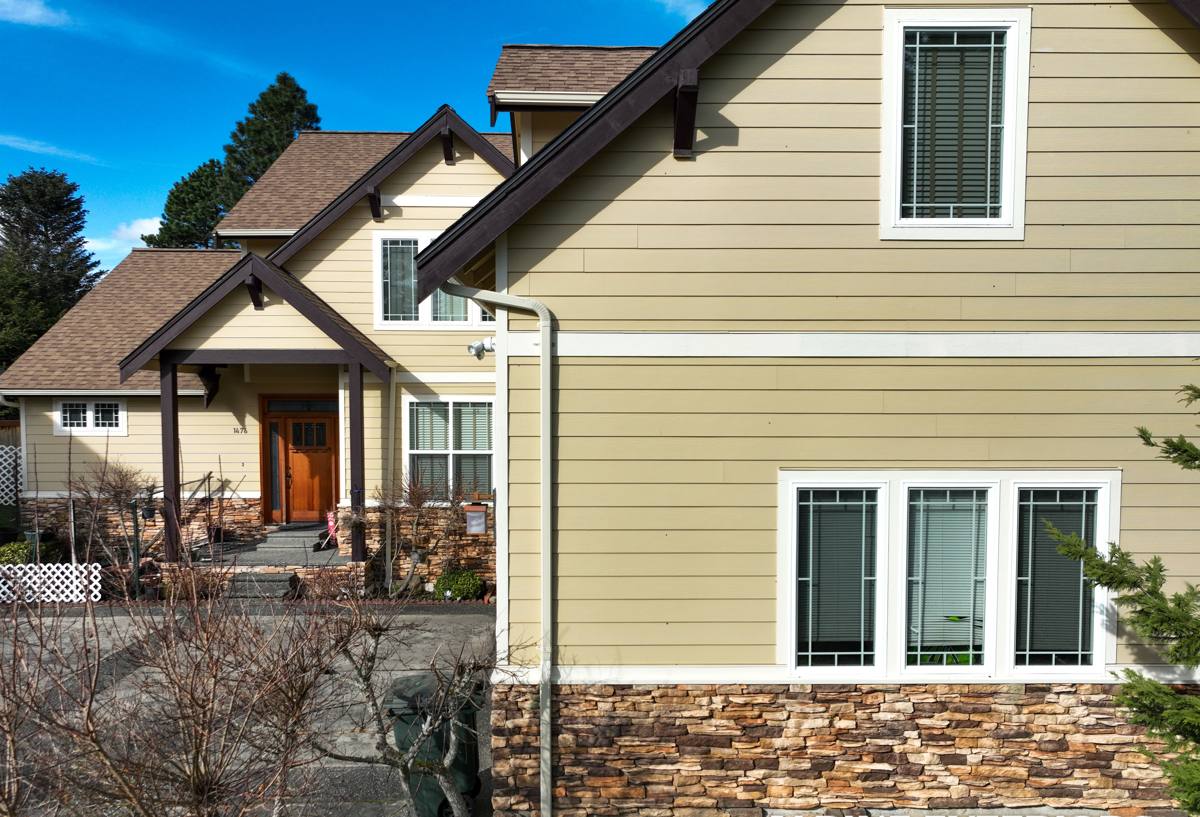
Signs Your Current Windows Are Underperforming
Drafts and Cold Spots
If you can feel air movement near a closed window, or notice a cold zone in a room even with the heat running, the weatherstripping or the frame seal has likely failed. This is common on original windows in older Whatcom County homes that have never been replaced.
Fogging Between the Panes
A hazy or foggy look between the two panes of glass means the seal on the insulated glass unit has broken and the gas fill (or plain air) has escaped or let moisture in. This can't be fixed — the glass unit needs replacing, and often the whole window is due for an upgrade.
Moss, Discoloration, or Soft Spots on Sills and Trim
Given how much of the year Blaine spends under damp, overcast conditions, any wood trim or sill that isn't draining and drying properly will eventually grow moss or algae, and behind that greenish film there's often already moisture doing damage to the substrate underneath.
Windows That Are Hard to Open, Close, or Lock
Swollen frames, sagging sashes, or hardware that's seized up from corrosion are common near the water and usually point to moisture intrusion or salt-air wear on the mechanical parts, not just an old-fashioned design.
What Actually Makes a Window "Energy Efficient" for This Area
Efficient window ratings come down to a handful of numbers on the NFRC label, and they matter differently depending on climate:
- U-factor — measures how well the window resists heat loss. In a heating-dominated, mild-summer climate like ours, a low U-factor is the number that saves the most on energy bills.
- SHGC (Solar Heat Gain Coefficient) — measures how much solar heat passes through the glass. It matters less here than in sunnier climates, but on south- and west-facing rooms it can still affect summer comfort.
- Low-E coatings — a microscopically thin coating that reflects heat while still letting light through. Standard on virtually every quality window sold today.
- Gas fill and warm-edge spacers — argon (or krypton) fill between panes and a non-metal spacer bar reduce heat transfer and cut down on interior condensation on cold, damp mornings, which is a common complaint in coastal Whatcom County homes.
Frame material matters just as much as the glass package, especially with salt air in the mix:
| Frame Material | Salt Air / Moisture Resistance | Maintenance | Typical Lifespan |
|---|---|---|---|
| Vinyl | Good — won't corrode or rot, seams are the main watch point | Low | 20–30+ years |
| Fiberglass | Excellent — very stable in wet, salty, temperature-swinging conditions | Low | 30+ years |
| Wood-clad | Fair — the cladding protects the exterior, but any breach exposes wood to rot | Moderate to high | 20–30 years, cladding-dependent |
| Aluminum | Poor without a thermal break; prone to pitting and corrosion near salt air | Moderate | 15–25 years |
For most homes in and around Blaine, we steer people toward vinyl or fiberglass frames for this reason — not because wood-clad or aluminum windows are bad products, but because the maintenance burden and moisture risk they carry is a poor match for a marine climate where the window will see damp air and driving rain most months of the year.
Why Installation Quality Matters as Much as the Window Itself
A high-efficiency window installed poorly will underperform a mid-grade window installed correctly — and in a wind-driven rain climate, a bad install shows up fast. The details that make or break the job include:
- A properly sloped sill pan so any water that does get past the exterior sheds outward, not into the wall cavity.
- Flashing tape and house wrap integration done in the correct shingle-lap order, so water is always directed down and out, never trapped behind a seam.
- Backer rod and the right exterior sealant at the perimeter — not just a bead of caulk over a gap.
- Proper shimming so the frame isn't racked, which keeps the sash operating smoothly and the weatherstripping seated correctly for years, not just on install day.
Because we also work directly with siding, trim, and moisture barriers, we treat every window as part of the building envelope, not an isolated swap. That's the difference between a window that holds up through a Whatcom County winter and one that starts leaking behind the trim within a couple of seasons.
Our Process for a Blaine Window Project
- On-site assessment. We look at the existing windows, frames, sills, and surrounding trim or siding for signs of rot, moisture intrusion, or failed flashing — not just the glass.
- Product selection. We walk through frame material, glass package, and grille or hardware options based on your home's exposure, budget, and how the window will be used.
- Careful removal. Old windows come out with attention to what's underneath — this is often when hidden water damage from years of driving rain gets found, and we'll flag it before covering it back up.
- Correct flashing and sealing. Sill pans, flashing tape, and sealant go in following manufacturer specs and best practice for our wet climate, integrated properly with the existing wall assembly.
- Final adjustment and cleanup. Every window is checked for square, smooth operation, and a tight seal before we consider the job done.
Maintaining Energy-Efficient Windows in a Salt Air, High-Moss Climate
Even a well-installed, quality window benefits from a little seasonal attention here. A short list that goes a long way:
- Rinse salt residue and grime off exterior frames and glass a couple of times a year, especially on sides facing the water.
- Clear moss, leaves, and debris from sills and tracks before the wet season sets in, so water has a clear path to drain.
- Check weatherstripping and hardware annually — lubricate locks and hinges that see salt air exposure.
- Inspect exterior caulking at the window perimeter yearly and re-seal any cracked or shrinking beads before winter rains arrive.
- Watch for condensation between panes — it's the earliest sign of a failing seal and worth addressing before it leads to a bigger repair.
What Affects the Cost of a Window Project in This Area
| Factor | Why It Matters Locally |
|---|---|
| Frame material | Fiberglass and vinyl cost more up front than aluminum but hold up far better against salt air and moisture over time |
| Number and size of openings | Larger or custom-sized openings, common in older coastal homes, take more material and labor |
| Condition behind the old window | Rot or water damage found during removal — more likely here given the rain exposure — adds repair work before the new window goes in |
| Accessibility | Upper-story or hard-to-reach windows on multi-story homes take more time and equipment |
| Trim and siding tie-in | Matching new flashing and trim into existing siding cleanly can add scope, especially on homes with older or weathered exteriors |
We give straightforward, itemized pricing so you know what you're paying for and why — no vague lump sums, and no upselling you on features that don't make sense for your home.
Why Hire a Crew That Already Works in Blaine
Window installation done right depends on understanding the specific conditions a house faces — and a crew that regularly works Blaine and the surrounding Whatcom County coastline already knows what driving rain and salt air do to a poorly flashed opening or an aluminum frame left unprotected. That experience shows up in the small decisions: which sealant holds up in this humidity, how deep the moss problem usually runs on a north-facing sill, and where water actually tends to find its way in on homes exposed to weather off the bay. It's the difference between a crew guessing at best practice and one that's already seen how these installations perform through several wet seasons.
If your windows are drafty, fogged, sticking, or just old enough that you're wondering whether they're costing you more in heating bills than they're worth, we're happy to take a look. Reach out for a free, no-pressure estimate — we'll walk the property, answer your questions honestly, and give you a clear picture of your options before you decide anything.