 Custer
 Why Bellingham Windows Wear Out Differently Than Windows Inland
A window in Spokane and a window in Bellingham face two different jobs. Ours sits closer to Bellingham Bay and the Strait of Georgia, which means more airborne salt, more wind-driven rain, and a longer stretch of damp, low-sun months where moisture just doesn't dry out the way it would east of the mountains. None of that is dramatic on its own, but it adds up year after year in ways that show up first at the window.
Salt-laden air is hard on exposed hardware — hinges, cranks, locks, and any unprotected fasteners corrode faster here than in a dry inland climate. Driving rain, especially in storms that come off the water with real wind behind them, doesn't just hit glass — it gets pushed sideways into any gap around the frame, which is why flashing and sealant details matter more here than in calmer climates. And the long moss season that Whatcom County is known for isn't just a roof problem. Moss and algae find a foothold anywhere wood stays damp too long, including sills, trim, and the wood substrate behind old aluminum or wood-frame windows.
None of this means Bellingham homes need exotic solutions. It means the ordinary parts of a window replacement — flashing, sealant, drainage, material choice — need to be done correctly, because the climate here doesn't forgive shortcuts the way a drier region might.
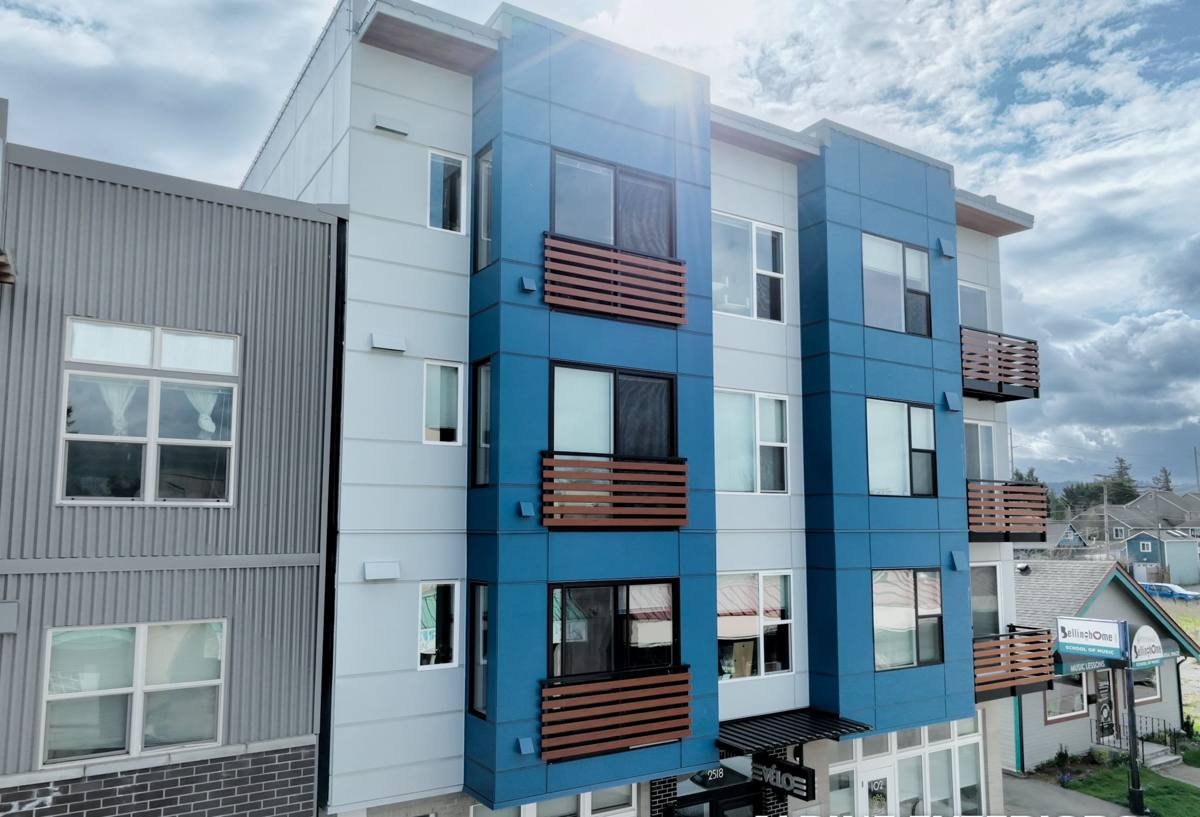
Signs a Bellingham Home Needs Window Replacement
Most homeowners don't wake up one day and decide to replace windows — they notice small things over time that eventually add up. Here's what we look for, and what you can check yourself:
- Visible fogging or a permanent haze between panes of double-glazed glass — the seal has failed and the gas fill is gone
- Wood trim or sills that feel soft, look discolored, or have visible moss/algae growth
- Drafts you can feel with a hand near the frame on a windy day
- Windows that are hard to open, close, or lock — often a sign the frame has swollen or shifted
- Condensation forming on the inside of the glass regularly, especially in winter
- Corroded or stiff hardware — cranks, latches, or hinges that have pitted or seized
- Paint or finish failing repeatedly on the same window despite regular upkeep
- Noticeably higher heating bills without another clear cause
Any one of these on its own might just need a repair. Several of them together, especially on a home more than 20-25 years old, usually mean it's time to talk about replacement rather than another round of patching.
What a Correct Window Replacement Actually Involves
It Starts Below the Surface
The window itself — the sash, the glass, the frame — is the easy part to picture. What actually determines whether a window performs for the next 20 years is what happens at the rough opening: how the old unit comes out, how the opening is inspected and prepped, and how the new window ties into the existing weather-resistive barrier and siding.
This is where a lot of window-only companies fall short, because they're focused on the unit and not the wall it sits in. As a siding contractor first, we look at the whole envelope — the window is one piece of a system that has to shed water, not just look good.
The Non-Negotiables
- Removing the old window without tearing up more siding or trim than necessary
- Checking the sheathing and framing around the opening for rot or moisture damage before the new window goes in
- Installing new flashing tape and pan flashing at the sill so any water that does get past the window drains back out, not into the wall
- Properly lapping the weather-resistive barrier over the flashing (shingle-style, top over bottom) so water sheds down and out
- Using the right sealant at the right joints — not sealant everywhere, which can trap moisture instead of releasing it
- Shimming and fastening the window plumb, level, and square per the manufacturer's instructions, since improper installation voids most warranties
- Insulating the gap between the frame and the rough opening without overpacking it, which can bow the frame
Skip or rush any one of these steps and the window can look perfect for a year or two while water quietly gets into the wall behind it. That's a much more expensive problem to fix later than it would have been to do right the first time.
Choosing Materials for a Marine Climate
There's no single "best" window material — there's a best fit for your home, budget, and how exposed it is to weather. For a home in or near Bellingham, exposure matters: a window on a wall that catches wind off the water needs to hold up to more than one tucked on a sheltered side of the house.
| Material | How It Handles Local Climate | Maintenance | Typical Lifespan |
|---|---|---|---|
| Vinyl | Good moisture resistance, won't rot or corrode; performs well in most Whatcom County exposures | Low — occasional cleaning | 20-30 years |
| Fiberglass | Excellent dimensional stability in temperature/humidity swings; strong option for higher-exposure walls | Low | 30-40 years |
| Wood (clad exterior) | Attractive, but exterior cladding must be intact — any breach exposes wood to our damp season | Moderate to high — watch cladding seams | 20-40 years, install-dependent |
| Aluminum (older stock) | Conducts cold and can corrode with salt air exposure over time; largely what we're replacing, not installing new | High | Varies widely, often already failing |
For most Bellingham homes we recommend vinyl or fiberglass for the balance of upfront cost, low maintenance, and how well they tolerate driving rain and salt air without ongoing upkeep. Wood-clad windows can still be the right call for a specific look or a historic home, but we'll be upfront that they ask more of you in maintenance, especially on walls that take direct weather.
Glass and Performance Options Worth Understanding
Beyond the frame material, the glass package matters just as much for comfort and condensation control.
Low-E Coatings
Low-emissivity coatings are a microscopically thin layer applied to the glass that reflects heat while still letting light through. In our climate, a good low-E package helps keep homes warmer in winter and reduces the interior condensation that shows up on cold, damp mornings — a common complaint we hear from homeowners with older single-pane or early double-pane windows.
Gas Fills and Spacers
Argon or krypton gas between panes improves insulation value over plain air, and the spacer material at the edge of the glass affects how well the seal resists failure over time. Warm-edge spacers generally hold up better to years of temperature and humidity cycling than older metal spacer designs, which is relevant given how much our weather swings between damp cold and humid summer stretches.
U-Factor and Air Infiltration Ratings
Every certified window carries a rating for U-factor (how well it resists heat loss) and air infiltration (how much air leaks through when it's windy). For a home exposed to driving rain and wind off the water, a lower air infiltration rating isn't just an efficiency number — it's a direct measure of how well that window will resist wind-driven weather.
Our Process for a Bellingham Window Replacement
- On-site assessment — we look at each window's exposure, condition, and the wall assembly around it, not just the glass
- Honest recommendation — replacement, repair, or a mix, depending on what each window actually needs
- Material and glass selection — matched to your budget and each window's specific exposure to weather
- Careful removal — protecting existing siding and trim rather than demolishing more than necessary
- Opening inspection — checking for hidden rot or moisture damage before anything new goes in
- Correct flashing and barrier integration — so the new window ties properly into the existing weather-resistive barrier and siding
- Installation to manufacturer spec — plumb, level, square, properly fastened and insulated
- Final sealing, trim, and cleanup — including hauling away the old units
Because we do siding work as our core trade, integrating a new window into the surrounding wall isn't an afterthought for us — it's the part of the job we're most particular about.
What Affects the Cost
We won't quote a number without seeing the job, but these are the factors that move the price up or down on most Bellingham window projects:
| Factor | Why It Matters |
|---|---|
| Number and size of windows | More glass and larger units cost more in materials and labor |
| Material (vinyl, fiberglass, wood-clad) | Fiberglass and wood-clad generally cost more upfront than vinyl |
| Glass package | Low-E coatings, gas fills, and impact-rated glass add cost but improve comfort and durability |
| Condition of the rough opening | Hidden rot or moisture damage found during removal adds repair time before the new window goes in |
| Siding coordination | Openings that need siding removed and reinstalled around them take more labor than a straightforward swap |
| Access and exposure | Second-story windows or units on high-wind walls can take longer to install correctly |
Homeowners are usually better served by fewer, correctly installed windows this year than a full-house job done in a hurry. We'll always tell you honestly if a phased approach makes more sense for your budget.
Why Local Experience in Bellingham Matters
Window replacement done by a crew that doesn't regularly work this specific climate tends to treat every job the same, regardless of exposure. A crew that works Bellingham and the surrounding Whatcom County area routinely sees which orientations take the worst of the wind-driven rain, how long the moss season really runs, and how salt air affects hardware and finishes differently than it does 50 miles inland.
That experience shows up in small decisions — which side of the house gets extra attention on flashing, which sealant holds up best through our wet season, when a wood-clad window makes sense and when it's setting a homeowner up for maintenance headaches. It also means we're not learning the local building department's expectations on your project — we already know them.
Caring for New Windows Through Bellingham's Weather
New windows installed correctly need very little from you, but a little seasonal attention extends their life:
- Rinse sills and frames periodically during moss season to keep organic growth from taking hold on trim
- Wipe down hardware occasionally, especially on windows facing open water or prevailing wind, to slow salt-related corrosion
- Check that weep holes on vinyl and fiberglass frames stay clear of debris so water drains as designed
- Keep an eye on exterior caulk lines each fall and have any cracked sealant addressed before winter's driving rain arrives
None of this is heavy maintenance — it's the same kind of seasonal attention most Bellingham homeowners already give the rest of their exterior.
If your windows are showing their age, or you're planning ahead before winter's storms arrive, we're happy to take a look and give you an honest read on what your home actually needs. Fill out the form below for a free, no-pressure estimate.