 Custer
 Metal Roofing in the Sumas Area: Built for What This Corner of Whatcom County Throws at a Roof
Sumas sits up against the Canadian border in the northern reach of Whatcom County, close enough to Custer that the two communities share the same weather system almost exactly. That means the same combination that wears out roofs across this part of the county: marine air pushed in off the Salish Sea, long stretches of driving rain from fall through spring, and a moss season that can run eight or nine months if a roof gives it the shade and moisture it wants. Metal roofing holds up well against all three, but only when it's specified and installed correctly for this exact climate. A metal roof detailed for a dry inland town isn't the same job as one detailed for Sumas.
We're a Custer-based crew, and Sumas is inside our regular service area — not a stretch job we drive an hour for once a year. That matters more with metal roofing than with almost any other exterior product, because so much of whether a metal roof performs for 40+ years versus leaking in year six comes down to details that don't show up in a sales brochure: underlayment choice, fastener pattern, panel overlap, and how the roof is flashed where it meets walls, chimneys, and valleys.
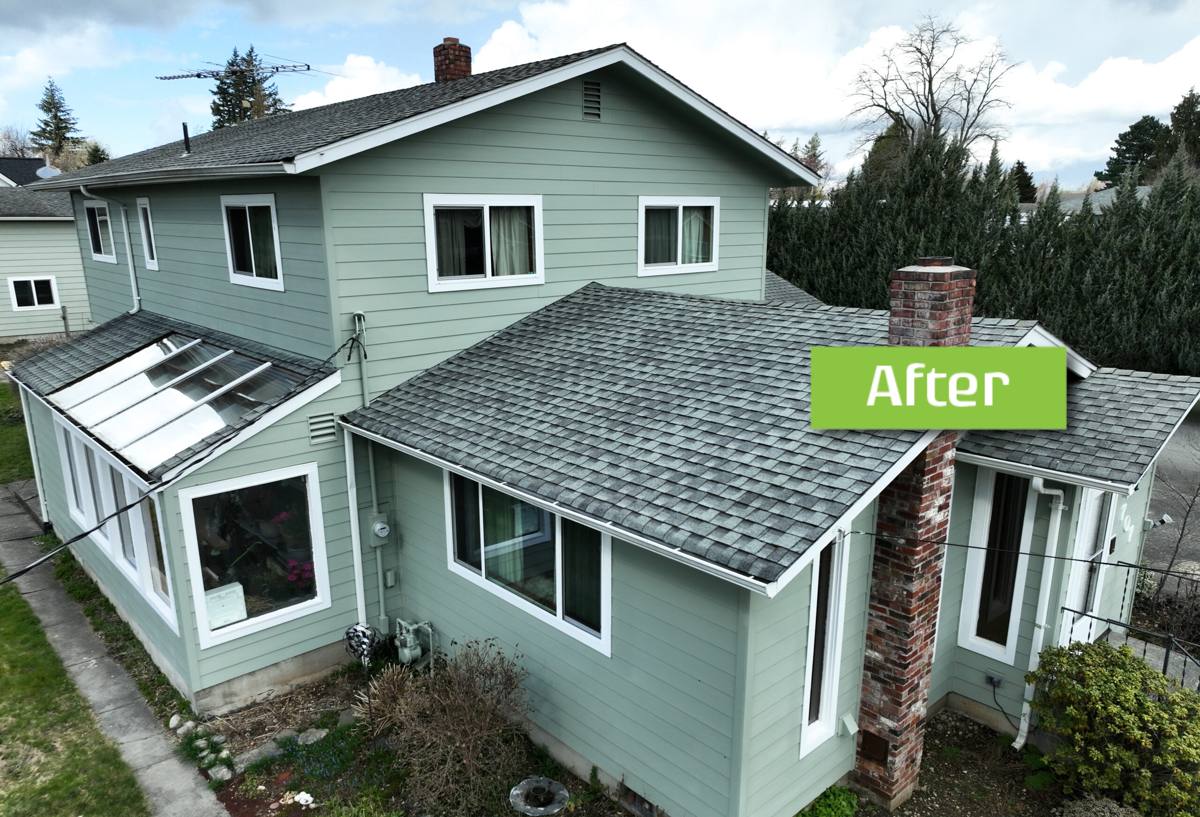
What Sumas Homes Specifically Need From a Roof
Salt Air and Corrosion
Sumas isn't oceanfront, but Whatcom County's marine air carries salt further inland than people expect, and it settles on every exposed metal surface — fasteners, flashing, panel edges. Over years, cheap or mismatched fasteners are usually the first thing to fail on a metal roof out here, showing up as rust streaks well before the panels themselves are in any trouble. The fix isn't complicated, but it has to be done from day one: fasteners and flashing metals that are rated for the same environment as the panels, not just whatever came in the cheapest bundle.
Driving Rain
Wind-driven rain doesn't just fall on a roof, it gets pushed sideways and upward under laps and around penetrations. Standard install practices that work fine in calmer climates can let water track backward under panel seams here. Panel overlap, sealant placement at seams, and proper ice-and-water-shield style underlayment at valleys and eaves all need to account for wind-driven rain, not just gravity-fed runoff.
Moss and Sustained Moisture
Metal roofing resists moss far better than asphalt shingles or wood shakes, since there's no granule surface or organic material for spores to root into. But moss and algae can still build up in areas where debris collects — valleys, behind chimneys, along low-slope sections — and sustained dampness under that buildup can eventually affect finish coatings and, on standing seam roofs, the seam caulking. Roof design that reduces debris traps, plus decent gutter and downspout capacity, keeps this from becoming a maintenance headache.
What a Correct Metal Roofing Job Actually Involves
A lot of what separates a roof that performs for decades from one that causes trouble happens before a single panel goes on.
- Deck inspection and repair — any soft, rotted, or water-damaged sheathing gets replaced before anything else happens. Metal panels fastened over a compromised deck will fail no matter how good the panels are.
- Underlayment — a synthetic or self-adhered underlayment suited to metal roofing, with extra protection (ice-and-water-shield style membrane) at eaves, valleys, and any low-slope transitions where wind-driven rain concentrates.
- Ventilation check — proper intake and exhaust airflow so moisture from inside the house doesn't condense against the underside of the metal, which is a real cause of hidden deck rot on poorly vented roofs.
- Panel installation — correct overlap, fastener spacing, and clip or fastener type matched to the panel profile and the wind exposure of the site.
- Flashing detail work — chimneys, skylights, wall transitions, and valleys are where the vast majority of leaks originate on any roof, metal included. This is where experience shows.
- Fastener and trim material match — everything exposed to weather rated for the corrosion environment, not mixed metals that can set up galvanic corrosion against each other over time.
Metal Roofing Options: What to Weigh
Not every metal roofing system is the right fit for every home, budget, or roofline. Here's how the common options stack up for a Sumas-area house.
| Type | Typical Look | Best For | Trade-offs |
|---|---|---|---|
| Standing seam | Clean vertical panels, concealed fasteners | Homes wanting a modern or high-end look, long-term low maintenance | Higher upfront cost; installation quality is critical since fasteners are hidden |
| Exposed-fastener panel (screw-down) | Ribbed panel look, visible screws | Budget-conscious projects, outbuildings, some primary roofs | Fasteners need periodic inspection and eventual re-torquing or replacement over the roof's life |
| Stone-coated steel | Mimics shingle or tile profiles | Homeowners who want metal's durability with a traditional look | More surface texture, which can collect moss debris faster than smooth panels |
| Metal shingles/shakes | Mimics wood shake or slate | Matching a traditional neighborhood look while gaining metal's durability | More seams and overlaps than standing seam, so install precision matters even more |
Our Process
1. On-Site Assessment
We walk the existing roof, check the deck condition where accessible, look at ventilation, and note anything specific to the site — tree cover, roof pitch, valleys, wall-to-roof transitions — that affects how the roof needs to be detailed.
2. Straight Options and Numbers
We explain the realistic options for that roof, what each costs, and why — no upselling to a system the house doesn't need, and no steering toward the cheapest option if it means cutting a corner that will cost more later.
3. Tear-off and Deck Repair
Old roofing comes off, the deck gets inspected, and any damaged sheathing is replaced before underlayment goes down. This step gets photographed and documented so there are no surprises about what was found.
4. Underlayment and Flashing First
We install underlayment and all flashing details before panels go up, since these are the components doing the real waterproofing work — the panels are largely the visible, durable top layer.
5. Panel Installation
Panels go on with fastener spacing and overlap matched to the manufacturer's specs and the site's wind exposure, working methodically rather than rushing to get panels visibly "up" on day one.
6. Final Walkthrough
We walk the finished roof with the homeowner, check all penetrations and edges, and go over basic care — what to watch for, and roughly how often gutters and valleys should get cleared given the tree cover on that specific lot.
Why a Crew That Already Works Sumas Matters
Metal roofing rewards installers who've done it repeatedly in the same conditions. A crew that mostly works drier inland climates can install a technically correct roof by the book and still miss the extra underlayment coverage or fastener spec that matters specifically where wind-driven rain and salt air are a daily fact of life. Working Custer and Sumas regularly means we're not guessing at what this stretch of Whatcom County does to a roof over a winter — we're building to it from experience, and we're a known, reachable local crew if anything ever needs a look after the job is done.
Maintenance: What Actually Matters
- Clear debris from valleys and behind chimneys once or twice a year, more often under heavy tree cover — trapped debris holds moisture against the panel finish.
- Keep gutters and downspouts clear so water isn't backing up under the drip edge during heavy rain events.
- After major windstorms, a quick visual check for any lifted trim or flashing is worth doing — catching a small issue early avoids a bigger repair.
- Avoid pressure washing metal panels directly; it can drive water under laps and damage finish coatings. A garden hose rinse is usually enough.
- Have fastener condition checked periodically on exposed-fastener panel systems, since these are the most likely wear point over a roof's life.
Cost Factors Worth Understanding
Metal roofing costs more upfront than asphalt shingles, but the comparison isn't apples-to-apples once you factor in lifespan and maintenance. What actually moves the price on a given Sumas-area home:
- Panel type — standing seam typically costs more than exposed-fastener systems due to material and labor differences.
- Roof complexity — the number of valleys, wall transitions, and penetrations drives labor time more than square footage alone.
- Deck condition — hidden rot or damage found during tear-off adds cost, which is why an honest assessment upfront matters.
- Tear-off requirements — removing existing roofing layers versus a simpler strip job affects labor and disposal costs.
- Ventilation upgrades — if the existing roof is poorly vented, addressing that adds a modest cost but protects the new roof's lifespan.
If you're weighing a metal roof for a home in Sumas or anywhere around Custer, we're happy to come take a look and give you a straight, no-pressure estimate — just fill out the form below.