 Custer
 Storm Damage Roof Repair Built for Lynden's Weather
Lynden sits in a stretch of Whatcom County that takes weather from two directions: wet, salt-tinged air moving in off the Sound and Georgia Strait, and cold outflow winds that funnel down through the Fraser Valley from the north. Neither one is dramatic on its own, but together, year after year, they wear on a roof in ways that homeowners from drier parts of the state rarely deal with. We repair storm-damaged roofs across the Lynden area, and most of what we see didn't happen in a single dramatic event — it built up over several storm seasons before something finally gave.
This page covers what storm damage actually looks like on a Lynden roof, what a repair needs to include to hold up through the next season (not just look fixed), and how we handle the job from first call to final walkthrough.
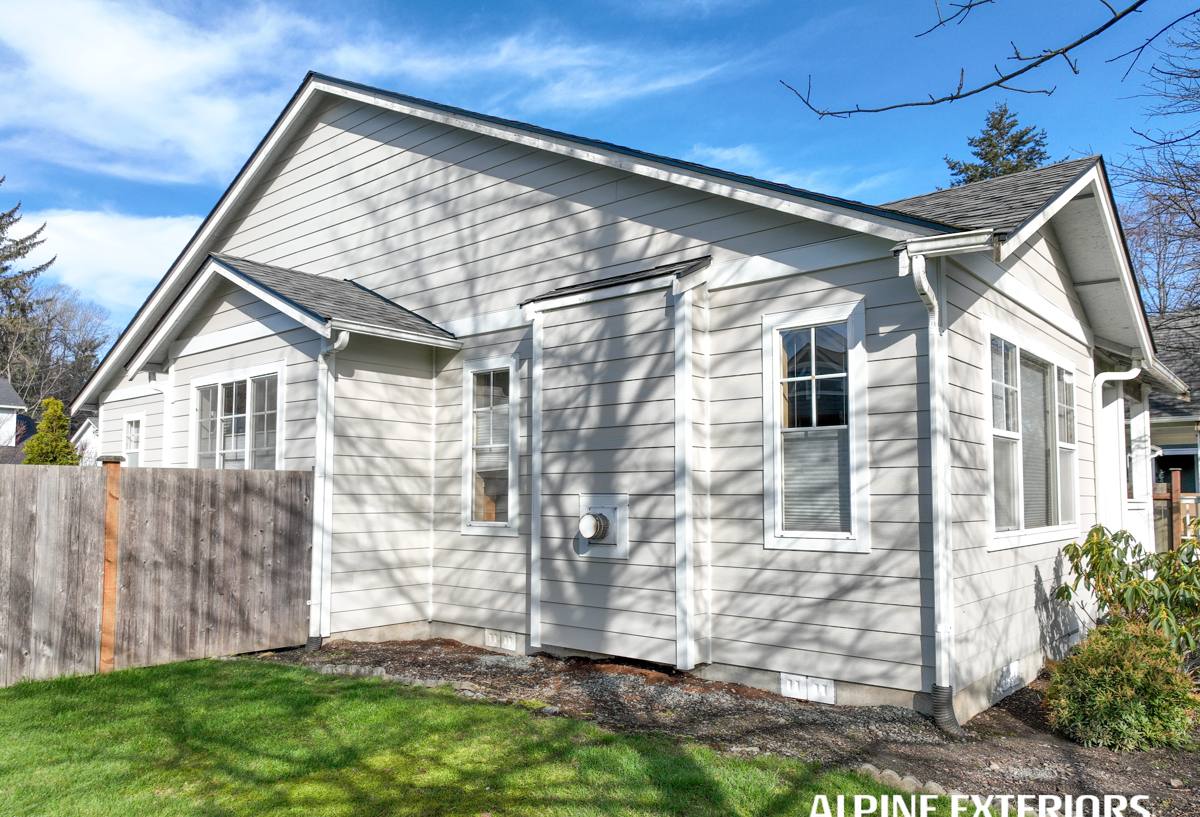
What Whatcom County's Climate Does to a Roof Over Time
Three things drive most of the storm-related roof calls we get in this area:
Wind Events
Outflow wind events that push down the Fraser Valley and across northern Whatcom County can hit well above normal gusts with little warning, and Lynden gets its share of them. Wind doesn't have to be a named storm to do damage — it lifts shingle tabs, works flashing loose at edges and penetrations, and drives rain sideways into gaps that would never leak in a straight-down rain.
Driving Rain
Once wind-driven rain finds a weak spot — a lifted shingle edge, a nail that's backed out, aging flashing around a vent or chimney — it doesn't just sit there. It gets pushed uphill under the roofing material, which is why storm leaks often show up several feet from where the actual opening is. That makes storm damage harder to diagnose than it looks from the ground.
Moss and Moisture
Whatcom County's roofing season is long and damp, and Lynden's tree cover and humidity give moss plenty of time to establish. Moss holds moisture against the roof surface, works its way under shingle edges as it grows, and keeps sections of the roof wet long after the rest has dried out. A roof that's already carrying moss is more vulnerable when a wind event hits — the shingles underneath are softer, and the moss itself adds weight and traps debris that clogs drainage paths.
Signs Your Roof Took Storm Damage
Not all storm damage announces itself with an active leak. Some of the most costly damage sits quietly for a season or two before it shows up as water stains on a ceiling. After any significant wind or rain event, it's worth checking for:
- Shingles that are lifted, curled, cracked, or missing entirely, especially along roof edges and ridges
- Granules collecting in gutters or at downspout outlets — a sign the shingle surface is wearing thin
- Bent, lifted, or missing flashing around chimneys, skylights, vents, or where the roof meets a wall
- Sagging or soft spots when the roof deck is viewed from the attic side
- Water stains, discoloration, or a musty smell in the attic or on upper-floor ceilings
- Debris — branches, moss clumps, granule buildup — sitting in valleys or against the lower edge
- Gutters pulling away from the fascia or sagging under debris weight
If you notice any of these after a storm, it's worth having it looked at before the next round of rain rather than waiting to see if it gets worse.
What a Correct Storm Damage Repair Actually Involves
A quick patch can stop an active leak for a while, but storm repair done right addresses the whole path water could take, not just the spot where it showed up inside the house.
Finding the Real Entry Point
Because wind-driven rain travels sideways and uphill under roofing material, the visible stain or drip inside the house is rarely directly below the actual damage. A proper repair starts with tracing the water path from the interior sign back up to where it's actually getting in — which sometimes means pulling back more roofing material than the homeowner expects to find the true source.
Matching the Existing Roof
Storm repairs almost always involve tying new material into an existing roof. That means matching shingle profile and, as closely as possible, color and age-weathering so the repair doesn't stand out as an obvious patch. It also means using flashing details and fastening patterns consistent with how the rest of the roof was installed, so the repaired section performs the same as the surrounding roof rather than becoming the next weak point.
Flashing and Underlayment, Not Just Shingles
Most storm leaks trace back to flashing or underlayment failure, not the shingles themselves. A repair that replaces damaged shingles but reuses bent or corroded flashing, or skips replacing compromised underlayment underneath, is a repair that's likely to leak again in the next comparable storm. We replace the flashing and underlayment in the repair area as a matter of course, not as an upsell.
Checking the Deck
Sustained moisture from a slow storm leak can soften the plywood or OSB roof deck underneath. If the deck has gone soft, laying new shingles over it doesn't fix anything — it just hides a structural problem under a new surface. Any section with a soft or delaminated deck gets replaced as part of the repair, not left in place.
How We Handle a Storm Damage Repair in Lynden
1. Inspection and Assessment
We start with a full inspection, not just a look at the spot you called about — one storm event often damages more than one area, and it's better to find that on the first visit than the second. We check the roof surface, flashing, gutters, and attic if accessible.
2. Documentation
We document what we find with photos and a written description of the damage and cause. If you're filing an insurance claim, this record supports your adjuster's assessment and gives you something concrete to reference, rather than relying on memory of what the roof looked like before the storm.
3. A Straight Scope and Estimate
We explain what needs to be repaired, why, and what it involves before any work starts — no vague line items. If a section needs full replacement rather than a patch, we'll tell you that directly and explain the reasoning, rather than patching something that's due to fail again.
4. The Repair
We do the work to match the standards above: proper tear-back to find the real damage, new flashing and underlayment where the leak path runs, deck replacement if needed, and shingle matching that blends with the existing roof.
5. Follow-Up
After the repair, we walk the finished work with you and check that gutters and drainage paths are clear so the repaired area can actually shed water the way it's supposed to.
Repair or Replace? What Actually Drives That Decision
Not every storm-damaged roof needs full replacement, and not every roof is a good candidate for another round of patching. The honest answer depends on a handful of factors:
| Factor | Points Toward Repair | Points Toward Full Replacement |
|---|---|---|
| Age of the roof | Roof is well within its expected service life | Roof is already near or past the age where the material naturally wears out |
| Extent of damage | Damage is localized to one section or slope | Damage is spread across multiple slopes or the whole roof |
| Deck condition | Deck is sound under the damaged shingles | Deck shows soft spots or moisture damage in more than one area |
| Moss and granule loss | Minor, surface-level moss with shingles otherwise intact | Heavy, long-term moss with visible granule loss across large areas |
| Shingle availability | Existing shingle line is still available or a close match exists | Shingle is discontinued and won't reasonably match |
We'll give you our honest read on where your roof falls on this list. If repair is the right call, that's what we'll recommend — we don't push replacement on a roof that doesn't need it.
Insurance and Storm Damage
Many storm damage repairs in this area go through a homeowner's insurance policy, particularly when a specific wind or rain event caused sudden, identifiable damage. We're not your insurance company and we don't handle the claim for you, but we can provide the documentation, photos, and a clear scope of the damage and needed repair that supports your claim. If your adjuster has questions about the scope of work once we're on site, we're glad to walk the roof with them directly.
Preventing the Next Round of Storm Damage
Once a storm-damaged section is repaired, a few maintenance habits go a long way toward keeping the rest of the roof out of trouble through the next wet season:
- Keep gutters and downspouts clear so wind-driven rain has somewhere to go instead of backing up under the roof edge
- Address moss while it's light — a roof cleaned before moss gets established is far easier to keep ahead of than one where it's already worked under the shingles
- Trim back tree limbs that overhang the roof, which reduces both physical damage risk and the shade and debris that feed moss growth
- Have the roof looked at after any significant wind event, even if nothing is visibly wrong from the ground
- Keep an eye on attic ventilation — trapped moisture from poor ventilation compounds storm and moss damage from the inside
Why Working With a Crew That Already Knows Lynden Matters
Storm damage repair isn't a generic skill applied the same way everywhere. A crew that works Whatcom County roofs regularly recognizes what outflow wind damage looks like versus straight storm damage, knows how far moss typically gets established by the time a homeowner calls, and has already seen how different shingle lines in this area hold up to years of driving rain and salt-tinged air. That experience shows up in faster, more accurate diagnosis — finding the actual damage the first time instead of chasing it across two or three visits.
If your roof took a hit in a recent storm, or you're noticing signs of damage that's been building for a while, we're glad to take a look. Reach out for a free, no-pressure estimate — use the form below to get started.