 Custer
 Why Siding Wears Differently in Laurel
Laurel sits in the open, low farmland that stretches between Custer and the rest of Whatcom County's coastal lowland. There isn't much in the way of hills or dense tree cover to slow down weather moving in off the Strait of Georgia and the greater Salish Sea, which means homes here take on marine air, driving rain, and long stretches of gray, damp weather more directly than properties tucked farther inland or up in elevation. Salt-laden air corrodes fasteners and cheap trim faster than people expect, driving rain finds every gap in flashing and caulk, and the moss season — realistically eight or nine months of the year in a wet Pacific Northwest winter-into-spring cycle — coats anything that stays damp for more than a day or two at a time.
None of that is unique to Laurel, but it's more pronounced here than in a drier inland climate. Siding that isn't rated for sustained moisture exposure, or that was installed without real attention to water management, tends to show it first in exactly this kind of setting: swelling at the bottom courses, staining under window sills, and moss creeping up from the ground line on the shaded north side of a house.
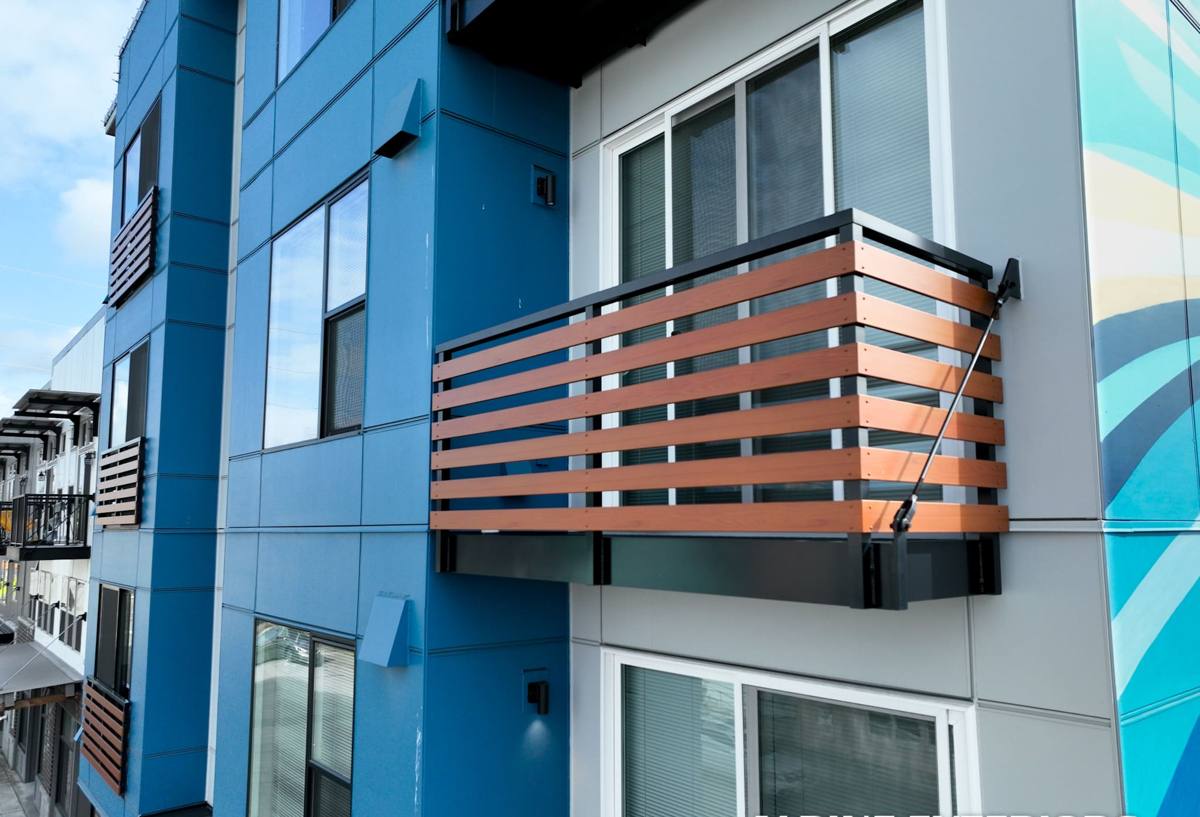
What "Correct" Siding Replacement Actually Involves
It's Not Just Swapping Panels
A siding replacement done right is a water-management project first and a cosmetic upgrade second. That means pulling the old siding back far enough to actually inspect the sheathing underneath — not just around visibly bad spots, but around every window, door, and roof intersection where water tends to concentrate. In a climate like this one, we routinely find soft sheathing or rotted trim behind siding that looked fine from the street.
The Parts Homeowners Don't See
Once the old siding is off, the job is really about three layers working together: a weather-resistive barrier (housewrap) installed with proper shingle-lap so water sheds down and out, correctly flashed windows and doors so water can't get behind the barrier at those penetrations, and a rainscreen gap or drainage plane behind the new siding so any moisture that does get past the surface has somewhere to go besides straight into the wall. Skipping any one of those steps is how a brand-new siding job ends up with the same rot problems five years later.
Signs a Laurel Home Needs Replacement, Not Repair
Not every siding problem calls for a full tear-off. But in this climate, small issues tend to compound faster because moisture doesn't dry out between rain events the way it would in a drier region. Here's what tells us a home has crossed the line from "patchable" to "replace it":
- Soft or spongy spots when you press on the siding, especially near the bottom courses or below windows
- Persistent moss or algae growth that comes back within weeks of cleaning
- Paint that's bubbling, peeling, or won't hold for more than a couple of years
- Visible gaps, warping, or cupping in the siding boards themselves
- Staining or discoloration streaking down from window and door trim
- A musty smell in an exterior-facing room, which usually points to moisture already inside the wall
- Siding that's original to a home built more than 20-25 years ago with older wood or hardboard product
If a home only shows one or two of these, targeted repair paired with better flashing might be enough. If several show up at once, that's usually a sign the underlying water management has failed broadly enough that a full replacement is the more honest recommendation.
Why We Install Only James Hardie Fiber Cement
We don't install vinyl, LP SmartSide, or primed wood products, and Laurel's climate is a big part of why. Fiber cement doesn't swell, delaminate, or feed moss the way wood-based products can when they stay damp for months at a time, and it doesn't warp or crack in the temperature swings that come with driving coastal rain followed by cold, clear nights. James Hardie's HZ5 product line is specifically engineered for climates with heavy moisture exposure, and the factory-applied ColorPlus finish holds color and resists the kind of chalking and fading that salt air accelerates on field-painted products.
It's also non-combustible, which matters as much for insurance considerations as for wildfire exposure, and it carries a strong transferable warranty that follows the house, not just the original owner — a real consideration in a market where homes change hands. We standardized on Hardie because, installed correctly, it's the product that best matches what this specific climate does to a house over time.
Our Process, Step by Step
- On-site assessment — we walk the exterior, check moisture readings where we suspect trouble, and look at trim, flashing, and roofline intersections, not just the field of the siding.
- Scope and estimate — a written plan covering tear-off, sheathing repair allowances, house wrap, flashing details, and the specific Hardie products and colors.
- Tear-off and inspection — old siding comes off in sections so sheathing gets a real look, not a guess.
- Repair as needed — any soft or rotted sheathing gets replaced before anything new goes back on; this is where a rushed job cuts corners.
- Weather barrier and flashing — housewrap, window and door flashing, and drainage plane installed to manufacturer spec.
- Hardie installation — panels, planks, or shingles installed with correct fastening, clearances, and joint treatment per James Hardie's published installation requirements.
- Final trim and paint touch-up — factory-finished ColorPlus product needs minimal touch-up, but seams and cut edges get sealed correctly.
- Walkthrough — we go over the finished job with the homeowner before calling it done.
Cost Factors Worth Understanding
Every home is different, and we're not going to quote a number without seeing the house, but these are the variables that actually move the price on a siding replacement in this area:
| Factor | Why It Matters |
|---|---|
| Extent of hidden damage | Rotted sheathing found during tear-off adds material and labor beyond the base siding cost |
| Home size and wall complexity | More corners, gables, and window/door openings mean more flashing and cutting labor |
| Siding profile chosen | Lap plank, shingle-style, and panel products carry different material and install costs |
| Trim and accessory scope | Full trim replacement adds cost but usually pays off in long-term water management |
| Access and site conditions | Tight lots, multi-story sections, or landscaping obstacles affect labor time |
| Paint/finish choice | Factory ColorPlus finish costs more upfront but avoids repainting cycles |
Homeowners sometimes compare a fiber cement estimate against a vinyl re-side quote and assume the gap is all markup. Most of it is the material itself and the labor that correct water management actually requires — cutting corners on either is exactly how you end up back here in ten years instead of twenty-five.
Why It Matters That We Already Work in Laurel and Custer
A crew that works this specific stretch of Whatcom County knows what the moisture exposure actually does to a house here versus a drier inland job, and that shapes real decisions — how much drainage gap to build in, where moss is likely to become a recurring problem, which flashing details are worth extra time. It also means straightforward logistics: material staging, scheduling around the wetter months, and being available for a warranty question five years down the road instead of having moved on to a different region entirely.
Permitting and Timing
Whatcom County building permits typically apply to full siding replacement, particularly when sheathing repair is involved, and we handle that process as part of the job rather than leaving it to the homeowner. Timing also matters in this climate — scheduling tear-off during a realistic weather window, and having a plan for protecting an open wall if conditions turn, isn't optional here the way it might be in a drier climate.
Maintenance After Replacement
Correctly installed Hardie siding is genuinely low-maintenance compared to what most Laurel homeowners are used to, but "low-maintenance" isn't "no-maintenance." An occasional soft wash to knock back algae and moss buildup, a yearly look at caulking around windows and trim, and keeping gutters clear so water isn't sheeting down the wall face will keep the system doing what it's designed to do for decades.
If your home in the Laurel or Custer area is showing any of the signs above, or you'd just like an honest read on where your siding stands, we're happy to walk the exterior with you and give you a straight answer — no pressure, no upsell, just what we'd actually recommend for your house. Reach out below for a free estimate.