 Custer
 Why Bellingham Siding Wears Out Faster Than People Expect
Bellingham sits close enough to the Salish Sea that salt-laden air is a real factor on siding, not just a coastal-town cliché. Add in Whatcom County's long stretch of driving rain each fall and winter, plus a moss season that can run from October well into spring on shaded or north-facing walls, and you've got a climate that's genuinely tough on exterior materials. It's not dramatic weather — no hailstorms or extreme heat cycles — but it's relentless. Siding here doesn't fail from one bad event. It fails from years of moisture sitting where it shouldn't, finishes chalking and fading under UV and salt exposure, and moss and algae holding dampness against the wall longer than the material was ever designed to tolerate.
That's the backdrop for every siding replacement job we do in this part of Whatcom County. The product and the installation both have to account for it, or you're replacing siding again sooner than you should.
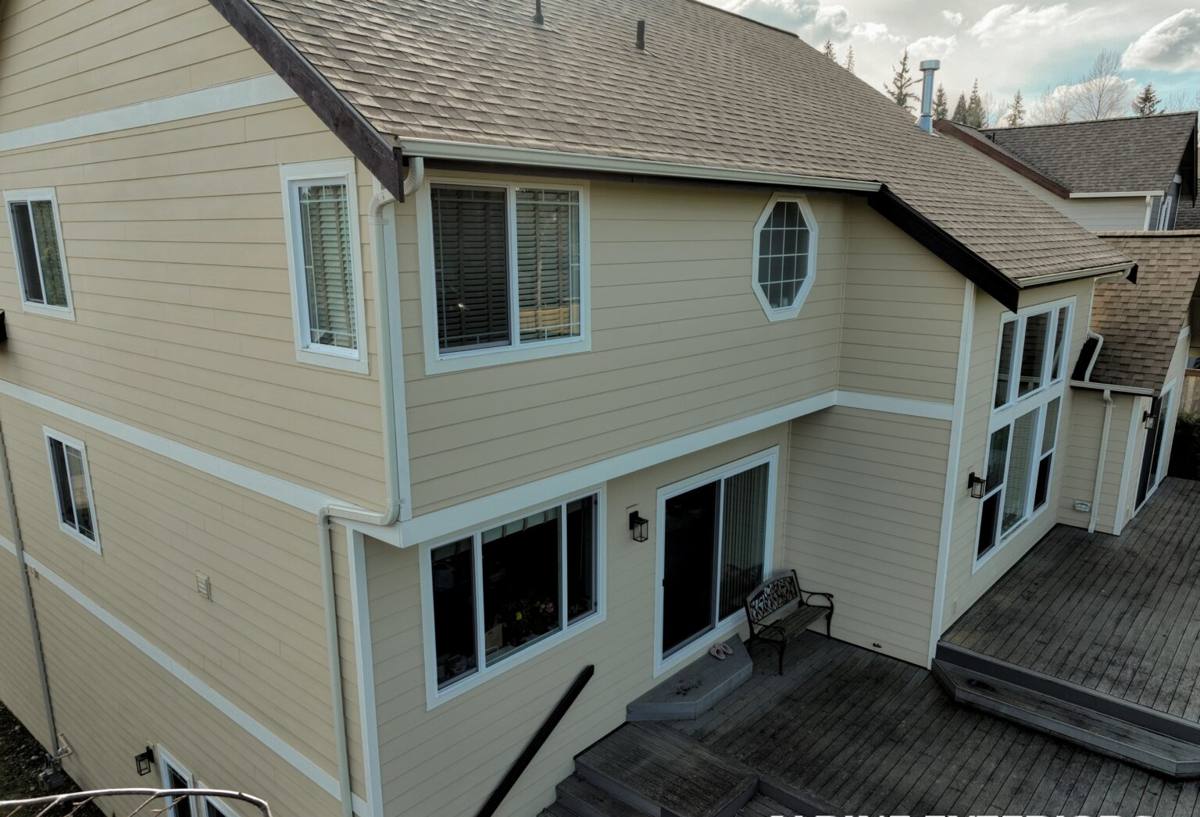
Signs a Bellingham Home Needs Replacement, Not a Repair
Not every siding problem calls for a full tear-off. But there's a point where patching stops making sense — either because the damage is systemic or because the labor cost of a proper repair starts approaching the cost of doing it right, once.
- Soft or spongy spots when you press on the siding, especially near the bottom courses or below windows
- Paint that keeps failing within a couple of years no matter how well it's prepped and applied
- Persistent moss or dark streaking that comes back within a season of cleaning
- Visible gaps, warping, or cupping in horizontal lap siding
- Siding that's original to a home built more than 20-25 years ago, particularly if it's wood, hardboard, or an older composite
- Interior signs — musty smells, peeling interior paint, or stains on walls that share an exterior with problem siding
If you're seeing two or more of these on the same elevation, it's usually a sign the water management behind the siding has broken down, not just the surface material.
What Correct Siding Replacement Actually Involves
It Starts Behind the Siding, Not With It
The siding itself is the least important variable in whether a replacement job holds up. What matters more is what's underneath: the weather-resistive barrier, the flashing details around windows, doors, and penetrations, and how water is directed away from the wall assembly once it gets behind the cladding — because in a climate like this, some water will get behind the cladding eventually. A correct job replaces or repairs damaged sheathing, installs house wrap with properly lapped and taped seams, and flashes every opening so water sheds outward and down instead of pooling.
Fastening and Clearances Matter More Here Than in Dry Climates
Fiber cement siding has specific fastening patterns and clearance requirements — gaps from grade, decks, roof lines, and other trim — that exist specifically to keep the material out of standing water and prolonged dampness. In a region with Bellingham's rainfall totals, skipping or shortcutting those clearances is exactly how you end up with the moss-and-moisture problems we described above, just on brand-new siding instead of old siding.
Trim, Caulking, and Finish Work
The last stage — corner boards, trim, caulking joints, and finish coating on cut edges — is where a lot of lower-bid jobs cut corners because it's slow, detail-heavy work that doesn't show up in a quick walk-around. It's also the work that determines whether the siding still looks tight and clean in year eight, not just in month one.
Why We Install Only James Hardie Fiber Cement
We don't install vinyl, LP SmartSide, primed spruce, cedar, or other fiber cement brands. That's a deliberate standard, not a lack of options. Each of those products has legitimate strengths, but in a climate that combines salt air, sustained rain exposure, and a real moss season, they each come with trade-offs — moisture sensitivity at cut edges, shorter finish life, or maintenance burdens — that we're not willing to install and then stand behind.
James Hardie's fiber cement is non-combustible, dimensionally stable in wet-dry cycling, and available in HZ5 formulations engineered for wetter, harsher climates like the Pacific Northwest. The ColorPlus factory finish is baked on under controlled conditions rather than field-applied, which matters directly for a region where field-applied paint has a shorter functional life due to damp cure conditions much of the year. It also carries a strong, transferable limited warranty when installed to Hardie's specifications — which is part of why our installation standards exist in the first place.
How the Common Options Compare
| Material | Moisture Behavior in Wet Climates | Finish Durability | Typical Maintenance |
|---|---|---|---|
| James Hardie fiber cement | Dimensionally stable, engineered HZ5 lines for PNW conditions | Factory ColorPlus finish, long field life | Periodic washing; caulk/trim checks |
| Vinyl | Can warp/buckle with temperature swings; seams are moisture entry points | Color molded in but fades and chalks over time; cannot be repainted easily | Low, but limited repair options if damaged |
| LP SmartSide (engineered wood) | Treated to resist moisture but wood-based core is still moisture-sensitive at cut edges | Field or factory finish; field-applied needs more frequent attention here | Edge sealing, regular inspection |
| Cedar / primed spruce | Natural wood movement; high moisture sensitivity without diligent upkeep | Requires ongoing staining or painting | Highest — frequent refinishing in this climate |
Our Process for a Bellingham Siding Replacement
The steps are the same wherever we work in Whatcom County, but the details we pay closest attention to are shaped by what actually causes siding failure locally — moisture intrusion and prolonged dampness, not weather extremes.
- On-site assessment — we look at existing siding, trim, flashing, and any signs of moisture damage before quoting anything, including areas that are shaded or north-facing where moss tends to establish first
- Tear-off and substrate check — old siding comes off and we inspect sheathing for rot or soft spots, replacing anything compromised before new material goes up
- Water-resistive barrier and flashing — house wrap and flashing at every window, door, and penetration, installed to shed water outward
- Hardie installation to spec — correct fastening pattern, clearances from grade and other surfaces, and factory-finish protection during handling
- Trim, caulk, and touch-up — finish detailing at corners, joints, and cut edges
- Final walkthrough — we go over the completed work with you before calling the job done
Cost Factors for Siding Replacement in This Area
We won't quote pricing without seeing the home, but the variables that move the number are consistent enough to explain up front.
| Factor | Why It Matters Here |
|---|---|
| Existing wall condition | Rot or moisture damage found during tear-off adds sheathing repair before new siding can go on |
| Home size and wall complexity | More corners, gables, and trim details mean more labor-intensive flashing and finish work |
| Siding profile and accessories | Lap width, trim style, and accent details all affect material and labor cost |
| Access and site conditions | Steep lots, tree cover, or tight setbacks common on wooded Whatcom County properties can slow staging and scaffolding |
| Time of year | Scheduling around the wettest months can affect sequencing and drying time for certain steps |
Why Hiring a Crew That Already Works in Bellingham Matters
Siding installation standards are written for a range of climates, but the judgment calls — how much clearance to leave in a shaded, damp side yard, which trim details need extra sealant given local rain exposure, how to sequence a job around Whatcom County's wet stretches — come from having actually worked on homes in this area. A crew that's replaced siding on homes dealing with the same salt air and moss pressure knows where problems tend to originate on local homes, and builds the job to prevent them rather than treating every wall the same regardless of climate.
Keeping New Siding Looking Right Through the Wet Season
Correct installation does most of the work, but a little homeowner upkeep extends the life of the finish and keeps moss from getting a foothold in the first place.
- Rinse siding annually, focusing on shaded and north-facing walls where moss and algae take hold first
- Keep gutters clear so overflow isn't running down the siding face
- Trim back vegetation and tree cover that keeps walls damp longer than surrounding areas
- Check caulking at trim joints and penetrations every year or two and re-seal as needed
- Address any soft spots, cracks, or damage promptly rather than letting moisture sit
If your Bellingham home's siding is showing its age, or you just want an honest read on whether repair or replacement makes sense, we're happy to take a look. Request a free, no-pressure estimate using the form below.