 Custer
 Why Cherry Point Siding Takes a Different Kind of Beating
Cherry Point sits right up against the water, and that changes what "normal wear" looks like on a home's exterior. Siding here isn't just dealing with rain and sun the way it would a few miles inland — it's dealing with salt-laden air blowing off the water, wind-driven rain that gets forced sideways into seams and laps, and a moss season that can stretch across most of the year in this part of Whatcom County. Any one of those factors is manageable on its own. Combined, and applied to the same exposed wall year after year, they find every weak point in a siding system faster than you'd expect.
That's the context we bring to every repair call in this area. A crack or a soft spot that would take five years to develop in a drier, more sheltered part of the county can show up in two or three out here, especially on the sides of a house that face the prevailing wind and weather off the water.
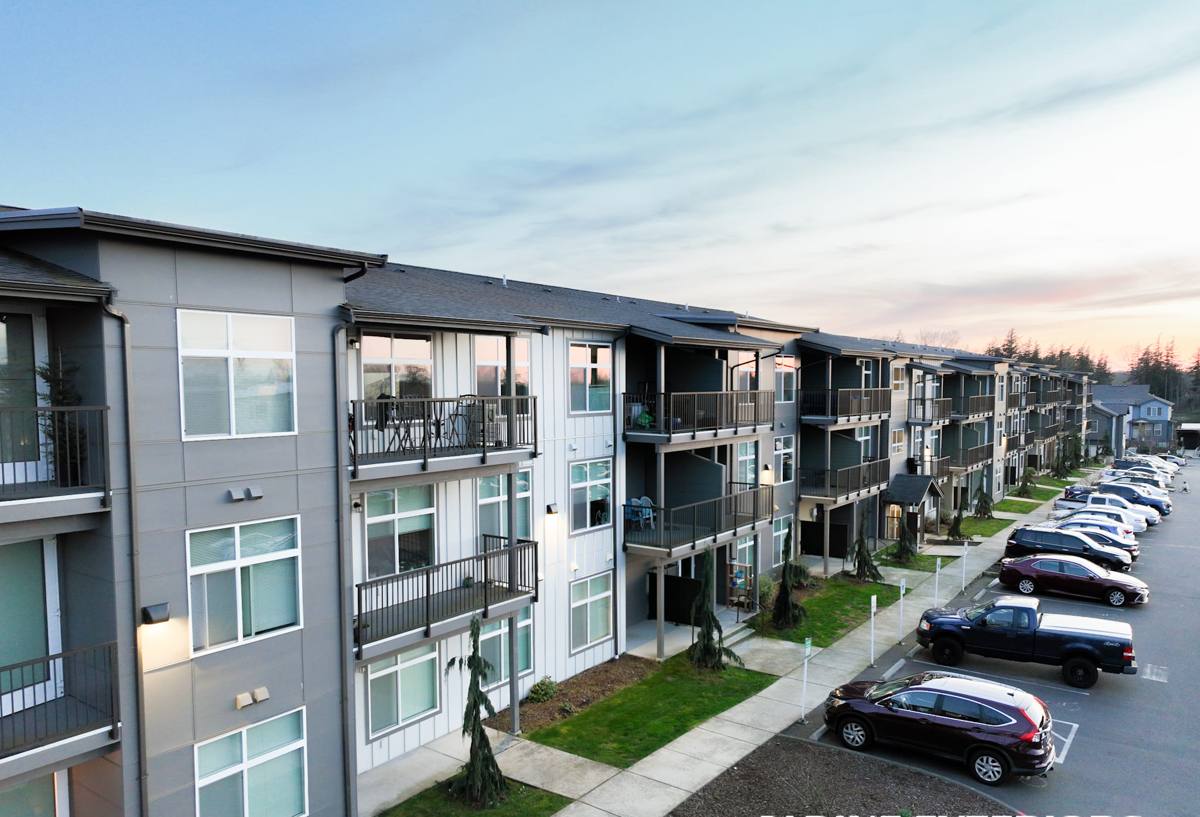
Common Siding Damage We See Near Custer
Most of the repair calls we get in and around Cherry Point fall into a handful of categories:
- Moisture intrusion at seams and butt joints — where two pieces of siding meet, or where siding meets trim, window casings, or flashing.
- Soft or delaminating panels — common on wood-based siding products that have absorbed water over time and started to swell, crumble, or separate in layers.
- Moss and algae staining and buildup — cosmetic at first, but it holds moisture against the siding surface and accelerates whatever is already going wrong underneath.
- Corroded or backed-out fasteners — salt air is hard on exposed metal, and nails or screws that aren't sealed or that were driven improperly tend to show it first.
- Failed caulking and sealant joints — caulk has a shorter service life in this climate than most manufacturers' literature assumes, and once it cracks, water finds a way behind the siding.
- Impact damage — storm debris, tree limbs, and the occasional stray branch during a winter windstorm.
Why the Water Side of a Home Fails First
On most Cherry Point properties, damage isn't spread evenly around the house. The wall facing the water and the prevailing wind almost always shows more wear than the sheltered sides. If you're only inspecting the front of the house or the side you see from the driveway, it's easy to miss active damage building on the exposure that actually takes the weather.
Repair or Replace? How We Make the Call
Not every damaged section needs a full re-side, and we're not going to tell you it does. But we also won't patch over a problem that's going to reopen in a year. The honest answer depends on a few factors:
| What We Find | What It Usually Means | Typical Path |
|---|---|---|
| Isolated crack or impact damage, dry substrate underneath | Localized failure, structure is sound | Targeted repair or panel replacement |
| Soft, spongy panels in one area with visible staining | Trapped moisture, possible sheathing involvement | Open it up, confirm extent, repair or replace affected section |
| Delamination or swelling spread across multiple walls | Material-wide moisture failure, often age- or product-related | Full re-side usually makes more financial sense than repeated patching |
| Heavy moss/algae with sound siding underneath | Cosmetic and maintenance issue, not structural — yet | Clean, treat, repair caulking, monitor |
| Widespread caulk failure and fastener corrosion, siding otherwise intact | Normal aging for the climate | Re-caulk, re-fasten, spot-repair as needed |
We'll always walk you through which category your situation falls into and why, before we recommend anything.
What a Correct Repair Actually Involves
A siding repair that actually holds up in this climate is more than swapping a cracked board for a new one. Done right, it includes:
- Diagnosis beyond the visible damage. We check whether moisture has migrated past the surface into the weather barrier or sheathing before we decide how far the repair needs to go.
- Moisture verification. Where there's any doubt, we use a moisture meter rather than guessing from appearance alone — this is especially important on siding that's already shown one failure point, since it's rarely the only one.
- Correcting the underlying cause, not just the symptom. If a failed flashing detail or a gap in the weather-resistive barrier caused the damage, replacing the siding without fixing that detail just buys you a repeat visit down the road.
- Proper fastening and clearances. Fasteners driven at the wrong depth or angle, or siding installed too close to grade or a roofline, are common contributors to repeat failures — we correct these as part of the repair, not just replace like-for-like.
- Sealant and joint detailing appropriate for a marine-influenced climate — not the minimum a manufacturer's spec sheet allows, but what actually holds up to salt air and repeated wetting.
- A finish match that doesn't stand out. Where possible, we match texture, reveal, and color so the repair blends into the wall instead of announcing itself.
Why the Original Material Often Decides How the Repair Goes
This is the part of the conversation most repair companies skip, and it matters a lot near the water. We install exclusively James Hardie fiber cement siding — we don't install vinyl, LP SmartSide, Cemplank, Allura, or primed wood or cedar siding. That's a standard we hold for new installs and full re-sides. But it also shapes how we think about repairs on siding we didn't originally install.
A lot of the moisture-related failures we see in engineered wood and OSB-based siding products trace back to the material itself — once the wood fiber core takes on water, it swells and softens, and a patch doesn't reverse that; it just isolates it temporarily. Vinyl siding doesn't rot the same way, but a cracked or warped panel usually can't be seamlessly patched — it needs a full panel replacement, and older vinyl profiles are frequently discontinued, making an exact color match difficult to impossible. Fiber cement, including Hardie, is far more dimensionally stable and doesn't absorb water into a wood-fiber core the way engineered wood products do, which is a big part of why repairs on Hardie tend to stay smaller and more localized.
When we're called to repair a home with existing vinyl, LP, or wood siding, we'll do the honest, targeted repair if that's genuinely the right call. But if the damage points to a material-wide problem rather than a one-off, we'll tell you that plainly — and explain why, if a re-side is in your future anyway, Hardie's ColorPlus factory finish, non-combustible composition, and engineered-for-climate HZ product lines are what we'd put on the house instead, backed by a strong transferable warranty.
Our Repair Process
We keep this straightforward:
- Inspection. We look at the damaged area and the surrounding wall, not just the spot you called about.
- Honest assessment. You get a clear explanation of what's happening, what caused it, and what the realistic options are — repair, partial replacement, or full re-side.
- Written estimate. No surprise scope changes once work starts, barring something we genuinely couldn't see until the siding came off.
- The work itself. Matched materials where feasible, correct fastening and flashing detail, and cleanup that leaves the site the way we found it.
- A straight answer on what to watch going forward, including anything else on the house we noticed that isn't urgent yet but is worth keeping an eye on.
Keeping Repaired Siding Ahead of Moss and Salt
A repair holds up longer with a little upkeep, and in this climate that upkeep matters more than it would inland. A simple annual routine goes a long way:
- Rinse siding surfaces (especially north- and water-facing walls) at least once a year to slow moss and algae buildup before it takes hold.
- Keep gutters clear so overflow isn't running down the siding face during heavy rain.
- Trim back vegetation and tree limbs that shade siding and keep it damp longer after storms.
- Check caulk joints around windows, trim, and penetrations each fall, before the wet season sets in.
- Walk the exterior once a year and look specifically at the wall facing the water — it will show problems first.
- Address small issues (a lifted piece of trim, a hairline crack, a rust streak from a fastener) while they're still small.
Why It Matters That We Already Work in Cherry Point
A repair crew that mostly works drier, more sheltered neighborhoods will diagnose a Cherry Point home the same way they'd diagnose one twenty miles inland — and that's how avoidable repeat repairs happen. Knowing which wall of a Custer-area home is going to take the brunt of the wind and salt, how fast moss reestablishes itself on a shaded roofline near the water, and which sealant and flashing details actually hold up to this specific combination of exposure isn't something you learn from a spec sheet. It comes from working this shoreline repeatedly and seeing what fails and what doesn't.
We also know the practical side of working in Whatcom County — what a straightforward repair permit looks like versus what triggers additional review, and how to schedule work around the wetter stretches of the year so a repair isn't rushed or compromised by weather mid-job.
Get a Straight Answer on Your Siding
If you're seeing staining, soft spots, cracked panels, or heavy moss on your Cherry Point home, it's worth having someone look at it before a small problem becomes a bigger one. We'll give you a clear, no-pressure assessment of what's actually going on and what it would take to fix it right — no upsell, no guesswork. Reach out for a free estimate and we'll take a look.