 Custer
 Why Siding in Bellingham Wears Differently Than Siding Inland
Bellingham sits close enough to the water that salt air is a daily fact of life for the siding on your home, not an occasional inconvenience. Add wind-driven rain that comes at walls sideways off the Strait rather than straight down, and a moss and algae season that can run from October clear through April in a wet year, and you have a climate that is genuinely harder on exterior siding than most of the country ever deals with. None of this means your siding is doomed — it means repairs here have to account for moisture and biological growth in ways that a drier, inland climate simply doesn't require.
We work in and around Custer and see the same failure patterns repeat across Whatcom County: caulk joints that gave up years before the siding itself did, trim details that were never built to shed water properly, and small, ignorable problems that sat through one too many wet winters and turned into rot. Most of what we get called out for in Bellingham is fixable without a full re-side — but only if it's caught and repaired correctly, not just patched.
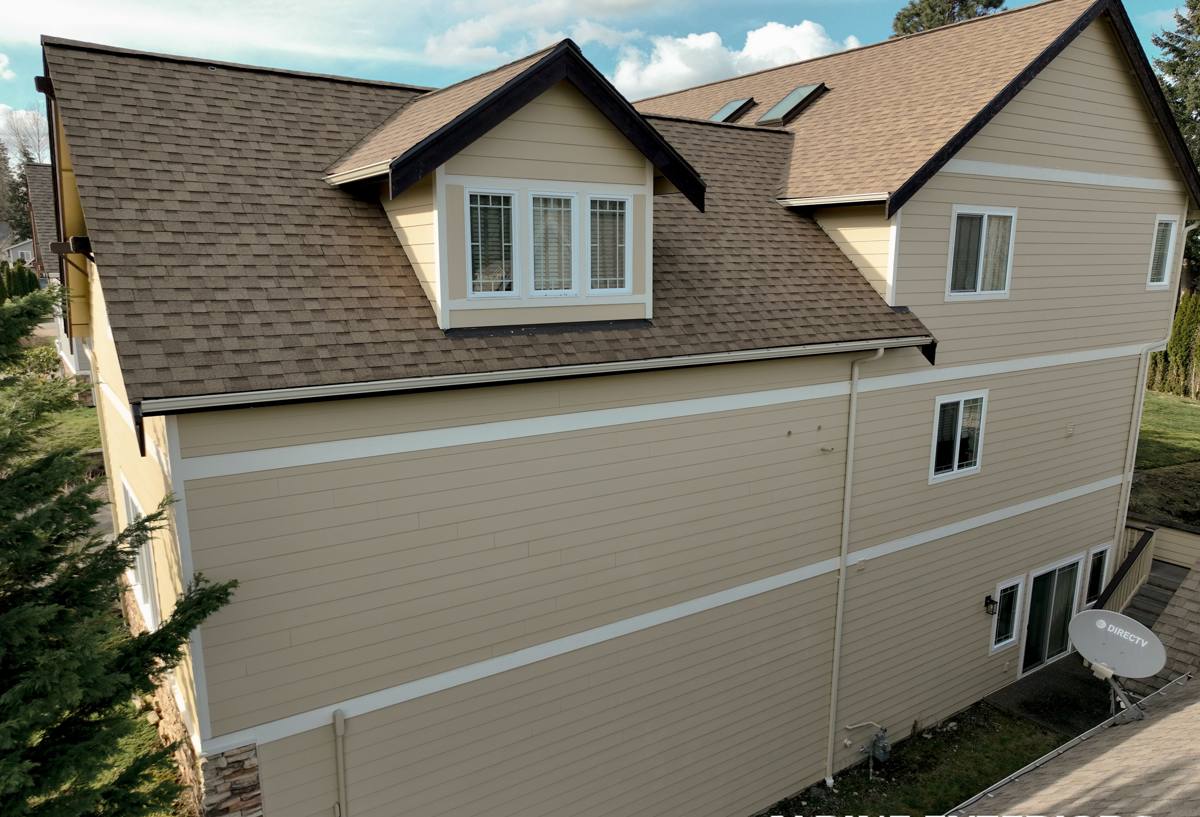
Signs Your Siding Needs Repair, Not Full Replacement
The vast majority of siding calls we take in Bellingham are legitimate repairs, not sales pitches for a new install. Here's what typically points to a repair job rather than a replacement:
- Isolated cracking or chipping at one or two boards, usually from impact damage or a nail driven too close to an edge
- Soft or discolored trim around a single window, door, or roofline transition while the field siding elsewhere is solid
- Caulk joints that have pulled away, cracked, or gone chalky, letting water track behind the siding at seams
- Nail pops or boards that have worked loose but haven't warped or delaminated
- Persistent moss or algae staining concentrated on the north or shaded side of the home, without soft substrate underneath
- Woodpecker damage or small punctures that penetrated the surface but not the structure behind it
- Staining or bubbling near a specific penetration — a hose bib, dryer vent, or light fixture — that suggests a flashing or sealant failure at that one spot
If damage is limited to a few boards or a handful of trouble spots and the water-resistive barrier and sheathing behind the siding are still sound, repair is almost always the right call. Widespread softness across multiple walls, or rot that's tracked into the framing, is a different conversation.
What a Correct Siding Repair Actually Involves
A repair that just matches paint and caulks the gap looks fine for a season and then fails again, often worse than before, because it never addressed why the original spot failed. A correct repair in this climate has to deal with what's happening behind the siding, not just what's visible on the surface.
Repairing the Water-Resistive Barrier, Not Just the Surface
Every time we pull a damaged board, we're also looking at the house wrap or building paper behind it. If that barrier is torn, improperly lapped, or missing at a seam, replacing the board without fixing the barrier just resets the clock on the same failure. Correct repair means restoring proper shingle-lap drainage behind the siding, not just fastening a new piece over a compromised layer.
Matching the Existing Siding
Because we work exclusively with James Hardie fiber cement, matching an existing Hardie installation is usually straightforward — the plank profiles, reveals, and ColorPlus finishes are consistent and available through the manufacturer. We match reveal spacing, fastener pattern, and factory finish so a repaired section reads as part of the wall, not a patch. Where an exact ColorPlus color has aged or faded slightly on the existing wall, we'll talk through realistic expectations before starting rather than promise an invisible blend that field-painted touch-up can't always deliver.
Repair or Replace? How We Help You Decide
Homeowners in Bellingham often call unsure which category their problem falls into. We walk the exterior, check moisture readings where we suspect trouble, and give a straight answer. In general terms, here's how the decision tends to break down:
| Factor | Repair usually makes sense | Replacement usually makes sense |
|---|---|---|
| Extent of damage | Limited to a few boards or one wall section | Spread across multiple walls or elevations |
| Water-resistive barrier | Intact behind the affected area | Torn, degraded, or missing in multiple spots |
| Sheathing/framing | Dry and solid when probed | Soft, delaminated, or showing rot |
| Age of siding | Well within its expected service life | Near or past original manufacturer lifespan |
| Root cause | A single identifiable failure point | A systemic issue (bad original flashing details, chronic moisture path) |
When the damage is contained and the underlying structure is sound, repair almost always costs less and disrupts your household far less than a full tear-off. We'd rather do an honest $400 repair than talk you into a $20,000 re-side you don't need yet.
Why We Repair — and Install — Only James Hardie Fiber Cement
We made a decision early on to work exclusively with James Hardie fiber cement siding, and it shapes how we approach repair work too. Hardie's ColorPlus factory finish, HZ product engineering for wet coastal climates, and non-combustible composition give us a consistent, well-documented material to repair correctly — we know exactly how it's built, how it takes fasteners, and how a repaired section should perform once it's back on the wall.
If Your Home Already Has a Different Siding Product
We regularly get called to homes sided in vinyl, LP SmartSide, primed wood, or other fiber cement brands. We'll still inspect honestly and tell you what we see. But because we don't stock or install those other products, repair options on non-Hardie siding are more limited on our end — sometimes it means a targeted fix within what that material allows, and sometimes it means a frank conversation about the material's remaining life and what replacing the affected section with James Hardie would look like going forward. We'd rather tell you that plainly than pretend we can seamlessly match a discontinued vinyl profile or a wood product we don't work with.
Our Process for a Bellingham Repair Call
Repair work in Whatcom County follows the same disciplined process every time, whether it's one board or a whole wall section:
- Inspection. We walk the full exterior, not just the spot you called about — moisture and rot rarely stay isolated once they've had a wet season or two to spread.
- Diagnosis. We identify the actual cause — failed caulk, a flashing gap, a moisture path from a penetration — so the repair fixes the source, not just the symptom.
- Scope and estimate. You get a clear, written explanation of what's being repaired, what it involves, and what it costs before any work starts.
- Repair. We remove and replace only what's damaged, restore the water-resistive barrier properly, and reinstall with correct fastener placement and reveal spacing.
- Finish and cleanup. Caulking, touch-up, and site cleanup so the repair blends in and your property is left tidy.
Moss, Algae, and Moisture: Whatcom County's Repair Triggers
A lot of what looks like siding damage in Bellingham is really a moisture management problem wearing a moss costume. Shaded north walls, areas under overhangs with poor airflow, and spots where sprinklers or downspouts throw water directly onto the siding all accelerate growth and, over time, soften caulk and trim faster than sun-exposed walls. The long moss season here means growth gets a real head start before most homeowners notice it in spring.
Part of a proper repair visit is flagging those conditions — a gutter that's overshooting, a downspout dumping at the base of a wall, vegetation crowding the siding — because fixing the repair without addressing the cause just invites the same call again in a year or two.
Caring for Repaired Siding Year-Round
Once a repair is done, a little seasonal attention keeps it from becoming a repeat job:
- Rinse moss and algae buildup off shaded walls before it has a chance to hold moisture against the siding
- Keep gutters clear heading into the fall rains so water isn't overshooting onto walls below
- Walk the exterior after any major windstorm and check caulk lines at trim and penetrations once a year
- Trim back vegetation that's crowding the siding and blocking airflow or sun exposure
- Address small cracks or gaps as soon as you notice them, before a wet winter gets behind them
Why Local Experience in Bellingham Matters
Siding repair isn't complicated in theory, but doing it right in this climate means understanding how salt air, driving rain, and a long wet season actually behave against a wall over years, not just what a repair looks like the day it's finished. Working Bellingham and the wider Whatcom County area regularly means we've seen which details fail first here and which repairs actually hold up through a full wet season — not just guesswork imported from a drier region.
If you've got a section of siding that's cracked, staining, or just doesn't look right, we're happy to take a look and give you a straight assessment — repair, monitor, or replace — with no pressure either way. Reach out for a free estimate using the form below.