 Custer
 Siding That Actually Holds Up in Sumas
Sumas sits right up against the Canadian border in the northern reach of Whatcom County, and homes here take a beating that a lot of siding products were never designed to handle. You've got damp Pacific air pushing in off the Strait, driving rain that comes sideways more often than straight down, and a moss and mildew season that can run eight or nine months out of the year on a shaded wall. Add in the temperature swings between a wet winter and a hot, dry late-summer stretch, and you've got a climate that finds every weak point in a siding system within a few years, not a few decades.
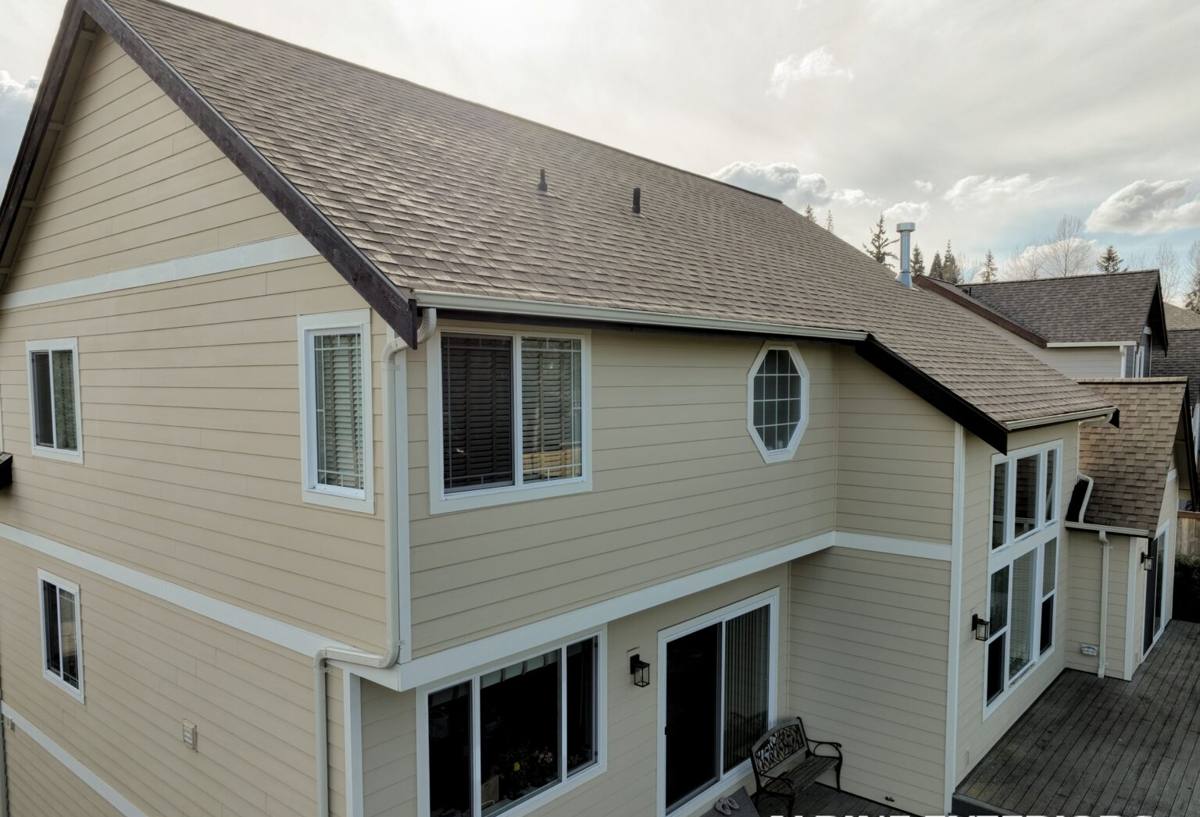
We install James Hardie fiber cement siding exclusively, and Sumas is exactly the kind of town where that decision pays off. This page is about one thing: what a correct James Hardie install looks like on a Sumas home, why the climate here makes the details matter more than they would somewhere drier, and how our process is built around that.
What Sumas' Climate Actually Does to Siding
Moisture Load
Whatcom County gets a lot of rain, and Sumas' low-lying position near the Nooksack floodplain means humidity lingers longer than it does on higher ground. Siding here isn't just getting wet during storms — it's staying damp for extended stretches, which is exactly the condition that breaks down products with poor moisture tolerance. Wood-based and composite sidings that swell, delaminate, or take on water at cut edges and seams are working against the climate every single day they're on the wall.
Salt-Influenced Air
Sumas isn't coastal, but weather systems moving inland off the Strait of Georgia and the Salish Sea carry salt-laden moisture further than people expect, especially on north and west-facing walls that don't get much sun to dry out between weather events. Combined with the general dampness, that's a corrosive environment for fasteners, trim, and any siding material with exposed wood substrate.
Moss and Organic Growth
The long wet season means moss, algae, and mildew get a real foothold on north-facing and shaded walls, under eaves, and anywhere airflow is restricted. Some siding materials just hold onto that growth once it starts — the surface texture and porosity let spores anchor in. Siding that resists moisture absorption at the surface makes moss and algae much easier to keep off, because there's nothing for it to root into.
Why James Hardie Fits This Climate
James Hardie fiber cement is engineered from cement, sand, and cellulose fibers — there's no wood substrate to swell, rot, or delaminate when it stays damp. That matters enormously in a town like Sumas where "damp" isn't an occasional condition, it's most of the year. Hardie's HZ5 product line in particular is engineered for climates with freeze-thaw cycling and sustained moisture exposure, which fits Whatcom County's winter pattern well.
The factory-applied ColorPlus finish is baked on under controlled conditions and backed by its own finish warranty, which means the color layer isn't relying on a field-applied coat of paint to resist the UV and moisture cycling that fades and chalks lesser finishes within a handful of years. On a home that's shaded half the day and soaked the other half, that factory finish is doing real work.
None of that means Hardie is maintenance-free. It's low-maintenance relative to the alternatives, not zero-maintenance. Caulking, flashing, and paint at cut edges (where required) still need periodic attention. What changes is the baseline: you're maintaining a material that isn't structurally degrading underneath, instead of racing to keep water out of a substrate that's already vulnerable.
What a Correct Install Requires Here
Fiber cement siding is only as good as the installation behind it, and in a wet climate the installation details matter more, not less. A rushed or generic install can undercut everything the product is engineered to do.
Water Management Behind the Siding
- Proper weather-resistive barrier (housewrap) installed and lapped correctly, with all penetrations sealed
- Rainscreen or drainage gap where wall assembly and budget allow, so any moisture that gets behind the siding has somewhere to drain and dry
- Correct flashing at every window, door, and roof-to-wall intersection — this is where the majority of siding failures actually start, regardless of the siding material
- Proper starter strip and bottom clearance so siding isn't wicking moisture up from grade or a deck ledger
Fastening and Fit
- Fasteners driven to Hardie's specified depth — overdriven nails crack the board's fastener zone and create a moisture entry point that shows up as a problem years later
- Correct fastener spacing and placement per the HardieZone HZ5 install instructions for this region
- Proper gapping at butt joints and trim to allow for the material's minor expansion and contraction without buckling
Cut Edges and Field Painting
Any factory edge that gets cut on site needs to be sealed per Hardie's specification before installation, particularly on a home that's going to sit in damp conditions for most of the year. Skipping this step is one of the more common corner-cuts we see on jobs that weren't installed to spec, and it's invisible until moisture starts working into the cut end.
Our Process for a Sumas Home
| Step | What Happens |
|---|---|
| 1. Walkthrough | We look at your current siding condition, wall orientation (which sides take the worst weather), existing moisture damage, and trim/window details |
| 2. Product Selection | We spec the right Hardie profile (lap, shingle, panel) and HZ5 formulation, plus a ColorPlus color that fits your home and holds up to shaded, damp exposure |
| 3. Tear-off and Inspection | Removing old siding lets us check the sheathing underneath for rot or existing moisture damage before anything new goes on — this step gets skipped on corner-cutting jobs and it shouldn't |
| 4. Water Management Install | Housewrap, flashing, and drainage detailing done to spec, not eyeballed |
| 5. Siding Install | Correct fastening, gapping, and cut-edge sealing throughout |
| 6. Trim and Final Detail | Trim, caulking, and touch-up so every seam and penetration is sealed against the weather this area actually sees |
| 7. Walkthrough and Warranty Paperwork | We review the finished work with you and register the manufacturer warranty |
Why Local Install Experience Matters in a Town Like Sumas
Sumas is a small town, and its housing stock includes a mix of older farmhouses, mid-century homes, and newer construction — each with different wall assemblies and different existing problems hiding under the current siding. A crew that's worked here before knows which orientations take the worst weather, what kind of moisture damage tends to show up under old siding in this area, and how to sequence a job around the wet season instead of fighting it.
That local pattern recognition is worth something. A crew installing Hardie in Sumas for the first time is learning the local conditions on your house. A crew that already works this area brings that knowledge with them, which shows up in fewer surprises during tear-off and a tighter, more weather-appropriate install.
Cost Factors Specific to This Job
| Factor | Why It Matters Here |
|---|---|
| Existing moisture damage | Homes with long-standing siding issues often need sheathing repair before new siding goes on — this isn't discovered until tear-off |
| Wall complexity | Dormers, multiple gables, and lots of trim add labor time regardless of material |
| Product line and profile | HZ5 lap siding, shingle-style, and panel systems price differently; your walkthrough will narrow this down |
| Drainage plane upgrades | Adding a rainscreen gap costs more upfront but pays off on shaded, damp-prone walls |
| Trim and color | ColorPlus factory finishes and custom trim packages affect material cost but reduce future painting |
We don't quote a number without seeing the house — anyone who does is guessing, and on a home with unknown moisture history behind the old siding, that guess is usually wrong in one direction or the other.
Signs Your Current Siding Is Already Losing the Fight
- Persistent moss or dark streaking on north or west walls that comes back within weeks of cleaning
- Soft or spongy spots when you press on the siding, especially near the bottom courses or under windows
- Visible swelling, bubbling, or delamination at seams and cut edges
- Paint that's failing faster than it should, or chalking heavily within a few years of a repaint
- Gaps opening up at trim and butt joints as the material moves with moisture cycles
Any of these on a Sumas home is worth a look before winter, not after.
Get a Straight Answer on What Your Home Needs
If you're dealing with tired or failing siding in Sumas, we're glad to come take a look and give you an honest read on what's going on and what a correct James Hardie install would involve on your specific house. There's no pressure and no obligation — just a straightforward estimate based on what we actually see when we're there. Use the form below to get started.