 Custer
 Point Roberts Homes Take the Hardest Version of Our Local Climate
Every house in Whatcom County deals with Pacific Northwest weather, but Point Roberts gets a concentrated dose of it. The peninsula sits surrounded by water on three sides, which means homes here are exposed to salt-laden air, wind, and driving rain in a way that inland Custer and Bellingham properties simply aren't. Add in the heavy tree cover on many lots and the long, damp stretch of fall through spring, and you have a set of conditions that will find every weak point in a siding job within a few years, not a few decades.
This page covers what siding installation actually needs to look like for a Point Roberts home — the material, the detailing, and the process — so you know what to ask for and what to expect before you hire anyone.
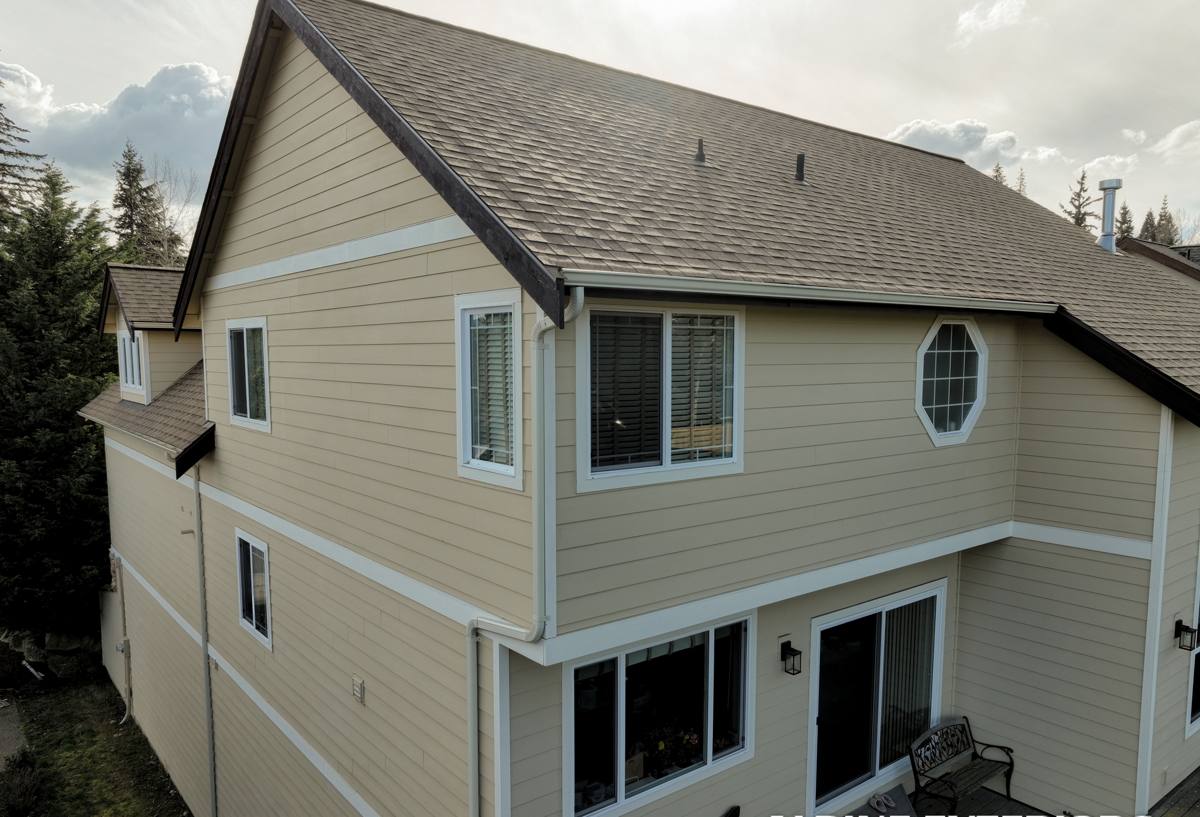
What Coastal Exposure Does to Siding Over Time
Salt Air and Corrosion
Airborne salt doesn't just affect homes sitting directly on the water. Wind carries it inland across the whole peninsula, and it settles on siding, trim, and fasteners year-round. Over time it accelerates corrosion in anything not rated for coastal exposure — cheap fasteners, unprotected metal flashing, and paint films that weren't built to shed salt residue. Siding that looks fine going in can start showing streaking, fastener bleed, or finish breakdown within a few years if the materials and hardware weren't chosen with this in mind.
Wind-Driven Rain
Point Roberts gets rain that doesn't just fall — it's pushed sideways by wind coming off the water. That matters because most siding failures aren't caused by rain hitting the face of the wall; they're caused by rain that gets forced behind the siding through a gap, a bad lap, or a missing piece of flashing. A wall assembly that would hold up fine in a sheltered inland yard can leak within a couple of wet seasons if it's installed to a lower standard here.
Extended Moss and Algae Season
Shaded, tree-covered lots combined with our long wet season give moss and algae a wide window to take hold, especially on north- and west-facing walls that stay damp longest. Once moss establishes itself on a wall, it holds moisture against the surface long after the rain has stopped, which is exactly the condition that causes rot in wood-based products and finish failure in lower-grade siding. The right material and the right air gap behind it make a real difference in how long a wall stays clean.
Why We Only Install James Hardie Fiber Cement Here
We don't install vinyl, LP SmartSide, primed wood, or cedar. That's a deliberate standard, not a limitation of what we're capable of doing. James Hardie fiber cement is non-combustible, doesn't absorb water the way wood-based siding does, and won't degrade the way vinyl can under sustained UV and salt exposure. Hardie's ColorPlus factory finish is baked on under controlled conditions rather than field-painted, which matters a lot in an environment where a rushed or under-cured field paint job is going to fail faster than it should. Hardie also builds its HZ product line around specific climate zones, and the configuration used in Western Washington is engineered for exactly the wet, moderate-temperature marine conditions Point Roberts sits in.
None of that means Hardie is maintenance-free or idiot-proof to install. It still needs to be detailed correctly for this climate, which is the next section.
What a Correct Installation Involves in This Climate
Water-Resistive Barrier and Rain Screen Gap
Every installation starts with a continuous water-resistive barrier over the sheathing, lapped correctly so water is always directed outward and down, never into a seam. Behind the siding itself, we build in a rain screen gap — a small drainage and ventilation space between the WRB and the back of the panel. On a wind-exposed property like this, that gap is what lets any moisture that does get past the siding face drain and dry out instead of sitting against the wall.
Flashing and Sealant Details
Windows, doors, and any wall penetration are where driving rain finds its way in. Head flashing, kick-out flashing at roof-to-wall intersections, and properly lapped z-flashing above horizontal trim aren't optional extras — they're the difference between a wall that sheds wind-driven rain and one that slowly saturates behind the siding. Sealant gets used sparingly and in the right places, not as a substitute for flashing that was skipped to save time.
Fastening and Joint Treatment
Fastener choice and placement matter more here than in a sheltered yard. Corrosion-resistant fasteners, correct nailing patterns per Hardie's specifications, and properly gapped and sealed joints all affect how the assembly performs against salt air and moisture over the long run. Butt joints get treated with the correct sealant or joint flashing rather than caulked and left, since caulk alone breaks down faster in this climate than most homeowners expect.
A homeowner walking a finished or in-progress job can check for a few things without needing to be a contractor:
- Visible rain screen gap or furring strips behind the siding, not siding nailed flat to the WRB
- Flashing installed above windows, doors, and any horizontal trim board
- Consistent fastener spacing with no visible corrosion-prone hardware
- Butt joints and panel seams treated, not just caulked over
- Cut edges of Hardie panels sealed or back-primed, especially at corners
- No siding installed in direct contact with soil, decking, or roofing
Our Installation Process
- On-site assessment — we walk the exterior, check the current siding and sheathing condition, and look at wind and moisture exposure specific to the lot.
- Tear-off and sheathing check — old siding comes off and we inspect the sheathing underneath for rot or damage before anything new goes on, since covering a problem never fixes it.
- Water-resistive barrier and flashing — WRB, flashing at every penetration, and the rain screen gap go in before any Hardie panel is hung.
- Hardie installation — panels, fasteners, and joint treatment installed to manufacturer specification and adjusted for the specific exposure of that wall.
- Trim, caulking, and touch-up — trim boards, corners, and any factory-finish touch-up completed with Hardie-matched products.
- Final walkthrough — we go over the finished job with you before calling it done.
Cost Factors for a Point Roberts Siding Project
Every home is different, but the same handful of factors drive most of the cost variation we see on peninsula projects:
| Factor | Why It Matters Here |
|---|---|
| Home size and wall complexity | More corners, gables, and cutouts mean more flashing and labor time |
| Current siding removal | Tear-off and disposal of old material adds time, especially with wood or vinyl over old sheathing |
| Sheathing condition | Rot repair from prior moisture intrusion is common on wind-exposed walls and isn't visible until tear-off |
| Hardie product line and profile | Lap width, panel style (shingle, board-and-batten, plank), and trim choices affect material cost |
| Color and finish | Factory ColorPlus finishes vary slightly in cost by color line versus standard options |
| Site access and logistics | Delivery scheduling and site access on the peninsula factor into project timelines |
Why Hire a Crew That Already Works in Point Roberts
Point Roberts is geographically cut off from the rest of Whatcom County — the only land route in and out runs through Canada. That's not a reason to avoid getting quality work done, but it is a reason to hire a crew that already accounts for it. Material deliveries, crew scheduling, and permitting through the county all need to be planned around that reality, and a contractor who hasn't worked the peninsula before is learning that on your job instead of showing up already knowing how to handle it.
There's also the climate-specific experience itself. A crew that mainly installs siding on sheltered inland lots doesn't automatically know how much more attention flashing, fastener choice, and rain screen detailing need on a wind- and salt-exposed wall. That knowledge comes from having done the work here before, not from a spec sheet. Whether your home is a year-round residence or a home you use seasonally, the siding still has to hold up to the same weather every day it's standing.
Maintaining Hardie Siding in a Point Roberts Environment
Hardie fiber cement is low-maintenance compared to wood or vinyl, but "low-maintenance" isn't "no-maintenance," especially in this environment. A little attention twice a year keeps a correctly installed job performing the way it should for decades:
- Rinse salt residue and grime off the siding surface a couple of times a year, especially walls facing open water or prevailing wind
- Keep gutters clear so overflow doesn't run down the wall face and feed moss growth
- Trim back vegetation and tree limbs that keep a wall shaded and damp longer than it needs to be
- Check caulking at trim joints and penetrations annually and have any cracked or separated sealant redone
- Have a professional look at any area where you notice discoloration, soft trim, or a section that stays wet longer than the rest of the wall
If you're planning a siding project in Point Roberts, we're glad to come take a look, walk the property with you, and give you a straight answer on what your home actually needs. There's no pressure and no cost for the estimate — just fill out the form below to get started.