 Custer
 Meridian's Siding Problem Isn't Like Siding Problems Inland
Meridian sits in that stretch of Whatcom County where the weather off the water and the weather off the Cascades foothills seem to argue with each other most of the year. Homes here don't fail because of one bad storm — they fail slowly, from a climate that never really dries out. Salt-tinged marine air moves through constantly, driving rain comes in sideways more often than straight down, and there are stretches of fall and winter where the sun barely gets a look in. That combination is exactly what wears out siding faster than the manufacturer's brochure ever suggests it will.
We install siding across Custer and the surrounding Whatcom County communities, and Meridian homes tend to show the same pattern: siding that looks fine from the street but is holding moisture behind it, moss creeping into every horizontal lap and trim joint, and paint that's chalking or peeling years ahead of schedule. None of that is bad luck. It's what happens when a siding product or an installation detail wasn't built for this specific climate.
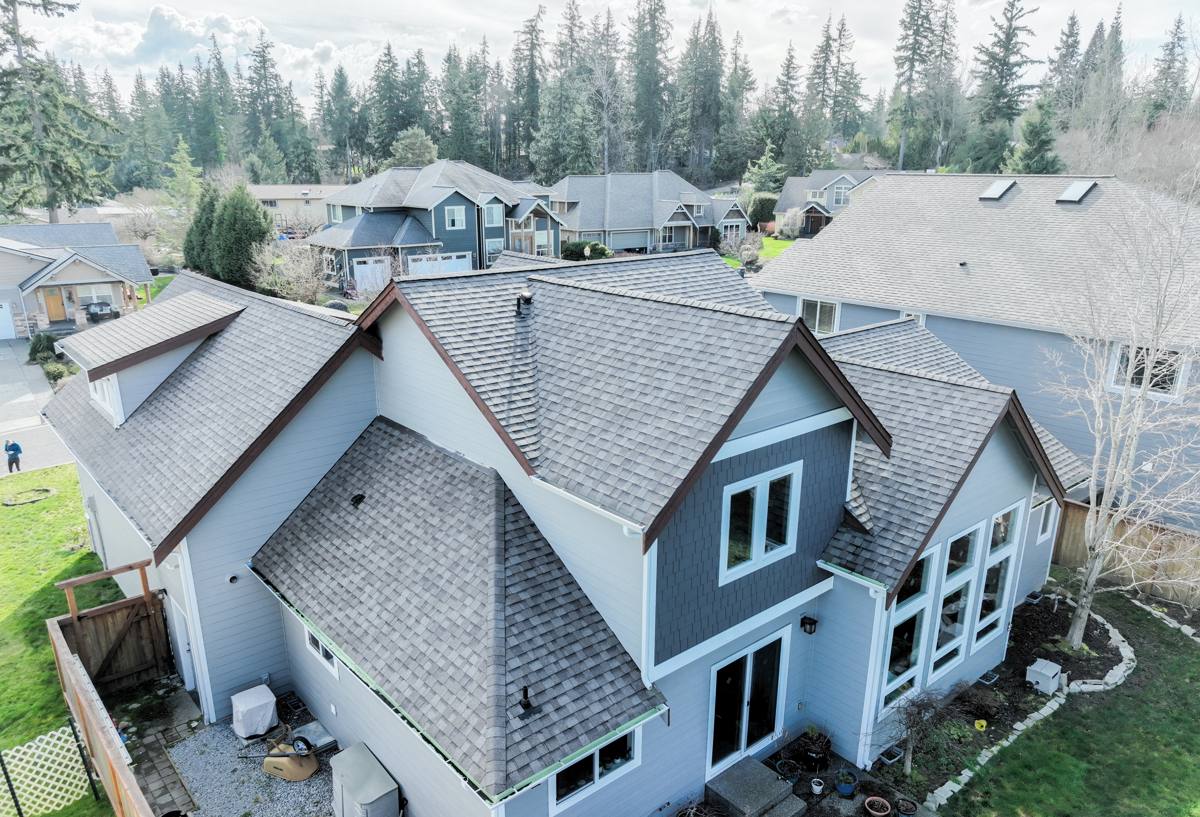
What Salt Air, Driving Rain, and Moss Actually Do to Siding
Salt Air
Airborne salt is corrosive to fasteners and hardware, and it accelerates the breakdown of some paint films and coatings. Siding that's rated for a generic "cold climate" but not specifically for coastal exposure can chalk, fade unevenly, or lose adhesion faster near Meridian than the same product would fifty miles inland.
Driving Rain
Wind-driven rain doesn't just wet the surface of a wall — it gets pushed sideways and upward into laps, seams, and anywhere flashing is short or a nailing pattern is loose. Over years, that's how water finds its way behind siding that was never actually "leaking" in any way you could see from outside.
The Long Moss Season
Whatcom County's moss season isn't a few weeks — it's most of the year on a north-facing wall or anything shaded by trees. Moss and algae hold moisture directly against the siding surface far longer than open air would, which is exactly the condition that rots wood-based products and stains or degrades weaker coatings.
What Correct Siding Installation Involves Here
Siding is a system, not a single product nailed to a wall. On a Meridian home, we treat every layer as doing real work against the climate described above, not just as a step to check off.
- Water-resistive barrier (WRB): installed continuously, lapped correctly shingle-style so water is always directed outward and down, never into a seam.
- Flashing at every penetration: windows, doors, hose bibs, vents, and any deck or porch ledger — these are the spots driving rain finds first.
- A rainscreen gap: a small air space behind the siding so any moisture that does get past the cladding can drain and dry instead of sitting against the WRB and sheathing.
- Correct fastening: the right fastener type, spacing, and depth for the specific Hardie product and exposure — under- or over-driven nails are one of the most common causes of early siding failure.
- Proper joint and caulking details: butt joints, trim intersections, and inside/outside corners sealed and detailed the way the manufacturer actually specifies, not just "close enough."
Skip any one of these and the siding can look correct for a few years while the wall behind it quietly stays wet. That's the failure mode we're most often called out to diagnose on homes that were sided by someone unfamiliar with what this climate demands.
Why We Only Install James Hardie Fiber Cement
We standardized on James Hardie siding for every job we do, including here in Meridian, and we don't install vinyl, LP SmartSide, primed spruce, cedar, or other fiber cement brands. That's a deliberate professional standard, not a sales position, and it's worth explaining plainly.
Hardie's fiber cement is non-combustible and doesn't rely on paint or a factory coating alone to resist moisture the way engineered wood products do — it's cement-based, so it doesn't swell, delaminate, or feed rot the way wood-fiber siding can when it stays damp for long stretches, which is a near-constant condition here. Hardie also builds specific HZ5 product lines engineered for wetter, harsher climate zones, and their ColorPlus factory finish is baked on under controlled conditions rather than field-applied, which matters a lot in a place where paint has to fight salt air and moss for years without a break. The warranty is a real, transferable warranty backed by a large manufacturer, not a shorter or more conditional one.
Vinyl is inexpensive and low-maintenance in mild climates, but it can warp or become brittle over time and it's a poor fit when a homeowner wants a heavier, more dimensional, paintable exterior. Cedar and primed spruce look great on day one, but they demand a maintenance schedule most owners underestimate, especially in a climate that barely lets wood dry out between rain events. LP SmartSide is a legitimate engineered-wood product, but it's still wood-based at its core, and wood-based siding is the category most exposed to the specific risks — sustained moisture and moss — that define a Meridian exterior. We'd rather tell a homeowner this up front than install something we don't believe will hold up on their specific home.
Our Process on a Meridian Home
1. On-Site Evaluation
We look at the existing siding and sheathing condition, note which walls take the worst weather (usually the sides facing prevailing wind and rain), and check for any signs of moisture already trapped behind the current cladding.
2. Tear-Off and Sheathing Check
Old siding comes off down to the sheathing, which gets inspected and repaired as needed. This is the point where hidden moisture damage from a prior install shows up — better to find it now than to bury it under new siding.
3. WRB, Flashing, and Rainscreen Installation
The water management layer goes on first and gets the most attention of any step, because it's the layer that determines whether the job holds up in ten years, not just in year one.
4. Hardie Installation to Manufacturer Spec
Fastening, spacing, joint treatment, and trim details are all done to James Hardie's published installation requirements — which is also what keeps the manufacturer's warranty intact.
5. Final Walkthrough
We go over the finished exterior with the homeowner, point out anything worth knowing for upkeep, and answer questions before we consider the job done.
What Drives the Cost of a Siding Job in This Area
| Factor | Why It Matters in Meridian |
|---|---|
| Extent of hidden moisture damage | Sheathing or framing repair adds cost but is common on older homes here once old siding comes off |
| Home size and wall complexity | More corners, dormers, and penetrations mean more flashing and detail work, not just more square footage |
| Hardie product line chosen | Lap, shingle, and panel products vary in material cost and labor time |
| ColorPlus vs. field-painted finish | Factory finish costs more up front but holds color longer against salt air and UV |
| Trim and accessory scope | Fascia, soffit, and trim replacement alongside siding affects total project cost |
| Access and site conditions | Tree cover, tight lots, and drainage issues common in this area can affect labor time |
We give a written, itemized estimate before any work starts, so a homeowner can see exactly where the cost is going rather than getting a single lump number.
Signs a Meridian Home May Need New Siding Soon
- Moss or algae that keeps returning to the same spots no matter how often it's cleaned off
- Paint that's peeling, bubbling, or chalking heavily, especially on walls facing the prevailing weather
- Soft or spongy spots when pressing on siding near the bottom edges or around windows
- Visible gaps at seams, corners, or trim where daylight or drafts get through
- A musty smell in a room along an exterior wall, which can point to moisture trapped behind the cladding
- Siding that's more than 20-25 years old and has never had a full inspection of what's happening behind it
Why It Matters That a Crew Already Works This Area
A crew that installs siding across Custer and the rest of Whatcom County on a regular basis isn't guessing at how to detail a wall for this climate — they've already seen where water finds its way in on homes like this, which walls take the worst of the weather, and how long moss actually takes to become a problem versus a cosmetic annoyance. That local pattern recognition shows up in the small decisions on a job: where to add extra flashing attention, how aggressive the rainscreen detailing needs to be, and which trim joints deserve extra care. It's the difference between a crew executing a generic install and one building specifically for what this stretch of the county throws at a house.
Living With Hardie Siding in a Wet, Salty Climate
Once the siding is on correctly, upkeep in Meridian is straightforward but shouldn't be skipped. A yearly rinse to knock moss and grime off before it gets established, a look at caulking and trim joints every couple of years, and prompt attention to anything that looks off are really all it takes. Hardie's cement-based material and factory finish are built to take the salt air and rain without the maintenance burden of wood, but "low-maintenance" isn't "no-maintenance" — the homes that go decades without issues are the ones where small things get checked before they become big things.
If you're weighing a siding replacement on a Meridian home, we're happy to take a look, explain honestly what we see, and walk through what a correct job would involve for your specific house. Reach out for a free, no-pressure estimate using the form below.