 Custer
 Why Semiahmoo Homes Wear Out Siding Faster Than Most
Semiahmoo sits close enough to the water that salt air is part of daily life, not an occasional event. That salt-laden air settles on exterior walls year-round, and combined with Whatcom County's driving rain and long, damp winters, it creates a set of conditions that most siding products simply weren't built to handle over the long haul. If you've owned a home out here for more than a few years, you've probably already noticed it: paint failing early, caulk joints opening up, or moss creeping across north-facing walls no matter how often you clean them.
Siding replacement in this part of Custer isn't a cosmetic upgrade — it's a decision about what's going to hold up against salt corrosion, constant moisture, and a moss season that can stretch from October through May. We've replaced siding on enough homes in this stretch of Whatcom County to know which failure patterns show up first and why, and that shapes how we approach every job here differently than we would inland.
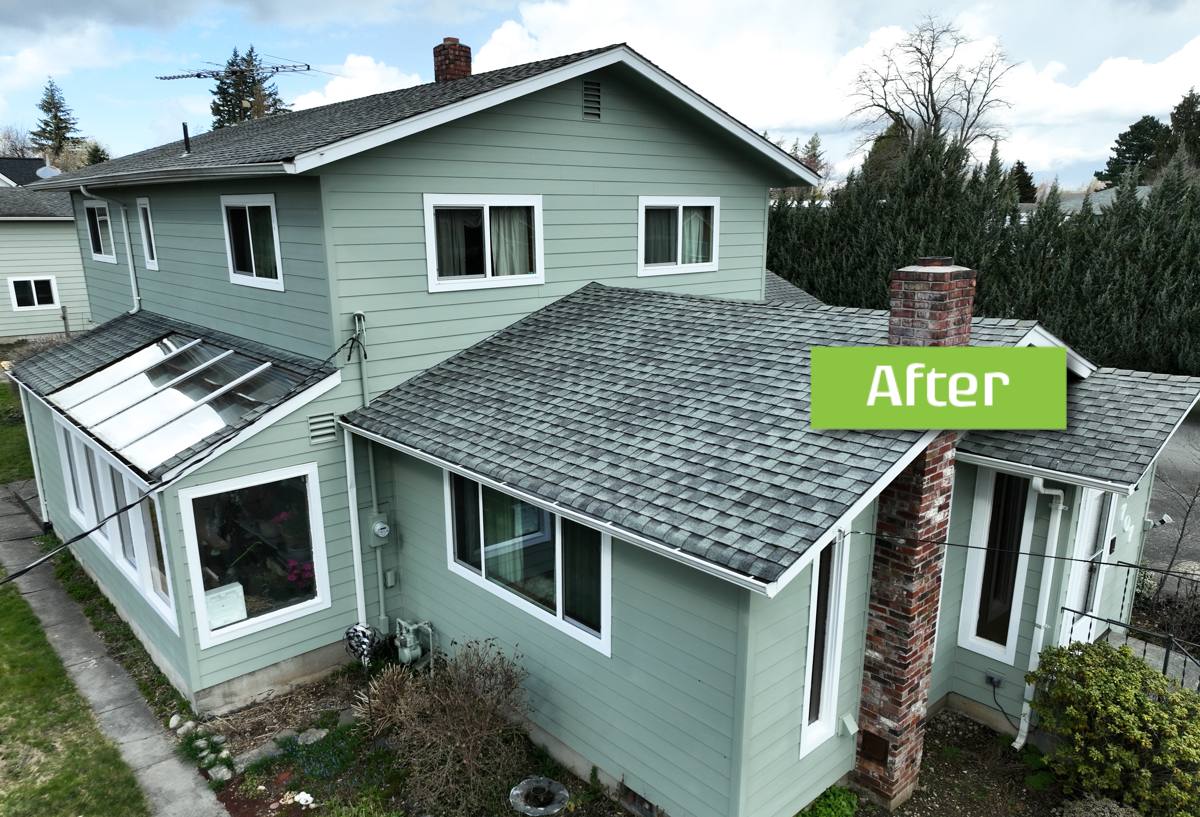
What Salt Air and Driving Rain Actually Do to Siding
Salt Air's Slow Damage
Salt doesn't just sit on the surface — it works into seams, fastener heads, and any place where two pieces of material meet. On wood-based products, that moisture-salt combination accelerates rot at the exact joints that are hardest to inspect. On vinyl, salt residue builds up in the panel laps and can accelerate fading and brittleness over time. Metal fasteners that aren't properly rated corrode faster near the water, and once a fastener fails, the panel around it starts moving, which opens the door to water intrusion.
Driving Rain and Wind-Driven Moisture
Semiahmoo's exposure means rain doesn't just fall straight down — wind pushes it sideways into wall assemblies, especially on the water-facing sides of a home. Siding that isn't installed with the right lap, flashing, and clearances will let that wind-driven rain behind the cladding, where it soaks sheathing and framing out of sight. By the time it shows up as a soft spot or a stain on an interior wall, the damage has usually been building for a couple of years.
The Long Moss Season
Because this area stays damp for so much of the year, moss and algae get a long runway to establish themselves on shaded and north-facing walls. Beyond looking bad, moss holds moisture directly against the siding surface, which is exactly what accelerates rot in wood-based products and breaks down cheaper factory finishes faster than they're rated for.
Why We Only Install James Hardie Fiber Cement
We made a decision a long time ago to install one siding system and stand behind it, rather than offer half a dozen options and let price alone decide. For a climate like Semiahmoo's, that system is James Hardie fiber cement, and here's the honest reasoning:
- Non-combustible core: fiber cement doesn't feed a fire the way wood-based products can, which matters for insurance and peace of mind alike.
- Factory-applied ColorPlus finish: the color and protective coating are baked on at the factory under controlled conditions, not brushed on in the field where weather and humidity affect cure quality.
- Climate-engineered HZ product lines: Hardie builds region-specific formulations (HZ5 for wetter, harsher climates like ours) that are engineered around moisture exposure rather than a one-size-fits-all mix.
- Doesn't feed moss and rot the way wood does: fiber cement is not an organic food source for fungal growth the way untreated wood products are, which matters directly for a moss-heavy environment.
- Transferable, long-term warranty: backed by a manufacturer with a long track record, which protects the next owner too if you sell.
We don't install LP SmartSide, vinyl, Cemplank, Allura, primed spruce, or cedar. Each of those has legitimate uses elsewhere, and we're not going to tell you they're worthless — but for the specific combination of salt air, wind-driven rain, and moss exposure that Semiahmoo homes deal with, we've seen enough of them fail early or demand ongoing maintenance that we no longer put our name on that install. Standardizing on one system also means our crews install it correctly every time, instead of learning six different products' quirks on the fly.
What a Correct Siding Replacement Involves Here
Tear-Off and Inspection
Every replacement starts with full removal of the old siding, not a re-side over the top. That's the only way to actually see the sheathing and framing underneath — which, given how long moisture problems can hide in this climate, is often where the real story is. We flag and repair any rotted sheathing or framing before anything new goes up; covering over a compromised wall assembly just guarantees a repeat job in a few years.
Water Management Behind the Cladding
Correct installation depends as much on what's behind the siding as the siding itself. That means a proper weather-resistive barrier, correctly lapped and taped seams, and flashing detail around every window, door, and penetration — installed so water is directed out and down, not trapped behind the panel. In a driving-rain environment like this one, this layer is doing as much work as the cladding itself.
Fastening and Clearances
Fastener choice and placement matter more here than in a drier climate — corrosion-resistant fasteners, correct nailing patterns per Hardie's specifications, and proper clearance from grade, roofing, and decks so water isn't wicking up into the bottom course. These are the details that separate a siding job that lasts 30+ years from one that starts showing problems in five.
Finish and Joint Detailing
Field-cut edges get sealed per manufacturer spec, caulking is used only where it's actually appropriate (not as a substitute for proper flashing), and trim details are finished to shed water rather than collect it.
Our Process for a Semiahmoo Job
- On-site assessment: we walk the exterior, check the water-facing sides especially closely, and look for existing moisture damage, moss buildup, and problem areas around windows and trim.
- Straightforward estimate: a clear scope and price, with any sheathing or framing repair called out separately so there are no surprises mid-job.
- Tear-off and structural repair: old material comes off, damaged framing or sheathing gets fixed, and we don't move forward until that substrate is sound.
- Weather barrier and flashing install: the moisture-management layer goes in correctly before a single piece of Hardie touches the wall.
- Hardie installation: panels, fasteners, and joints installed to manufacturer spec, in the HZ5 line suited to this climate.
- Final walkthrough: we go over the finished job with you before we consider it done.
Why Hiring a Crew That Already Works Semiahmoo Matters
A lot of siding problems out here aren't from bad materials — they're from installation that didn't account for the environment. A crew that mostly works drier, inland areas may not automatically think about wind-driven rain exposure on the water side of a house, or about how aggressively moss establishes on shaded walls in this microclimate. Crews that already work this stretch of Whatcom County know which sides of a Semiahmoo home take the worst weather, where moss shows up first, and how to detail flashing so it actually holds up to salt air over time rather than just meeting minimum code.
That local familiarity also means fewer surprises during tear-off — we've seen the same wall assembly issues enough times in this area to know roughly what to expect and to price for it honestly up front.
Cost Factors for Semiahmoo Siding Replacement
| Factor | Why It Affects Price |
|---|---|
| Extent of hidden moisture damage | More sheathing/framing repair needed if water has been getting behind old siding for years |
| Home size and wall complexity | More corners, windows, and trim details mean more labor and flashing work |
| Existing siding type | Some materials (like old cedar or certain vinyl installs) are more labor-intensive to remove than others |
| Water-side exposure | Walls facing prevailing wind and salt spray often need extra flashing attention, which adds labor |
| Access and site conditions | Steep grades, tight lot lines, or limited equipment access can add time |
| Trim and color selection | ColorPlus finish options and trim detailing affect material cost |
Signs Your Semiahmoo Home May Need Siding Replacement Soon
- Paint or finish peeling or bubbling, especially on water-facing walls
- Soft spots when you press on siding near the bottom courses or around windows
- Persistent moss or algae that returns quickly after cleaning
- Visible gaps, warping, or buckling panels
- Rising energy bills that hint at compromised insulation behind the wall
- Caulk joints that keep cracking open no matter how often they're redone
- A musty smell near exterior walls, which can indicate trapped moisture
If you're seeing any of that on a Semiahmoo home, or you'd simply like an honest look at where your siding stands, we're glad to come take a look. There's no pressure and no cost to get our read on it — fill out the form below and we'll get in touch to schedule a free estimate.