 Custer
 Sandy Point Sits Right at the Edge of the Weather
Sandy Point is one of the more exposed pockets of Whatcom County. It sits low and close to the water, which means homes there take a different kind of beating than a house a few miles inland in Custer or Blaine. Salt-laden air moves off the water and settles on every exterior surface. Wind carries rain sideways into walls that would stay mostly dry on a more sheltered lot. And because the marine layer keeps humidity high for much of the year, moss and algae get a long runway to take hold on anything that stays damp.
None of that is unusual for coastal Whatcom County. But it does mean siding installation here isn't a one-size-fits-all job. A product and a crew that perform fine in a dry, inland neighborhood can fall short on a waterfront lot at Sandy Point. The material has to tolerate salt and moisture cycling without breaking down, and the installation details — flashing, clearances, drainage — have to account for wind-driven rain that finds every gap a standard install might leave.
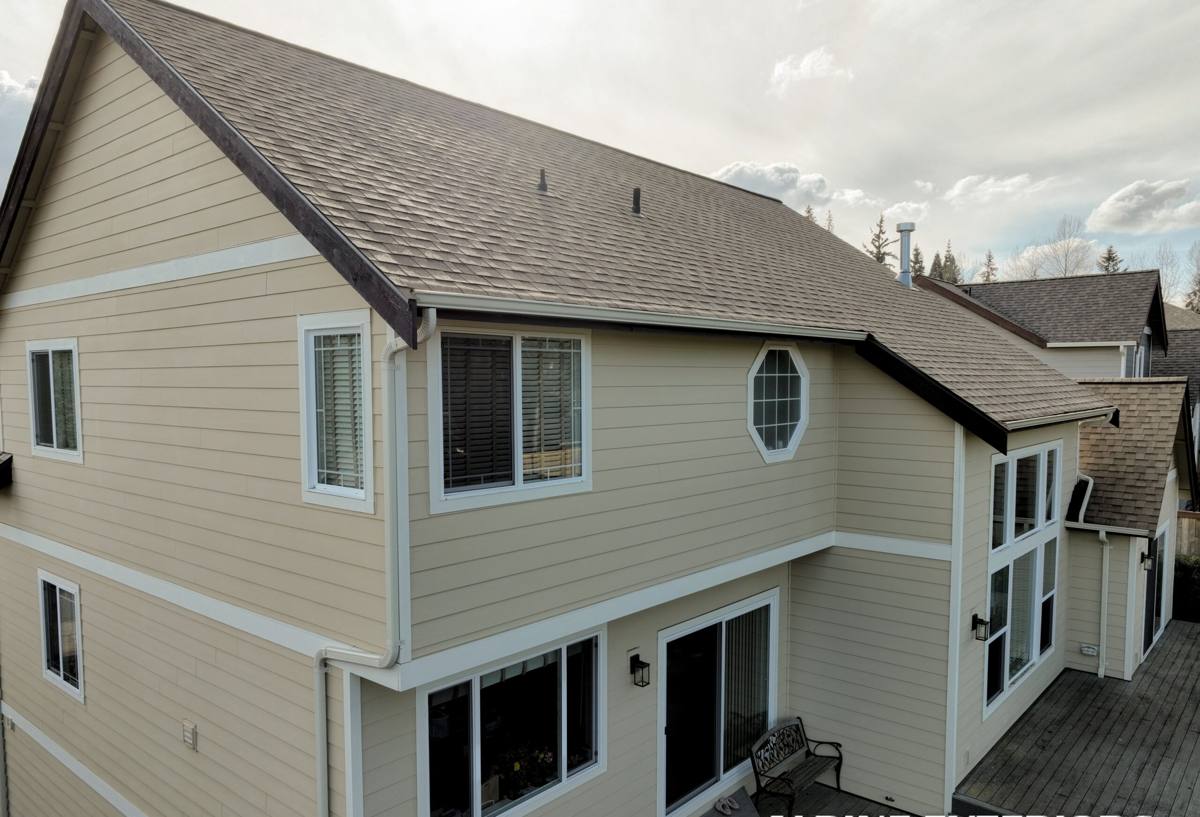
What Salt Air, Driving Rain, and Moss Actually Do to Siding
Salt Air
Salt in the air isn't just corrosive to metal — it's abrasive and hygroscopic, meaning it pulls moisture out of the air and holds it against whatever surface it lands on. Over years, that constant low-level dampness accelerates paint and coating breakdown, softens caulk and sealants faster than inland exposure, and speeds up corrosion on fasteners, flashing, and trim that aren't rated for it.
Wind-Driven Rain
Rain that falls straight down mostly runs off a wall. Rain that's pushed sideways by wind off the water gets forced up under laps, into butt joints, and around penetrations that were never designed to shed water from that angle. A siding system that isn't detailed for wind-driven rain will eventually let moisture behind the cladding — and once water gets behind siding, the sheathing and framing pay the price long before the siding itself shows a problem.
Moss and Algae
Whatcom County's moss season runs long — shade, moisture, and mild temperatures are exactly what moss and algae need to establish. On siding, that growth holds moisture against the surface, stains the finish, and can work into seams and butt joints over time. Some siding materials feed algae growth more than others because of how they absorb and hold moisture at the surface.
What a Correct Siding Installation Involves Here
A siding job that's going to hold up at Sandy Point isn't just about nailing panels to a wall. The parts that actually determine whether a house stays dry for the next 30 years happen before the first piece of siding goes up and in details most homeowners never see once the job is done.
- Weather-resistive barrier and rain screen: A drainage gap behind the siding lets any moisture that does get past the cladding drain and dry out instead of sitting against the sheathing.
- Flashing at every penetration: Windows, doors, vents, and roof-to-wall transitions all need properly lapped, corrosion-resistant flashing — this is where wind-driven rain finds its way in if it's skipped or done wrong.
- Correct fastener spec: In a salt-air environment, fastener material and coating matter. The wrong fastener corrodes early and can stain or fail well before the siding itself is due for attention.
- Proper clearances: Siding held too close to grade, decks, roofs, or hardscape stays wet longer and invites rot and moss growth at the bottom courses — the first place problems usually show up.
- Sealed and caulked joints done to spec: Butt joints, corners, and trim intersections need the right sealant, applied correctly, not just enough to look finished.
Skip or rush any one of these and the siding can look fine for a while and still fail underneath. That's the trap with coastal installs — the visible problems show up years after the real mistake was made.
Why We Install Only James Hardie Fiber Cement
We standardized on James Hardie fiber cement siding and we don't install vinyl, LP SmartSide, or other fiber cement brands. That's a deliberate call, not a default, and on a lot like Sandy Point the reasoning matters more than usual.
Fiber cement handles moisture cycling without warping, swelling, or delaminating the way some engineered wood products can if a fastener or seal ever fails. It's non-combustible, which matters on any home but especially where wildfire smoke and defensible-space rules are part of the conversation across the Pacific Northwest. And it holds a factory-applied finish — ColorPlus — that's baked on and cured under controlled conditions rather than field-applied, which means it resists fading and holds up to salt exposure and UV significantly better than a job-site paint job.
James Hardie also builds region-specific HZ product lines engineered for different climate zones, including wetter, higher-humidity regions like ours. That's not marketing — it changes how the product is formulated to handle moisture. Combined with a strong transferable warranty, it's the product we're willing to put our name behind on the most exposed lots in our service area, Sandy Point included.
We're upfront that this means we turn down some jobs where a homeowner wants a different product. We'd rather be honest about that than install something we don't believe will hold up to this specific coastline.
Our Process for a Sandy Point Home
- Site walk and assessment: We look at sun and wind exposure, proximity to water, existing moisture damage, and grading before we talk product or price.
- Tear-off and sheathing check: Old siding comes off and we inspect the sheathing underneath — this is where hidden moisture damage from a prior install shows up, and it needs to be addressed before anything new goes on.
- Weather barrier and rain screen install: Correctly lapped house wrap and a drainage gap, sized and installed to Hardie's specifications.
- Flashing and trim: Every window, door, and penetration gets flashed before siding goes up around it.
- Hardie panel or lap installation: Installed to manufacturer spec on fastener type, spacing, and clearance — the details that actually determine long-term performance.
- Caulking, paint touch-up, and final walkthrough: Field-cut edges get sealed and touched up, and we walk the finished job with the homeowner.
Cost Factors on a Waterfront Lot
Every siding job is priced on its own specifics, but a few things move the number more on an exposed, coastal lot like Sandy Point than they would inland.
| Factor | Why It Affects Sandy Point Jobs |
|---|---|
| Existing moisture or rot damage | Coastal exposure means a higher chance the sheathing or framing needs repair before new siding goes on |
| Access and site conditions | Waterfront lots can have tighter access, drainage considerations, or setback requirements that affect scaffolding and staging |
| Trim and flashing detail | More flashing points and higher-grade fasteners add labor and material cost but are non-negotiable on this coastline |
| Siding profile and finish | Panel vs. lap, and standard vs. premium ColorPlus finishes, shift material cost |
| House size and complexity | Corners, gables, and dormers all add cutting, fitting, and flashing time regardless of location |
We give straight, itemized estimates so a homeowner can see exactly what's driving the number, not a flat square-footage guess.
Keeping Coastal Siding Looking Right
Even the right product and a correct install still benefit from basic upkeep in a salt-air, moss-prone environment. None of this is complicated, but it's easy to let slide.
- Rinse siding annually with a garden hose to clear salt residue, especially on sides facing the water
- Trim back vegetation and tree cover that keeps siding shaded and damp longer than necessary
- Check and clear gutters before the fall rains so water isn't overflowing onto siding below
- Address moss or algae growth early with a gentle wash rather than letting it establish
- Re-caulk trim and joints if you notice gaps or cracking — small sealant failures are easy to catch early and cheap to fix
- Watch bottom courses near grade, decks, and downspouts — that's where moisture problems show up first
Why a Crew That Already Works This Coastline Matters
Sandy Point isn't like every lot in our service area, and a crew that mostly installs siding on inland, sheltered homes doesn't necessarily know where this coastline tends to cause problems — how far wind-driven rain actually travels up a wall, which corners take the worst of the salt exposure, where moss establishes first, or how much clearance really matters near grade on a low-lying lot. That knowledge comes from doing the work here repeatedly, not from a spec sheet.
We work throughout Custer and the surrounding Whatcom County coastline, and we bring what we've learned on similar exposed properties to every Sandy Point estimate — what tends to go wrong, what holds up, and what a correct install actually requires on this particular stretch of water.
If you're planning a siding replacement or new install on a Sandy Point home, we're glad to walk the property, take a look at what you're working with, and give you a straight assessment. Reach out for a free, no-pressure estimate using the form below.