 Custer
 Sandy Point's Waterfront Climate Is Not Kind to Siding
Sandy Point sits close enough to the water that homes here deal with a different set of stresses than siding a few miles inland in Whatcom County. Salt-laden air moves off the water and settles on exterior surfaces year-round. Wind-driven rain finds its way into every gap, seam, and fastener hole that isn't properly sealed. And the long gray stretch from fall through spring keeps north-facing walls, fence lines, and shaded siding damp long enough for moss and algae to take hold and stay there.
None of that is unusual for this part of Washington. But it adds up faster on a waterfront lot than it does elsewhere. Siding that's rated "good enough" for a typical inland install can start showing paint failure, swelling, or moss staining years ahead of schedule when it's facing salt air and near-constant moisture. That's the baseline we plan around for every Sandy Point job — not a worst-case scenario, just normal conditions here.
What This Means for Material Choice
Wood-based products absorb moisture and are more prone to rot when they stay wet, which is common with the humidity and rainfall this area sees. Vinyl can warp or fade under UV and temperature swings, and it doesn't hold up well against wind-driven debris. Fiber cement, when it's the right formulation and it's installed correctly, resists moisture absorption, doesn't feed mold or moss the way wood fiber can, and holds its factory finish far longer than field-painted materials. That's the short version of why this is the only siding material we recommend for homes in this area, waterfront or not.
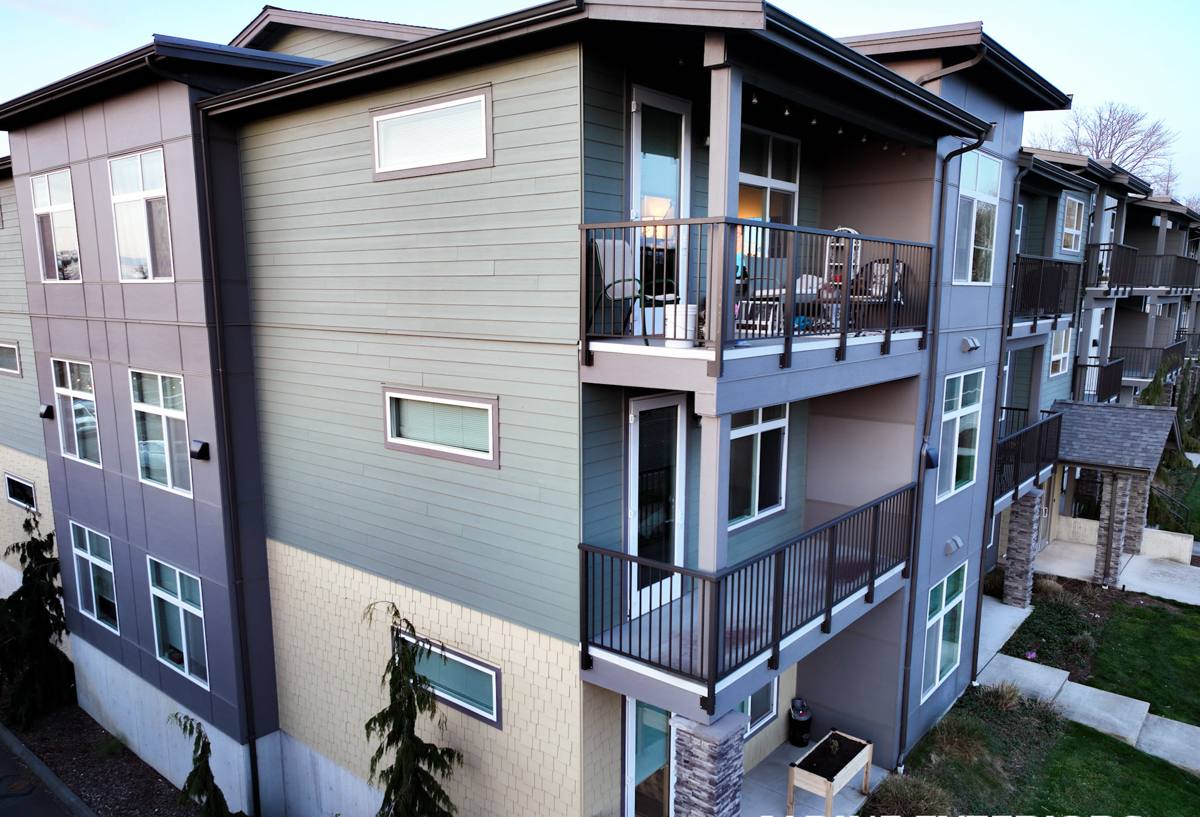
Why We Only Install James Hardie Fiber Cement
There are several fiber cement brands on the market, and some contractors mix and match based on price. We don't. We install James Hardie exclusively, for reasons that matter specifically in a climate like this one:
- ColorPlus factory finish — baked-on, not field-applied, so it holds color and resists the fading and chalking that salt air and UV exposure accelerate.
- HZ5 climate-engineered formulation — Hardie's cold/wet-climate product line is engineered for regions with sustained moisture exposure, which describes Sandy Point and most of Whatcom County.
- Non-combustible core — doesn't affect coastal weather directly, but it's a material advantage we're not willing to give up for a marginally cheaper product.
- A transferable warranty backed by decades of manufacturing history — meaningful if the home changes hands, which happens often with vacation and waterfront properties.
We're not going to tell you every other siding product is worthless — some of them do specific things well. But when we weigh moisture behavior, finish longevity, and long-term maintenance against each other for a home exposed to salt air and driving rain, Hardie is what we're willing to put our name behind and warranty our work on.
What a Correct Fiber Cement Job Involves
Fiber cement siding is only as good as the installation underneath it. This is the part homeowners rarely see, and it's where most of the problems on poorly-installed siding actually start.
The Water Management Layer
Correct installation starts before a single board goes up. That means a properly lapped weather-resistant barrier, flashing at every window, door, and roof intersection, and a rainscreen gap where conditions call for it so water that does get behind the siding has somewhere to drain and dry instead of sitting against the wall sheathing. On a lot exposed to wind-driven rain, this layer matters more than the siding itself.
Fastening and Clearances
Hardie specifies fastener type, spacing, and penetration depth for a reason — get it wrong and you create entry points for moisture or cause the board to crack over time. We also hold to manufacturer-specified clearances from grade, roof lines, and decks, which is especially important on waterfront lots where soil moisture and splash-back are more of a factor.
Joints, Caulking, and Trim
Every horizontal joint and trim intersection is a potential water entry point if it's not treated correctly. We follow Hardie's joint treatment specifications rather than relying on caulk alone to do the job — caulk fails eventually, and a joint that depends entirely on it will leak once that happens.
Our Process for Sandy Point Projects
- On-site assessment — we look at wall orientation, exposure to prevailing wind and rain, existing moisture damage, and any moss or algae staining that points to trapped moisture.
- Scope and product selection — we walk through the right Hardie plank, panel, or shingle profile and ColorPlus finish for the home, factoring in sun exposure and how the color will read against salt-air weathering over time.
- Tear-off and sheathing check — we remove the old siding and inspect the sheathing underneath for rot or water damage before anything new goes up. This step gets skipped by crews trying to move fast, and it's the one that determines whether the new siding lasts.
- Water management install — barrier, flashing, and rainscreen detailing done to spec, inspected before it's covered.
- Siding installation — fastened, spaced, and joined to Hardie specifications, with trim and caulking done as a system rather than an afterthought.
- Final walkthrough — we go over the finished job with the homeowner and cover basic care specific to a waterfront property.
Cost Factors for Sandy Point Homes
Every home is different, but the factors that move the price on a Sandy Point job tend to be consistent. We give firm numbers after a walkthrough, not before, but this is what typically drives the estimate:
| Factor | Why It Matters Here |
|---|---|
| Extent of existing water damage | Waterfront exposure means a higher chance of sheathing repair being needed before new siding goes on |
| Wall exposure and elevation count | Sides facing prevailing wind and rain may need more flashing detail and rainscreen work |
| Home size and complexity | Dormers, multiple roof lines, and trim details add labor time regardless of material |
| Siding profile and finish selected | Lap, shingle, and panel profiles carry different material and labor costs |
| Access and site conditions | Waterfront lots sometimes have tighter access or landscaping that affects staging and disposal |
Maintenance: What Changes With Hardie in a Salt-Air Environment
No siding is maintenance-free, but the maintenance load looks different with correctly installed Hardie than it does with wood or vinyl in this climate.
- Rinse siding periodically to clear salt residue and organic buildup, especially on north- and shade-facing walls where moss is more likely to establish.
- Inspect caulking at trim and joints annually — even good caulk has a service life, and catching failure early prevents water intrusion.
- Keep gutters and downspouts clear so runoff isn't sheeting down the siding face during heavy rain events.
- Trim back vegetation and landscaping that holds moisture against the wall.
- Watch for any soft spots, staining, or paint failure at the lowest courses, which are the first place moisture problems show up.
Because ColorPlus finish is factory-applied and baked on, it doesn't need repainting on the same cycle field-finished wood siding does — which matters on a property where reapplying paint every few years in a wet, mossy climate is a real recurring cost.
Why Hiring a Crew That Already Works This Area Matters
A lot of siding problems on waterfront and near-waterfront homes trace back to a crew that installed the product correctly for an inland climate, not the one the house actually sits in. The flashing details, rainscreen decisions, and fastener choices that hold up fine a few miles from the water can fall short here.
Working in and around Custer and Whatcom County's waterfront communities means we've already seen how homes in this specific exposure behave over time — where moss actually establishes, which elevations take the worst of the wind-driven rain, and what the sheathing looks like when we pull siding off a home that's been fighting salt air for a couple of decades. That's not something a crew unfamiliar with the area gets right on the first try.
Signs It's Time to Talk About Replacement
- Paint that's peeling, chalking, or fading unevenly across walls with different sun exposure
- Soft or spongy spots when you press on the siding, especially near the bottom courses
- Persistent moss or algae staining that comes back shortly after cleaning
- Visible gaps, warping, or buckling at seams and joints
- Rising energy bills that suggest the wall assembly isn't sealing the way it used to
Getting Started
If you're seeing any of those signs on a Sandy Point home, or you're just planning ahead for a home in this kind of exposure, we're glad to take a look and give you an honest assessment of what your siding actually needs — not just a quote. We'll walk the property, point out what's driving any current problems, and explain what correct installation looks like for your specific exposure before you decide anything.
Reach out for a free, no-pressure estimate using the form below.