 Custer
 Board & Batten in a Climate That Doesn't Let Up
Board and batten has been a Pacific Northwest favorite for generations, and it's easy to see why — the vertical lines, the shadow reveal from the battens, the barn-and-farmhouse look that suits rural Whatcom County properties around Nooksack. But the same look that makes it popular also makes it unforgiving. Every seam, every batten strip, every cut edge is a place where wind-driven rain can find a way in if the assembly behind it isn't built correctly.
Nooksack sits in a part of Whatcom County that gets the full package: salt-tinged marine air moving in off the water, driving rain for a good chunk of the year, and a moss season that seems to start earlier and end later every year. Board and batten siding installed with shortcuts — unsealed cuts, battens nailed straight to the wall with no drainage gap, caulk used as the primary defense instead of a backup — tends to show its age fast here. Installed correctly, it can be one of the more durable siding styles available. The difference is entirely in the details.
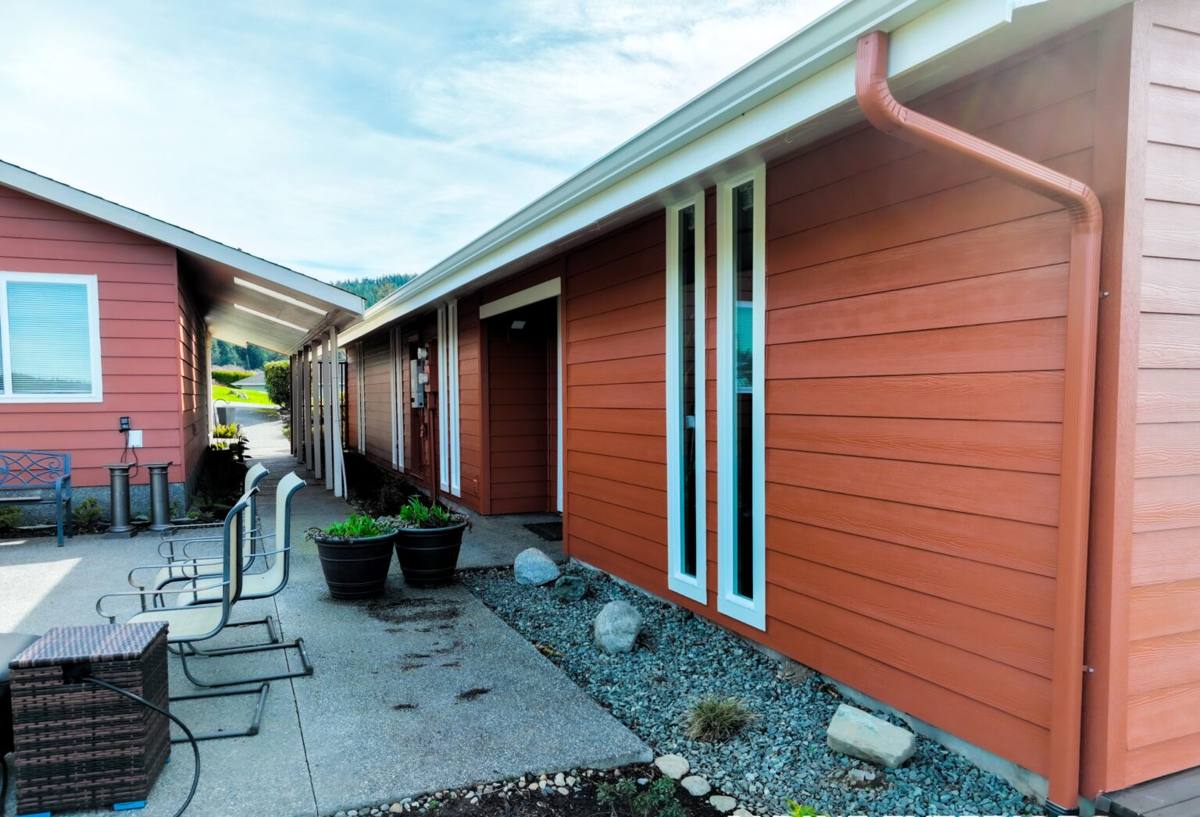
What the Climate Actually Does to This Siding Style
It helps to understand the specific ways this region's weather attacks a vertical siding system, because it explains why we build it the way we do.
Moisture That Doesn't Evaporate Quickly
Long stretches of overcast, damp weather mean siding doesn't get the quick dry-out time it would in a drier climate. Any water that gets behind a batten or into an unsealed panel edge can sit there for days. Wood-based products swell, delaminate, or rot under those conditions. Even durable materials need a way to shed and drain that moisture instead of trapping it.
Salt Air and Metal Fasteners
Homes closer to the water pick up salt in the air, which accelerates corrosion on fasteners and trim flashing that aren't rated for it. Cheap or mismatched fasteners are a common failure point on board and batten jobs — they're often visible, so a corroding nail head is both a function problem and a cosmetic one.
Moss and Organic Growth
Whatcom County's long wet season is exactly what moss, algae, and mildew need to establish themselves. Horizontal surfaces on trim caps and the tops of battens are especially prone to holding moisture and organic debris if they aren't detailed to shed water.
What a Correct Board & Batten Installation Actually Involves
A good-looking board and batten wall and a well-built one aren't always the same thing — problems are usually hidden until years later. Here's what separates the two.
A Real Drainage Gap
Battens and panels should never be fastened flat against the weather-resistive barrier with no space behind them. A rainscreen gap — created with vertical furring strips or a purpose-built drainage mat — lets any moisture that gets past the outer layer drain and dry instead of sitting against the sheathing.
Sealed and Back-Primed Cut Edges
Every field cut on a fiber cement panel exposes raw material that will absorb water if left untreated. Cut edges need factory-matched sealant or touch-up product applied before the piece goes up — not caulked over afterward as an afterthought.
Fastening Pattern and Batten Spacing
Battens need consistent spacing, correct fastener length and placement per the manufacturer's installation instructions, and enough panel movement allowance to handle seasonal expansion and contraction without cracking the finish.
Flashing at Every Transition
Windows, doors, roof lines, and the base of the wall are where board and batten siding fails first if flashing is skipped or undersized. Vertical siding actually has more of these transition points per square foot than horizontal lap siding, which is one reason installer experience with this specific profile matters.
Why We Install James Hardie Board & Batten Exclusively
We don't offer board and batten in vinyl, engineered wood, or unbranded fiber cement. We install James Hardie's vertical siding system, and we did that deliberately after weighing the alternatives against what this climate does to a wall over 20-plus years.
HardiePanel Vertical Siding with Battens
Hardie's fiber cement panels paired with matching batten strips give the traditional board and batten look without the wood-swelling and delaminating risk that comes with organic materials in a wet climate. Fiber cement doesn't feed moss the way wood does, and it holds its shape through the county's wet winters and drier summers without warping.
HZ5 Engineering for This Region
Hardie engineers its HZ product lines for specific climate zones, and the HZ5 formulation used in the Pacific Northwest is built around moisture and freeze-thaw resistance rather than the fire- or humidity-specific concerns of other regions. That's a meaningful difference from a generic siding product that wasn't engineered with Whatcom County's weather in mind.
ColorPlus Factory Finish
The factory-applied ColorPlus finish is baked on under controlled conditions, which gives more consistent coverage and better fade and moisture resistance than field-applied paint — especially valuable on a dark or bold color choice, which board and batten homeowners often want for that vertical-line contrast look.
Comparing Board & Batten Material Options
| Factor | Wood Board & Batten | Vinyl Board & Batten | James Hardie Fiber Cement |
|---|---|---|---|
| Moisture resistance | Poor without diligent upkeep | Good, but seams can trap water behind panels | Engineered for wet climates (HZ5) |
| Moss/mildew resistance | Low — organic material feeds growth | Moderate — growth sits on the surface | High — non-organic substrate |
| Finish durability | Repaint every 3-7 years | Color molded in, but fades and chalks over time | Factory ColorPlus finish, 15-year finish warranty |
| Fire resistance | Combustible | Melts/deforms under heat | Non-combustible |
| Typical lifespan installed to spec | 15-25 years with upkeep | 20-30 years | 30-50+ years |
None of these materials are "bad" in the abstract — each has a place. But when we're the crew putting our name behind the install and the warranty, fiber cement is the one that holds up to this specific climate with the least ongoing maintenance burden.
Our Process for Board & Batten Jobs in the Nooksack Area
- On-site assessment of the existing wall assembly, moisture readings where rot is suspected, and a look at how water currently moves around the home
- Removal of old siding and inspection of sheathing and framing for hidden damage before anything new goes up
- Installation of a weather-resistive barrier and rainscreen drainage gap behind the new siding
- Flashing at every window, door, and roofline transition, sized and lapped correctly for the direction water actually travels on that wall
- Panel and batten installation following James Hardie's fastening and spacing specifications, with sealed cut edges throughout
- Final walkthrough covering caulking points, touch-up needs, and basic maintenance expectations for the finish
What We See Go Wrong on Existing Board & Batten Homes Here
When we're called out to look at a failing board and batten wall in this part of Whatcom County, a handful of issues show up repeatedly: battens fastened directly to sheathing with no drainage plane, caulk relied on as the sole barrier at butt joints instead of proper flashing, moss buildup at horizontal trim tops that were never detailed to shed water, and corroding fasteners left visible from an earlier install that used the wrong hardware for a coastal-influenced climate. Almost all of these are installation issues, not material failures — which is exactly why we're picky about how the work gets done, not just what product goes on the wall.
Installation Quality Checklist
- Rainscreen or drainage gap present behind panels and battens, not fastened flat to the sheathing
- All cut edges sealed with manufacturer-approved product before installation
- Corrosion-resistant fasteners appropriate for a marine-influenced climate
- Flashing integrated at every window, door, and roof intersection — not just caulked
- Batten spacing and fastening pattern matching manufacturer specifications
- Trim and horizontal transitions detailed to shed water rather than collect it
Why Local Experience with This Area Matters
Board and batten's failure points are mostly hidden behind the wall, which means the quality gap between a correct install and a corner-cut one won't show up on a walkthrough — it shows up in year three or four when moisture problems surface. A crew that already works homes around Nooksack and Custer has seen how this specific climate treats vertical siding over time: which details hold up, which shortcuts fail first, and what a house here actually needs versus what a general installation guide assumes. That local track record is worth more than a low bid from a crew installing the same system for the first time.
We also know the permitting and inspection expectations in this part of Whatcom County, which keeps a re-side project moving instead of stalling on paperwork.
If you're weighing board and batten for a home in Nooksack or elsewhere around Custer, we're happy to take a look and give you a straight assessment — no pressure, no upsell, just an honest read on what your home needs. Use the form below to request a free estimate.