 Custer
 Why Laurel Roofs Wear the Way They Do
Laurel sits close enough to the water and open farmland north of Bellingham that roofs here take a different kind of beating than roofs twenty miles inland. You've got salt-laden air drifting in off the Strait and Boundary Bay, wind-driven rain that comes in sideways more often than straight down, and a wet season that stretches long enough for moss and moisture to work into anything that isn't detailed correctly. None of that is exotic — it's just Whatcom County weather doing what it does, year after year, to the same roof.
What it means in practice is that a roof built to a generic spec sheet often underperforms here. Fasteners that would hold fine in a drier climate corrode faster. Underlayment that's "good enough" elsewhere lets moisture track under shingles during a hard blow. Valleys and penetrations that aren't flashed with this climate in mind become the first place a leak shows up — usually two or three winters in, right when a homeowner has stopped thinking about the new roof they just paid for.
A correctly installed roof in Laurel isn't a different product than what you'd put on a house in a milder climate — it's the same materials installed with more attention to the details that matter most where salt air, driving rain, and moss season are a fact of life.
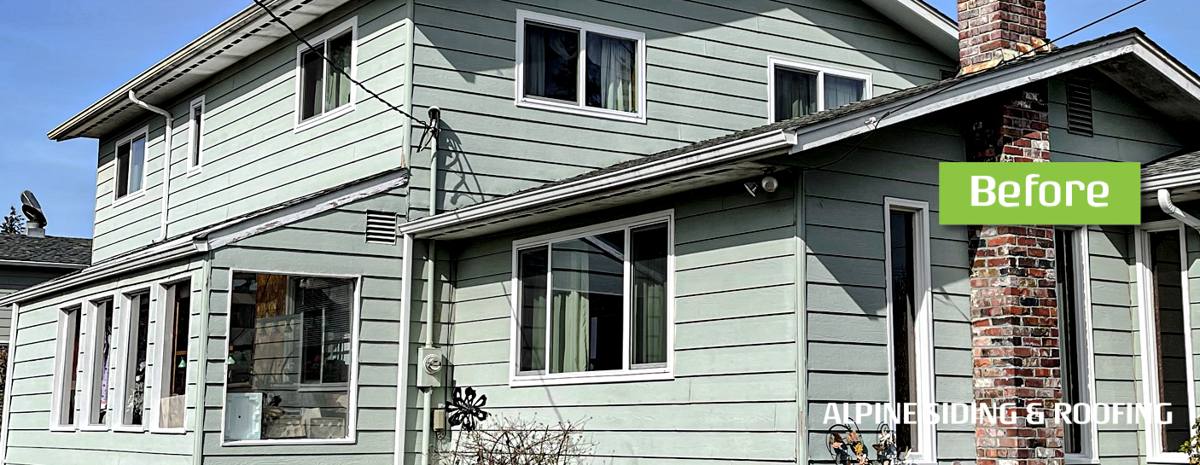
What a Correct Installation Actually Involves
New roof installation gets sold as one line item, but it's really a stack of individual decisions, each of which matters more in this climate than in a drier one. The shingle or panel on top is the part everyone sees, but it's the layers and details underneath that determine whether the roof still performs the way it should in year twelve.
Deck Inspection and Prep
Before anything new goes down, the existing roof comes off and the deck gets inspected — not just glanced at. Years of moisture intrusion around old flashing or clogged valleys can soften plywood or OSB in ways that aren't visible from the attic. Any soft or delaminated sheathing gets replaced before a single shingle goes on. Skipping this step is one of the most common ways a "new roof" fails early.
Underlayment Selection
In a region with this much sustained rain, a synthetic underlayment with strong water resistance — not just the minimum felt required by code — is the baseline we work from. In vulnerable areas like eaves, valleys, and around chimneys or skylights, we add self-adhered ice-and-water membrane, even though Laurel doesn't see the ice dams that membrane was originally designed for. Here, it's doing a different job: standing between the deck and water that's being driven sideways by wind rather than melting off a slope.
Ventilation
A roof that can't breathe traps moisture, and trapped moisture is what accelerates moss growth and shortens shingle life. Balanced intake and exhaust ventilation is planned as part of the install, not bolted on afterward as an afterthought.
Comparing Roofing Materials for Salt Air and Moss Season
There's no single "best" roofing material for every Laurel home — it depends on the home's style, roof pitch, budget, and how much long-term maintenance the homeowner wants to take on. Here's how the common options stack up against this specific climate.
| Material | Moss & Moisture Resistance | Salt Air Durability | Typical Lifespan Here |
|---|---|---|---|
| Standard 3-tab asphalt | Fair — needs regular cleaning | Fair; exposed fasteners corrode faster over time | 15-20 years |
| Architectural (laminate) asphalt shingle | Good — thicker profile sheds debris better | Good with corrosion-resistant fasteners | 25-30 years |
| Standing seam metal | Excellent — smooth surface discourages moss | Very good with the right coating and fastener spec | 40-50+ years |
| Cedar shake | Poor without diligent maintenance — moss-prone | Fair; needs regular treatment near salt air | 20-25 years with upkeep |
For most Laurel homes we recommend a quality architectural shingle or a standing seam metal system, depending on budget and roofline. Both give you a surface that sheds moss-friendly debris well and holds up to the corrosion pressure that comes with living this close to salt water. We're honest about cedar shake: it can look great, but it demands a maintenance commitment that most homeowners underestimate in a climate this wet, and we'd rather set that expectation up front than sell a product that disappoints two years in.
Flashing and Water Management
Driving rain finds the weak points in a roof faster than any other kind of weather. Flat rain mostly runs off; sideways rain gets pushed up under shingle laps, around chimneys, and along wall-to-roof transitions if those areas aren't flashed correctly. This is where most leaks on wind-exposed roofs actually originate — not in the field of the roof, but at the transitions.
- Step flashing woven correctly at every wall intersection, not just caulked over old flashing
- Kick-out flashing at the base of walls to direct water into the gutter instead of behind siding
- Properly lapped valley flashing, sized for real wind-driven rain volume
- Pipe boots and vent flashing rated for UV and salt air, not the cheapest stock option
- Drip edge on every eave and rake, set correctly under or over the underlayment as the location requires
Every one of these is a small detail that's invisible once the roof is finished — which is exactly why it matters who's installing it. A roof can look identical from the street with correct flashing or with shortcuts underneath, and you won't know the difference until a storm finds the gap.
Our Installation Process
- On-site assessment. We walk the roof, check the deck condition where accessible, and talk through material options based on your home's exposure and budget.
- Written estimate. Clear scope, materials, and pricing — no surprise change orders for work that should have been scoped up front.
- Tear-off and deck inspection. Old roofing comes off, the deck gets checked and repaired as needed before anything new goes down.
- Underlayment and flashing. Ice-and-water membrane at vulnerable areas, synthetic underlayment across the field, and flashing detailed for wind-driven rain.
- Roofing installation. Shingles or panels installed to manufacturer spec, with fastening patterns suited to our wind exposure.
- Ventilation check. Intake and exhaust balanced so the attic can actually dry out between wet stretches.
- Final walkthrough. We review the completed roof with you, including warranty paperwork and basic maintenance guidance for this climate.
Signs a Laurel Roof May Need Replacement, Not Repair
Not every roof problem calls for full replacement — but there's a point where patching becomes false economy. A few signs worth taking seriously:
- Granule loss heavy enough that shingles look bald or the gutters fill with grit after every rain
- Moss established at the ridge or in valleys that keeps returning after cleaning
- Soft spots or sagging visible from the ground or in the attic deck
- Daylight visible through the roof deck from inside the attic
- Shingles curling, cracking, or lifting at the edges, especially on wind-exposed slopes
- Recurring leaks around the same chimney, skylight, or wall flashing despite prior repairs
- A roof approaching or past the upper end of its expected lifespan for its material type
If you're only seeing one or two of these and the roof is otherwise sound, a repair or partial re-roof may be the right call. We'll tell you honestly which category your roof falls into rather than defaulting to a full replacement recommendation.
Why It Matters That We Already Work This Area
Roofing crews that work Whatcom County regularly develop a feel for how houses in this specific stretch of the county actually fail — which slopes catch the worst of the wind off the water, which valleys collect moss fastest, which fastener and flashing choices hold up and which don't. That's knowledge you build by doing the work here repeatedly, not by reading a manufacturer's install guide once.
It also means we're not guessing at permit requirements, wind exposure ratings, or the practical realities of scheduling around this region's wet season. A crew unfamiliar with Custer and the surrounding Laurel area might build a roof that's technically to code and still underperforms here, because code is a minimum, not a climate-specific standard.
Warranty and Long-Term Care
Manufacturer warranties on materials are only as good as the installation underneath them — most shingle and metal roofing warranties can be voided by incorrect installation, which is one more reason installation quality matters as much as the product you choose. We stand behind our workmanship separately from the manufacturer's material warranty, and we'll walk you through exactly what's covered by each before the job starts, not after.
Once the roof is on, upkeep in this climate is straightforward: periodic moss treatment or gentle cleaning, keeping gutters clear so water isn't backing up under the eaves, and a visual check after major windstorms. A well-installed roof shouldn't demand much beyond that.
If you're weighing a new roof for a Laurel-area home, we're happy to take a look and give you a straight, no-pressure estimate — what your roof actually needs, what it'll cost, and why. Use the form below to get started.