 Custer
 Building New in Point Roberts Means Building for the Water
Point Roberts sits on its own peninsula at the southern tip of Boundary Bay, cut off from the rest of Whatcom County by water and by the Canadian border. That location is part of what makes it a great place to build — but it also means new construction here sits closer to open water and prevailing wind than almost anywhere else we work. Salt-laden air, wind-driven rain off the Strait of Georgia, and a wet, shaded marine climate all put more stress on a new home's windows than a typical inland Whatcom County lot.
New-construction windows are a one-time chance to get this right. Unlike a replacement, where you're working around an existing rough opening and trim, new construction lets the window get installed as part of the wall assembly from the start — flashing, weather-resistant barrier, and sheathing all integrated together. Done correctly, that window should perform for decades. Done poorly, water finds the gaps within a few winters, and by then it's hidden behind siding and trim.
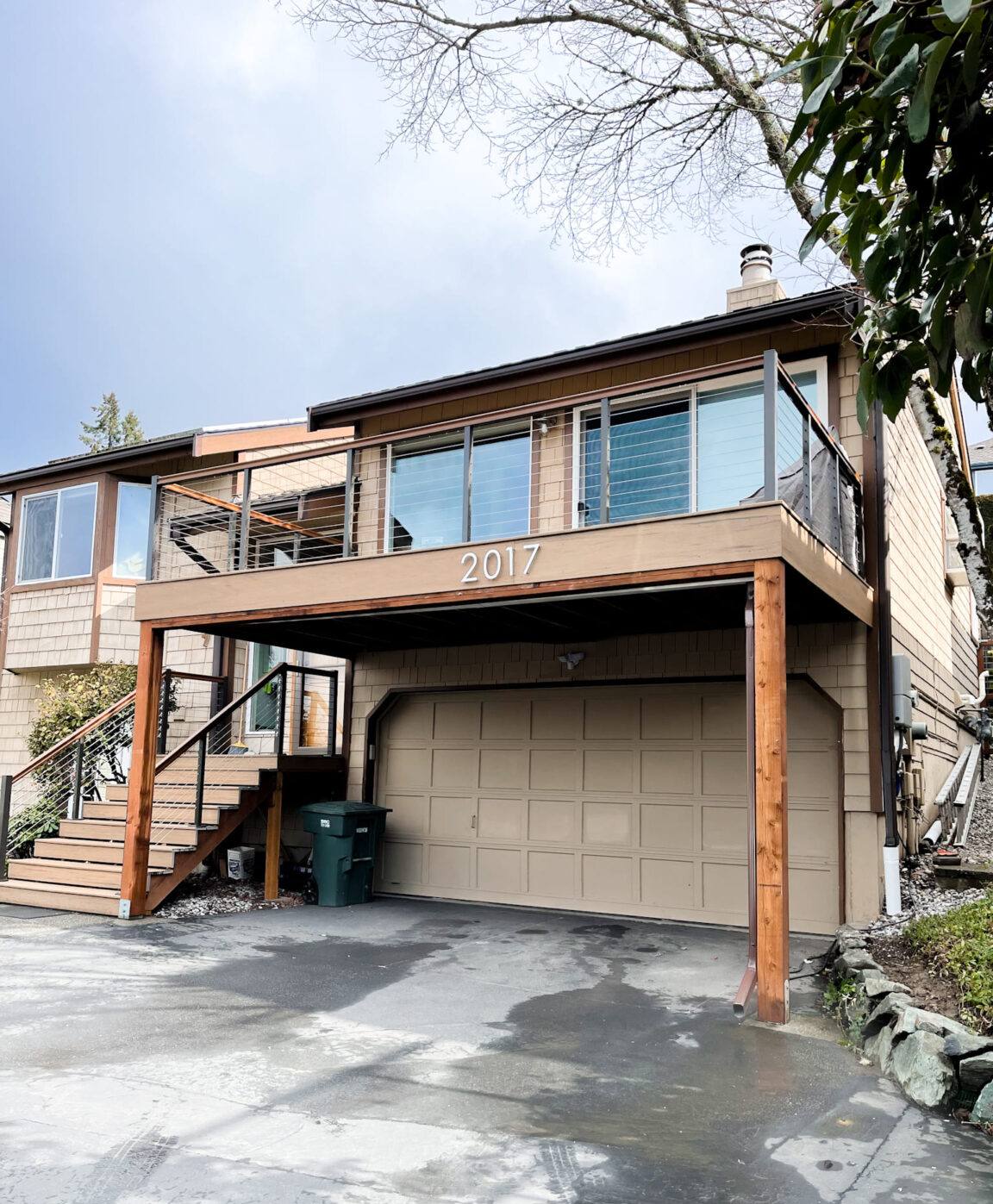
What Salt Air, Driving Rain, and Moss Season Actually Do to Windows
Salt Air
Airborne salt is corrosive to metal. Over years, it attacks unprotected fasteners, hinges, balance hardware, and low-grade aluminum components. This isn't a dramatic failure — it's a slow one. Hardware stiffens, corrodes, or discolors, and seals that were never rated for a marine-adjacent environment degrade faster than the manufacturer's literature assumes.
Driving Rain
Point Roberts gets weather off open water, and wind-driven rain doesn't fall straight down — it gets pushed sideways into wall assemblies and window openings under pressure. A window that would be fine in a sheltered inland yard can leak here if the flashing details, sill pan, and head flashing weren't built to shed water under wind load, not just gravity.
Moss and Constant Moisture
Western Washington's long wet season keeps shaded exterior surfaces damp for months at a time. Moss and algae take hold readily on window sills, trim boards, and anywhere water sits instead of draining. Beyond looking bad, sustained moisture against wood trim or under failed caulk joints is exactly the condition that leads to rot and hidden water intrusion over time.
What "Doing It Right" Looks Like for New Construction
New-construction window installation is a sequence, and skipping a step doesn't show up right away — it shows up in three or five years, after siding and trim are already closed in. A correct install includes:
- A properly sloped sill pan flashing under every window opening, so any water that gets past the glazing drains back outside instead of into the wall
- Weather-resistant barrier (house wrap) integrated with the window flange in the correct shingle-lap order — never taped in a way that traps water behind the window
- Head flashing installed last, lapping over the WRB above the window so water is always directed outward and downward, never into the seam
- Corrosion-resistant fasteners and hardware appropriate for a marine-influenced climate, not standard-grade fasteners that were specified for an inland build
- Correctly shimmed and squared rough openings so sashes operate smoothly and weatherstripping seals evenly for the life of the window
- Backer rod and quality exterior sealant at the trim-to-window joint, sized and tooled correctly rather than a bead of caulk smeared over a gap
Choosing a Window Frame Material for a Point Roberts Build
Frame material matters more here than in a sheltered inland location, because it's what's absorbing years of salt air and moisture cycling. There's no single "best" choice for every project — it depends on budget, the look you want, and how much upkeep you're willing to do. Here's how the common options hold up in this specific climate:
| Frame Material | Salt Air / Moisture Behavior | Maintenance | Typical Fit |
|---|---|---|---|
| Vinyl | Won't corrode or rot; performs consistently in coastal moisture | Low — occasional cleaning | Budget-conscious builds, rentals, straightforward window shapes |
| Fiberglass | Very stable in wet, salty air; resists warping and pitting | Low | Higher-end new construction, larger openings, dark exterior colors |
| Wood-clad (exterior clad) | Good if cladding is intact; wood interior needs the exterior seal to stay perfect | Moderate — clad exterior is low-maintenance, but any breach exposes wood beneath | Homeowners who want a wood interior look and are willing to maintain seals |
| Bare Aluminum | Prone to pitting and corrosion over time in salt-influenced air unless specifically coated/anodized for marine use | Higher — needs monitoring for corrosion | We generally steer new-construction clients away from uncoated aluminum this close to the water |
We'll walk through this with you honestly based on your budget and how the home is oriented to weather — there's rarely one right answer, but there are choices that make more sense than others out here.
Our Process for New-Construction Window Installs in Point Roberts
1. Plan Review and Rough Opening Coordination
We work from the framer's rough openings and building plans before windows ever arrive on site, catching sizing or sequencing issues while they're still cheap to fix.
2. Flashing and Water-Management Install
Sill pans, WRB integration, and head flashing go in following manufacturer flashing instructions and standard weather-resistant barrier lapping order — the part of the job nobody sees once siding goes on, and the part that determines whether the window leaks in year four.
3. Window Setting and Fastening
Windows are set square and plumb, shimmed correctly, and fastened with hardware suited to this climate — not just whatever came in the box.
4. Sealing and Trim-Out
Exterior sealant joints are backer-rodded and tooled properly, and trim is installed to shed water rather than trap it against the frame.
5. Final Walkthrough
We check operation, seal quality, and drainage on every opening before we call the job done — not just that the window looks installed.
Why It Matters to Hire a Crew That Already Works Point Roberts
Point Roberts is geographically separate from the rest of Whatcom County — reaching it means crossing the Canadian border twice each way. That's not a small detail for a construction schedule. Crews unfamiliar with the area often underestimate travel time, border logistics, and material delivery timing, which turns into delays or rushed work on your project. A crew based out of Custer that already routes jobs into Point Roberts regularly has that logistics figured out, so your build timeline doesn't slip because of something that has nothing to do with the windows themselves.
There's also a climate-literacy piece. A crew that's installed windows across Whatcom County's marine-influenced areas has seen firsthand which details hold up out here and which ones fail early — that's knowledge you can't get from a spec sheet.
Cost Factors for New-Construction Window Installation
Every project is different, but the main variables that move the price are consistent. We'll always give you a specific number after seeing your plans — broad ranges below are just to help you think through the decision:
- Frame material — vinyl is typically the most budget-friendly; fiberglass and clad-wood cost more upfront but bring different maintenance and longevity tradeoffs
- Number and size of openings — larger and more numerous windows increase both material and labor cost
- Glazing package — double vs. triple pane, and low-E coatings suited to a wet coastal climate, affect both comfort and price
- Site access and logistics — Point Roberts' border-crossing logistics can factor into scheduling, which we account for upfront rather than surprising you later
- Trim and exterior detailing — the complexity of your exterior trim package affects labor time
What Homeowners Can Do to Protect New Windows Long-Term
A correctly installed window still benefits from a little seasonal attention, especially in a climate that stays wet as much of the year as ours does:
- Rinse accumulated salt residue off exterior glass and frames a few times a year, especially after storms
- Keep sills and trim clear of moss and organic debris so water keeps draining instead of pooling
- Check exterior caulk joints annually and flag any cracking or separation before it becomes a leak path
- Trim back vegetation that keeps window areas shaded and damp longer than they need to be
- Operate and lubricate hardware periodically so hinges and locks don't seize up from disuse
Let's Talk About Your Point Roberts Build
If you're planning new construction in Point Roberts and want windows installed the way this climate actually requires — not just the way a standard spec sheet describes — we're happy to walk your plans and give you a straightforward, no-pressure estimate. Use the form below to get started.