 Custer
 Why Meridian Homes Wear Out Siding Faster
Homes in and around Meridian sit close enough to the water and the marine weather patterns that move through Whatcom County that siding here works harder than siding two hundred miles inland. Salt-laden air, wind-driven rain, and a moss season that can stretch from fall through spring aren't occasional stressors — they're the baseline. A siding replacement in this part of Custer needs to be planned around that reality from the first nail, not treated as a cosmetic swap.
Salt Air and Coastal Exposure
Even a few miles from open water, airborne salt settles on exterior surfaces, accelerates corrosion of fasteners and metal trim, and breaks down finishes that weren't built to take it. Paint film that would last a decade in a dry inland climate can chalk, fade, or lift years early here. Fastener corrosion is one of the most common hidden failures we find when we pull old siding off a Meridian-area home — the boards look fine from the yard, but the nails holding them on are compromised.
Driving Rain and Wind-Driven Moisture
Storms coming off the water don't just fall straight down — wind pushes rain sideways and up under laps, trim, and penetrations that would stay dry in a calmer climate. That means the water-management details behind the siding (the parts nobody sees after the job is done) matter as much as the siding itself. A product and installation that can't shed wind-driven rain will eventually let water behind the cladding, no matter how good it looks from the street.
A Long Moss Season
Shade, humidity, and mild temperatures give moss and algae a long growing window on north- and west-facing walls in particular. Moss doesn't just look bad — it holds moisture against the siding surface and, on porous or absorbent materials, can accelerate softening and paint failure over time. Siding choice and finish quality make a real difference in how much of this problem a homeowner has to manage every year.
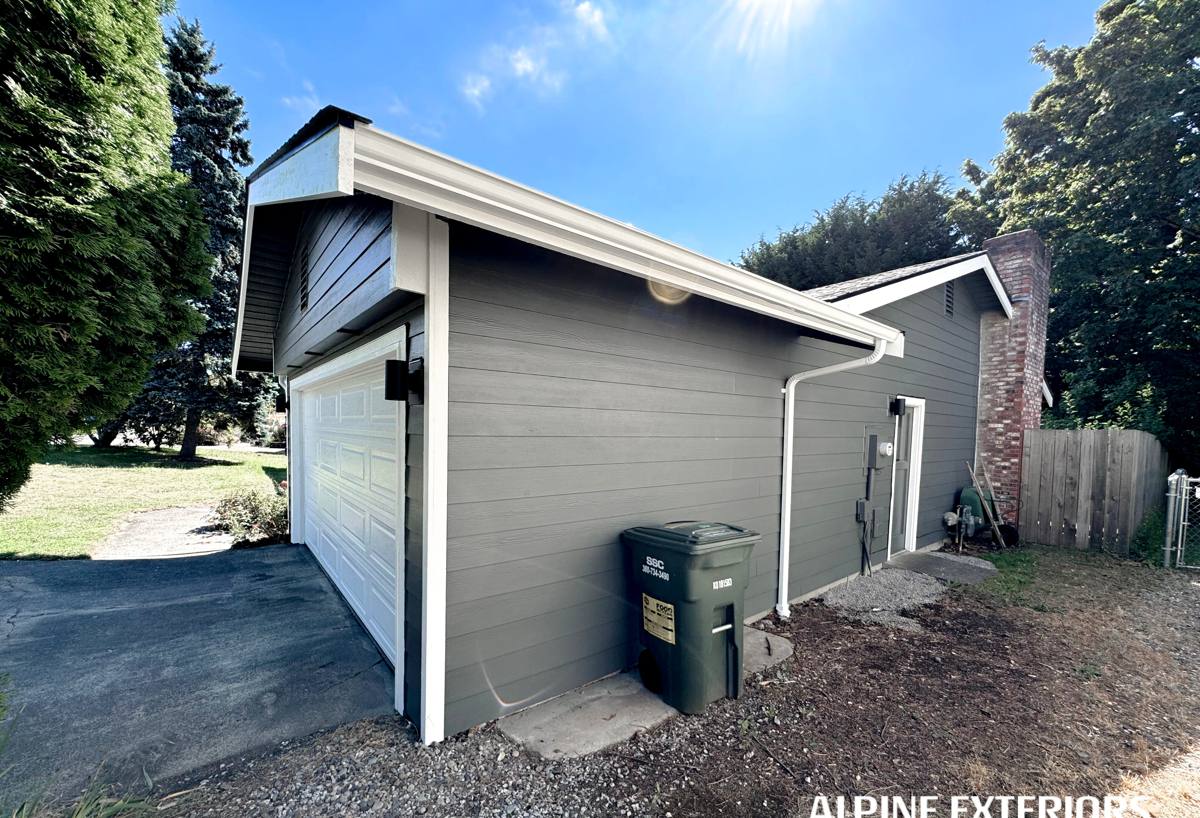
What "Replacement" Should Actually Mean
A lot of what gets sold as siding replacement is really just a panel swap: strip the old siding, hang new siding, caulk the seams, done. In a climate like ours, that skips the part of the job that actually determines how long the new siding lasts.
Tear-Off and Sheathing Inspection
Full removal is the only way to see what's really going on behind the old siding — soft or delaminated sheathing, past water intrusion around windows and penetrations, or insulation that's been wet longer than anyone realized. Any of that needs to be repaired before new siding goes up, not covered over.
Water-Resistive Barrier and Drainage
A correctly lapped water-resistive barrier, sealed and flashed at every penetration, is what actually stops wind-driven rain from reaching the wall assembly. On homes with more exposure, a drainage gap (rainscreen) behind the siding gives incidental moisture a way out instead of trapping it against the sheathing — a meaningful upgrade in a climate that stays damp for months at a time.
Flashing and Trim Details
Window heads, deck ledgers, roof-to-wall intersections, and anywhere two planes meet are where the vast majority of siding failures actually start. Kick-out flashing that directs roof runoff away from the wall, properly lapped head flashing, and trim held back from grade and roof lines all matter more here than in a drier climate, because there's more water looking for a way in and more time each year for it to find one.
Our Siding Replacement Process
The steps don't change much from job to job, but the attention paid to moisture management is where a Meridian-area project differs from siding work somewhere dry.
- Assessment and moisture check. We look at existing siding, trim, and any visible staining or soft spots, and check moisture levels where we suspect a problem before we ever quote the job.
- Full tear-off. Old siding, house wrap, and damaged trim come off completely so the sheathing underneath can be inspected and repaired.
- Sheathing and framing repair. Any rot, delamination, or damaged framing gets addressed before anything goes back on — this is not an optional step.
- New water-resistive barrier and flashing. Properly lapped, sealed at penetrations, with flashing at every horizontal transition.
- Siding installation to manufacturer spec. Correct fastener type, spacing, and clearances — including the ground and roofline clearances that keep new siding from repeating old moisture problems.
- Trim, caulking, and finish work. Minimal caulk joints where the product allows, finished to a clean, factory-consistent look.
- Walkthrough. We go over the finished job with the homeowner before calling it done.
Comparing Siding Materials for This Climate
We install James Hardie fiber cement exclusively, but homeowners deserve to understand why — not just be told. Here's how the materials most commonly discussed for this kind of project actually compare on the factors that matter in a salt-air, high-moisture climate.
| Factor | James Hardie Fiber Cement | Vinyl | LP SmartSide / Engineered Wood | Cedar |
|---|---|---|---|---|
| Moisture tolerance | Non-combustible, dimensionally stable, doesn't rot or swell | Won't rot, but can warp/distort in heat and doesn't breathe | Wood-based core is vulnerable to moisture at cut edges and gaps | Natural material, absorbs and releases moisture, needs diligent maintenance |
| Moss/algae resistance | Factory ColorPlus finish resists staining and is easier to clean | Can host algae/mildew in shaded, damp areas | Textured surface can hold moisture and organic growth | Porous surface is prone to moss and mildew without regular treatment |
| Salt air durability | Engineered fiber cement holds up well to coastal exposure | Can become brittle and discolor faster near salt air | More sensitive to prolonged coastal moisture exposure | Requires more frequent refinishing near salt air |
| Maintenance | Repaint cycle measured in decades with factory finish | Low maintenance but can crack, fade, and isn't repairable in sections easily | Needs consistent paint maintenance and edge sealing | Regular staining/sealing and moss treatment required |
| Fire performance | Non-combustible material | Combustible, can melt/deform near heat | Combustible | Combustible |
Signs a Meridian-Area Home Needs Siding Replacement Now
Some warning signs are obvious from the driveway; others only show up once you know what to look for.
- Soft, spongy spots when you press on the siding, especially near the bottom courses or under windows
- Moss or dark staining that keeps coming back within a season or two of cleaning
- Paint that's peeling, bubbling, or chalking heavily rather than just fading evenly
- Visible warping, cupping, or gaps opening up between boards or at trim joints
- A musty smell in an exterior wall, or interior wall discoloration on an exterior-facing wall
- Higher-than-expected heating bills, which can point to moisture-compromised insulation behind the siding
- Siding that's original to a home more than 20-25 years old, particularly if it's never been fully inspected behind the surface
Why We Install Only James Hardie
We don't install vinyl, LP SmartSide, Cemplank, Allura, primed spruce, or cedar. That's a deliberate standard, not a limitation in what we're capable of installing. James Hardie's fiber cement is non-combustible, dimensionally stable in wet-dry cycling, and comes from the factory with a ColorPlus finish baked on under conditions we can't replicate on a job site — which matters directly in a climate that puts real stress on paint film. Hardie also engineers specific product lines for different climate zones; homes in our part of Washington fall into a moderate marine climate zone, and the products we spec are matched to that reality rather than a one-size-fits-all approach. The warranty is transferable to a future owner, which matters for resale in a market where buyers increasingly ask what the siding is and when it was done.
None of this means other materials are without merit — vinyl is inexpensive and low-maintenance for the right budget, engineered wood has genuine fans, and cedar has a look some homeowners want enough to accept the upkeep. We simply won't install products where the moisture behavior, maintenance burden, or long-term performance in this specific climate doesn't meet the standard we're willing to put our name behind.
Installation Details That Matter Most in Salt Air and Moss Country
Product choice is half the equation — installation quality is the other half, and it's where a lot of siding jobs quietly fail years before they should.
Clearance and Ground Contact
Siding held too close to grade, decks, or roof lines wicks moisture and stays wet longer after every rain. We hold to the clearances that manufacturer specs require, even when it means adjusting trim or grading details that a faster crew might skip.
Fastening and Finish Integrity
Correct fastener type and placement keep water from finding a path in at every nail head, and keep the factory finish intact instead of cracking the coating during installation — a real risk with fiber cement if it's handled or fastened incorrectly.
Orientation to Wind and Rain
On more exposed elevations, we pay extra attention to lap direction, joint placement, and flashing at every horizontal break, because the prevailing wind and rain direction in this area isn't uniform across every wall of a house.
Why a Local Custer Crew Is Worth Choosing
A crew that works Meridian and the surrounding Custer area regularly has already seen how this specific stretch of Whatcom County treats siding — which walls take the worst of the weather, how fast moss comes back on a shaded elevation, and what old installation shortcuts tend to fail first. That's not something a crew based hours away, working the job once and moving on, picks up. Being local also means we're reachable after the job is done, we're not disappearing across a state line if a warranty question comes up, and we're building a reputation in a community we actually live and work in — which keeps us honest about the quality of what we install.
If your siding is showing its age or you're just trying to plan ahead of the next wet season, we're happy to take a look and give you a straight answer — no pressure, no obligation. Request a free estimate below and we'll walk the house with you and talk through what it actually needs.