 Custer
 Siding Installation Built for Marietta's Waterfront Exposure
Marietta sits close enough to Puget Sound and Drayton Harbor that homes here take on a different kind of weather punishment than siding just a few miles inland. Salt-laden air moves through the neighborhood on a regular basis, wind-driven rain hits siding sideways instead of just running down it, and the mild, wet Whatcom County winters give moss and algae months at a time to get established on anything that stays damp. A siding installation done right in Marietta has to account for all three of those things at once — not just look good on the day it goes up.
We install siding in Marietta and the surrounding Custer area regularly, which matters more than it sounds like. A crew that mostly works drier, inland neighborhoods can do a technically fine install and still miss the details that matter specifically here — flashing choices, fastener selection, and how tight to run trim reveals in a spot where salt air and standing moisture are a daily fact of life, not an occasional storm event.
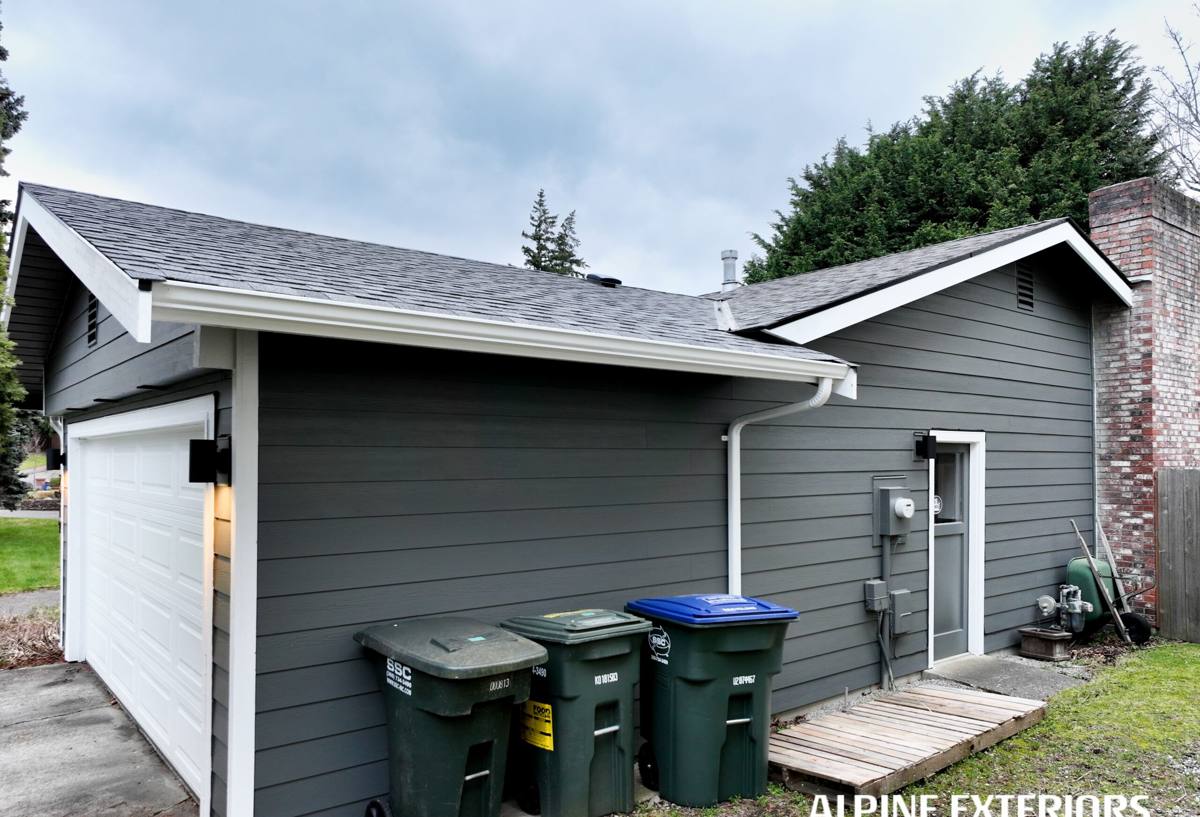
What Marietta's Climate Actually Does to Siding
Salt Air
Airborne salt from the Sound doesn't just affect boats and metal railings. It settles on exterior surfaces, and over years it accelerates corrosion on fasteners, hardware, and any metal flashing or trim components that aren't rated for coastal exposure. Siding materials that rely on paint film alone for protection tend to show wear faster in this kind of air than the same product would inland.
Driving Rain
Marietta gets wind off the water that pushes rain sideways into walls rather than letting it fall straight down and shed off. That means water finds its way into laps, seams, and penetrations that would stay dry in a calmer climate. The water-resistive barrier behind the siding, the flashing details around windows and doors, and the way panels are lapped all matter more here than in a sheltered inland lot.
A Long Moss Season
Whatcom County's wet season runs long, and shaded or north-facing walls in Marietta can stay damp for weeks at a stretch. That's exactly the environment moss and algae need. Siding that holds moisture at the surface, or that has small gaps and rough textures where spores can take hold, will show green and black staining faster than a product engineered to shed water and resist that growth.
Why We Standardized on James Hardie for This Exposure
We install James Hardie fiber cement siding exclusively, and Marietta's climate is a big part of why. Hardie's HZ5 product line is engineered specifically for climates with prolonged moisture exposure — which describes this stretch of the Washington coast well. Fiber cement doesn't rot, doesn't feed moss the way some wood-based products can, and its ColorPlus factory finish is baked on under controlled conditions rather than field-applied, which gives it better, more consistent resistance to fading and moisture intrusion at the surface than a job-site paint job.
We've made the decision not to install vinyl, LP SmartSide, primed wood siding, or other fiber cement brands like Cemplank or Allura. Some of those products perform reasonably well in more moderate climates. In a salt-air, high-moisture environment like Marietta's, we've seen enough of the trade-offs — vinyl's tendency to warp and fade under UV and thermal cycling, wood-based products' vulnerability to moisture wicking at cut edges, and the inconsistency of field-applied finishes — that we don't think they hold up to our own standard for a house that has to face this exposure for decades, not years.
What a Correct Installation Involves Here
Fiber cement siding is only as good as the installation behind it. In a location like Marietta, a few details matter more than they would somewhere drier:
- Weather-resistive barrier: A continuous, properly lapped barrier behind the siding, with no gaps at seams or penetrations, so any water that does get past the siding has a path to drain out rather than sit against the sheathing.
- Flashing at every penetration: Windows, doors, hose bibs, vents, and light fixtures all need proper flashing integrated with the barrier — not just caulk, which fails long before the siding does.
- Correct fastener spacing and type: Hardie specifies fastener type, spacing, and placement for a reason; in coastal air, using corrosion-resistant fasteners installed to spec is not optional.
- Proper clearance at grade and roof lines: Siding held too close to grade, decks, or roof surfaces stays wet longer and is far more likely to show moss and staining within a few years.
- Correct panel gapping and caulking: Hardie's installation instructions call for specific gaps at butt joints and trim, sealed with a high-quality sealant rated for the material — skipping this is one of the most common causes of early failure we see on other people's work.
Our Process for a Marietta Siding Installation
1. On-Site Assessment
We look at the specific exposure of your home — which walls face prevailing wind and rain, how much shade contributes to moisture retention, and the condition of the sheathing and framing underneath the existing siding before we ever talk product or price.
2. Tear-Off and Substrate Check
Once old siding comes off, we inspect the sheathing for rot or water damage that's been hidden. This is common on older Marietta homes where wind-driven rain has been finding its way in for years without anyone knowing. Any damaged sheathing gets replaced before new siding goes on — covering over a compromised substrate just hides the problem.
3. Barrier and Flashing Installation
We install a continuous weather-resistive barrier and flash every penetration before a single piece of siding goes up. This step is invisible once the job is done, which is exactly why it's the step that separates a durable installation from one that fails early.
4. Hardie Panel Installation to Spec
Panels, fasteners, gapping, and caulking are installed to James Hardie's published specifications, not shortcuts based on what's faster. This is what keeps the manufacturer's warranty valid and what actually determines how the siding performs over the next 30-plus years.
5. Final Walkthrough
We walk the finished job with the homeowner, checking trim lines, caulking, and overall finish before considering the project complete.
Comparing Siding Options for Marietta's Exposure
| Factor | James Hardie Fiber Cement | Vinyl | Wood-Based / LP SmartSide |
|---|---|---|---|
| Salt air resistance | Strong — non-combustible, factory finish holds up well | Can fade and become brittle over time | Vulnerable at cut edges and fastener points |
| Moisture / moss resistance | Engineered HZ5 line for wet climates | Doesn't feed moss, but seams can trap moisture | Higher risk of moisture wicking and rot |
| Finish durability | Factory-applied ColorPlus finish | Color molded in, but fades under UV over time | Field-applied paint, inconsistent longevity |
| Warranty structure | Long-term, transferable manufacturer warranty | Varies widely by manufacturer | Varies; often shorter on finish |
| Fire resistance | Non-combustible | Combustible | Combustible |
This isn't a claim that every alternative product fails in every case — it's an honest summary of the trade-offs that led us to install one product line, done correctly, rather than offer several and hope each one holds up.
Cost Factors for a Marietta Siding Project
Every home is different, but a few things consistently move the price on a siding installation in this area:
- Square footage and the number of stories, which affects both material and labor
- How much of the existing sheathing needs repair once old siding comes off
- Amount of trim, corners, and architectural detail (dormers, bump-outs, gables)
- Whether the home needs additional flashing work around older windows or doors
- Siding profile and Hardie product line selected (lap, shingle-style, or panel)
We give straightforward, itemized estimates rather than one flat number, so homeowners can see what's driving the cost rather than guessing.
What to Check Before Hiring Anyone for This Job
- Do they have documented experience installing fiber cement siding specifically, not just siding in general?
- Will they inspect and replace damaged sheathing before installing new siding, not just cover it?
- Do they follow the manufacturer's published fastener, gapping, and clearance specifications?
- Are they familiar with the specific wind and moisture exposure of homes near the water in Whatcom County?
- Do they offer a clear, written scope of work rather than a vague verbal estimate?
Why Local Experience in Marietta Matters
A siding crew that already works this specific stretch of Whatcom County has seen how these homes actually age — which walls take the worst of the driving rain, where moss shows up first, and which older installations are already showing the early signs of moisture problems behind the siding. That kind of pattern recognition doesn't come from a general contractor's résumé; it comes from doing this work, on these houses, in this exact climate, repeatedly.
If you're planning a siding project in Marietta, we're happy to take a look at your home and walk you through what we'd recommend and why — no pressure, no obligation. Reach out for a free estimate using the form below.