 Custer
 New Roof Installation in Lynden: Built for This Weather, Not Just This House
Lynden sits inland from the water but still gets the full weight of Whatcom County's weather — long stretches of steady rain, wind that comes through the valley in bursts, and a moss season that can run most of the year on a north-facing slope. A new roof here has to be installed with that reality in mind, not just nailed down to a code minimum and left to see what happens. We're based in Custer and have worked roofs across this stretch of the county long enough to know which details matter and which corners get cut when a crew is just passing through.
This page is about one job: full new roof installation for Lynden homes. Not a patch, not a partial re-cover — a complete, correctly sequenced replacement that's built to handle what this climate actually throws at it.
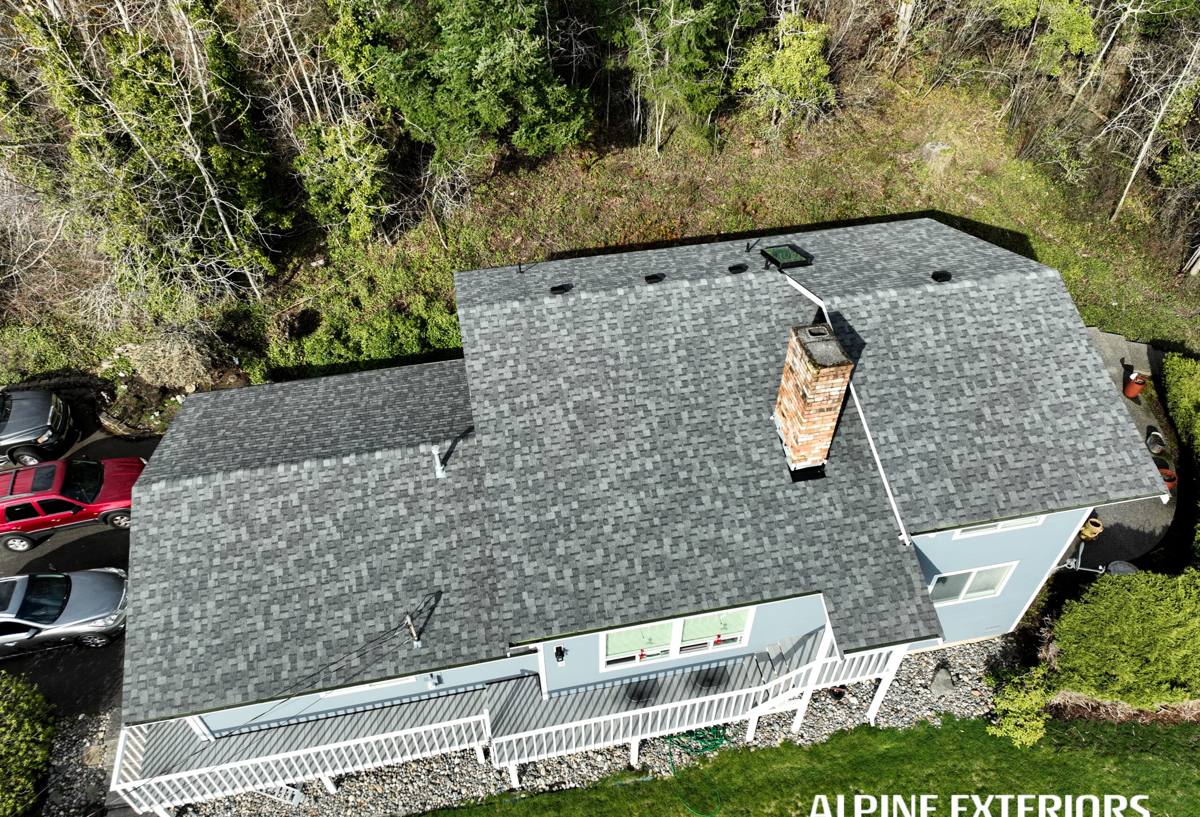
What Whatcom County Weather Actually Does to a Roof
Moss and a Season That Never Really Ends
Shade, moisture, and mild temperatures are a perfect combination for moss, and Lynden has all three for most of the year. Moss doesn't just sit on top of shingles — it holds water against the roofing surface, works into laps and edges, and lifts granules and shakes over time. A roof that isn't installed with drainage and airflow in mind will grow moss faster than one that is, regardless of the material.
Driving Rain, Not Just Steady Rain
It's not only volume of rain that matters — it's wind-driven rain that pushes water sideways under normal laps and around fasteners. Valleys, low-slope transitions, and anywhere two roof planes meet are where a poorly detailed roof leaks first. These are exactly the areas where flashing and underlayment choices make or break a roof's performance.
Salt Air and Corrosion
Even set back from the shoreline, this part of Whatcom County gets salt-laden air blowing in off the Strait and Bellingham Bay, especially during winter storms. Salt air accelerates corrosion on exposed metal — fasteners, flashing, and vent components — long before it visibly affects the roofing material itself. Material and hardware choices that ignore this end up with rust streaks and failed flashing well ahead of schedule.
Signs a Lynden Home Needs Full Replacement, Not Another Patch
Repairs make sense when a roof is otherwise sound and the damage is isolated. Full replacement is the honest answer once a roof is failing broadly rather than in one spot. Some signs worth taking seriously:
- Granule loss heavy enough to show bald patches or clog gutters repeatedly
- Moss coverage across large sections rather than just the shaded side
- Shingles that are cupping, curling, or cracking in multiple areas
- Soft spots in the decking when walked, or visible sagging along the ridge or eaves
- Daylight or water stains in the attic, especially near valleys or penetrations
- A roof already past 20–25 years old with no major work done
- Multiple past repairs in different spots rather than one recurring issue
If you're seeing two or more of these, it's worth having someone look at the whole roof rather than chasing individual leaks.
What a Correct New Roof Installation Actually Involves
Tear-Off and Deck Inspection
A proper new roof starts with a full tear-off down to the deck, not an install over existing layers. That's the only way to actually see the plywood or plank sheathing underneath — soft, delaminated, or water-damaged sections need to be identified and replaced before anything new goes down. Skipping this step is one of the most common ways a "new roof" fails early.
Underlayment and Ice-and-Water Barrier
Given how much wind-driven rain this area sees, underlayment choice matters more here than in a drier climate. Self-adhering ice-and-water membrane belongs at eaves, valleys, and around every penetration — chimneys, vents, skylights — where water is most likely to be pushed backward under normal shingle laps.
Ventilation
A roof that can't breathe traps moisture in the attic, which shows up as condensation, premature deck rot, and mold — problems that have nothing to do with the shingles themselves. Balanced intake at the eaves and exhaust at the ridge is what actually controls this, and it needs to be sized to the specific attic, not assumed.
Flashing and Penetrations
Step flashing at walls, proper counterflashing at chimneys, and correctly lapped valley metal are where most leaks start on roofs that otherwise look fine. Given the corrosion risk from salt air, we use flashing and fasteners rated for coastal exposure rather than the cheapest available option.
Choosing a Roofing Material for This Climate
There's no single "best" material for every house — it depends on budget, roof pitch, and how much long-term maintenance an owner wants to take on. Here's how the common options actually compare for a Lynden roof:
| Material | Moss/Moisture Resistance | Wind Performance | Typical Lifespan | Relative Cost |
|---|---|---|---|---|
| Architectural asphalt shingle | Good with proper ventilation and periodic cleaning | Good when correctly fastened and sealed | 25–30 years | $ |
| Standing seam metal | Excellent — sheds water and resists moss growth | Excellent | 40–50+ years | $$$ |
| Synthetic/composite shake | Very good — doesn't absorb moisture like wood | Good to excellent | 30–50 years | $$ |
| Natural cedar shake | Requires ongoing maintenance to resist moss and rot | Fair, depends on install method | 20–30 years with upkeep | $$ |
We don't push cedar shake as a first recommendation for this climate — not because it's a bad-looking product, but because keeping it moss-free and rot-resistant here takes real ongoing maintenance that most owners underestimate when they choose it. If someone wants the look and is committed to the upkeep, we'll install it correctly. For most Lynden homes, architectural asphalt or synthetic composite gives the best balance of appearance, cost, and realistic maintenance.
Cost Factors for a New Roof in Lynden
Every roof is priced on its own specifics, but these are the factors that move the number most:
| Factor | Why It Matters |
|---|---|
| Roof size and number of planes | More material, more labor, more flashing detail work |
| Pitch and accessibility | Steeper or harder-to-access roofs take longer and need more safety setup |
| Deck condition | Rotten sheathing found at tear-off adds material and labor to replace it |
| Material choice | Asphalt, metal, and composite carry very different material costs |
| Layers to remove | Tearing off multiple old layers takes more labor than a single layer |
| Ventilation upgrades | Adding proper intake/exhaust venting where none existed is extra work done right |
We give a firm, itemized number after we've actually looked at the roof — not a phone estimate — because deck condition in particular can't be judged accurately from the ground.
Our Process, Start to Finish
- On-site inspection. We walk the roof and attic, check the deck, ventilation, and flashing condition, and take real measurements.
- Written estimate. A clear, itemized proposal — material, labor, and any deck repair allowance — with no vague line items.
- Scheduling around weather. We plan installs for dry windows and stage materials so the roof isn't left exposed longer than necessary.
- Tear-off and deck repair. Full removal down to sheathing, with any damaged decking replaced before underlayment goes down.
- Underlayment, flashing, and ventilation installed correctly. The details that determine whether the roof performs for decades or leaks in year three.
- Final roofing material installed to manufacturer specification. Correct nailing pattern, exposure, and sealing for the product chosen.
- Full cleanup and magnetic sweep. Debris and stray fasteners cleared from the yard and driveway before we consider the job done.
Why a Crew That Already Works in Lynden Matters
A roofing crew based out of Custer isn't guessing at what this area's weather does — we've seen which roofs hold up and which ones fail early, and why. That local knowledge shows up in small decisions: which underlayment gets used at valleys, how ventilation gets sized for a typical attic here, and how installs get scheduled around the wetter months instead of racing the weather. It also means we're not disappearing after the job — if something needs a warranty follow-up, we're still working in the area.
Whatcom County building requirements and typical roof pitches around Lynden are also things a local crew already accounts for without needing to research it on your job.
Keeping a New Roof Performing After Installation
A correctly installed roof still benefits from basic upkeep given this climate. Gutters should be cleared before the fall rains build up, especially where trees overhang the roofline. Moss growth on shaded slopes should be treated early rather than left to spread — a light annual treatment is far cheaper than the granule loss and lifted shingles that come from ignoring it. Attic ventilation should stay unobstructed by insulation or storage so it can keep doing its job year-round.
If you're weighing a new roof for a Lynden home, we're happy to take a look and give you a straight answer — including whether repair still makes sense instead of full replacement. Fill out the form below for a free, no-pressure estimate.