 Custer
 Why Lynden Roofs Take a Different Kind of Beating
Lynden sits far enough inland from Bellingham Bay to feel like it should be sheltered, but the weather that moves through this part of Whatcom County doesn't respect that distinction. Marine air pushes in off the Salish Sea and carries salt-laden moisture across the flats and farmland surrounding town. Combine that with the long, low-angle rain that settles in from October through May, and you've got a roof environment that's working overtime almost nine months out of the year.
The fourth factor is moss. Whatcom County's mild, wet winters and shaded, tree-lined lots around Lynden and Custer create ideal conditions for moss and algae to take hold on a north-facing slope. Once moss gets a foothold in a shingle's granule layer, it holds moisture against the roof deck long after the rain stops, and that's when small problems become expensive ones. A roof that would last three decades in a dry inland climate can show real wear in half that time here if it wasn't built with this specific combination of salt, rain, and moss in mind.
What a Correct Installation Looks Like in This Climate
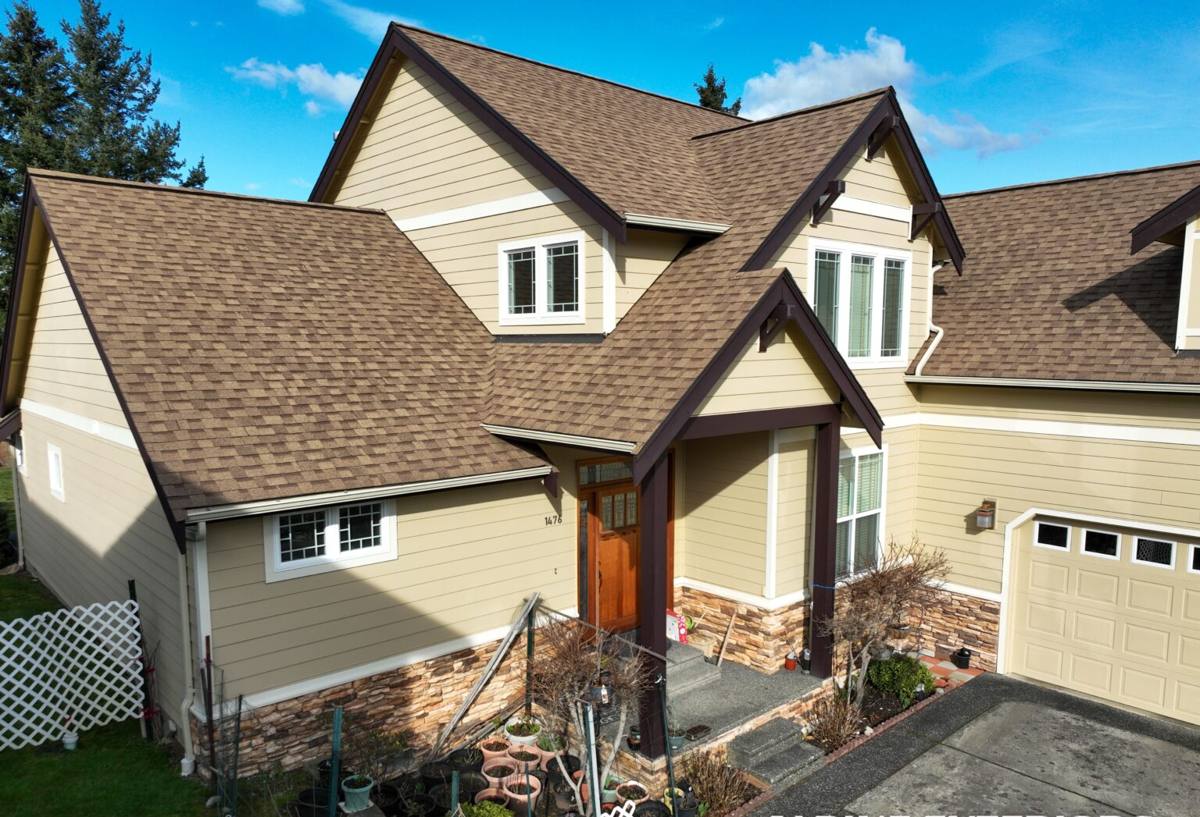
An asphalt shingle roof that's going to hold up in Lynden isn't just "shingles nailed to plywood." The details underneath and around the shingles matter as much as the shingles themselves.
Underlayment and Water Protection
We use synthetic underlayment across the full deck rather than the older felt paper products, because it holds up better to the repeated wetting and drying cycles typical of our winters. In vulnerable areas — eaves, valleys, and around any roof penetration — we install self-adhered ice and water shield. Lynden doesn't get heavy ice damming like colder climates, but wind-driven rain can push water sideways under shingles at these exact spots, and that membrane is the backup layer that keeps it out of the deck.
Ventilation
A hot, poorly ventilated attic in summer and a damp, poorly ventilated one in winter both shorten shingle life. Balanced intake at the soffits and exhaust at the ridge keeps moisture from condensing on the underside of the deck, which matters a lot in a climate where the air outside is often already near saturation. We check existing ventilation on every reroof and correct it when it's inadequate, rather than just re-covering a roof that was never breathing right in the first place.
Flashing
Flashing failures cause more leaks than worn-out shingle fields do. Step flashing at walls, counter-flashing at chimneys, and proper metal at valleys and roof-to-wall transitions all get replaced during a full reroof, not reused. Driving rain off the coast finds any gap in old flashing eventually.
Our Process for a Lynden Roofing Job
Inspection and Estimate
We start by getting on the roof, not just looking at it from the driveway. We check the deck condition, existing ventilation, flashing, and how much moss or granule loss is already present. That inspection is what the estimate is actually based on — not a generic square-footage guess.
Tear-Off and Deck Check
Full tear-off lets us see the deck itself. Any soft or delaminated sheathing — usually from a long-standing leak nobody knew about — gets replaced before a single new shingle goes down. Covering over a bad deck is how a new roof ends up with problems in year three instead of year twenty.
Installation
New underlayment, ice and water shield at the vulnerable areas, new flashing, then shingles installed to the manufacturer's nailing pattern and exposure specs. Nailing pattern matters more in wind-exposed spots like open farmland lots around Lynden, where gusts off the flats can find any shingle that was fastened short.
Cleanup and Walkthrough
Magnetic sweep for nails, full site cleanup, and a walkthrough so you know what was done and what to watch for going forward.
Choosing a Shingle for This Climate
Not every asphalt shingle product is built the same way, and the differences matter more here than in a drier region. The table below is a general guide to the tiers we typically discuss with Lynden homeowners.
| Shingle Type | Typical Lifespan | Moss/Algae Resistance | Best For |
|---|---|---|---|
| Standard 3-tab | 15-20 years | Low unless treated | Budget rebuilds, secondary structures |
| Standard architectural (laminate) | 25-30 years | Moderate | Most Lynden homes; good balance of cost and durability |
| Algae-resistant architectural (copper/zinc granules) | 25-30 years | High | Shaded lots, north-facing slopes, homes near trees |
| Premium/designer architectural | 30-50 years | High | Homeowners prioritizing appearance and longest service life |
For most homes in Lynden and the surrounding Custer area, we lean toward algae-resistant architectural shingles as the honest middle ground — the copper or zinc granules blended into the shingle slow moss regrowth without pushing the budget into premium territory. Standard architectural shingles without that treatment still work fine on open, sun-exposed roofs with good airflow; it's the shaded, tree-lined lots where the upgrade earns its keep.
What We See Go Wrong on Older Lynden Roofs
- Moss buildup at the ridge and in valleys — holds moisture against the deck and lifts shingle edges over time
- Granule loss on south and west-facing slopes — accelerated by UV exposure between rain events
- Nail pops — often from shingles installed with the wrong nailing pattern for our wind-exposed sites
- Flashing rust and separation — especially on older homes closer to the water where salt air speeds up corrosion of untreated metal
- Soft spots at valleys and penetrations — usually a sign that ice and water shield was skipped or under-sized during a prior install
What Homeowners Can Do Between Roof Jobs
A little seasonal attention goes a long way in this climate. Here's a practical checklist we give Lynden clients:
- Have moss physically removed (not just chemically killed) before it builds up thick enough to hold water against the shingles
- Keep gutters clear going into the fall rains — clogged gutters back water up under the shingle edge
- Trim back overhanging branches to cut down on shade and debris that feed moss growth
- Walk the yard after wind events and check for shingle debris in the gutters or on the ground
- Get a roof looked at every few years even without an obvious leak — small flashing or granule issues are cheap to fix early and expensive once they've caused deck damage
What Affects the Cost of a Lynden Roofing Job
Every roof is different, but a few factors consistently move the price up or down for homes in this area:
| Factor | Why It Matters |
|---|---|
| Roof pitch and complexity | Steep pitches and multiple valleys or dormers take more labor and material |
| Deck condition | Rot or delamination found during tear-off means sheathing replacement before shingles go down |
| Layers to remove | Homes with an existing layer or two of old shingles cost more to strip than a single-layer tear-off |
| Shingle tier chosen | Standard architectural vs. algae-resistant vs. premium changes material cost per square |
| Ventilation corrections | Adding or upgrading soffit and ridge venting adds labor but protects the new roof's lifespan |
| Access and site conditions | Steep driveways, tight lot lines, or landscaping that limits staging can add setup time |
We'd rather walk you through these factors on your actual roof than quote a number that doesn't hold up once we're up there tearing off the old material.
Why It Matters That We Already Work in Lynden
A crew that roofs all over Western Washington treats every job as a one-off. A crew based near Custer and working Lynden regularly already knows which streets sit low and hold moisture longer, which lots get heavy shade from mature trees, and which older homes in the area were built with the flashing and ventilation standards of a different era. That local pattern recognition shows up in the estimate — we're not guessing at what your roof needs, we're applying what we've already seen on roofs like it a few miles away. It also means we're a short drive away if a question comes up after the job is done, not a company that pulled a permit and moved on to the next county.
Whatcom County's building department and inspection process is also something we deal with regularly, which keeps permitting and inspections moving instead of stalling a project.
If your roof is showing moss, granule loss, or you just want an honest read on how much life is left in it, we're happy to take a look. Fill out the form below for a free, no-pressure estimate — we'll tell you what we actually see up there, not just what sells a job.