 Custer
 Siding Built for Sumas' Weather, Not Just Its Looks
Sumas sits at the northern edge of Whatcom County, close enough to the coast to catch the same marine-driven weather that soaks the rest of the region, and far enough inland to hold onto damp, shaded conditions long after a storm has passed. Homes here don't fail because of one bad storm. They fail slowly, from siding that was never matched to the climate in the first place, or that was installed without the details that keep water moving out instead of in.
We're a Custer-based crew, and Sumas is part of our regular service area. This page is about one thing specifically: what it takes to do fiber cement siding right on a home in this part of Whatcom County, and why we've standardized on a single product line instead of offering a menu of options.
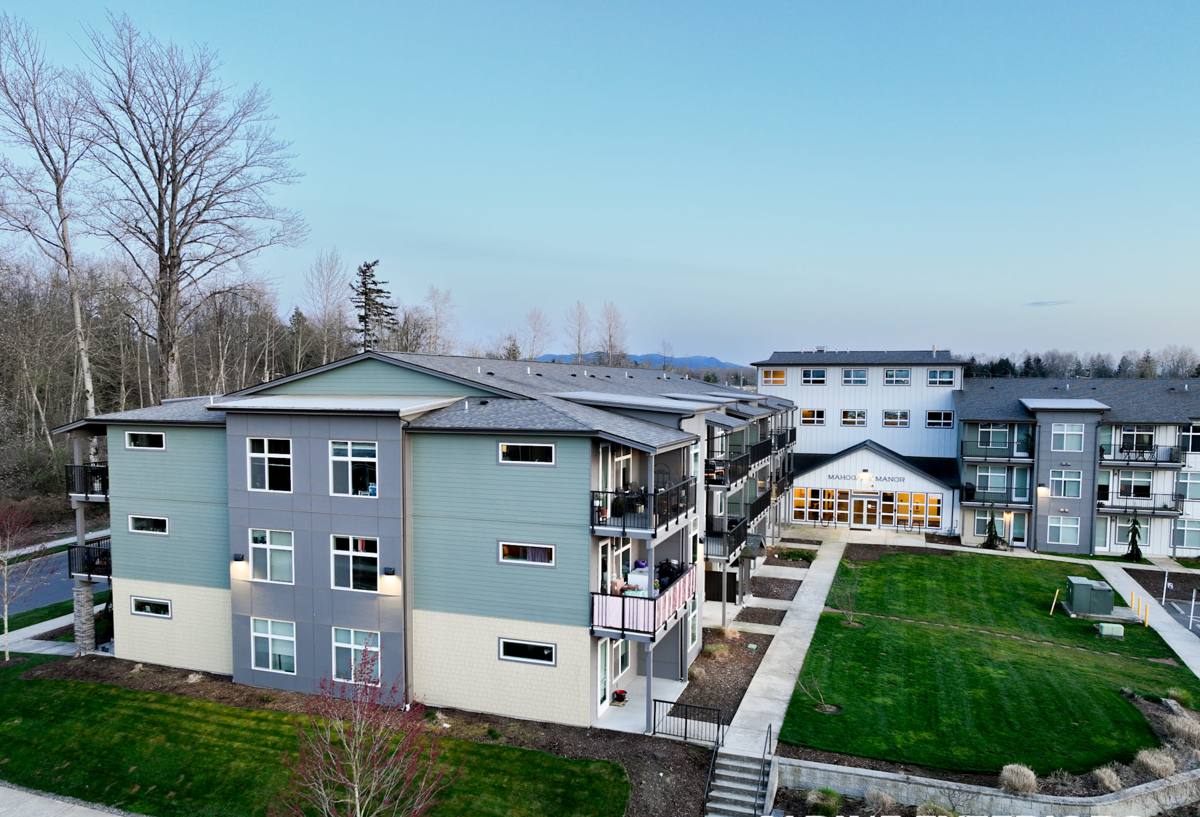
What This Climate Actually Does to Siding
Salt Air and Slow Corrosion
Whatcom County's proximity to the Salish Sea means salt-laden moisture moves inland on prevailing winds, even in communities that aren't right on the water. Salt air accelerates corrosion of exposed metal fasteners, flashing, and trim, and it degrades cheap coatings faster than a manufacturer's spec sheet usually admits. Siding materials and fastening hardware that aren't rated for coastal or near-coastal exposure tend to show it first at the fasteners and cut edges.
Driving Rain and Wind-Driven Water
Rain here rarely falls straight down. Storms moving through the region push rain sideways against west- and south-facing walls, forcing water into laps, seams, and butt joints that would stay dry in a calmer climate. Siding systems that rely on caulk alone to keep water out, rather than proper overlap, flashing, and drainage behind the cladding, are the ones that develop hidden rot first — often years before any staining shows on the surface.
A Long Moss Season
Between the shade from mature trees common in this area and months of low sun angle and high humidity, moss and algae have a long runway to establish themselves on north-facing and shaded walls. Moss doesn't just look bad — it holds moisture against the siding surface for extended periods, which is exactly the condition that breaks down materials not engineered to handle sustained dampness.
Why We Only Install James Hardie Fiber Cement
We made a decision early on to install one siding system, not several. James Hardie fiber cement is what goes on every home we side, and we don't offer LP SmartSide, vinyl, Cemplank, Allura, primed spruce, or cedar as alternatives. That's not a marketing position — it's a standard we hold because of what we've seen matched against this specific climate.
- Non-combustible core: fiber cement doesn't feed a fire the way wood-based products can, which matters for insurance conversations as much as safety.
- Climate-engineered product lines: Hardie's HZ5 formulation is built for regions with freeze-thaw cycling and sustained moisture exposure — a closer match to Whatcom County than the HZ10 line built for hot, humid southern climates.
- ColorPlus factory finish: baked-on color that resists fading and doesn't rely on a field-applied paint job to hold up against UV and driving rain.
- Dimensional stability: fiber cement doesn't swell, cup, or absorb water the way wood-based composite products can when moisture gets past the surface.
- A transferable warranty backed by a manufacturer with decades in the fiber cement category, not a newer entrant still building a track record.
None of this means other products are junk. It means that when we weighed maintenance burden, moisture behavior, and long-term performance against this region's weather, one system came out consistently ahead — and we'd rather install that one system correctly, every time, than spread our attention across several.
What a Correct Installation Actually Involves
Fiber cement siding is only as good as the assembly behind it. The board is a small part of the system; the water management underneath it is what actually keeps a home dry.
Water Management Behind the Boards
Given how much wind-driven rain this area sees, we treat drainage behind the siding as non-negotiable, not optional. That means a weather-resistant barrier installed correctly at every penetration, properly lapped flashing above windows and doors, and a drainage path that lets any moisture that does get behind the cladding find its way back out instead of sitting against the sheathing.
Fastening and Spacing
James Hardie publishes specific fastening patterns, nail types, and clearance requirements for a reason — get them wrong and you create the exact stress points where water intrusion and cracking start. Board spacing at butt joints and corners also has to account for expansion, which matters more in a climate with real seasonal temperature swings and sustained dampness than it does somewhere dry.
Caulking, Trim, and Touch-Up Paint
ColorPlus finish reduces how much field painting a project needs, but cut edges and any field-applied caulking still have to be treated with the manufacturer's specified products to keep the warranty intact and keep water from wicking into the cut ends of the board.
| Install Detail | Why It Matters Here | What Gets Skipped on a Rushed Job |
|---|---|---|
| Weather-resistant barrier & drainage plane | Manages the wind-driven rain that gets past the outer surface | Barrier installed without proper laps or fastened through without sealing |
| Flashing at windows/doors | Highest-risk points for water intrusion during driving rain | Reused old flashing or missing head flashing entirely |
| Fastener spacing & type | Corrosion resistance against salt-influenced air, structural hold | Standard fasteners instead of corrosion-resistant hardware |
| Clearance at grade & roofline | Keeps siding out of standing moisture and moss-prone splashback | Boards installed too close to grade or roof surfaces |
| Caulking & cut-edge sealing | Prevents moisture wicking into cut ends over a long moss season | Cut ends left unsealed to save time |
Mistakes We See on Fiber Cement Jobs in This Region
Fiber cement has a reputation for being low-maintenance, and it earns that reputation — but only when it's installed to spec. Most of the problems we get called out to look at aren't product failures. They're installation shortcuts that this particular climate exposes faster than a drier one would.
The most common issues we see: siding installed tight to grade or hardscaping with no clearance, which traps moisture and accelerates moss growth at the base of the wall; missing or improperly lapped flashing above windows, which shows up as staining and eventually rot around the frame; and unsealed cut edges at corners and outlets, which let water into the board's core in exactly the conditions Whatcom County provides for months at a time.
Our Process for a Sumas Fiber Cement Project
- On-site assessment: we look at existing siding condition, wall orientation relative to prevailing wind and rain, moss and moisture patterns, and any trim or flashing already showing wear.
- Product and color selection: we walk through Hardie's HZ5 lineup and ColorPlus color options suited to the home and its exposure.
- Tear-off and substrate check: removing old siding lets us catch sheathing damage or rot before it's covered up again — a step that gets skipped on cheaper bids.
- Water management install: barrier, flashing, and drainage plane go in before a single piece of siding is hung.
- Siding installation to manufacturer spec: correct fastening, spacing, and clearances throughout, not just on the visible elevations.
- Final detailing: caulking, touch-up, and a walk-through so you know what maintenance, if any, the finish actually needs.
Cost Factors for Fiber Cement Siding in Sumas
Pricing depends on the specifics of a given home, so we won't put a number on this page that doesn't reflect your project. What we can tell you is what actually moves the price up or down.
| Factor | How It Affects Cost |
|---|---|
| Existing siding removal | Tear-off of old material, and any sheathing repair it uncovers, adds labor before new siding can go on |
| Home size and wall complexity | More corners, gables, and trim detail mean more cutting, fitting, and flashing work |
| Board profile and color | Lap width and ColorPlus color selection can shift material cost within Hardie's product range |
| Trim and accessory scope | Full trim replacement versus reusing sound existing trim changes the labor scope |
| Access and site conditions | Height, landscaping, and staging space affect labor time on any given wall |
Maintaining Fiber Cement Through a Long Moss Season
Fiber cement asks far less of a homeowner than wood siding does, but "low-maintenance" isn't "no-maintenance," especially in a climate that gives moss and algae months to take hold.
- Rinse shaded and north-facing walls periodically to keep moss and algae from establishing rather than trying to remove it once it has.
- Keep gutters clear so overflow isn't running directly down siding faces during heavy rain events.
- Trim back vegetation and tree cover that keeps specific wall sections shaded and damp longer than the rest of the house.
- Inspect caulking at trim joints and penetrations annually, and re-seal before gaps become water paths.
- Address any impact damage or chipped ColorPlus finish promptly with manufacturer-specified touch-up product.
- Watch clearance at grade over time — mulch beds and landscaping have a way of creeping up against siding that started with proper clearance.
Why Hiring a Crew That Already Works in Sumas Matters
A siding crew that mostly works drier, calmer climates can install a technically correct assembly on paper and still miss the details that matter here — how far siding needs to clear grade given how much moss pressure this area sees, how flashing needs to handle rain that's coming in sideways rather than straight down, which walls on a typical local lot orientation take the worst of it. Working Custer, Sumas, and the surrounding Whatcom County area regularly means we're not guessing at how this climate behaves — we're building around what we already know it does to a house.
If you're weighing a siding replacement or new construction project in Sumas, we're glad to take a look and talk through what your home actually needs. Request a free, no-pressure estimate using the form below.