 Custer
 Semiahmoo's Coastline Is Not Kind to Siding
Semiahmoo sits right up against the water, and that changes what a house needs from its exterior. Homes a few miles inland in Custer deal with plenty of moisture, but Semiahmoo adds salt-laden air on top of it. Salt air accelerates corrosion of fasteners and trim, works its way into seams that aren't detailed correctly, and leaves a fine residue on surfaces that holds moisture longer than it should. Combine that with the driving rain that comes off Semiahmoo Bay and Drayton Harbor during winter storms, and you have siding that gets hit from the side, not just from above — which means lap joints, butt seams, and penetrations around windows and doors take more abuse here than they would on a sheltered inland lot.
Then there's moss. Whatcom County's long, wet, mild winters give moss and algae months at a time to establish themselves on any surface that stays damp and shaded — north-facing walls, areas under eaves with poor airflow, and anywhere siding sits too close to grade or landscaping. Once moss gets a foothold on a porous or poorly sealed surface, it holds moisture against the substrate and speeds up whatever deterioration was already starting.
None of this is exotic weather. It's just persistent, and persistence is what wears out siding that wasn't built or installed for it.
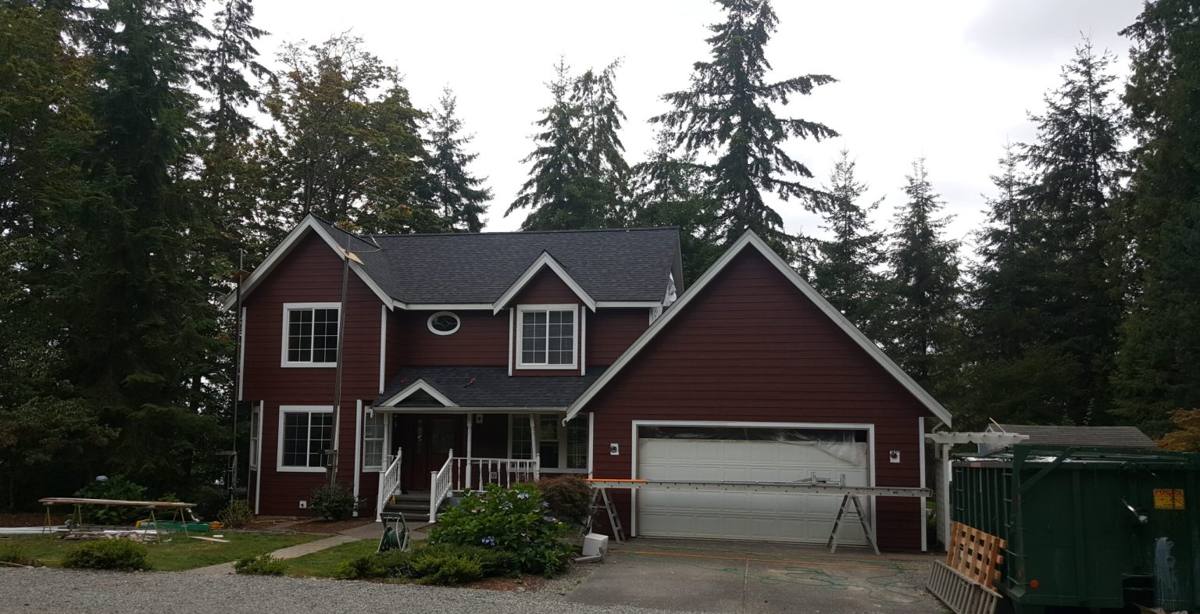
What Siding Actually Needs to Do in This Location
For a Semiahmoo home, siding has three jobs that matter more here than in a drier, inland part of the county:
- Resist moisture intrusion at every joint and penetration — driving rain finds gaps that vertical rain never would.
- Hold up to salt exposure without pitting fasteners, degrading finishes, or breaking down at the surface over years of cycling wet and dry.
- Resist moss and algae growth, or at least not feed it the way untreated wood-based products can.
This is why we standardized on James Hardie fiber cement and don't install anything else. It's a cement-based product, not a wood-based one, so it doesn't swell, rot, or feed fungal growth the way wood and wood-fiber siding can. It's also non-combustible, which matters less for salt air specifically but is part of why we trust it as the one product we put our name behind on every job, including here.
James Hardie's Climate-Engineered Lines
Hardie makes region-specific formulations under its HZ5 and HZ10 designations, engineered for wetter, harsher climates rather than a one-size-fits-all mix. For a property this close to the water, that engineering is the point — not a marketing detail. The factory-applied ColorPlus finish is baked on and backed by its own finish warranty, which matters in a salt environment because field-applied paint is exactly the kind of finish that fails first under repeated wet-dry-salt cycling. A factory finish with a real bond to the substrate holds up longer than a coat applied on-site in variable weather.
Product Lines We Typically Use Here
| Product | Where It Fits on a Semiahmoo Home |
|---|---|
| HardiePlank lap siding | Primary field siding, horizontal exposure, most common choice |
| HardiePanel vertical siding | Accent walls, gables, modern or board-and-batten looks |
| HardieTrim boards | Corners, window and door trim — critical for sealing against driving rain |
| HardieSoffit panels | Under-eave areas prone to trapped moisture and moss |
What a Correct Installation Involves
Fiber cement is only as good as the installation behind it, and this is where a lot of siding jobs — with any brand — quietly go wrong. In a location like Semiahmoo, the details below aren't optional extras; they're the difference between siding that shrugs off thirty years of coastal weather and siding that starts failing at the seams in year eight.
The Weather-Resistive Barrier and Flashing
Everything starts with the water-resistive barrier underneath the siding. Seams get lapped correctly, taped, and integrated with window and door flashing so that any water that does get past the siding — and some always will, on any home — drains back out rather than tracking down into the wall assembly. Around every window, door, and penetration, flashing has to be sequenced correctly: barrier, then flashing, then siding, shingle-style, so water always moves outward and down.
Clearance and Drainage
Hardie's own installation instructions call for minimum clearances above grade, roof lines, and decks, plus a rainscreen or drainage gap in many applications. Skipping these clearances is one of the most common corner-cutting moves in the trade, and it's exactly the kind of shortcut that causes problems fastest in a wet, salt-exposed spot like this one.
Fasteners
Corrosion-resistant fasteners, driven correctly (not overdriven, which cracks the board's fiber cement edge and creates a moisture entry point), matter more here than almost anywhere else in the county. Salt air will find a substandard fastener faster than plain rainwater ever would.
Caulking and Sealant Joints
Fewer, better-placed sealant joints beat caulking everything as a substitute for correct flashing. Sealant is a backup layer, not the primary defense — treating it as the primary defense is how homes end up with leaks a few years after a repaint.
Our Process on a Semiahmoo Project
- On-site assessment. We walk the exterior, check existing sheathing condition where accessible, note moss and moisture patterns on the current siding, and look at drainage, grading, and roofline details that affect the new install.
- Tear-off and sheathing check. Once old siding is off, we inspect the sheathing underneath for rot or moisture damage before anything new goes on. This is the point where hidden problems — often caused by whatever was installed before — get caught and fixed rather than covered up.
- Water-resistive barrier and flashing. Installed to manufacturer spec, with particular attention to window/door integration and any wall sections most exposed to wind-driven rain off the water.
- Hardie installation to spec. Correct fasteners, correct clearances, correct exposure, following James Hardie's published installation requirements — which is also what keeps the manufacturer's warranty valid.
- Final inspection and walkthrough. We check seams, trim, caulk joints, and clearances before calling the job done, and walk the property with the homeowner.
Fiber Cement Compared to Other Siding Options Here
| Factor | James Hardie Fiber Cement | Vinyl | Untreated/Primed Wood |
|---|---|---|---|
| Salt air resistance | Strong — cement-based, factory finish | Can become brittle and discolor over time | Vulnerable without diligent maintenance |
| Moss/algae resistance | Doesn't feed organic growth | Growth can develop in shaded, damp areas | Prone to holding moisture, feeding growth |
| Driving rain performance | Strong when flashed and installed correctly | Seams and panels can flex and gap over time | Depends heavily on paint maintenance |
| Fire resistance | Non-combustible | Combustible | Combustible |
| Typical maintenance | Occasional rinse, no repainting for years | Low, but limited repair options if damaged | Regular repainting and inspection required |
We don't install vinyl or wood siding, so this isn't a sales pitch dressed up as a comparison — it's the reasoning behind why we made fiber cement the only thing we put our crew's name on, especially on a lot this exposed to the water.
What This Costs
Pricing on any Semiahmoo project depends on square footage, how much trim and detail work is involved, tear-off condition, and any sheathing repair uncovered along the way. We give honest, specific numbers after walking the property — broad online estimates rarely account for a coastal lot's flashing and drainage needs, which is real labor, not padding.
Living With Fiber Cement Siding on the Water
Even the right product needs basic upkeep in this environment. A few habits go a long way:
- Rinse siding periodically, especially north-facing walls and areas under eaves where salt residue and moss are most likely to build up.
- Keep gutters clear so overflow doesn't run down the face of the siding and create a permanently damp strip.
- Trim back vegetation and shrubs that block airflow against the wall — airflow is what lets a wall dry out between storms.
- Check caulk joints around windows and trim every year or two and touch up as needed; this is minor upkeep, not a red flag.
- Watch for moss starting at ground level or under eaves and address it early, before it spreads across a wider section of wall.
Why Local Experience on This Stretch of Coast Matters
A crew that has worked Semiahmoo before already knows how this particular stretch of Whatcom County coastline behaves — which walls take the worst of the wind-driven rain, where moss tends to establish first, and how much clearance and drainage detail actually holds up here versus what the manufacturer minimums allow for on paper. That's the kind of knowledge that only comes from doing the work in this specific area repeatedly, not from a general siding background applied to a coastal lot for the first time.
It also means faster, more accurate estimates. We're not guessing at how Semiahmoo's microclimate will treat a given wall orientation — we've already seen how it plays out on homes nearby.
Questions Worth Asking Any Contractor Bidding This Job
- Are you a certified James Hardie installer, and can you explain how you'll meet the HZ5 clearance and flashing requirements on this specific home?
- How will you handle window and door flashing sequencing, and what's your plan for the walls most exposed to wind-driven rain?
- What fasteners will you use, and how do you prevent overdriving that cracks the board edge?
- Will you inspect the sheathing during tear-off before installing new siding, and what happens if you find rot or moisture damage?
- Have you worked on homes in Semiahmoo or similar waterfront areas of Whatcom County before?
If you're planning a siding project on a Semiahmoo property, we're glad to come take a look and give you a straightforward, no-pressure estimate — no obligation, just an honest read on what your home needs.