 Custer
 Ferndale's Weather Doesn't Go Easy on Windows
Ferndale sits close enough to the water and to Whatcom County's marine weather patterns that windows here work harder than they would somewhere inland. Salt-tinged air moves in off the Strait of Georgia and Puget Sound, rain comes in sideways more often than people expect, and the long gray stretch of fall through spring gives moss and algae months to get established on anything that stays damp. None of that is unusual for this part of Washington. But it does mean a window that was installed without accounting for it will show problems years before it should.
We install windows in Ferndale and the surrounding Custer area regularly enough to know which failures are climate-driven and which are installation-driven. Most of the time, when a homeowner calls about a "bad window," the glass and frame are fine — the installation around them isn't. That distinction matters, because it changes whether the fix is a new window or just correcting how the old one was set.
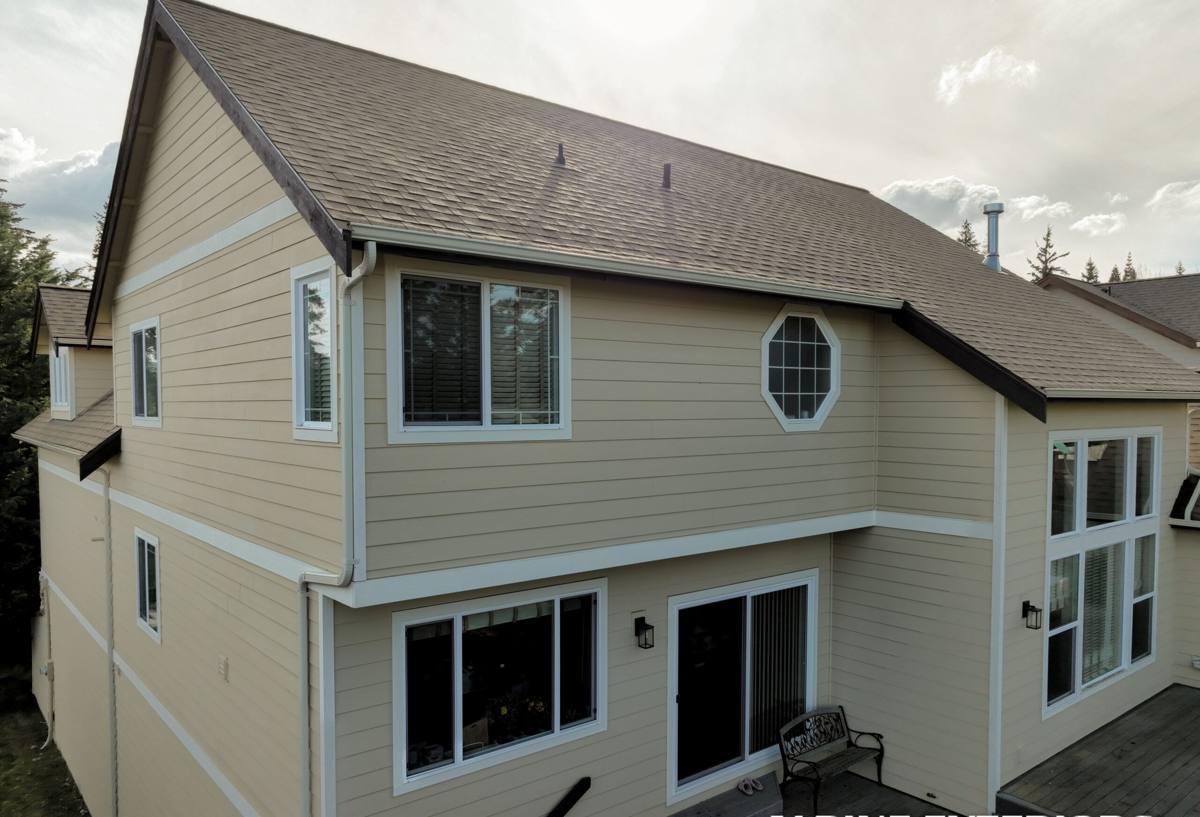
What Salt Air, Driving Rain, and Moss Actually Do to a Window
Salt air and hardware
Airborne salt accelerates corrosion on anything metal — hinges, locks, cranks, and especially the fasteners holding a window frame in place. On lower-quality hardware, this shows up as stiff or seized operation within a handful of years. It's a slower process on vinyl and fiberglass frames themselves, but the metal components inside a window assembly are where salt exposure shows up first.
Wind-driven rain
Rain that falls straight down is easy to manage. Rain that's being pushed sideways by wind off the water is a different problem — it gets forced up under trim, into gaps around the frame, and behind siding that isn't properly lapped. A window can have excellent glass and still leak if the flashing and drainage path behind it weren't built to handle wind-driven moisture. This is one of the most common causes of hidden rot we find when we pull old windows in this area.
Moss, algae, and trapped moisture
Ferndale's long wet season means anything that holds moisture against wood — a poorly sealed sill, a gap in caulking, debris sitting in a window track — gives moss and mildew time to take hold. Once organic growth gets a foothold on a windowsill or the trim around it, it holds even more moisture against the wood, and the problem accelerates. It's a slow-motion issue that's easy to miss until the wood underneath is already soft.
Signs Your Ferndale Home Is Due for New Window Installation
Most window problems don't announce themselves with a dramatic failure. They show up as small annoyances that get worse over a season or two. Worth checking for:
- Visible fog or moisture between panes of double-pane glass — a sign the seal has failed
- Drafts you can feel near the frame even with the window fully closed and locked
- Wood trim or sills that feel soft, spongy, or show dark staining
- Windows that are hard to open, close, or lock, especially after damp weather
- Visible moss or persistent green staining on sills, trim, or the siding directly below a window
- Noticeably higher heating bills without another clear cause
- Peeling paint or bubbling finish on interior trim near a window
- Condensation on the interior glass or frame during cold, wet stretches
Any one of these on its own might just need a repair. Several at once, especially combined with soft wood, usually means the installation has been failing for a while and it's worth having someone look at the whole opening, not just the glass.
What a Correct Window Installation Actually Involves
Window installation looks simple from the outside — old window out, new window in — but the parts nobody sees are what determine whether it holds up through a Whatcom County winter or starts leaking in year three.
Opening prep and removal
Once the old window is out, the opening gets inspected before anything new goes in. This is the point where hidden rot, soft framing, or old flashing mistakes get found. Skipping this step and just dropping a new window into a compromised opening is how problems get sealed in rather than fixed.
Flashing and the weather-resistive barrier
The flashing around a window — the material that directs water away from the opening and down and out past the siding — has to integrate correctly with the house's weather-resistive barrier. Sill pan flashing at the bottom of the opening matters especially here, since it's the last line of defense if any water does get past the exterior. Given how much wind-driven rain this area sees, this is the step most likely to make or break a window's long-term performance, and it's also the step most likely to get shortcut on a rushed job.
Insulation and air sealing
The gap between the window frame and the rough opening needs to be insulated and air-sealed correctly — not overpacked with fill that can compress the frame out of square, and not left with gaps that let air and moisture track in. Done right, this is also where a lot of a home's draft and energy loss around windows gets eliminated.
Exterior sealant and trim
The visible caulking and trim work is the last step, but it's also the part most exposed to salt air and rain. Using the right sealant for exterior, marine-adjacent conditions — and applying it correctly, not just as a bead over a gap — is what keeps water from finding its way back in around the finished edges.
Frame and Glass Options Worth Considering in This Climate
There's no single "best" window for every home, but some combinations of frame and glass hold up better than others against salt air, driving rain, and a long wet season. Here's how the common options compare for this specific climate:
| Frame Material | How It Handles This Climate | Maintenance |
|---|---|---|
| Vinyl | Doesn't corrode or rot; handles moisture well; performance depends heavily on installation quality | Low — occasional cleaning, no painting |
| Fiberglass | Very stable in wet, temperature-swinging conditions; strong resistance to warping | Low — durable finish, rarely needs attention |
| Wood-clad | Good insulating properties, but the exposed wood interior needs protection from any moisture that gets past the cladding | Moderate — periodic finish checks, especially on the interior wood |
| Bare wood | Classic look, but the most vulnerable to a long moss season and wind-driven rain without diligent upkeep | High — regular painting/sealing required |
On the glass side, we recommend double-pane low-E glass as the practical standard for most Ferndale homes, and triple-pane where a home faces prevailing wind and rain directly or where street noise is a factor. Argon or krypton gas fill between panes adds a modest efficiency gain but matters less than getting the frame, flashing, and installation right — a premium glass package installed poorly will underperform a standard glass package installed correctly.
How Our Installation Process Works
- On-site assessment — we look at each window opening individually, not just the glass, and flag anything that looks like existing water damage or old flashing problems.
- Honest recommendation — we tell you what actually needs replacing versus what can be repaired, and explain the frame and glass options relevant to your home's exposure.
- Careful removal — old windows come out without tearing up more of the surrounding wall than necessary.
- Opening inspection and repair — any soft framing or old moisture damage gets addressed before the new window goes in, not after.
- Flashing and sill pan installation — built and integrated to shed wind-driven rain, not just block direct rainfall.
- Window setting, shimming, and squaring — so the window operates correctly and doesn't stress the frame.
- Insulation, air sealing, and interior/exterior trim — finished with sealant rated for this region's conditions.
- Final walkthrough — we check operation, sightlines, and finish work with you before we consider the job done.
What Affects the Cost of Window Installation
Every home is different, so we won't quote a number without seeing the openings, but the main variables that move the price are consistent:
| Factor | Why It Matters |
|---|---|
| Number of windows and openings | The most direct driver of total project cost |
| Frame material chosen | Vinyl, fiberglass, and wood-clad carry different material costs |
| Glass package | Double-pane low-E versus triple-pane or specialty glass changes cost per unit |
| Condition of the existing opening | Hidden rot or old flashing damage found during removal adds repair work |
| Home height and access | Second-story or hard-to-access windows take more time and equipment |
| Trim and finish complexity | Custom trim profiles or matching existing exterior detailing adds labor |
Homeowners are often surprised that the window unit itself is only part of the cost — the labor to do the flashing, sealing, and trim work correctly is what actually determines whether the installation holds up. That's not an area worth cutting corners on to save a small amount up front, especially in a climate that punishes bad flashing quickly.
Vetting a Window Installer in Whatcom County
Window installation is one of those jobs where a bad install can look fine for a year or two before problems show up, so it's worth asking a few direct questions before hiring anyone:
- Do you use sill pan flashing on every window, not just on some jobs?
- Can you explain how you tie the window flashing into the existing weather-resistive barrier?
- What happens if you find rot or damage once the old window is removed?
- Are you licensed and insured to work in Washington state?
- Do you warranty the installation labor separately from the manufacturer's window warranty?
- Can you walk me through your process before work starts, not just describe the finished result?
A contractor who answers these clearly and specifically, without vague reassurance, is generally one who actually does the work carefully. This is a job where the details you can't see matter more than the ones you can.
Why It Matters That We Already Work in Ferndale
A crew that installs windows across a range of climates has to relearn the local conditions every time they show up somewhere new. A crew that works Whatcom County regularly already knows how the wind comes off the water, how bad a given winter's rain has been, and what kind of moss and moisture problems tend to show up on homes with certain exposures. That familiarity shows up in small decisions — how much attention a north-facing window gets versus a sheltered one, which sealants actually hold up through a wet Ferndale winter, and where rot tends to hide on homes built in this area during different decades. It's the difference between a generic installation and one built for the specific conditions your home actually faces.
If your windows are drafty, fogged, hard to operate, or just old enough that you're wondering whether it's time, we're glad to come take a look. There's no cost and no pressure for an estimate — just a straight answer about what your home actually needs. Use the form below to get started.