 Custer
 Asphalt Shingle Roofing for Ferndale Homes
Ferndale sits close enough to the water and open farmland that its roofs take a different kind of beating than homes further inland. Salt-tinged air off the Strait of Georgia, long stretches of driving rain, and a moss season that can run eight or nine months out of the year all work on a roof at the same time. Asphalt shingle roofing is still the right call for most Ferndale homes — it's affordable, it's proven, and it holds up well when it's installed correctly for this climate. The problem isn't the shingle. It's how often the underlying work gets rushed or skipped.
We install and repair asphalt shingle roofs throughout the Ferndale area as part of our regular Whatcom County service territory. This page covers what a correct installation actually involves here, what tends to go wrong, and how to think about the decision if you're planning a re-roof.
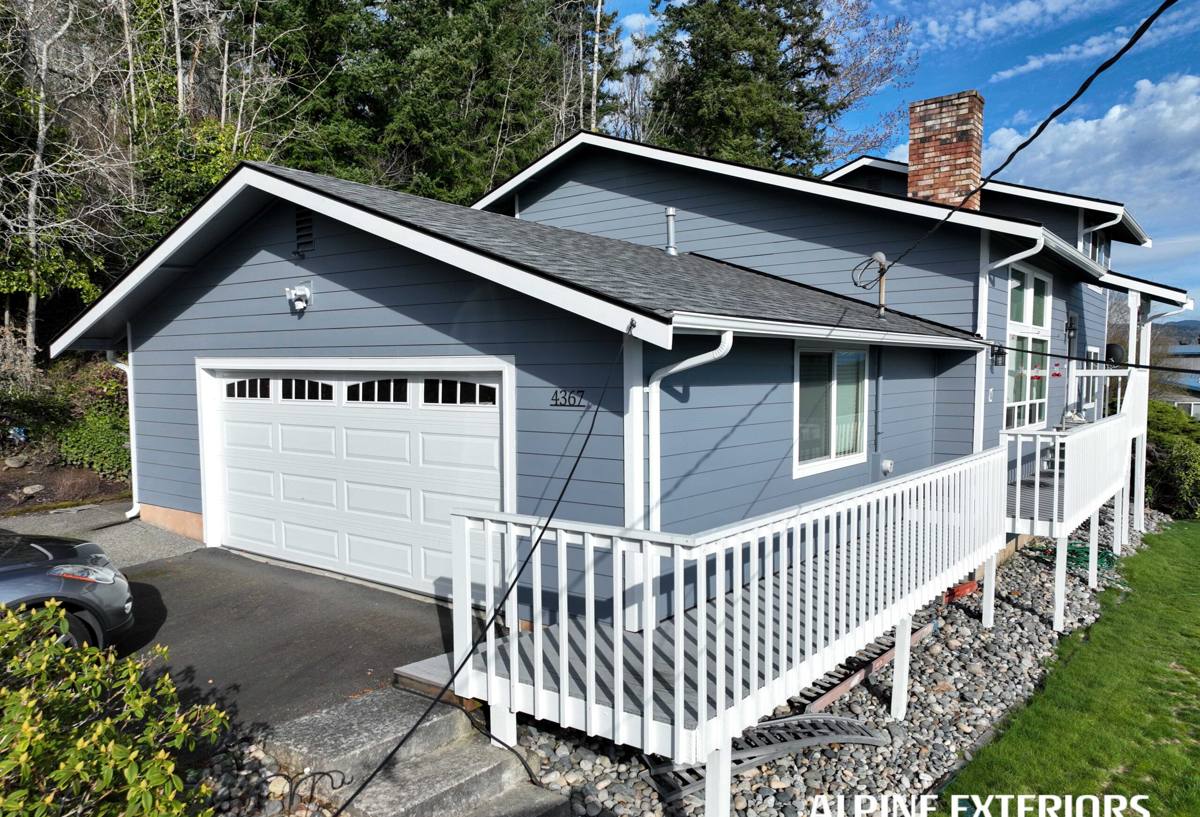
What Ferndale's Climate Actually Does to a Roof
Moisture Load, Not Just Rain Totals
The number that matters isn't how many inches of rain fall a year — it's how many days the roof stays damp. In this part of Whatcom County, a roof can go weeks without fully drying out between fall and spring. That sustained dampness is what feeds moss, softens the mat underneath low-quality shingles, and slowly breaks down sealant strips that were never rated for this kind of exposure.
Salt Air and Metal Components
Ferndale isn't oceanfront, but it's close enough to the water that airborne salt reaches roofs on the west-facing side of town, especially during winter storms. Salt air accelerates corrosion on exposed fasteners, flashing, and vent housings faster than it does further inland. A roof spec'd the same way you'd spec one in Sumas or Everson often falls short here on hardware alone.
Moss as a Structural Issue, Not Just Cosmetic
Moss gets treated like a cleaning problem, but on an asphalt roof it's a moisture problem. Moss holds water against the shingle surface, keeps the roof deck cooler and damper longer than the surrounding air, and its root structure works into shingle granules and laps over time. A roof with heavy moss along the north-facing slope or under tree cover isn't just ugly — it's aging faster than the rest of the roof.
What a Correct Installation Involves Here
A shingle roof is only as good as what's underneath it. In a climate like this one, the underlayment, flashing, and ventilation decisions matter more than the shingle brand printed on the wrapper.
- Ice-and-water shield at eaves and valleys: even though Ferndale doesn't see heavy snow loads, this membrane is what keeps wind-driven rain from backing up under the shingle course.
- Synthetic underlayment over felt: felt absorbs moisture and can wrinkle under sustained damp conditions; synthetic underlayment holds up better through a long wet season without drying out between storms.
- Step flashing and counter-flashing at every wall and chimney intersection: caulk-and-hope flashing is one of the most common failure points we find on older Ferndale roofs.
- Balanced intake and exhaust ventilation: a roof that can't breathe traps moisture in the attic, which shortens shingle life from underneath — you'll never see it from the yard, but it shows up as premature curling and granule loss.
- Corrosion-resistant fasteners and flashing metal: given the salt exposure on the west side of town, we don't cut corners on hardware just to save a few dollars per roof.
- Proper starter strip and drip edge at every eave and rake: this is a small detail that gets skipped more often than homeowners realize, and it's a direct path for wind-driven rain to get under the first course.
Shingle Selection for This Climate
Not every asphalt shingle line is built the same way, and in a high-moisture climate the differences show up faster than they would in a drier region. We generally steer homeowners toward architectural (laminated) shingles over basic three-tab for Ferndale installs, for a few honest reasons:
| Factor | 3-Tab Shingles | Architectural Shingles |
|---|---|---|
| Typical wind rating | Lower | Higher |
| Moisture/moss resistance | Thinner mat, wears faster in wet cycles | Heavier mat, holds up longer under sustained dampness |
| Algae-resistant granule options | Sometimes available | Widely available, worth it here |
| Manufacturer warranty length | Shorter, standard terms | Longer, often prorated less aggressively |
| Upfront cost | Lower | Moderate premium |
Algae-resistant (AR) granules are worth calling out specifically. They're copper- or zinc-infused granules that slow the growth of the dark streaking that shows up on north-facing roof slopes in wet climates. It's not a moss cure on its own, but paired with proper airflow and periodic maintenance, it meaningfully cuts down on regrowth between cleanings.
Our Process
1. On-Site Inspection
We walk the roof, not just look at it from the ladder. That means checking deck condition at the eaves (a common soft spot in older Ferndale homes), flashing condition around penetrations, attic ventilation, and how much moss or organic buildup has accumulated on shaded slopes.
2. Honest Scope and Written Estimate
You get a written estimate that spells out tear-off, deck repair contingencies, underlayment and flashing spec, shingle line, and ventilation work — not a one-line number. If we find soft decking once tear-off starts, we stop and show you before replacing anything, rather than surprising you on the invoice.
3. Tear-Off and Deck Inspection
Full tear-off lets us actually see the deck, which is the only reliable way to catch rot from long-term moisture intrusion before it becomes a bigger problem. Roofing over an existing layer hides these issues — we don't recommend it in this climate.
4. Installation to Spec
Underlayment, ice-and-water membrane, flashing, and shingle install following manufacturer specifications for wind and moisture exposure in this region — not just the minimum code requirement.
5. Cleanup and Walkthrough
Full site cleanup including magnetic sweep for nails, and a walkthrough so you understand what was done and what maintenance, if any, we'd recommend going forward.
Repair, Recover, or Full Replacement?
Not every roof issue in Ferndale needs a full tear-off. The right call depends on the roof's age, how widespread the damage is, and what's happening underneath the shingles.
- Repair makes sense for isolated issues — a damaged section from a fallen branch, a flashing failure around one vent, or localized granule loss — on a roof that's otherwise sound and under 15 years old.
- Recover (a new layer over existing shingles) is rarely something we recommend here. It traps moisture between layers and makes it impossible to inspect the deck, which is a real risk given how much moisture this climate holds against a roof.
- Full replacement is the right move once you're seeing widespread granule loss, curling shingles across multiple slopes, recurring leaks in different spots, or a roof that's simply reached the end of its rated life — typically in the 20-25 year range for a well-installed architectural shingle roof in this climate.
What to Watch For Between Inspections
A short seasonal checklist can catch problems while they're still cheap to fix:
- Moss buildup along shaded or north-facing slopes, especially near overhanging trees
- Granules collecting in gutters or at downspout outlets, a sign of accelerated shingle wear
- Dark streaking that spreads rather than staying isolated to one area
- Soft spots or sagging when viewed from the attic side, particularly near eaves
- Daylight visible around flashing at chimneys, vents, or wall intersections
- Water stains on interior ceilings, even faint ones, after a heavy rain event
Why Local Experience Matters for This Job
Roofing crews that work outside this region tend to spec roofs for average conditions, not for a specific climate that stays wet longer than most of the country and carries salt exposure on top of it. We work Ferndale and the rest of Whatcom County regularly, which means we already know which slopes in this area tend to hold moss, which flashing details fail first under sustained rain, and which shingle lines actually hold up rather than just meeting minimum code. That local pattern recognition is the difference between a roof that looks fine at installation and one that still looks fine in year fifteen.
Get a Straight Answer on Your Roof
If your Ferndale home's roof is showing moss, granule loss, or you're just planning ahead for a re-roof, we're happy to take a look and give you an honest read on where it stands. Reach out for a free, no-pressure estimate using the form below.