 Custer
 Why Ferndale's Climate Is Hard on Windows
Ferndale sits close enough to the water and the Strait of Georgia weather patterns that homes here take a different kind of beating than houses even twenty minutes inland. Salt-laden air corrodes metal hardware and dulls finishes faster than dry-climate manufacturers account for. Driving rain, pushed sideways by wind off the water, finds every gap in flashing and trim that a calmer climate would never expose. And Whatcom County's long, damp moss season keeps north-facing walls and window sills wet for months at a stretch, which is exactly the condition that rots wood trim and breeds mold in a window that wasn't sealed correctly the first time.
None of this means Ferndale needs exotic materials. It means the window and the installation both need to be matched to real conditions instead of a generic spec sheet. A window that performs fine in a dry, low-wind region can fail here in a few years if the frame material, glass package, or flashing detail wasn't chosen with this climate in mind.
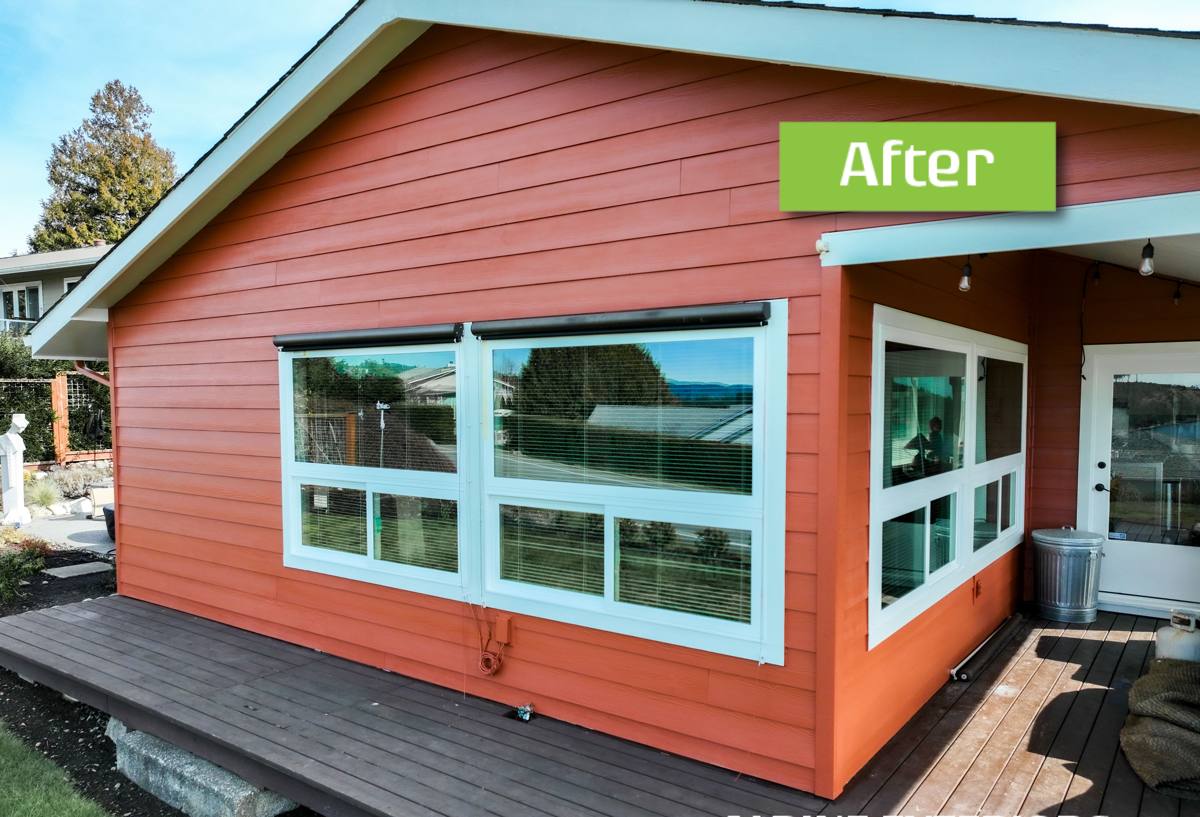
What "Energy-Efficient" Actually Means for a Window
The phrase gets used loosely, so it's worth being precise. An energy-efficient window is doing three jobs at once: keeping conditioned air inside, keeping outside air and moisture out, and managing how much heat passes through the glass. Every one of those depends on a different part of the window.
The Glass Package
Look for the NFRC label, not marketing language. Two numbers matter most in this region: U-factor (how much heat escapes through the glass — lower is better for our mild but persistently cool, wet winters) and air infiltration rating (how much outside air leaks around the sash — lower is better everywhere, but especially where wind-driven rain is common). Low-E coatings and gas-filled sealed units both improve U-factor without adding maintenance.
The Frame Material
Frame material determines how the window handles decades of damp exposure. Vinyl doesn't absorb moisture or corrode, which is a real advantage near salt air. Fiberglass holds its shape better through temperature swings and takes paint well if you want a custom color. Wood-clad frames look good but put the exposed cladding's seams and caulk joints between the wood and the weather — a detail that has to be maintained, not ignored, in a climate this wet.
The Installation Itself
This is the part most homeowners underestimate, and it's the part that matters most here. A high-performance window installed without proper flashing and air-sealing will underperform a mid-range window installed correctly. In a region with this much driving rain, installation quality is often the deciding factor in whether a window leaks in year three.
Frame Material Comparison for This Climate
| Frame Material | Moisture Resistance | Maintenance | Typical Lifespan Here |
|---|---|---|---|
| Vinyl | Excellent — won't rot, rust, or corrode from salt air | Low — occasional cleaning | Long, if installed with proper drainage |
| Fiberglass | Excellent — dimensionally stable in wet/cold swings | Low to moderate | Long |
| Wood-clad | Good on the exterior face if caulking is maintained; vulnerable at seams | Higher — periodic caulk and finish checks | Depends heavily on upkeep |
| Aluminum (older stock) | Poor — conducts cold, prone to condensation and corrosion near salt air | High | Often the reason for replacement |
We don't push one material on every job. The right call depends on the wall's sun and wind exposure, the home's existing trim detail, and what the homeowner wants to be maintaining ten years from now.
What a Correct Installation Involves
This is where a driving-rain climate punishes shortcuts. A correct window replacement isn't just pulling the old unit and screwing in a new one — it's rebuilding the water management system around the opening. That includes:
- Removing the old window without tearing the surrounding sheathing or existing weather-resistive barrier more than necessary
- Inspecting the rough opening for hidden water damage or soft sheathing before anything new goes in
- Installing a sloped sill pan so any water that gets past the window drains back outside instead of pooling in the frame
- Integrating new flashing tape with the house wrap in the correct shingle-lap order — top piece over the one below, always — so water sheds down and out
- Sealing and insulating the gap between the window frame and rough opening without over-packing it, which can bow the frame
- Finishing exterior trim and caulk joints so they shed water rather than trap it against the frame
Skip the sill pan or lap the flashing wrong, and you can end up with a brand-new, high-efficiency window that still leaks into the wall cavity during a hard winter storm — the moisture just won't show up for a year or two, by which point it's caused real damage.
Signs a Ferndale Home Needs Window Replacement
- Visible condensation or fogging between the panes of a double-pane window (the seal has failed)
- Cold drafts near the window frame even when it's latched shut
- Soft or discolored trim or sill, especially on north- and west-facing walls that stay damp longest
- Difficulty opening, closing, or latching — often a sign the frame has shifted or swollen
- Visible moss or dark staining creeping onto the sill or lower sash from nearby roof or siding runoff
- Noticeably higher heating bills without another clear cause
Our Process for Ferndale Window Replacement
We keep the process straightforward because the value is in the details, not the sales pitch:
- On-site assessment: We look at each opening individually — sun exposure, wind exposure, existing water damage, and how the current windows have actually held up.
- Product recommendation: We walk through frame and glass options suited to that specific wall and your budget, not a one-size answer for the whole house.
- Accurate measurement and ordering: Wrong measurements mean gaps, and gaps mean the flashing detail above never gets a fair chance to work.
- Careful removal: We protect interior finishes and inspect the opening as soon as the old window is out, before assuming anything about what's behind it.
- Correct flashing and sill pan installation: This step doesn't get shortcuts, regardless of schedule pressure.
- Air-sealing and insulation: Sealed properly, not overstuffed.
- Interior and exterior trim finish: Clean lines, properly caulked, no gaps left for moisture to find.
- Final walkthrough: We test operation and check the seal with you before calling the job done.
Why Local Experience Matters for This Job
A window installer who mostly works drier, calmer regions can still do competent work — but they may not default to the extra flashing detail this climate demands, because most of the country doesn't need it as consistently as Whatcom County does. Crews who work Ferndale and the surrounding Custer area regularly get a feel for which walls take the worst of the wind-driven rain, how long moss season really runs here, and which older homes are likely to have hidden trim rot before the siding even comes off. That familiarity shows up in fewer surprises mid-project and fewer callbacks after the first hard winter storm.
It also matters for scheduling. Whatcom County's wet season narrows the practical window for exterior work with open wall cavities. A crew that knows the local weather pattern plans around it instead of getting caught mid-installation by a multi-day rain system.
What Affects the Cost
| Cost Factor | Why It Matters |
|---|---|
| Frame material | Vinyl is generally the most budget-friendly; fiberglass and wood-clad cost more upfront |
| Glass package | Better U-factor and additional low-E coatings add cost but lower long-term heating expense |
| Number and size of openings | Larger and custom-sized windows cost more than standard sizes |
| Condition of the existing opening | Hidden rot or damaged sheathing found during removal adds repair time before the new window goes in |
| Access and site conditions | Second-story or hard-to-reach windows take longer to install safely |
We give straightforward, itemized estimates so you can see what you're paying for — there's no reason a homeowner should have to guess at the breakdown.
Keeping New Windows Performing Long-Term
Even a well-installed window benefits from basic upkeep in this climate. Clear moss and debris out of window tracks and weep holes so water can drain as designed. Check exterior caulk joints once a year, since UV and constant moisture cycling will eventually break down sealant faster here than in drier climates. And keep an eye on any wood trim components — catching a small failure in the finish early is far cheaper than replacing rotted trim later.
If you're weighing a replacement, we're glad to take a look and give you a straightforward read on your current windows — what's actually wearing out versus what still has life left, and what it would take to fix it right. Reach out for a free, no-pressure estimate using the form below.