 Custer
 Windows Built for the California Creek Climate
Homes in the California Creek area near Custer sit close enough to the water that the weather does things a standard window package isn't designed for. Salt-laden air off the Salish Sea works on aluminum and low-grade vinyl components over time. Wind-driven rain doesn't just fall straight down here — it comes in sideways during winter storms and finds every weak seal. And the long, damp moss season that Whatcom County is known for keeps window sills, tracks, and exterior trim wet for months at a stretch. A window that's rated fine for a dry inland climate can still underperform here, not because it's a bad product, but because it wasn't matched to this specific exposure.
This page is about one thing: getting energy-efficient window replacement right for California Creek homes specifically — what the climate demands, what a correct installation actually involves, and how we approach these jobs after years of working exteriors in this part of Whatcom County.
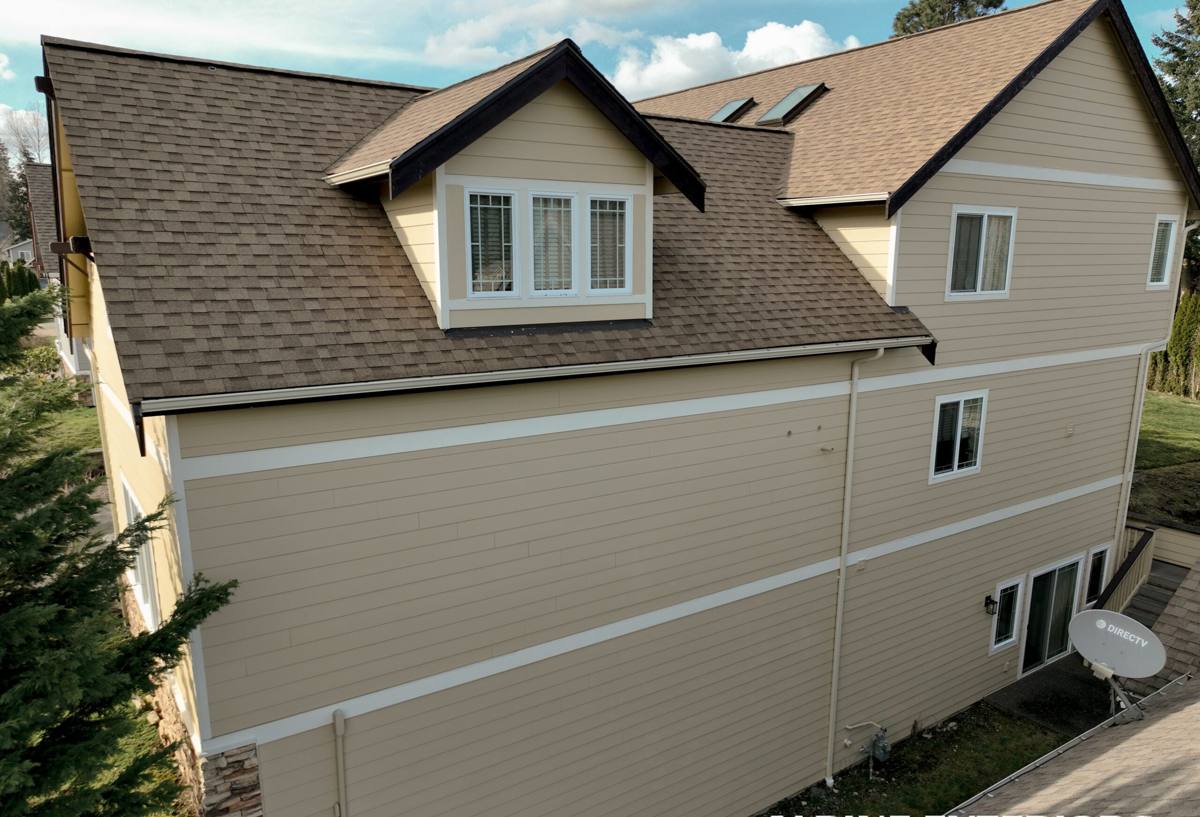
What "Energy-Efficient" Actually Means Out Here
Energy-efficient window marketing throws around a lot of numbers. In a marine climate like this one, only a few of them actually matter for your comfort and your heating bill.
The Ratings Worth Paying Attention To
- U-factor — measures how well the window resists heat loss. Lower is better for our cool, wet winters. This is the single most important number for a Custer-area home.
- Solar Heat Gain Coefficient (SHGC) — matters less here than in sunnier climates, but still affects how a south-facing room feels in the brief stretches of summer sun.
- Air infiltration rating — how much air leaks through the frame under wind pressure. Given how often California Creek gets direct wind off the water, this rating deserves real attention, not just the glass package.
Frame Materials Compared
The frame matters as much as the glass in a salt-air, high-moisture environment. Here's how the common options hold up:
| Frame Material | Coastal/Salt-Air Performance | Maintenance |
|---|---|---|
| Vinyl (quality-grade) | Good — won't corrode, handles moisture well if welded corners are solid | Low |
| Fiberglass | Very good — dimensionally stable, resists swelling and corrosion | Low |
| Wood-clad | Fair — the clad exterior helps, but any breach exposes wood to constant damp | Higher |
| Bare aluminum | Poor — prone to pitting and corrosion in salt air over time | Moderate to high |
We don't push bare aluminum frames on homes this close to the water. It's not that the material is worthless — it's that it's the wrong tool for this specific exposure, and we'd rather steer a homeowner toward something that won't need attention again in five years.
The Problems We See on Aging Windows in This Area
When we get called out to a California Creek home for window issues, the same handful of problems show up again and again:
Moisture-Related Failures
Condensation between panes means the seal has failed and the insulating gas is gone — the window is no longer doing its job even if the glass looks fine. Moss and green growth on sills and lower sashes is a sign that water is sitting where it shouldn't, which speeds up rot in wood components and staining everywhere else.
Wind-Driven Rain Intrusion
Water pushed sideways by storm wind can work past worn weatherstripping or a poorly flashed opening, showing up as staining or soft drywall below the window — sometimes weeks after the storm that caused it, which makes the source hard to trace without experience in exactly this kind of failure.
Drafts and Heating Costs
Old or poorly sealed windows are one of the biggest reasons a Custer-area home feels cold in a room even when the furnace is running constantly. Homeowners often notice this more than any other single issue, because it shows up on the power bill every month.
What a Correct Installation Actually Involves
The window product itself is only part of the equation. Most window failures we see in this climate trace back to installation details, not the window brand. A correct job includes:
- Removing the old window and inspecting the rough opening for hidden rot or moisture damage before anything new goes in
- Installing a proper sloped sill pan so any water that gets past the window sheds outward, not into the wall
- Flashing integrated correctly with the existing weather-resistive barrier and siding — sequenced so water always drains out and over, never behind
- Using sealants and tapes rated for the temperature range and UV exposure they'll actually face, not whatever's cheapest
- Shimming and fastening so the window operates smoothly and the frame isn't racked, which affects both function and long-term seal life
Because we work as a siding crew first, this integration step is where we add the most value. A window installer who only does windows may do fine work on the window itself but not think as carefully about how that opening ties into the siding and drainage plane around it. That handoff between window and siding is exactly where leaks start on homes exposed to driving rain.
How We Approach California Creek Window Projects
- On-site assessment — we look at the existing windows, the siding condition around each opening, and any signs of past water intrusion before recommending anything.
- Product recommendation — based on the home's exposure (how close to the water, which direction it faces prevailing storms), we recommend frame material and glass package rather than a one-size answer.
- Opening prep — old units come out carefully, and we inspect and repair any hidden damage to sheathing or framing before it's covered up again.
- Installation — sill pans, flashing, and sealants go in following manufacturer instructions and sound building practice, not shortcuts.
- Siding tie-in — trim and siding are refitted around the new windows so the whole assembly sheds water the way it's supposed to.
- Walkthrough — we go over operation, any warranty paperwork, and basic care before we consider the job done.
Cost Factors for This Type of Project
We don't post fixed prices because every home's window count, sizes, and condition are different — but these are the main factors that move the number up or down:
| Factor | Why It Affects Cost |
|---|---|
| Frame material chosen | Fiberglass and higher-end vinyl cost more upfront than basic vinyl or aluminum |
| Number and size of openings | Larger and more numerous windows mean more labor and material |
| Condition of existing framing | Hidden rot or water damage found during removal adds repair work |
| Glass package (double vs. triple pane) | Triple-pane costs more but performs better against both cold and noise from wind |
| Full-frame vs. insert replacement | Full-frame replacement costs more but is often the right call when the old frame or flashing is compromised |
As a general range, homeowners in this area typically see per-window costs from the low thousands up depending on size and material, with full-home replacements scaling from there. We'll always give you a real number for your specific home rather than a rough guess.
Why It Matters to Hire a Crew That Already Works This Area
Custer and the California Creek area sit in a specific microclimate within Whatcom County — closer to salt water and open wind exposure than homes further inland. A crew that installs windows across a wide range of inland conditions may not think twice about frame material or flashing sequence in the way it deserves here. We work this stretch of coastline regularly, which means we already know which details matter most: the sill pan slope, the frame material trade-offs, and how window flashing needs to interact with the siding system on a home that takes wind-driven rain most winters.
That local familiarity also shows up in permitting and code knowledge specific to Whatcom County jurisdictions, and in simply knowing what "normal" wear looks like on a California Creek home versus what's an early warning sign.
Keeping New Windows Performing Long-Term
Even a correctly installed, well-chosen window benefits from basic upkeep in this climate. A short annual routine goes a long way:
- Clear moss and debris from sills and tracks before it holds moisture against the frame
- Check weatherstripping for compression or gaps each fall before storm season
- Inspect exterior caulking around the frame perimeter yearly and touch up any cracked or shrunk sections
- Make sure gutters and downspouts near windows are directing water away, not overflowing onto the wall below
- Operate each window a few times through the year so tracks and hardware don't seize from disuse
If you're weighing window replacement for a home in the California Creek area, we're happy to take a look and give you an honest read on what your home actually needs — no pressure, no upsell. Fill out the form below for a free estimate.