 Custer
 Decks Built for Custer's Wet, Salty Climate
A deck in the Meridian area near Custer has to deal with conditions that a lot of national decking guides never mention. Whatcom County sits close enough to the water that salt-laden air moves through on a regular basis, driving rain is a fact of life most of the year, and a long moss season means anything horizontal that doesn't shed water and dry out quickly will grow a green film sooner or later. None of that means a deck can't last for decades here — it just means the design, materials, and hardware have to be chosen with this specific climate in mind, not a generic one.
We build and repair decks throughout Custer and the surrounding Whatcom County communities, and Meridian is an area we know well. This page covers what actually matters for a deck built here: the material trade-offs, the hardware that holds up, the moisture details that get skipped on a lot of jobs, and what our process looks like from first visit to final walkthrough.
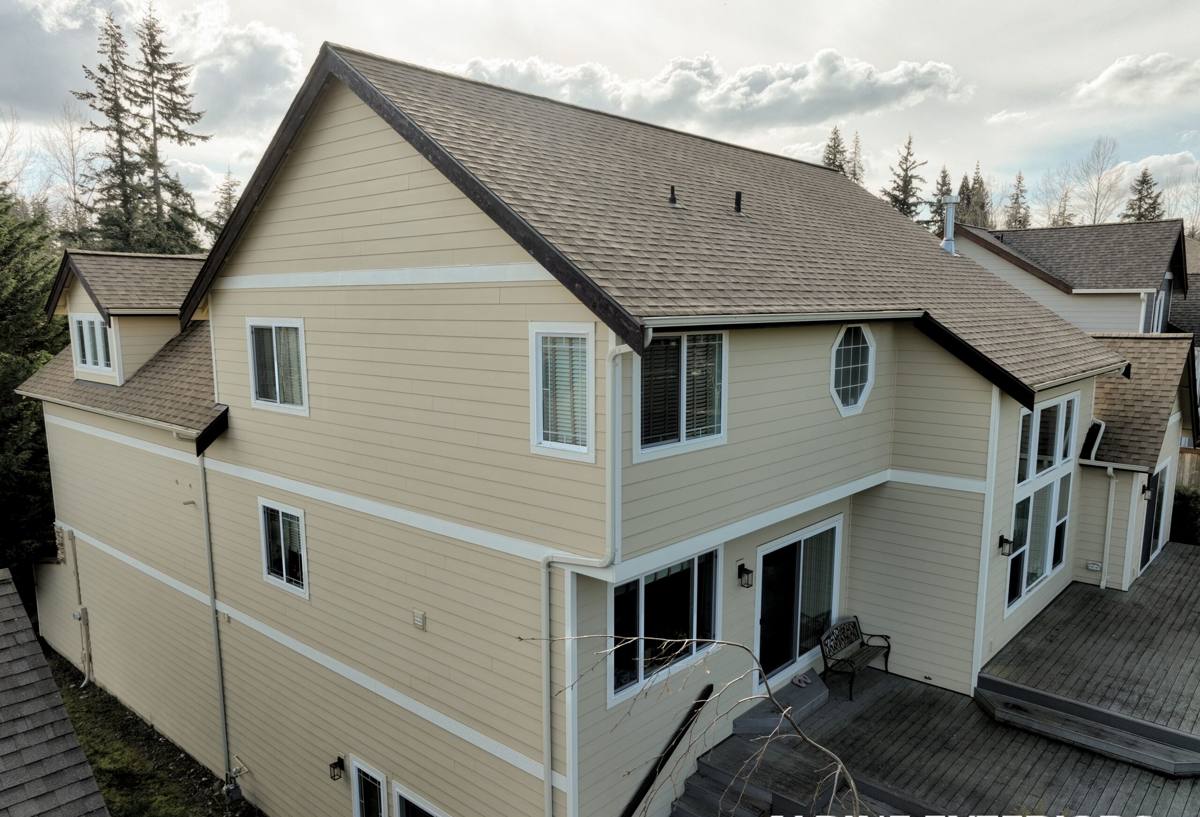
What Meridian Homes Need From a Deck
Wind and Salt Exposure
Properties in this part of Whatcom County catch salt-bearing wind more often than homeowners expect, even a few miles inland. Salt air accelerates corrosion on anything metal — fasteners, joist hangers, railing hardware — long before the wood itself shows real wear. A deck that looks fine on the surface can have rusting connectors doing the structural work underneath, which is a problem you don't want to discover during an inspection or, worse, a repair call five years down the road.
Moss and the Long Wet Season
Moss and algae need two things to establish: moisture and shade. Custer gets plenty of both for a good chunk of the year. Decking boards laid too tight, framing with poor airflow underneath, and shaded north-facing decks are the most common spots we see moss take hold. The fix isn't a single product — it's a combination of board spacing, ventilation, drainage, and material choice working together.
Choosing the Right Decking Material for This Climate
Every decking material has trade-offs. In a climate with this much rain and moss pressure, the right choice usually comes down to how much maintenance you're willing to do versus how much you want to spend up front.
| Material | Moisture & Moss Resistance | Maintenance | Typical Lifespan |
|---|---|---|---|
| Pressure-treated wood | Fair — needs sealing and cleaning to resist moss | Annual cleaning, resealing every 1-2 years | 15-20 years with upkeep |
| Cedar | Good natural resistance, but surface still needs care | Regular cleaning and periodic finish | 15-25 years with upkeep |
| Capped composite | Very good — cap layer resists moisture absorption | Occasional washing, no sealing | 25-30+ years, manufacturer-warrantied |
| PVC/cellular decking | Excellent — doesn't absorb water | Occasional washing | 25-30+ years, manufacturer-warrantied |
We install all of these depending on budget and the homeowner's priorities. Our standard is to steer clients away from uncapped, budget composite boards in this climate — the exposed core on those products can wick moisture at cut ends and fastener holes, which shows up as swelling or discoloration over time. That's a maintenance and warranty trade-off worth knowing about before you buy, not a knock on composite decking as a category.
Framing, Fasteners, and Flashing That Actually Hold Up
Ledger and Framing
Most deck failures we get called out to repair start at the ledger board — the piece that attaches the deck to the house. If that connection isn't properly flashed, water works its way behind the siding and into the rim joist, and you don't see it until there's rot. We flash every ledger attachment with self-adhering membrane and proper metal flashing, sloped to shed water away from the house, every time — no exceptions for this climate.
Fasteners and Hardware
Standard electroplated zinc screws and hangers are not our standard for coastal Whatcom County work. We use stainless steel or heavy hot-dip galvanized fasteners and connectors rated for exterior, high-moisture exposure. It costs more than hardware-store basics, but corroded hardware is one of the most common reasons decks fail structurally years before the decking itself wears out.
Footings and Moisture Control
Posts sitting directly on wet concrete or in standing water will fail faster than almost anything else in the structure. We set posts on elevated post bases that keep the wood off the footing, grade the site so water drains away from posts rather than pooling around them, and size footings to local frost depth and load requirements rather than guessing.
Permits and Code Basics in Whatcom County
Most decks attached to a house and elevated more than a modest height above grade require a building permit in Whatcom County, and there are standard code requirements around guardrail height, baluster spacing, and stair rise and run that apply regardless of who builds the deck. Setback rules can vary by property and zoning, so what's allowed next door isn't automatically allowed on your lot. We handle the permit process as part of the job rather than leaving it to the homeowner, and we build to current code, not to whatever the old deck happened to meet when it went in.
Our Process, Start to Finish
- Site visit and assessment — we look at sun exposure, drainage, existing structure (if replacing a deck), and how the space will actually be used.
- Design and material selection — walking through the trade-offs above so the choice fits your budget and how much upkeep you want to do.
- Permitting — we prepare and submit what the county requires before any work starts.
- Demolition, if needed — removing and disposing of an old structure, checking the ledger and framing underneath for hidden damage.
- Framing and structural work — ledger flashing, footings, joists, and hardware installed to the standards described above.
- Decking, railing, and stairs — installed per manufacturer spec, with attention to spacing and ventilation for drainage and airflow.
- Final walkthrough — we go over the finished deck with you and explain the maintenance it actually needs, not a generic checklist.
Cost Factors to Expect
Every deck is priced on its own specifics, but the factors that move the number are consistent. As a broad range, homeowners in this area typically see something in the neighborhood of $25 to $65 per square foot installed, depending heavily on the factors below — treat any tighter number without a site visit as a guess.
| Factor | How It Affects Cost |
|---|---|
| Decking material | Pressure-treated wood costs less up front; composite and PVC cost more but need less maintenance |
| Size and shape | Larger decks and multi-level or irregular shapes add framing and labor |
| Height and stairs | Decks well above grade need taller framing, extra footings, and stairs with railings |
| Railing type | Basic wood railing costs less than composite, metal cable, or glass panel systems |
| Site access | Tight side-yard access or steep grade can add labor time for materials and equipment |
| Attached vs. freestanding | Freestanding decks skip ledger work but need additional footings and beams |
Maintenance Checklist for a Coastal-Climate Deck
A properly built deck in this climate still needs regular attention. Here's what actually matters:
- Sweep debris out of board gaps so water and moss-feeding organic matter don't build up
- Rinse the deck periodically to clear salt residue, especially after windy weather off the water
- Check visible fasteners and railing connections once a year for corrosion or loosening
- Reseal wood decking every 1-2 years; composite and PVC just need washing
- Make sure gutters and downspouts direct roof water away from the deck and its footings
- Trim back overhanging vegetation to improve airflow and sun exposure on shaded sections
- Inspect ledger flashing and the house connection point for any signs of moisture intrusion
Why a Crew That Already Works Meridian Matters
A deck built for a dry inland climate and a deck built for Custer are not the same project, even if they look identical in a catalog photo. Working in this area regularly means we already know which hardware holds up to the salt air, which decking profiles handle a long wet season without trapping moisture, and what Whatcom County's permitting process actually requires — not what a generic online guide says it requires. It also means we're local when you need us after the job is done, whether that's a warranty question or just some advice on keeping moss off the boards next winter.
If you're planning a new deck or replacing one that's past its prime, we're happy to come take a look and walk you through your options. Fill out the form below for a free, no-pressure estimate.