 Custer
 Decking in a Bay-Side Climate
Semiahmoo sits close enough to the water that homes here deal with a different set of conditions than a deck built ten miles inland. Salt-laden air off Semiahmoo Bay works on fasteners and hardware year-round, driving rain off the Strait comes in sideways more often than straight down, and Whatcom County's long, damp shoulder seasons keep every horizontal surface wet for days at a stretch. Add the low winter sun angle that keeps shaded decks from ever fully drying out, and you have an environment that will find every weak point in a deck build within a few seasons.
Composite decking exists partly to solve wood's rot and maintenance problems, but composite isn't immune to a bad build. A composite deck installed with wood-deck habits — undersized joists, no ventilation gap, the wrong fasteners — will still fail early here. The material choice matters less than getting the substructure, fastening, and drainage details right for this specific climate. That's the part of the job most homeowners never see and most low-bid crews skip.
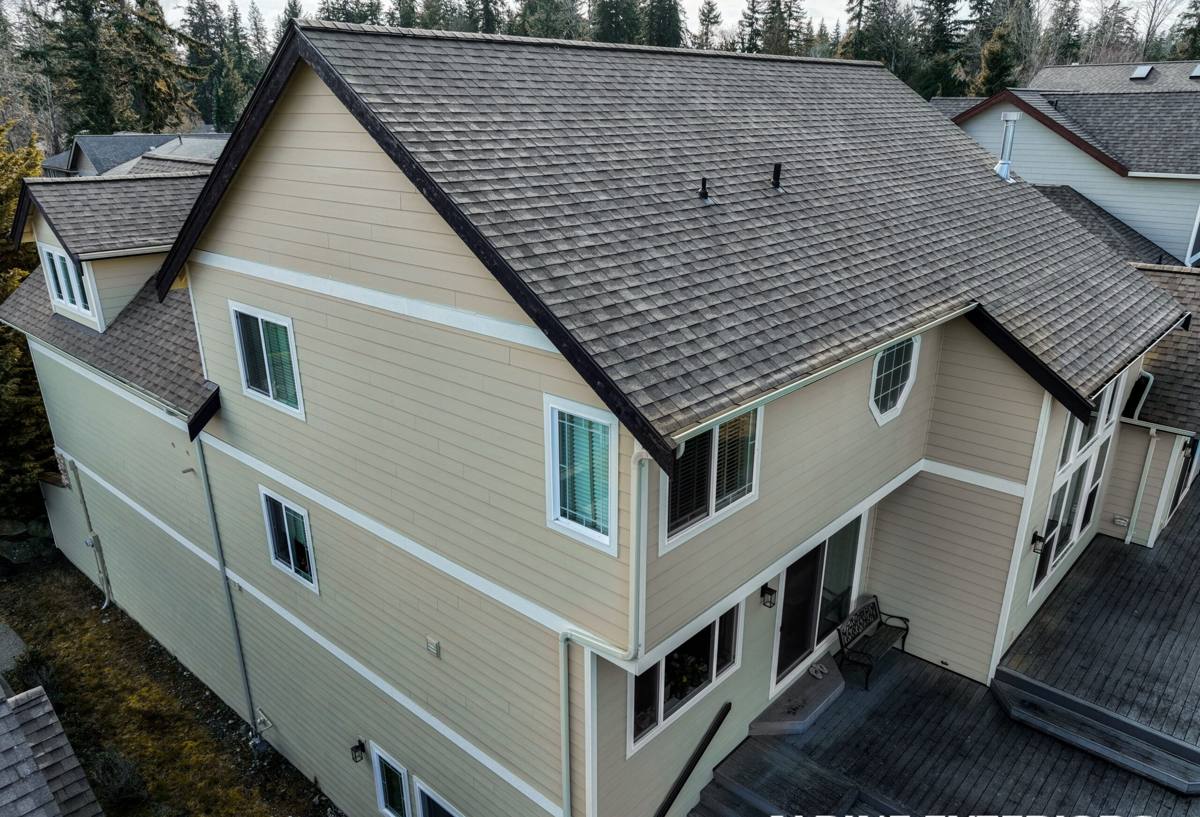
What Semiahmoo Homes Actually Need From a Deck
Corrosion-Resistant Everything, Not Just the Boards
Salt air doesn't just affect boats and railings on the water — it travels inland on the wind and settles on anything metal. Standard galvanized hardware corrodes faster near the bay than it would in, say, Sumas or Everson. Every fastener, joist hanger, post base, and ledger bolt on a Semiahmoo deck should be rated for coastal or ACQ-treated-lumber exposure (typically stainless steel or heavy hot-dip galvanized), not the standard-grade hardware that's fine further inland.
Real Airflow Underneath
Composite boards don't rot, but the joists, ledger, and framing underneath usually are still wood, and trapped moisture under a deck with no airflow is exactly what invites rot, mold, and eventually structural problems. In a climate that stays wet for months at a time, the gap between grade and the deck frame, and the spacing between boards, both need to be sized to actually dry out between rain events — not just meet the minimum code number.
A Surface That Sheds, Not Holds, Moss
Whatcom County's moss season runs long — often October through April in shaded, damp spots. Moss needs standing moisture and organic debris to get started, so board profile (grooved vs. solid), gap width, and how well a deck drains toward its edges all affect how much moss and algae growth a homeowner is fighting in year three versus year eight.
Capped Composite vs. Other Deck Materials
Most homeowners comparing decking near Semiahmoo are weighing capped composite against either pressure-treated wood or older uncapped composite. Here's the honest trade-off breakdown:
| Material | Coastal/wet-climate behavior | Maintenance | Typical lifespan here |
|---|---|---|---|
| Pressure-treated wood | Absorbs moisture, prone to splintering and rot at fastener points; salt air accelerates hardware corrosion | Annual staining/sealing recommended | 10-15 years before major repair |
| Uncapped composite (older-style) | Surface can absorb moisture and grow mold/mildew without a protective cap | Periodic cleaning; more prone to staining | 15-20 years |
| Capped composite (modern) | Moisture-resistant shell resists mold and staining; still needs correct substructure venting | Occasional washing | 25-30+ years, manufacturer-dependent |
| PVC decking | Fully synthetic, very moisture-resistant; more sensitive to installation temperature and fastening technique | Low | 25-30+ years |
We install capped composite from the established manufacturers (Trex, TimberTech, Fiberon, and similar) most often for Semiahmoo jobs, because the capped shell handles the salt-air and constant-damp cycle better than uncapped boards without asking the homeowner to do much upkeep. We don't push a specific brand — we size the recommendation to the homeowner's budget, sun exposure, and how close the lot sits to the water.
Where Coastal Decks Actually Fail
In our experience, composite deck problems near the water almost never start with the boards themselves. They start below the surface:
- Undersized or improperly spaced joists that let boards flex and eventually crack at fastener points
- Standard hardware that starts rusting within a couple of seasons in salt air, staining boards and weakening connections
- Ledger boards attached to the house without proper flashing, letting driving rain track behind the ledger and rot the rim joist
- No ventilation gap at grade, so moisture sits under the deck year-round instead of drying between storms
- Boards installed too tight, leaving no drainage gap and creating a moss trap along the seams
Every one of these is a substructure or fastening decision made before a single composite board goes down. It's why we treat the framing and hardware spec as seriously as the decking material itself on every Semiahmoo job.
How We Build a Composite Deck for This Area
1. Site Assessment
We look at sun exposure, wind direction relative to the water, existing drainage patterns, and how close the deck sits to grade. A shaded, water-facing deck gets different ventilation and fastener specs than a south-facing one on the same street.
2. Substructure First
Joist spacing, hardware grade, and the ledger flashing detail get locked in before decking material is even discussed. This is the part that determines whether the deck is still solid in year twenty.
3. Ventilation and Drainage Planning
We set the gap at grade and the board-to-board spacing to actually move air and shed water in a climate that stays damp for weeks at a time, not just to hit a minimum code clearance.
4. Fastening System
Hidden fastener clips or coastal-rated screws, matched to the board manufacturer's spec, so there's no exposed fastener head sitting in the weather corroding and staining the deck surface.
5. Board Installation
Boards are run, gapped, and secured per manufacturer spec, with attention to expansion gaps — composite moves with temperature swings, and getting that gap wrong causes buckling.
6. Railing and Edge Detail
Post bases and railing hardware get the same coastal-grade treatment as the deck frame, since railings take direct salt-air exposure and see the most hand contact.
7. Final Walkthrough
We check every fastener, gap, and drainage point before calling the job done, and walk the homeowner through what routine care (if any) the specific board line needs.
Maintenance in Whatcom County's Moss Season
One of composite decking's real selling points is that it doesn't need staining or sealing — but "low maintenance" isn't "no maintenance," especially this close to the bay. A properly built composite deck in Semiahmoo generally needs:
- A rinse or light wash a couple of times a year to clear salt residue, pollen, and organic debris before it becomes a moss or algae foothold
- An eye on drainage points and gaps each fall, before the wet season, to make sure leaves and debris aren't blocking water flow
- A visual check of railing posts and any exposed hardware for early corrosion, since that's the first sign hardware wasn't spec'd for salt air
- Prompt clearing of any moss that does start, since moss holds moisture against the board surface longer than bare composite would sit wet
None of this is heavy work, and it's a fraction of what a wood deck demands. But skipping it entirely in a climate this wet will shorten the life of even a good composite deck.
What Drives the Cost
| Factor | Why it matters near Semiahmoo |
|---|---|
| Board tier (capped composite vs. PVC) | Higher-tier boards cost more up front but resist the salt-air/moisture cycle with less upkeep |
| Substructure condition | Older decks near the water often need full joist and hardware replacement, not just a board swap |
| Fastener and hardware grade | Coastal-rated stainless or heavy-galvanized hardware costs more than standard-grade but avoids early corrosion |
| Deck height and railing complexity | Taller decks and multi-level railings add labor and code requirements |
| Site access | Waterfront and bluff lots can add setup and material-handling time |
We give homeowners a straightforward, itemized estimate rather than a single lump number, so it's clear what portion of the cost is boards versus what's going into the substructure and hardware that actually determine how long the deck lasts.
Why It Matters That We Already Work Semiahmoo
A crew that's built decks around Semiahmoo has already seen how fast standard hardware corrodes here, which slopes hold moisture longest through a Whatcom County winter, and which board profiles actually shed moss instead of trapping it. That's not something a crew coming from a drier, inland market gets right on the first try — it usually shows up as a callback a year or two later. Being a local Custer-based crew means we're also reachable for warranty work or a maintenance question without a homeowner chasing down a contractor who's moved on to a different region.
Before You Hire — A Quick Checklist
- Ask what hardware grade they spec for coastal/salt-air exposure — "standard" is a red flag this close to the water
- Ask how they handle ledger flashing where the deck meets the house
- Ask about ventilation gap at grade, not just board spacing
- Ask which composite lines they install regularly and why, not just which is cheapest
- Ask for references or completed work in Whatcom County specifically, not just "the Northwest" generally
If a contractor can't answer the hardware and ventilation questions clearly, that's usually a sign they're building the same deck they'd build anywhere — which is exactly what fails early in a climate like Semiahmoo's.
If you're planning a new composite deck or replacing an aging one near Semiahmoo, we're happy to take a look and put together a straightforward, no-pressure estimate — just fill out the form below.